
Why Does Paint Come Off When I Wipe the Walls?
The wall looked fine until someone tried to wipe away a fingerprint, food mark, pet smudge, or furniture scuff. After wiping, paint showed up on the rag, the wall looked lighter in that spot, or a shiny patch remained where the mark used to be.
Paint may come off when a wall is wiped because the coating has poor scrub resistance, hasn’t fully cured, was applied too thinly, is weakly bonded to the surface underneath, or is being cleaned too aggressively. Low-cost flat and builder-grade paints are especially prone to transferring pigment, developing shiny patches, or showing marks that don’t fully go away. It’s one reason our interior painters in Jacksonville, FL look beyond color when recommending wall paint—the specific product, sheen, surface preparation, application, and way a room is actually used all affect how well the finished walls will stand up to everyday cleaning.
After more than 25 years of interior painting in Jacksonville, FL, we’ve learned that this problem rarely comes down to one factor alone. Low scrub resistance, a flat or porous finish, builder-grade paint chosen for other priorities, incomplete curing, aggressive cleaning, harsh cleaning products, weak adhesion, incomplete surface preparation, dust or drywall residue trapped beneath the coating, or paint that was simply applied too thin can all contribute to what you’re seeing.
Not every mark that shows up on a cleaning cloth means the entire paint system is failing. Sometimes you’re seeing pigment transfer or burnishing from a low-sheen coating; other times, the paint film itself may have a genuine adhesion or durability problem. This guide will help you understand the difference and determine whether the wall needs a different cleaning approach, localized attention, or repainting with a more durable and washable coating.
For more Jacksonville homeowner guides covering builder-grade paint, washable wall finishes, paint sheen, touch-ups, drywall repairs, surface preparation, paint selection, and other common interior paint problems, visit our Interior Painting Resource Center.
Why Does Paint Come Off When I Wipe the Walls?
Quick Answer: Dried paint forms a film held together by its binder. When that film is weak, porous, under-cured, poorly bonded, or repeatedly scrubbed, pigment or coating material can transfer onto a cleaning cloth. This ranges from minor surface pigment transfer to more serious issues like chalking, burnishing, weak adhesion, or actual coating failure.
It helps to know these aren’t all the same problem, even though they can look similar at first glance:
- Surface pigment transfer — a small amount of color coming off, often from an inexpensive flat paint under real cleaning pressure
- Burnishing — the sheen changing (usually getting shinier) from repeated rubbing, without the paint actually being removed
- Chalking — a powdery residue coming off the surface, a sign of a weak or aging paint film
- Soft paint — a coating that hasn’t fully cured and is more vulnerable to any contact
- Weak adhesion — the paint film not properly bonded to the wall underneath
- Peeling — the coating physically lifting and separating from the surface
- Complete coating failure — a combination of the above serious enough that a wall genuinely needs professional repair, not just gentler cleaning
Is It Normal for Paint to Come Off on a Rag?
A very small amount of color transfer from inexpensive flat paint can happen during aggressive cleaning — but that’s not the same as saying it’s ideal, expected performance. It’s a sign the paint is at or past the edge of what it was designed to handle, not something to shrug off entirely.
Signs the issue is likely minor:
- Only slight color transfer onto the cloth
- No bare drywall visible
- No peeling edges anywhere nearby
- No bubbling
- No widespread powdering across the wall
- The wall still looks visually uniform overall
Signs of a more serious problem:
- Bare drywall becomes visible after wiping
- Paint repeatedly wipes away with normal cleaning, not just aggressive scrubbing
- The wall feels genuinely powdery to the touch
- The coating flakes or peels rather than just showing color transfer
- Paint releases with only light pressure
- Large sections show poor adhesion, not just one isolated spot
- Water causes immediate, noticeable softening
- Repairs or joint compound become exposed underneath
Flat Paint vs. Actual Paint Failure
This distinction matters more than almost anything else in this guide. Flat paint is inherently more porous and less reflective than higher-sheen finishes, and many low-cost flat paints have genuinely limited resistance to scrubbing, repeated washing, fingerprints, grease, pet marks, furniture contact, and children’s handprints. That’s a real limitation of the product category — not necessarily evidence that something went wrong during painting.
Flat paint, even when performing exactly as expected for its category, may:
- Transfer some pigment onto a cloth
- Look slightly lighter in a spot after wiping
- Develop shiny patches (burnishing) from repeated contact
- Show a visible “halo” where it’s been cleaned versus the surrounding untouched wall
- Lose some of its originally uniform appearance over time
That’s genuinely different from actual coating failure, which typically involves:
- Peeling
- Cracking
- Bubbling
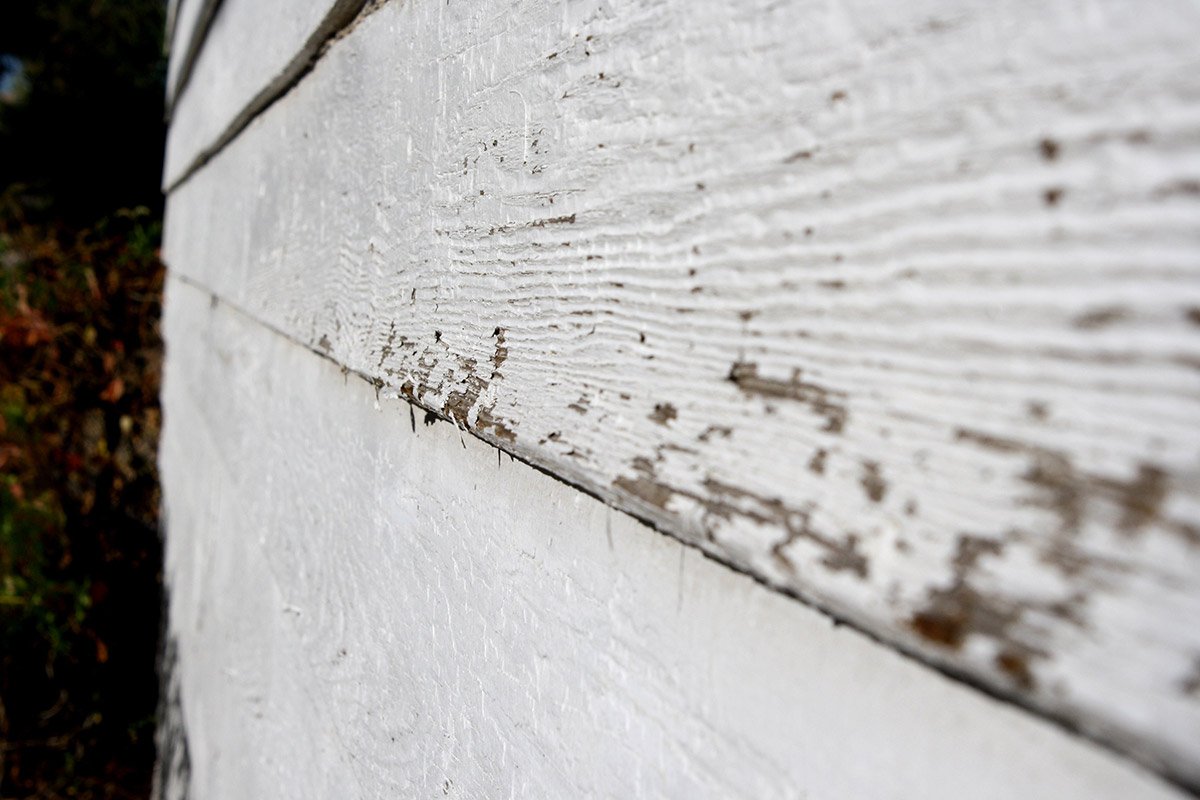
- Delamination (separating in sheets or larger sections)
- Exposed drywall
- Paint releasing in flakes rather than fine pigment transfer
- Poor adhesion evident beneath the surface, not just at the top layer
| Symptom | Likely Issue |
|---|---|
| Slight color on rag | Low scrub resistance or aggressive cleaning method |
| Shiny patch after wiping | Burnishing |
| Powdery residue | Chalking or a generally weak paint film |
| Bare drywall exposed | Paint removal or adhesion failure |
| Peeling edges | Coating failure |
| Bubbles | Moisture or adhesion problem |
| Paint softens with water | Under-cured or generally weak coating |
Worth noting: more than one of these conditions can produce a similar-looking symptom, so this table is a starting point for diagnosis, not a definitive answer on its own.
Why Does Builder-Grade Paint Rub Off So Easily?
Many production builders use economical flat coatings because they apply quickly, spray efficiently across many homes on a schedule, hide minor drywall imperfections, reduce surface glare, touch up relatively easily before a walkthrough, help control overall construction costs, and create a uniform appearance in time for closing. These are all real, legitimate reasons for a builder to choose that product.
The catch is that these advantages don’t automatically translate into strong washability or scrub resistance once a family is actually living in the home day to day. That’s why homeowners often notice this issue specifically in hallways, stairways, entryways, kitchens, children’s rooms, family rooms, areas near light switches, walls used by pets, and other high-contact corners — exactly the spots where daily life puts the most demand on a coating that wasn’t necessarily chosen with that demand in mind.
We cover this in much more depth in our guide to why builder-grade paint scuffs so easily, and we compare production paint against higher-performance products directly in builder-grade paint vs. premium paint.
Does Cheap Paint Contain Too Many Fillers?
Paint generally includes a binder or resin, pigments, a liquid carrier, various additives, and often mineral extenders or fillers. Mineral extenders themselves aren’t automatically a problem — they’re used in plenty of legitimate coatings across price points. What can differ between an inexpensive product and a premium one is the balance: lower-cost formulations may prioritize coverage, flatness, and economy over film strength, washability, and stain resistance, sometimes with less high-quality binder relative to the total solids in the formula.
The problem isn’t simply that a paint contains clay, calcium carbonate, or other mineral extenders. The more useful question is whether the finished, dried coating has enough high-quality binder to resist cleaning, abrasion, stains, and daily contact — and that’s a product-specific performance question, not something you can determine from one ingredient alone.
Could the Paint Be Uncured?
It’s worth understanding that “dry to the touch,” “ready for another coat,” and “fully cured” are three different milestones, not the same thing. Recently applied paint can be more vulnerable to cleaning, scrubbing, tape, furniture contact, moisture, and repeated touching well after it feels dry on the surface.
Cure time depends on the specific product, temperature, humidity, ventilation, number of coats applied, how thick each coat was, the color (darker, more pigment-dense colors sometimes behave differently), and the condition of the surface underneath. There’s no single universal cure time that applies to every paint and every home — the right approach is following the specific manufacturer’s technical guidance for the product actually on your walls. What’s reliably true, though: properly cured paint shouldn’t continue wiping away indefinitely. If a wall is still transferring paint well beyond a reasonable cure window, that points toward a different underlying issue.
Can Over-Thinned Paint Rub Off the Walls?
Adding excessive water or thinner to paint reduces film build, coverage, the concentration of binder actually landing on the wall, overall durability, scrub resistance, and color uniformity. This can happen during high-production spraying to stretch material further, in DIY projects where someone adjusts paint without realizing the tradeoff, or simply from equipment setup that wasn’t dialed in correctly.
Some manufacturers do permit limited thinning under specific conditions — this isn’t inherently improper — but arbitrary dilution beyond that guidance can genuinely hurt performance. This is worth mentioning as a possibility without assuming or accusing any specific builder or painter of having done this on your particular home.
Can Paint Applied Too Thinly Cause This Problem?
Yes, potentially — paint durability depends partly on reaching the manufacturer’s recommended spread rate and dry-film thickness. Stretching paint too far across too much surface area can lead to weak color coverage, poor washability, uneven sheen, visible drywall showing through in spots, reduced overall durability, faster scuffing, weak performance specifically around repaired areas, and touch-ups that never quite blend in.
One heavy-looking sprayed coat can genuinely look acceptable during a pre-closing walkthrough while still providing meaningfully less durability than a wall that received proper coverage and full coat thickness. That said, it’s worth being fair here — not every sprayed wall received only one coat, and assuming that without evidence isn’t a reliable diagnosis on its own.
Can Dusty Drywall Cause Paint to Rub Off?
Yes. Drywall sanding dust, general construction dust, or pulverized joint compound residue left on the wall before painting can interfere significantly with adhesion. This includes dust left after sanding repairs, drywall compound that wasn’t properly primed before painting, paint applied directly to a powdery surface, overspray dust from other work happening nearby, general construction-site contamination, and bare drywall absorbing binder unevenly across the surface.
Paint can look completely intact right after application, and only later start releasing or wiping away, because it never actually bonded properly to what was underneath it in the first place. If you suspect this is the issue, our professional drywall repair team can properly repair and prime damaged or contaminated drywall before any new coating goes on. If a repair is already showing through the paint on your walls, see why drywall repairs show through paint.
Was the New Drywall Properly Primed?
Drywall primer exists specifically to even out how new drywall and joint compound absorb paint — these materials are more porous and absorb differently than a properly primed, previously painted wall. Without adequate priming, homeowners may notice uneven sheen, visible flashing at repaired spots, weak overall coverage, visible patches, uneven porosity across the wall, reduced uniformity, and paint that simply behaves differently over joints and repairs than it does on the flat field of the wall.
It’s worth being clear about two things at once here: drywall primer doesn’t automatically make a low-quality finish paint highly washable — primer and topcoat solve different problems. And not every paint issue you’re seeing necessarily means primer was skipped; it’s one possible cause among several covered in this guide, not an automatic conclusion.
Why Does the Wall Feel Chalky or Powdery?
Chalking happens when a paint film breaks down at the surface, releasing fine pigment particles. Possible causes include a genuinely weak paint film to begin with, an aging coating reaching the end of its useful life, excess pigment concentrated at the surface, incomplete binder formation during curing, moisture exposure, an inherently lower-quality product, surface contamination, incompatible coatings layered on top of each other, or — worth ruling out first — ordinary dust that’s simply being mistaken for paint failure.
A simple test: gently wipe a small area with a clean, dry, dark-colored cloth. If it comes away with a visible chalky residue, that’s a real sign of chalking rather than just surface dust. Avoid aggressive rubbing during this test — you’re checking for chalking, not trying to scrub the wall clean. Widespread chalking should be addressed before repainting, since new paint may not bond reliably to a powdery surface underneath it.
Could the Cleaning Product Be Removing the Paint?
It’s genuinely possible. Cleaning products and methods that can damage paint include harsh degreasers, abrasive cleaners, alcohol, solvents, concentrated disinfectants, bleach mixtures, strong alkaline cleaners, excessively hot water, repeated scrubbing in one spot, rough sponges, and melamine foam products.
Magic Erasers and similar melamine sponges deserve a specific mention: they’re mildly abrasive by design, and that’s exactly why they’re effective at removing marks — but that same abrasiveness can polish, dull, or remove paint, particularly flat and lower-durability finishes. This doesn’t mean they can never be used; it means testing in an inconspicuous spot first and using minimal pressure is a smart precaution rather than an overreaction.
Why Does Flat Paint Turn Shiny After Cleaning?
This is burnishing — a change in sheen caused by rubbing or polishing the painted surface, distinct from the paint actually being removed. The affected area may look shinier, sometimes darker or lighter depending on the angle and light, smoother to the touch, and especially noticeable under side lighting from a window or lamp. The paint hasn’t necessarily failed in this scenario — but the finish has been permanently altered in that spot, which is part of why touch-ups on a burnished area can remain visible even with a good color match. For more on why touch-ups specifically fail to blend, see why don’t paint touch-ups match in new homes.
Can Water Alone Remove Wall Paint?
Generally, no — water alone shouldn’t remove a fully cured, properly bonded, genuinely washable interior coating under gentle cleaning. But water can expose real weaknesses in low-grade flat paint, under-cured paint, paint applied over old wallpaper adhesive residue, paint applied over dusty or contaminated drywall, coatings that are simply more water-sensitive by formulation, chalky surfaces, or layers that were never properly bonded to begin with. Repeated wetting can also soften exposed joint compound if the paint film covering it is missing or damaged in that spot.
Why Does Paint Come Off Around Light Switches and Doorways?
These high-touch locations take more direct daily contact than almost anywhere else on a wall: skin oils, hand lotion, general dirt, extremely frequent contact, more frequent cleaning as a result, rings and fingernails, bags and furniture brushing past, pet contact at doorways, and children’s hands at their own height level around switches and frames. This concentrated contact is exactly why a genuinely durable, washable paint matters more in these specific spots than it might in the center of an untouched wall.
One practical note: if these areas need repainting, the entire wall — not just the touched spot — often needs to be redone, since an isolated touch-up frequently flashes and stands out from the surrounding, more weathered paint around it.
Why Does Paint Come Off in Bathrooms or Kitchens?
Bathrooms
Humidity, condensation, often-inadequate ventilation, cleaning chemicals, direct water splashes, moisture working its way behind the coating, and paint that wasn’t specifically selected for a high-humidity room can all contribute to premature wear here.
Kitchens
Grease, cooking residue, steam, food splatter, more frequent cleaning than most other rooms, degreasing cleaners specifically, and heat exposure near cooking areas all add up to more demanding conditions than the average wall faces.
In both rooms, what looks like paint failure often involves both the product’s inherent durability and the specific environmental demands of the room — not one factor in isolation.
How Can You Tell Whether the Paint Is Failing?
- Stop aggressive cleaning. Continuing to scrub the same spot risks making the damage worse before you’ve even diagnosed it.
- Let the wall dry. A wet wall can temporarily look darker or feel softer than it actually is once dry.
- Inspect the cloth. Is it dirt, actual paint color, chalky residue, or real paint flakes?
- Check the wall surface closely. Look for bare drywall, color loss, shiny spots, powder, peeling edges, bubbles, or cracks.
- Test another hidden area gently — behind furniture or inside a closet — using plain water and a soft microfiber cloth.
- Perform a dry-cloth test to check whether powder transfers even without water involved.
- Inspect repairs and joints specifically. Is the problem noticeably worse directly over joint compound or patched areas than on the surrounding flat wall?
- Consider the paint’s age. A recently painted wall may simply still be in its curing window.
- Check for moisture — leaks, condensation, staining, or any recurring dampness nearby.
- Request a professional evaluation if the problem is widespread rather than isolated to one small spot — and avoid destructive adhesion testing yourself unless you understand the risk of damaging the wall further in the process.
Can You Touch Up a Wall After Paint Rubs Off?
Sometimes, and it depends on several factors. Touch-up tends to work when the affected area is small, you have the exact same paint, ideally from the same batch or a very close match, applied with the same method originally used, the existing coating around it is otherwise stable, the room has relatively low side lighting, the finish is flat or low-sheen, and there’s no underlying adhesion problem driving the issue.
Touch-ups often remain visible or fail outright when the paint is from a different batch, the sheen doesn’t quite match, the original wall was sprayed but the touch-up is brushed (a very common mismatch), the surrounding wall has aged and shifted in appearance, the color has faded elsewhere, surface porosity has changed at the repaired spot, cleaning created a shiny halo that a color-matched touch-up can’t disguise, or the coating underneath is genuinely weak rather than just cosmetically marked.
In many of these situations, repainting the wall from corner to corner produces a noticeably better, more uniform result than trying to patch just the affected spot.
Can You Paint Over Walls That Rub Off?
Yes, but the existing surface needs to be properly evaluated first — not just coated over and hoped for the best. This generally involves cleaning off any loose residue, removing chalk, sanding unstable areas, repairing any exposed drywall, testing adhesion before committing to the whole wall, addressing any moisture source, priming bare drywall, using a bonding or stabilizing primer where the surface calls for it, and applying two properly spread finish coats rather than a single heavy one.
A stronger topcoat cannot compensate for a weak layer that’s already separating from the wall underneath it — premium paint applied directly over a failing coating risks failing right along with that old layer.
Do the Walls Need Primer Before Repainting?
Not always — primer isn’t automatically required over a sound, clean, fully cured existing coating. It’s generally worth using when the paint is chalky, color transfers easily during testing, bare drywall is exposed anywhere, drywall repairs are present, staining exists that could bleed through, adhesion is genuinely questionable, the surface shows uneven porosity, you’re covering a very dark or intense existing color, the current paint is glossy (which resists a new coat bonding), or you’re planning a major color change.
Depending on what your specific wall needs, that might mean a standard drywall primer, a bonding primer for adhesion-questionable surfaces, a stain-blocking primer, a high-build primer for texture or minor imperfections, or a dedicated problem-surface sealer — there’s no single universal primer that’s right for every situation described in this guide. For more on how proper preparation affects the finished result, see our overview of our interior painting process.
What Paint Is Better for Walls That Need Cleaning?
Worth evaluating together: washability, scrub resistance, stain resistance, burnish resistance, the sheen itself, how the room is actually used, your household’s lifestyle, whether you have kids or pets, how much natural light hits the wall, and the current condition of the surface you’re painting over.
- Flat — best at hiding surface imperfections, though cleaning resistance varies a lot depending on the specific product’s quality
- Matte — can offer a similar flat appearance with meaningfully better washability in premium formulations specifically
- Eggshell — often chosen for living spaces, hallways, and family areas, balancing decent cleanability against still-relatively-low sheen
- Satin — generally more washable still, though it can highlight drywall imperfections and repairs more than lower-sheen options
Product quality matters just as much as sheen category here — a genuinely premium washable matte can outperform a low-cost eggshell from a different line entirely. For the full comparison, see flat vs. matte vs. eggshell paint.
Builder-Grade Paint vs. Premium Interior Paint
| Performance Factor | Typical Production-Grade Flat | Higher-Quality Residential Coating |
|---|---|---|
| Primary objective | Economy, hide, and production speed | Durability and finished appearance |
| Washability | Often limited | Generally stronger |
| Scrub resistance | Lower | Higher |
| Burnish resistance | Lower | Better |
| Stain resistance | Limited | Improved |
| Touch-up ability | Often good | Product-dependent |
| Best use | Initial construction or low-contact rooms | Occupied family homes |
| Cost | Lower | Higher |
| Long-term appearance | May decline sooner in busy areas | Usually remains cleaner longer |
For a deeper look at this comparison specifically, see our full guide on builder-grade paint vs. premium paint.
Should You Repaint the Entire Room?
A full-room repaint tends to make sense when multiple walls are affected rather than one isolated spot, the paint genuinely can’t be cleaned without leaving marks, you’re unhappy with the existing color anyway, touch-ups are visibly flashing, high-traffic areas already look worn, drywall repairs are needed regardless, the paint is chalky or generally weak, you want a more durable finish going forward, the home has kids or pets creating ongoing wear, or the room gets strong side lighting that reveals every flaw. In more limited situations, repainting just the affected wall from corner to corner is genuinely sufficient — a full-room repaint isn’t always necessary.
Common Mistakes When Cleaning Painted Walls
- Scrubbing before the paint is cured — increases the risk of damage during exactly the window when the coating is most vulnerable.
- Starting with a Magic Eraser — its mild abrasiveness can remove more than intended, especially on flat finishes.
- Using concentrated cleaner — undiluted products are often more aggressive than the wall can handle.
- Applying too much water — can soften the paint film or anything not fully sealed underneath it.
- Using a rough sponge — physically abrades the surface more than a soft cloth would.
- Rubbing one spot repeatedly — concentrates wear exactly where you’re trying to fix a problem.
- Cleaning without testing first — means finding out about a sensitivity only after you’ve already damaged a visible area.
- Assuming every flat paint is washable — it’s a common but incorrect assumption that leads directly to this whole problem.
- Trying to remove deep stains with more pressure — often makes the mark worse rather than better.
- Touching up before the wall fully dries — can trap moisture and cause the touch-up itself to fail.
- Painting over chalky residue — new paint won’t bond reliably to a powdery surface.
- Ignoring moisture or adhesion problems — cosmetic fixes don’t address an underlying cause that will keep resurfacing.
How to Clean Painted Walls Without Damaging Them
- Identify the paint finish if you can (flat, eggshell, satin, etc.)
- Dust the wall first before introducing any moisture
- Test a hidden area before tackling the visible mark
- Start with a clean microfiber cloth
- Use plain lukewarm water first
- Add a small amount of mild soap only if plain water isn’t enough
- Use light pressure throughout
- Work from the outside of the mark inward, rather than scrubbing the center directly
- Avoid soaking seams, repairs, or any area you know was recently patched
- Pat the wall dry rather than letting it air-dry with cleaner residue on it
- Stop immediately if you see color transferring onto your cloth
- Let the area dry fully before judging whether the result actually looks acceptable
Some stains simply can’t be safely removed from a low-washability flat paint without also removing some of the paint itself — at that point, a touch-up or repaint becomes the realistic solution rather than more aggressive cleaning.
Professional Process for Repainting Weak or Builder-Grade Walls
- Inspect the existing coating thoroughly
- Identify moisture, chalking, and adhesion problems
- Protect floors, furniture, fixtures, and adjacent surfaces
- Clean any contamination carefully
- Remove loose or powdery material
- Repair drywall damage, nail pops, and settlement cracks
- Sand and control dust throughout
- Prime bare, repaired, stained, or unstable areas specifically
- Apply a full primer coat when the wall’s condition calls for it
- Apply a durable interior coating at the correct spread rate
- Use two finish coats where the project specifies
- Inspect the walls under both normal and side lighting
- Complete any final touch-ups
- Clean the room and perform a final walkthrough
Proper preparation matters more here than almost anywhere else in residential painting, because the new coating is only ever as stable as the surface it’s actually bonded to underneath.
Paint Coming Off Walls in New Construction Homes
New construction homes carry a specific set of conditions that can contribute to this problem: production-grade flat paint chosen for reasons covered above, spray application across many homes on a schedule, potentially thinner film build than a more deliberate hand-applied job, dust from ongoing construction activity nearby, drywall that wasn’t primed or wasn’t primed evenly, nail pops and settlement cracks that are normal in a home’s first year or two, builder touch-ups done quickly before a walkthrough, paint genuinely selected to look its best on closing day specifically, and walls that only reveal their real durability limits once regular family life begins.
It’s worth being fair here: these conditions don’t occur in every new home, and shouldn’t be assumed as a given just because a home is new construction. Homeowners most often first notice this issue after moving furniture in, cleaning fingerprints for the first time, trying to remove an early scuff, completing the builder warranty walkthrough, or simply living in the home for several months and starting to really use the space. For the full picture on whether repainting makes sense for your new home, see should you repaint a new construction home.
Paint Problems in Jacksonville’s Newer Homes
Northeast Florida’s rapid pace of new-home construction, spread across large communities, combines with our climate and typical new-home household realities in a few specific ways: humidity affects how paint cures and performs long-term, many new homes here are busy family households with kids and pets from day one, open floor plans mean more continuous wall space under consistent daily traffic, Florida’s strong natural light tends to reveal drywall imperfections and touch-up flashing more readily than a dimmer climate would, and settlement cracks and nail pops are a normal part of a new home’s first year here just as anywhere else. Many Jacksonville and Northeast Florida homeowners start thinking seriously about repainting right around the time of their builder warranty walkthrough, once they’ve had enough time in the home to see how the original paint is actually holding up.
None of this points to any specific builder — it reflects the broader production home-building model, playing out across a fast-growing region.
Frequently Asked Questions
Why does paint come off when I wipe the wall?
Usually some combination of low scrub resistance, incomplete curing, thin application, weak adhesion, or overly aggressive cleaning — flat and builder-grade paints are especially prone to this.
Is it normal for flat paint to come off on a rag?
A small amount of color transfer under real cleaning pressure can happen with inexpensive flat paint, though it’s a sign of the product’s limitations rather than ideal performance.
Why does builder-grade paint rub off?
It’s often chosen for economy, fast application, and easy pre-closing touch-ups rather than long-term washability, which is why it can struggle under regular family cleaning and contact.
Can water remove wall paint?
Not typically from a fully cured, properly bonded, washable coating — but water can expose real weaknesses in low-grade, under-cured, or poorly bonded paint.
Why does my wall become shiny after cleaning?
This is burnishing — repeated rubbing changes the paint’s sheen in that spot without necessarily removing the coating itself.
Can I clean flat paint?
Gently, yes, but many flat paints have limited washability, so light pressure, plain water first, and testing an inconspicuous area beforehand all help avoid making things worse.
Does paint need time to cure before cleaning?
Yes — paint can feel dry to the touch well before it’s actually fully cured, and cleaning too soon increases the risk of damage.
Can a Magic Eraser remove paint?
Yes, it’s possible — melamine sponges are mildly abrasive, which is exactly why they clean effectively but can also dull or remove paint, especially flat finishes.
Why does paint feel chalky?
Chalking happens when a paint film breaks down at the surface and releases fine pigment particles — it can result from an aging or lower-quality coating, or from moisture and other factors.
Can I paint over walls that are rubbing off?
Yes, but the existing surface needs proper evaluation and preparation first — cleaning, addressing chalk, repairing damage, and priming where needed — since a stronger topcoat can’t fix a weak layer underneath it.
Do I need primer before repainting?
Not always, but it’s often a good idea when the existing paint is chalky, damaged, stained, or when you’re making a significant color change.
Will touch-up paint fix a cleaned spot?
Sometimes, if the paint matches closely and was applied the same way originally — but touch-ups often remain visible due to sheen differences, aging, or application method mismatches.
Why does paint come off new drywall?
Often due to inadequate priming, dust left on the surface before painting, or paint applied too thin — new drywall and joint compound absorb paint differently than a properly primed, previously painted wall.
Should I repaint builder-grade walls?
It can be worthwhile if the walls are difficult to clean or already showing wear, though not every room necessarily needs it right away — see our full guide on builder-grade paint in new homes for more detail.
Conclusion
Paint coming off during cleaning can trace back to a range of causes — limited scrub resistance, builder-grade flat paint, incomplete curing, aggressive cleaning, thin application, excessive dilution, dusty drywall underneath, poor adhesion, missing or inadequate primer, or, less often, a genuinely failing coating. The right fix depends entirely on which of these is actually going on in your home — sometimes that’s as simple as gentler cleaning or a small, careful touch-up; other times it means proper priming and repainting the wall or room.
If you’re not sure which situation you’re dealing with, we’re glad to take a look, give you a straight assessment, and help you figure out whether this is a cleaning-habit fix or a genuine repaint.
Ready to talk through your walls? Schedule a free, no-pressure consultation for professional interior painting. Call 904-615-6599.
Helpful Resources
- Why Does Builder-Grade Paint Scuff So Easily?
- Builder-Grade Paint vs. Premium Paint
- Flat vs. Matte vs. Eggshell Paint
- Should You Repaint a New Construction Home?
- Why Don’t Paint Touch-Ups Match in New Homes?
- Why Are Drywall Repairs Showing Through the Paint?
- Interior Painting Services
- Drywall Repair
- Our Interior Painting Process
Looking for professional painters in Jacksonville, FL? A New Leaf Painting Contractors is a locally established Jacksonville painting company specializing in interior painting and exterior house painting for homes throughout Northeast Florida. Since 2001, our residential painters, interior painters, exterior painters, and house painting contractors have completed more than 5,000 projects while earning 750+ five-star reviews. Our painting services include walls, ceilings, trim and doors, exterior stucco and siding, cabinet painting and refinishing, drywall repair, popcorn ceiling removal, stucco repair, wood rot repair, surface preparation, priming, and complete residential repainting. Our licensed and insured Jacksonville painting contractors serve Mandarin, Riverside, Avondale, Jacksonville Beach, Nocatee, Ponte Vedra Beach, St. Johns, Fleming Island, Orange Park, St. Augustine, and communities across Northeast Florida. For dependable interior painters, exterior house painters, or residential painting contractors in Jacksonville, FL, call A New Leaf Painting Contractors at 904-615-6599 for a free estimate.