In this article
- What does a professional house painter actually do?
- House painters start by evaluating the existing surfaces
- What interior house painters do
- What exterior house painters do
- Interior vs. Exterior House Painters
- Preparation is a large part of the job
- Do house painters make repairs?
- Real Jacksonville example: when house painting becomes a repair-and-prep project
- What do house painters do when the home is occupied?
- What happens at the end of a house painting project?
- What house painters usually don't do
- What house painters encounter on Jacksonville homes
- What A New Leaf Painting Contractors handles
- Frequently asked questions
- Planning a House Painting Project in Jacksonville?
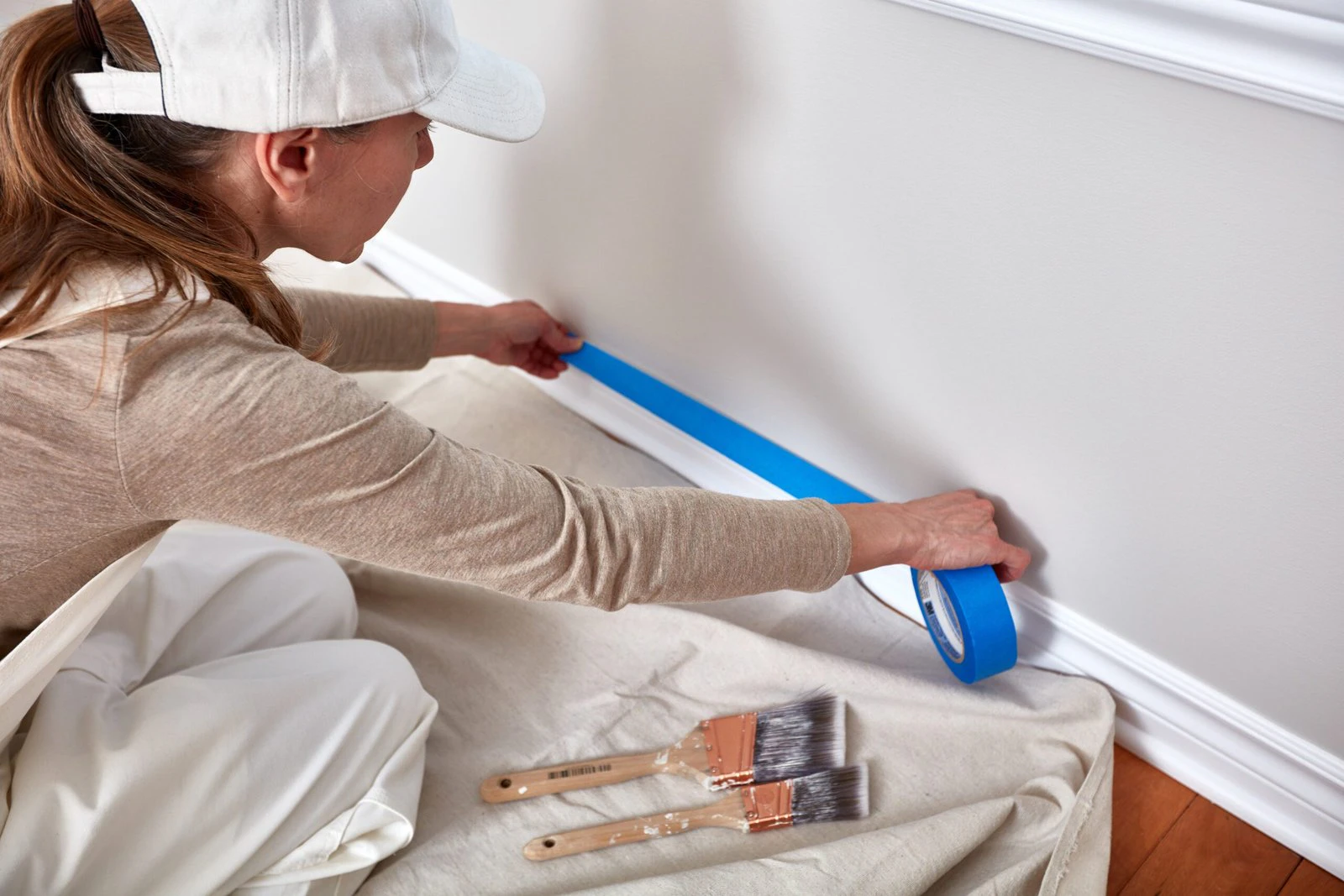
Professional house painters do a lot more than put paint on walls. A typical job means looking over the surfaces, protecting your home, cleaning and preparing what gets painted, making repairs, caulking, sanding, priming where needed, applying the paint, cleaning up and walking the finished work with you. How much of that a house needs depends on the house: an interior and an exterior are different jobs, and a five-year-old home needs less than a twenty-year-old one.
For house painters in Jacksonville, FL, Florida adds its own list: stucco that cracks, wood fascia and soffits that rot, fiber cement with its own requirements, strong sun, humidity, mildew, caulk that fails at joints and a rainy season that decides when exterior paint can go on.
What does a professional house painter actually do?
Most jobs, inside or out, follow the same order:
- Evaluate
- Protect
- Prepare
- Repair
- Prime
- Paint
- Inspect
- Clean Up
Not every job needs every step. A home in good shape may need no repairs, and many repaints only need spot priming. What surprises most homeowners is the ratio: on a typical exterior, putting on the finish coats is often the shortest stage. Most of the days go into what comes before.
House painters start by evaluating the existing surfaces
Before anything is scheduled, someone should walk the house and look closely. We look for peeling or chalking paint, cracks, hardened or split caulk, stucco problems, rotten trim and fascia, water stains, mildew, damaged drywall inside, old repairs that didn't hold and bare spots where paint has worn through. Stucco, fiber cement, wood siding, T1-11 and brick each need different prep.
That walk-through sets the scope. Two similar houses on the same street can need very different amounts of work.
What interior house painters do
Protection comes first. Floors are covered, furniture is moved and covered, and fixtures are masked. Whether the crew moves furniture or expects it moved varies by company, so it should be in the scope.
Then prep. Nail holes and dings are filled, drywall damage is patched and textured to match, surfaces are sanded, trim gaps are caulked, stains are blocked and bare or patched spots are primed.
Then paint. Depending on the scope that can include walls, ceilings, trim, baseboards, doors and frames, crown molding and closets, often with different products and sheens.
"Interior painting" doesn't automatically mean everything inside. Ceilings, trim, doors and closets are usually separate line items. A walls-only job is perfectly fine; it just needs to say so. More on our interior painting in Jacksonville homes.
What exterior house painters do
Exterior work means more surface, more weather and usually more repair. After the walk-through, most jobs start with washing off dirt, mildew, chalk and loose material, then scraping and sanding wherever paint has failed. Then come stucco crack repair, wood and fascia repair, caulking and priming bare or repaired areas, while plants, windows, walkways and fixtures are covered and protected.
The scope may include the body, bands and trim, fascia, soffits, doors, garage doors and shutters, and each should be named rather than assumed. More on our approach to exterior house painting across Northeast Florida.
Interior vs. Exterior House Painters
| Interior | Exterior | |
|---|---|---|
| Main preparation | Drywall repair, texture matching, sanding, caulking trim | Washing, scraping, stucco and wood repair, caulking |
| Protection focus | Floors, furniture, fixtures, dust control | Landscaping, windows, hardscape, driveways |
| Weather | Not a factor | Determines the schedule |
| Typical surfaces | Walls, ceilings, trim, doors, baseboards, crown | Body, bands, trim, fascia, soffits, doors, garage doors |
| Homeowner impact | Living around the work daily | Mostly access and noise |
Swipe to see the whole table
Preparation is a large part of the job
Paint sticks to whatever it goes on. Over chalk, it sticks to chalk. Over loose paint, it sticks to something already letting go. That's the whole case for prep, and it's why a proposal that spells out preparation usually describes a different job than one that doesn't mention it. More in why surface preparation matters in residential painting.
Washing
Most exteriors get cleaned first. It isn't about maximum pressure: too much can damage stucco, drive water where it shouldn't go or tear up wood, so the method is matched to the surface. In our humidity, and during the summer rains, the house also needs time to dry before paint goes on.
Caulking
Caulk wears out sooner than paint. It hardens and splits after years of sun and heat, so replacing it at trim joints, around windows and doors and where two materials meet is normal prep. But not every gap should be sealed. Some are meant to drain or breathe, and siding manufacturers say where caulk belongs. Caulk is also not waterproofing and doesn't replace flashing.
Priming
Most repaints don't need a full coat of primer. It goes where there's a reason: bare surfaces, repairs, stains that would bleed through, adhesion concerns, a big color change or a manufacturer requirement. When a proposal says "two coats," make sure you know whether that means two finish coats or primer plus one.
Application
Sprayed textured walls are often back-rolled to work the paint in, and edges are cut in by hand. Paint spread too thin never builds the film it was designed for, no matter how many coats. Humidity and dew point affect curing too.
Do house painters make repairs?
Often, yes, depending on the company. Many painting contractors handle the repairs that turn up during prep: drywall patching and texture matching, stucco crack repair, failed caulk and wood and siding repair on rotten trim, fascia and siding.
There is a limit. Structural movement, water coming in from an unknown source, an active roof or window leak or widespread rot need the right professional before anyone paints. Painting over them gives you a finish that looks right and a problem still growing underneath. Sometimes the honest answer is "this needs to be looked at first."
Real Jacksonville example: when house painting becomes a repair-and-prep project
On a Secret Cove home in Jacksonville 32216, the job started with carpentry. T1-11 siding had rotted past the point where paint would help, so it was repaired or replaced first, then the coquina, caulking and prep, and paint last. On a home in Jacksonville 32246, stucco had come loose, and removing it exposed rotted sheathing behind it, something no paint could fix. On a large stucco home in Jacksonville 32257, the work was crack prep and sealing across several sides and caulking at transitions before the coating went on.
Inside, a Queen’s Harbour home in Jacksonville was walls only across the main rooms, hallways and primary bedroom, with the existing crown, casings and baseboards left as they were. That's harder than it sounds: the new wall color has to meet every run of trim cleanly, with no trim coat to tidy it up.
What do house painters do when the home is occupied?
Most interior jobs happen with the family at home. Rooms are done in an order that keeps as much of the house usable as possible, kitchens and main bedrooms are planned around, sanding dust is controlled and wet walls are marked. Tell the crew about pets before they arrive, since doors are often left open.
At the end of each day, materials should be organized, ladders down, walkways clear and the house livable, and the crew should tell you what's happening tomorrow.
What happens at the end of a house painting project?
The crew inspects the work, does touch-ups, removes masking, cleans up and puts back anything they moved. Then they walk it with you, room by room or side by side, and fix anything you find before the job is called done. Ask about leftover paint, a record of the colors used and the written warranty while they're still there.
What house painters usually don't do
Painting contractors generally don't handle structural repairs, roofing, plumbing or electrical work, window and building envelope failures, mold that needs a remediation specialist, diagnosing serious leaks, engineering or remodeling.
Also, being attached to your house doesn't put something in the painting scope. Depending on the proposal, these may or may not be included:
- Gutters
- shutters
- exterior doors
- garage doors
- ceilings
- closets
- garage interiors
- fences
- decks
- railings
- pool cages
- detached structures
- sheds
The written scope decides. If you want it painted, make sure it's named.
What house painters encounter on Jacksonville homes
Stucco is everywhere here, and it cracks at openings and where materials meet. Fiber cement is common on newer homes, and wood siding, trim, fascia and soffits run through the older ones. Strong sun breaks paint down into chalk, humidity and summer rain feed mildew, caulk ages fast and homes near the beaches deal with salt air.
Homes range from new construction in the St. Johns corridor and Nocatee to established Jacksonville neighborhoods. Many sit in HOAs that require approval for exterior color changes, so ask early. More in our Exterior Painting Resource Center and, for stucco, the Jacksonville Stucco Resource Center.
What A New Leaf Painting Contractors handles
We've painted homes across Jacksonville and Northeast Florida since 2010. Our work covers interior and exterior painting, cabinet painting and refinishing, drywall repair, stucco repair, wood rot and carpentry repair, pressure washing, color consultation and concrete coatings. Every job starts with a look at the surfaces and ends with a walk-through.
Frequently asked questions
It varies by company. Many move and cover large pieces and ask you to clear small items. It should be in the scope.
Next, learn how to compare the companies offering to do the work in our guide on how to choose a residential painter in Jacksonville. For stucco problems, see the Jacksonville Stucco Resource Center.
Planning a House Painting Project in Jacksonville?
We will look at your home, explain what prep and repairs your surfaces need, put the scope in writing and give you a detailed estimate. Or call or text (904) 615-6599.