
Your House Will Tell You When It’s Time — If You Know What to Look For
One of the most common questions Jacksonville homeowners ask us is also one of the simplest: how often should I repaint my house? The answer depends on a lot more than the age of the existing paint. The exterior surface, the preparation that went in last time, the coating quality, the number of coats, sun exposure, moisture, landscaping, irrigation and how close you are to the coast all influence how quickly a home starts showing its age.
After more than 25 years of house painting in Jacksonville, FL, we’ve watched two sides of the same home age very differently. South- and west-facing elevations take intense UV and heat. Shaded elevations stay damp longer and grow mildew. Homes closer to the beaches and the Intracoastal deal with salt in the air on top of both.
As a planning range, most Jacksonville homeowners start evaluating their exterior somewhere around the 8- to 10-year mark — but there is no universal schedule. A well-prepared, well-specified coating system can stay serviceable longer. A home with heavy exposure, previous coating problems, failing caulk, wood deterioration, stucco cracks or thin preparation can need attention considerably sooner. That’s why our exterior painting crews evaluate the actual condition of the home rather than going by age alone.
This guide covers realistic repainting timelines for the exterior surfaces common in Jacksonville, the warning signs that mean it’s time regardless of the calendar, what Northeast Florida’s climate actually does to a coating, and what you can do to help a paint job last. For more on stucco, preparation, Florida weather, coating systems and repairs, see our Exterior Painting Resource Center.
This guide is about exteriors. Interior repainting runs on a different clock, driven by wear, room use, moisture and taste — for that, see our companion guide on how long interior paint lasts in Jacksonville.
How often should Jacksonville homes be painted?
Most Jacksonville homes need repainting every 8 to 12 years when a premium exterior paint goes over properly prepared surfaces. Stucco usually lands in the 8 to 12 year range, fiber cement and Hardie board 10 to 15 years, wood siding 7 to 10 years, and trim, doors, shutters and fascia 5 to 8 years.
Homes near Jacksonville Beach, Atlantic Beach, Neptune Beach, Ponte Vedra Beach or the Intracoastal Waterway often need it sooner, because salt air, humidity and UV break down paint and caulk faster.
More Guides on Painting a Jacksonville Exterior
Planning Your Repaint
- Paint lifespan (this page)
- → Exterior painting cost
- → Jacksonville climate & paint
- → Exterior painting services
Choosing Paint & Color
Where These Numbers Come From
A New Leaf Painting Contractors has been painting Northeast Florida exteriors since 2001. Licensed and insured, with 750+ verified five-star reviews and more than 5,000 completed projects. The ranges below come from watching how coatings actually perform on homes here, not from national averages that don’t account for our climate.
We’ve painted stucco, Hardie board, wood siding, brick, trim, doors and full coastal exteriors across Jacksonville, St. Johns County, Nocatee, Ponte Vedra, the Beaches, Orange Park, Fleming Island and Amelia Island. The lifespans and product recommendations here are based on what we’ve seen hold up — and what we’ve seen fail.
How Long Does Exterior Paint Last in Jacksonville?
The short answer is that it depends on what your house is made of. Different materials behave very differently under Jacksonville’s sun, humidity and rain. Here is what to expect from each when premium paint and real preparation are used.
| Surface | Premium Paint | Budget Paint | Coastal Homes |
|---|---|---|---|
| Stucco | 8–12 years | 3–5 years | 2–3 years sooner |
| Fiber cement / Hardie board | 10–15 years | 5–7 years | 1–2 years sooner |
| Wood siding | 7–10 years | 3–5 years | 1–2 years sooner |
| Brick / masonry coatings | 8–12 years | 4–6 years | 1–2 years sooner |
| Trim & doors | 5–8 years | 3–4 years | 1 year sooner |
These ranges assume two things: a premium acrylic applied at the correct film thickness, and thorough preparation before any paint goes on. Skip either and the numbers drop fast. Both are covered below.
Northeast Florida Climate Pressure
What Our Climate Does to a Coating
Jacksonville puts more pressure on exterior coatings than most of the country. These are the forces that compress paint lifespan here:
- UV exposure: Florida takes some of the highest annual UV in the country, which is what breaks down pigment and binder
- Year-round humidity: sustained high humidity encourages mildew and slow adhesion breakdown through repeated wet-dry cycles
- Heavy rainfall: around 50 inches a year, much of it in intense afternoon storms
- Wind-driven rain: tropical systems push water into hairline cracks and any failed caulk joint
- Coastal salt air: homes within a few miles of the ocean or Intracoastal collect airborne salt that is corrosive to paint film and sealants
- Thermal movement: daily temperature swings expand and contract stucco, siding and trim continuously, stressing the film
- Mildew pressure: warm, wet, shaded walls develop the green bloom faster here than in drier climates
A coating that performs well in a moderate climate may not perform here. Premium acrylics engineered for these conditions cost more up front and pay it back across the life of the job. For more on the specific forces at work, see our guide on why Jacksonville’s climate is tough on exterior paint.
How Often Should You Paint Stucco in Jacksonville?
Most stucco homes here need repainting every 8 to 12 years with premium paint and proper preparation. A properly applied elastomeric system can sometimes stretch that.
Stucco is one of the more demanding surfaces in Northeast Florida. It is porous, it moves, and it develops hairline cracks over time. The coating has to do three things at once: seal the substrate, flex with the wall, and hold up to UV.
The system we usually recommend on stucco repaints is our Stucco-Armor Hybrid System — a Loxon XP elastomeric base coat that builds film thickness, bridges hairline cracks and helps the wall resist water intrusion, paired with a premium acrylic finish coat (Sherwin-Williams Emerald, Emerald Rain Refresh or Duration) for UV-stable color and easier cleaning. Where moisture resistance is the priority, a single-system Loxon XP repaint also performs well.
For more on stucco-specific systems — including when elastomeric makes sense and when a premium acrylic is the better call — see our Jacksonville stucco painting guide, our comparison of elastomeric versus acrylic on stucco, or our breakdown of the best exterior paint for stucco homes.
How Often Should You Paint Hardie Board or Fiber Cement Siding?
Most Hardie board and fiber cement can go 10 to 15 years between full repaints when painted properly with a premium acrylic. That is the longest service life of any common exterior surface here.
The catch is that even when the field of the siding still looks good, the caulked joints, butt ends, trim intersections and cut edges usually need attention sooner — typically every 5 to 8 years. Caulk has a shorter life than the paint over it, and those joints see the same moisture and thermal cycling as the rest of the house.
For Hardie board repaints we typically specify Sherwin-Williams Duration or Benjamin Moore Regal Select Exterior, both of which adhere well to factory-primed fiber cement. Two coats minimum, with caulk replaced at every joint and trim intersection.
How Often Should You Paint Wood Siding and Trim?
Wood siding usually needs repainting every 7 to 10 years in Jacksonville. Wood trim, fascia, doors and shutters often need it sooner — every 5 to 8 years.
Wood is the most maintenance-intensive exterior surface in Florida. It absorbs moisture, moves with humidity, and breaks down anywhere the paint film has failed. Bare wood left through a single Florida summer can start rotting. Primer quality, careful preparation and prompt attention to peeling or bare spots matter more on wood than on anything else.
If you find peeling paint on wood siding or trim, deal with it before it spreads. The paint film is the protective layer. Once it is compromised, damage to the wood underneath can develop quickly, and carpentry repairs to rotted wood cost considerably more than the repaint would have.
How Often Should You Paint a Coastal Home Near the Beaches?
Homes near Jacksonville Beach, Atlantic Beach, Neptune Beach, Ponte Vedra Beach, Amelia Island and the Intracoastal often need repainting 1 to 3 years sooner than inland homes.
Salt air is the deciding factor. Airborne salt settles on every exposed surface and works on paint film, sealants, caulk and any exposed metal. Add stronger UV on oceanfront properties and constant moisture, and the cumulative effect shortens paint life noticeably.
If your home is in a coastal community, plan on the lower end of every range in this guide, specify a premium acrylic with strong UV resistance, and budget for more frequent washing. Soft-washing every 12 to 18 months to clear salt residue makes a real difference to how long the finish holds.
Not sure where your home is in the cycle? An on-site inspection takes about 20 minutes and tells you what condition the coating is actually in, what preparation it needs, and whether repainting now or in two years is the better call. Schedule a free exterior painting estimate.
Seven Signs Your Home Needs Repainting Now
You don’t have to wait for a specific number of years. The house will tell you — if you know what to look at.
1. Paint is peeling or bubbling
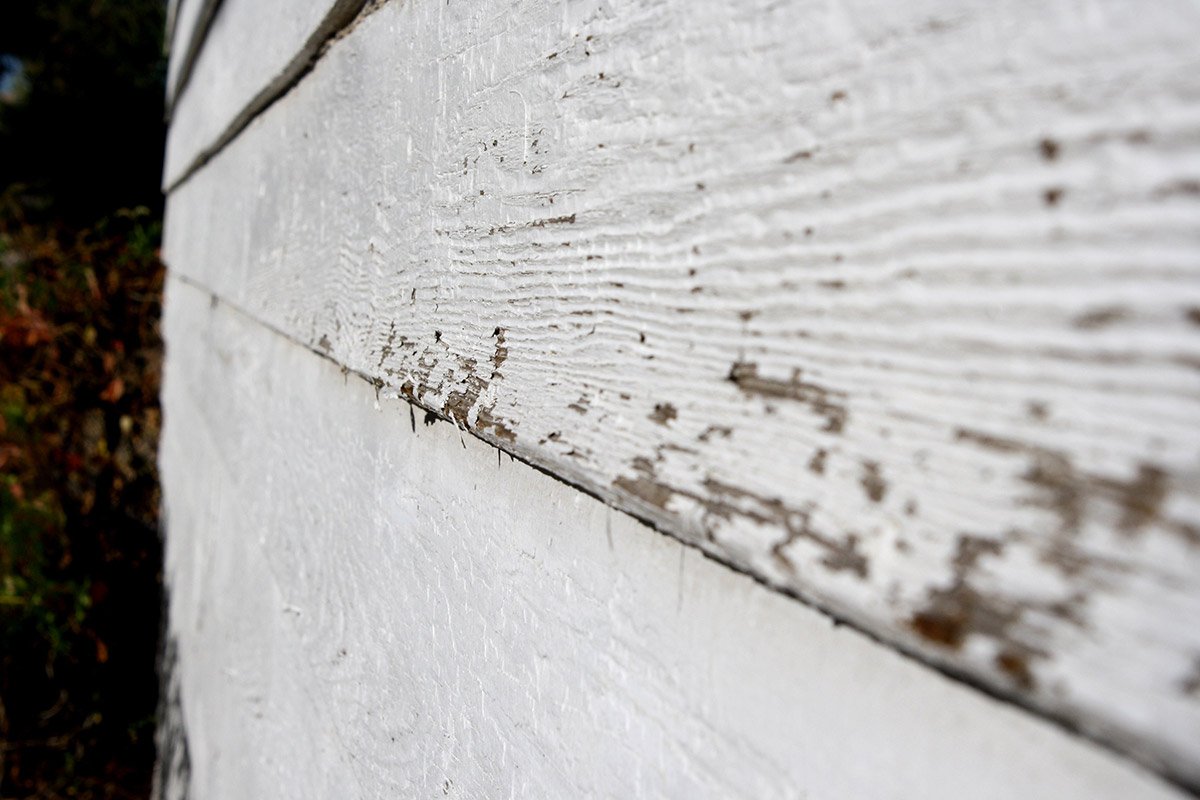
The clearest sign of failure. When paint lifts away in flakes or bubbles, the bond between film and substrate has broken down, almost always because moisture got behind it. This accelerates. Once peeling starts, water reaches the exposed substrate and the failure spreads outward. Don’t wait on this one.
2. Significant fading or washed-out color
Florida UV breaks down pigment over time. Some fading is normal late in a paint job’s life. Severe fading — where the house looks noticeably different from its original color, or one elevation looks dramatically different from another — means the film itself is degrading.
Quick test: compare a fully sun-exposed wall to the color under an eave or in a recessed corner. The contrast tells you how far the paint has gone.
3. Chalky residue when you rub the wall
Run your hand across the wall. If it comes away with powder, that is chalking — the binder breaking down at the surface. A small amount is normal near the end of a paint job’s life. Heavy chalking means the coating has reached the end of its useful life and needs replacing before the substrate is exposed.
4. Mildew or algae that keeps coming back
In this humidity, mildew and algae do well on exterior surfaces, especially north-facing and shaded walls. A small amount can often be cleaned off with a soft wash. But if it returns quickly each time, the mildewcide in the coating has worn out and a fresh premium acrylic is the right answer.
5. Cracking, crazing or checking patterns
A spider-web pattern of fine cracks in the film means the paint has lost flexibility and gone brittle. Thermal cycling here demands a coating that can still move. When it can’t, it cracks. Larger cracks in stucco can also point to substrate movement that needs addressing before anything is repainted.
6. Caulking cracked, shrunken or missing
Technically a caulk issue rather than a paint issue, and the most important thing on this list to check. Caulk typically lasts 5 to 8 years — less than the paint over it. When caulk at windows, doors, trim intersections or utility penetrations cracks or pulls away, heavy rain can get behind the finish and cause real damage quickly.
A full repaint should include re-caulking every joint with fresh, flexible, paintable caulk. If you find failing caulk before the paint is ready to go, treat it as a standalone repair.
7. Bare or thin spots where paint has worn through
On the most exposed areas — southwest-facing walls, surfaces near the roofline, anywhere prevailing rain hits hardest — paint can wear thin or down to bare substrate long before the rest of the house looks tired. Any bare spot puts the material underneath directly in the weather. On wood that leads to rot; on stucco it lets water in. Deal with those as soon as you find them, even if everything else looks fine.
Should You Repaint Now or Wait?
A quick way to place what you’re seeing:
| Condition | What It Means | Recommendation |
|---|---|---|
| Slightly faded but not peeling | Normal aging | Monitor; inspect yearly |
| Chalky residue on your hand | Binder is breaking down | Start planning a repaint |
| Caulk cracked or pulling away | Water can get behind trim and siding | Repair soon, repaint or not |
| Peeling or bubbling | Adhesion has failed | Schedule before it spreads |
| Bare wood, stucco or siding showing | The surface is unprotected | Do not wait |
| Mildew returns quickly after washing | Coating may have lost mildew resistance | Have it inspected |
What Happens If You Wait Too Long
Paint isn’t only cosmetic. It is the layer keeping water and UV off your stucco, wood, fiber cement, trim and caulk joints. When the film fails and isn’t replaced, the substrate underneath starts taking the weather instead.
That is the point where a paint job stops being a paint job and becomes a repair job. Peeling paint on wood becomes rot. Failed caulk becomes water in the wall. Bare stucco becomes saturated stucco that has to dry out for weeks before anything can be coated. Carpentry and stucco repair both add cost, sometimes more than the original repaint would have been.
The cheapest time to repaint is usually just before the paint fails completely. Getting the timing right keeps the project a straightforward repaint rather than a repaint plus repairs. For realistic numbers on what that costs here, see our guide to exterior painting cost in Jacksonville.
How to Make Exterior Paint Last Longer
Paint lifespan is not entirely out of your hands. A few decisions — at the time of painting, and in the years after — materially extend the life of every job.
1. Use a premium exterior product
This is the single most consequential decision in the project. The difference between premium and budget paint is chemistry, not marketing: higher-grade pigments, more durable binders, UV inhibitors, mildewcides and additive packages that lower-cost products simply don’t contain.
The lines we specify most often on Jacksonville exteriors:
- Sherwin-Williams Emerald Exterior — strong UV resistance and color retention
- Sherwin-Williams Emerald Rain Refresh — self-cleaning topcoat for stucco and humid exposures
- Sherwin-Williams Duration Exterior — heavier film build; good on shaded elevations
- Sherwin-Williams Loxon XP — high-build elastomeric for stucco and crack bridging
- Benjamin Moore Aura Exterior — strong color retention on deep and custom colors
- Benjamin Moore Regal Select Exterior — good adhesion on fiber cement and wood
2. Never rush the preparation
The most common reason paint fails early is not the product — it is what happened before the product went on. A proper prep sequence for a Jacksonville repaint includes:
- Pressure washing at appropriate pressure to remove dirt, mildew, salt residue and chalk
- Adequate dry time — generally 24 to 48 hours in our humidity before any coating goes on
- Scraping and sanding all peeling or loose paint back to a stable surface
- Crack repair with a flexible patching compound or elastomeric where needed
- Full re-caulking at joints, window and door frames, trim intersections and penetrations
- Spot priming on bare wood, fresh patches, repairs and stained areas
- Two coats minimum, applied at the manufacturer’s specified spread rate rather than stretched to save material
A premium product over poor preparation will fail faster than a mid-tier product over excellent preparation. The application matters as much as the paint.
3. Soft-wash the home every one to two years
One of the cheapest things you can do to extend paint life is wash the house. Mildew, algae, pollen and salt residue build up on exteriors here year-round, and letting that sit works on the coating.
A soft wash every 12 to 24 months clears biological growth and surface contamination before it does lasting damage. Keep high pressure off finished paint — low pressure and high volume is the right approach.
4. Check the caulk every few years
Caulk wears out before paint does. Walk the house every two to three years and check every joint and seam. Press it with a finger: if it’s cracked, hard or pulling away, it needs replacing. Re-caulking is inexpensive next to the water damage failed caulk allows.
5. Deal with small problems early
A small area of peeling, a spot of failing caulk or a single bare patch is quick and cheap to fix today. The same spot ignored for two years often becomes a rotted board or a stucco repair costing many times as much. An annual walk-around catches these while they’re still small.
Best Time of Year to Paint a House in Jacksonville
Spring (March through May) and fall (October through November) are the best windows for exterior painting here. Temperatures are mild, humidity is lower than mid-summer, and afternoon storms are less frequent.
Paint cures best in stable, moderate conditions — not in 95-degree heat at 90% humidity, and not on a cold morning. Surface temperature matters as much as air temperature: paint applied to a wall heated well past 100°F by direct sun dries faster than the manufacturer intended and won’t bond the way it should.
Spring books up. If you’re planning a spring project, reaching out in late February or early March gives you the best shot at preferred dates. Fall is equally good and usually less crowded.
Should You Repaint Before or After Hurricane Season?
It depends on the condition of your paint right now.
If the paint is already failing, repainting before hurricane season (June 1) is the right call. Fresh paint, fresh caulk and sealed joints give the house its best protection against wind-driven rain.
If your home has just come through a major storm, start with a thorough inspection. Storm damage to a coating isn’t always dramatic — it often shows up as subtle bubbling, displaced caulk or fresh cracks that are easy to miss until they get worse.
For a home in good shape heading into storm season, a fall repaint is excellent: the work happens after the weather risk has passed and the paint cures in mild conditions.
How Much Does Exterior Painting Cost in Jacksonville?
Cost depends on the size of the home, the number of stories, surface type, prep work, repairs, the paint system, trim, doors, shutters and HOA requirements. Homes with peeling paint, failed caulk, stucco cracks or wood rot cost more because those repairs have to happen before painting can start. Larger two-story homes and homes with extensive trim or architectural detail sit toward the higher end.
For current local ranges — including how surface type, prep condition and paint system move the number — see our full guide to exterior painting cost in Jacksonville.
Does Paint Color Affect How Often You Need to Repaint?
Yes. Dark colors generally fade faster in Florida sun than lighter ones. Lighter colors reflect more light and tend to hold their appearance longer. Premium paints help darker colors perform better, but color choice still affects how the house looks in year eight.
For more on HOA-friendly palettes, LRV ratings and heat-reflective options, see our guide to the best exterior paint colors for Jacksonville homes.
What We Tell Homeowners Who Ask
For most Jacksonville homes, get a full exterior inspection around the 8-year mark even if the paint still looks decent from the street. Trim, caulk, doors, fascia and sun-exposed walls usually start failing before the body of the house looks bad.
If your home is near the beach, the Intracoastal, or takes heavy sun, look sooner. If you already see peeling, bubbling, chalking, cracked caulk or bare spots, deal with it before water reaches what’s underneath.
- Year 5: start checking caulk, trim and exposed areas annually
- Year 8: plan and budget for the next repaint
- Years 10–12: most homes are ready or close
- Year 12+: inspect carefully for substrate damage before repainting
Coastal homes, dark-colored homes, and homes with budget paint or thin preparation should pull each of these forward by one to three years.
Frequently Asked Questions About Exterior Paint Lifespan
How often should you paint a house in Jacksonville, Florida?
Most Jacksonville homes need repainting every 8 to 12 years when premium paint goes over a properly prepared surface. Stucco typically falls in the 8 to 12 year range. Hardie board and fiber cement can reach 10 to 15 years. Wood siding usually needs it every 7 to 10 years. Trim, doors and shutters often need attention every 5 to 8 years.
How long does exterior paint last in Florida?
Less time than in cooler, drier climates, because of UV, year-round humidity, heavy rainfall and coastal salt air. With premium paint and professional preparation, most Florida exterior surfaces run 8 to 15 years depending on the substrate. With budget paint or rushed prep, that can drop to 3 to 5 years. The difference between a three-year paint job and a twelve-year one is almost always preparation and product selection.
How often should you paint a stucco house in Florida?
Most stucco homes should be repainted every 8 to 12 years. In Jacksonville, a hybrid system pairing a Loxon XP elastomeric base coat with a premium acrylic topcoat typically extends that interval, bridging hairline cracks and helping the wall resist water intrusion when properly applied.
How often should you paint a coastal home near the beach?
Homes near Jacksonville Beach, Atlantic Beach, Neptune Beach, Ponte Vedra Beach, Amelia Island and the Intracoastal often need repainting 1 to 3 years sooner than inland homes. Salt air, stronger UV and constant moisture all work on paint and caulk faster on coastal properties.
What are the signs my house needs repainting?
Peeling or bubbling paint, significant fading, chalky residue when you rub the wall, mildew that keeps returning after washing, cracking or crazing in the film, cracked or missing caulk around windows and doors, and bare or thin spots where the paint has worn through.
Is it better to repaint before the paint starts peeling?
Yes. Repainting before major failure usually reduces prep and repair costs and protects the house better. Once peeling starts, moisture reaches the substrate and can cause wood rot, stucco damage or siding failure.
Does pressure washing help exterior paint last longer?
Yes, when it’s done correctly. Soft-washing every one to two years removes mildew, algae, pollen and salt residue before they break down the film. Keep high-pressure settings off finished paint — they can damage it and drive water into joints.
What type of paint lasts longest in Jacksonville?
Premium acrylic exteriors — Sherwin-Williams Emerald, Duration and Rain Refresh, plus Benjamin Moore Aura and Regal Select — consistently outperform lower-grade products in our sun and humidity. For stucco specifically, an elastomeric base coat paired with a premium acrylic topcoat is the system we specify most often.
Helpful Resources for Jacksonville Homeowners
Best Exterior Paint for Jacksonville (2026) →Premium product comparison: Emerald, Duration, SuperPaint, Aura and Regal Select.
Jacksonville Stucco Painting Guide →Loxon XP, premium acrylic topcoats, and the Stucco-Armor Hybrid System.
Best Exterior Paint Colors (2026) →HOA-friendly palettes, LRV ratings, and heat-reflective color options.
Cost to Paint a House in Jacksonville →Realistic exterior painting cost ranges by surface type, size and condition.
Why Jacksonville’s Climate Is Tough →UV, humidity, salt air, and what they do to exterior paint here.
Elastomeric vs Acrylic Paint →When each system makes sense on stucco.
Why Stucco Paint Peels →Six causes of premature stucco failure and how to address them.
Not Sure If It’s Time?
We’ll Look at It and Tell You Straight
A New Leaf Painting Contractors has been painting Northeast Florida since 2001 — licensed and insured, with a written workmanship warranty on every project. We’ll walk your exterior, identify the preparation it actually needs, recommend the system that fits the surfaces and the exposure, and write up a free estimate with the products and process spelled out. If the honest answer is that you have two more years, we’ll tell you that too.
Where We Work
A New Leaf Painting Contractors serves homeowners across Jacksonville and Northeast Florida with licensed and insured exterior painting, interior painting, stucco repair, carpentry repairs, drywall repair, cabinet refinishing and color consultation. Since 2001 we’ve completed more than 5,000 projects and earned 750+ verified five-star reviews. We also help homeowners prepare HOA and ARB paint color approval packets across Northeast Florida’s master-planned communities.
We work in established Jacksonville neighborhoods including Ortega Forest, Avondale, San Marco, Riverside, Arlington, Baymeadows, Epping Forest, Beauclerc, Deerwood, Pablo Creek Reserve, Glen Kernan, Queens Harbour, Hidden Hills and San Jose Forest.
Across the Beaches and Ponte Vedra we serve Old Ponte Vedra Beach, The Plantation at Ponte Vedra, Sawgrass Country Club, Marsh Landing, Atlantic Beach and Neptune Beach — including oceanfront homes where salt air and UV make product selection matter more.
In St. Johns County our service area includes Nocatee (Twenty Mile and Coastal Oaks), Palencia, RiverTown, South Hampton, Cimarrone, Isle of Palms and the eTown communities. In Nassau County and on Amelia Island we work throughout Amelia Island Plantation, Crane Island, Amelia National and Headwaters at Lofton Creek. We also serve Mandarin, Southside, Fleming Island, Orange Park, Julington Creek and Middleburg.
If you’re planning an exterior project in Jacksonville or Northeast Florida, our team can walk the property with you, explain the condition of the surfaces, and lay out the preparation and coating options that make sense for your home. Call or text 904-615-6599.