
Should You Repaint the Entire House or Only Certain Rooms?
You can absolutely prioritize rather than tackling the whole home at once. Rooms most often upgraded first: entryways, hallways, stairways, family rooms, kitchens and breakfast areas, children’s bedrooms, primary living spaces, mudrooms, walls near pet areas, and high-contact spots in open-plan layouts.
Rooms that can often reasonably wait: guest bedrooms, low-use home offices, storage rooms, closets, and formal rooms that see relatively little daily activity. Repainting your highest-use areas first tends to deliver the most practical, noticeable benefit for the investment — you don’t have to treat this as all-or-nothing.
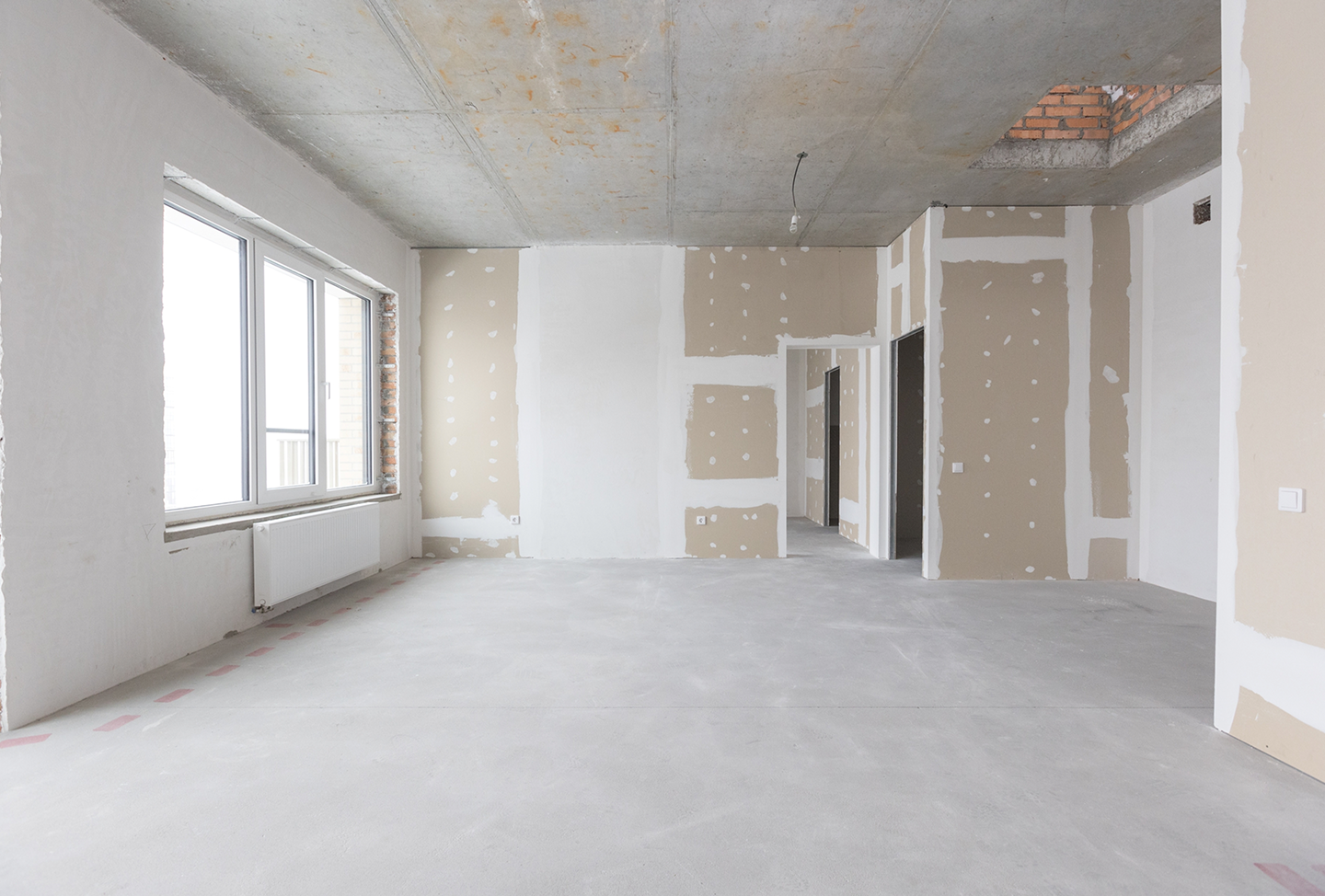
Best Rooms to Paint Before Moving In
Certain rooms are meaningfully harder to paint well once they’re furnished: primary bedrooms, children’s rooms, large open living areas, closets, stairwells, two-story foyers, any room with heavy furniture that’s difficult to move, home offices with built-ins, and garage walls if those are part of your project. Closets in particular are worth doing before move-in — painting around a closet full of clothing and shelving is a genuinely different (and more difficult) job than painting it empty.
What Paint Finish Is Best for New Construction Walls?
Flat hides imperfections well, keeps glare low, and often touches up easily — though lower-grade flat products can offer limited washability.
Matte offers a low-sheen look with meaningfully better durability in many premium formulations, making it a strong choice for bedrooms and living spaces where you want both appearance and reasonable maintenance.
Eggshell is more washable and holds up well in hallways and family spaces used by an active household, though it can reveal drywall imperfections and touch-ups more readily than flat or matte.
Satin offers even greater washability, suited to select high-moisture or high-contact areas, though it tends to emphasize wall defects more than any of the lower-sheen options.
We cover this comparison in full detail in flat vs. matte vs. eggshell paint — and it’s worth repeating here: product quality matters just as much as which sheen category you pick.
Best Paint for New Homes With Children and Pets
Real, practical concerns in these households include fingerprints, food marks, pet oils transferring onto walls, mud, crayon incidents, toys hitting walls, more frequent cleaning overall, and scuffs concentrated near stairs and hallways specifically. Worth evaluating together when choosing a product: washability, scrub resistance, stain resistance, burnish resistance, low odor (particularly relevant with young kids or pets in the home during painting), reasonable cure time, and a sheen that’s genuinely appropriate for how the room gets used. No coating on the market is fully stain-proof or pet-proof, regardless of price point — that’s worth keeping in mind rather than expecting perfection from any single product.
Can You Keep the Same Color and Upgrade the Paint?
Yes — you can absolutely keep a builder-white or neutral color you’re happy with while upgrading product quality, washability, film strength, stain resistance, burnish resistance, and overall finish consistency.
A few color-matching limitations worth knowing about: the exact original builder formula may not be readily available or even identifiable, existing paint ages and shifts subtly over time, different manufacturers and different color bases don’t always match perfectly even when labeled similarly, paint varies batch to batch, and the original wall may have been sprayed while any touch-up work gets rolled or brushed — a real, visible mismatch even with an otherwise close color match. Repainting complete walls corner-to-corner generally provides a more uniform, satisfying result than trying to patch isolated spots.
Why Do Builder Paint Touch-Ups Sometimes Look Different?
Several factors contribute: the original wall was likely sprayed, while touch-up work is usually done with a brush or roller — a genuine application-method mismatch. Different paint batches can vary subtly even within the same product line. Sheen differences between the original coat and touch-up paint show up more than you’d expect. The original paint ages and fades somewhat over time, even before any touch-up happens. Wall porosity can vary across a surface. Nearby drywall repairs affect how paint absorbs. Side lighting reveals differences that flat, even lighting would hide. And even something as small as a different roller nap can create a visibly different texture in the touched-up area.
This combination is exactly why painting a full wall from corner to corner often produces a noticeably better result than trying to blend an isolated touch-up. For the full breakdown of this specific issue, see why don’t paint touch-ups match in new homes.
Should Drywall Repairs Be Completed Before Repainting?
Yes. Nail pops, settlement cracks, joint cracking, visible patches, texture inconsistencies, corner damage, any damage from the move-in process itself, incomplete builder repairs, and caulk separation should all be addressed before new paint goes on, not covered up and hoped for the best. Repaired drywall needs to be properly sanded, fully dust-free, textured to match where applicable, primed, and blended in with the surrounding surface — skipping any of these steps is exactly how a repair ends up visible under the new paint instead of disappearing into it. Our professional drywall repair team handles this as a standard part of new-home repainting projects. If a repair is already showing through paint, see why drywall repairs show through paint.
Is It Better to Repaint Before or After Flooring and Other Work?
Before new flooring: generally means less worry about paint accidentally landing on finished floors, easier ladder placement, and simpler overall protection setup. The tradeoff: flooring installation afterward can sometimes damage fresh paint on walls or baseboards.
After flooring: lets you complete final wall and trim touch-ups once any installation-related nicks or damage are already visible and can be addressed together. The tradeoff: new flooring needs more careful, extensive protection during the painting process itself.
The right sequence really depends on your project’s full scope and how well your contractors coordinate schedules — there’s no universal right answer that applies to every renovation timeline.
How Much Disruption Does Repainting a New Home Cause?
This depends on several factors: whether the home is vacant or furnished, how much furniture needs to be worked around, the number of rooms involved, ceiling height, how much drywall repair is needed, whether you’re making significant color changes, primer requirements, number of coats specified, closets, trim and doors included in scope, and whether occupants and pets are living there during the work.
Painting before move-in is generally the least disruptive option overall — but an organized professional crew can absolutely work through an occupied home in phases, protecting rooms as they go, if that’s the more realistic option for your situation. Our step-by-step painting process covers how we protect an occupied home while work is underway.
Is Repainting a New Construction Home Worth It?
Real potential benefits: genuinely better washability, improved scuff resistance, colors that actually reflect your taste, better-looking walls overall, corrected drywall defects along the way, cleaner-looking touch-ups going forward, more consistent finish across the home, easier day-to-day maintenance, a better fit for a household with kids or pets, and simply enjoying your home’s walls more.
When it may not be the immediate priority: the existing paint is genuinely performing fine, warranty repairs are still incomplete, you’re planning major renovations that would affect the same walls anyway, budget is tight and needed for something more pressing, or you haven’t settled on permanent color choices yet.
There’s no single right answer here — it’s a genuine cost-benefit decision specific to your home, your paint’s actual condition, and your priorities. Our interior painting cost guide breaks down what drives the number if you’re weighing it up.
Repainting New Construction Homes in Jacksonville
Northeast Florida has seen rapid residential development across large production-home communities in recent years, and a few local factors are worth understanding: strong natural light throughout much of the year tends to reveal wall imperfections and touch-up flashing more readily than dimmer climates, open floor plans mean more continuous wall space under consistent daily traffic, humidity affects how paint cures and performs over time, many new homes here are busy family households with children and pets from the start, settlement and seasonal movement play out here just as they do anywhere, and many homeowners naturally start thinking seriously about repainting around the time of their builder warranty walkthrough.
Communities across the region — Nocatee, SilverLeaf, RiverTown, Shearwater, eTown, Beachwalk, Durbin Crossing, OakLeaf, Wildlight, and Tributary among them — have all seen substantial new construction, and homeowners across these communities ask us versions of the same questions covered in this guide. None of this points to problems in every home in these communities, or to any specific builder — it reflects the broader production home-building model playing out at scale across a fast-growing region.
Professional Process for Repainting a New Home
- Inspect the existing walls and paint condition
- Identify chalking, weak adhesion, or paint transfer
- Document any drywall defects found
- Confirm whether builder repairs are already complete
- Protect floors, cabinets, furniture, and fixtures
- Repair nail pops and settlement cracks
- Sand and control dust throughout
- Clean walls where necessary
- Prime bare, repaired, stained, or unstable areas
- Apply a full primer coat when conditions call for it
- Apply a suitable premium interior coating
- Use the correct finish for each specific room
- Apply two finish coats where specified
- Inspect walls under both normal and side lighting
- Complete final touch-ups and cleanup
The goal throughout isn’t just changing color — it’s building a more durable, easier-to-maintain wall system than what was there before. Why surface preparation matters goes deeper on the part of this list that does most of the work.
Common Mistakes When Repainting a New Construction Home
- Painting before documenting warranty defects — can make it harder to prove original wall condition later.
- Ignoring nail pops and cracks — they don’t fix themselves, and painting over them just delays the repair.
- Applying premium paint over chalky walls — a strong topcoat can’t fix a weak layer underneath it.
- Assuming primer is never needed — skips a step that’s genuinely necessary in several common situations.
- Choosing sheen without considering drywall condition — higher sheen on an imperfect wall reveals exactly what you didn’t want shown.
- Using one paint finish in every room — misses real opportunities to match finish to how each room actually gets used.
- Painting before construction dust is fully removed — undermines adhesion from the very first coat.
- Choosing colors before observing the home’s actual lighting — a color that looked right on a chip can read completely differently in your rooms.
- Expecting touch-ups to disappear invisibly — sets up disappointment given the real factors covered above.
- Skipping proper floor and cabinet protection — an avoidable source of new damage during the project.
- Painting over active moisture problems — hides a real issue rather than solving it.
- Using another round of low-durability paint — repeats the original problem instead of fixing it.
- Failing to coordinate with other contractors — leads to painting getting damaged by later work, or vice versa.
- Assuming the whole home must be painted at once — an unnecessary all-or-nothing mindset that isn’t actually required.
- Waiting until every room is fully furnished without weighing the added disruption — worth factoring into your timing decision upfront.
Decision Checklist: Should You Repaint Now or Wait?
Repaint now when:
- The house is still empty
- The paint is genuinely difficult to clean
- You don’t want the existing colors
- You have children or pets in the household
- High-contact rooms already show real damage
- Builder repairs are fully complete
- You want a long-term, durable finish from the start
- Painting later would be significantly more disruptive to your life
Consider waiting when:
- Warranty claims are still open
- Settlement-related repairs are still expected
- The existing paint’s performance is genuinely acceptable
- Future remodeling is already planned for the same spaces
- Your final color palette isn’t settled yet
- Your budget is needed for something more urgent right now
Frequently Asked Questions
Should you repaint a new construction home?
Not automatically — but it’s worth considering when the original paint is hard to clean, scuffs easily, or doesn’t suit your household’s needs. Many homeowners wait until they’ve lived in the home a while to make this call.
Is it normal to repaint a brand-new house?
It’s a common enough decision, particularly once homeowners notice builder-grade paint’s real-world washability limits during everyday family life.
Should you paint before moving in?
It’s often the least disruptive timing if your schedule allows, since there’s no furniture to work around — but it’s not the only reasonable option.
Should you wait until the builder warranty walkthrough?
Many homeowners do, to let settlement issues and drywall repairs surface first, though this means living with the original paint a while longer in the meantime.
Will repainting affect the builder warranty?
It can, depending on your specific warranty terms — reviewing your documentation and photographing any existing defects before painting over them is a reasonable precaution.
Can you paint over builder-grade paint?
Usually yes, after proper inspection, cleaning, and any needed repairs or priming — premium paint over a weak underlying layer won’t fix that layer on its own. We compare the two in builder-grade paint vs. premium paint.
Do new-home walls need primer?
Not always, but it’s often a good idea when the walls are chalky, damaged, stained, or you’re planning a significant color change.
How long does builder-grade paint last?
It varies significantly by room and household — low-traffic spaces may look fine for years, while high-traffic areas often show wear sooner, depending on the specific product and how it’s used.
Why does paint come off new-home walls?
Often due to limited scrub resistance in production-grade paint, incomplete curing, thin application, or dust trapped under the coating before it was ever applied. More on that in why paint comes off when you wipe the walls.
Should you wait for a new house to settle?
It can reduce how much repainting of repaired spots you do later, though it doesn’t mean you have to delay painting your entire home while you wait.
Which rooms should be repainted first?
High-traffic, high-visibility areas — hallways, entryways, kitchens, and family rooms — typically deliver the most noticeable benefit if you’re prioritizing rather than doing the whole house at once.
What paint finish is best for a new home?
It depends on the room — flat and matte hide imperfections better, while eggshell and satin offer more washability for high-contact spaces.
Is matte or eggshell better for new-home walls?
Neither is universally better — matte offers a lower-sheen look with good durability in premium formulations, while eggshell tends to be more washable but shows imperfections more readily.
Can you keep the same color but use better paint?
Yes — you can upgrade to a more durable, washable product while keeping a color you already like, though exact color matching to the original builder paint has real limitations.
Is repainting a new home worth the cost?
It depends on your specific situation — genuinely worthwhile when the existing paint is difficult to maintain or doesn’t fit your household, less urgent when it’s performing adequately and other priorities are more pressing.
Conclusion
Repainting a new construction home isn’t automatically necessary — but it can be a genuinely worthwhile upgrade when builder-grade paint is hard to maintain, walls scuff or transfer color, you want better washability, custom colors matter to you, drywall repairs need proper correction, the home is still empty and easy to work with, or you’re planning to stay long term. Some homeowners get real value from painting before moving in; others are better served waiting until warranty repairs and settlement issues have played out first. Neither approach is universally right — it comes down to your specific home and situation.
If you’re trying to decide whether now is the right time, or you’re ready to move forward, we’re glad to walk through your new home, give you a straight assessment of what’s actually on your walls, and help you plan a project that fits your timeline and priorities.
Ready to talk through repainting your new home?
Schedule a free, no-pressure consultation for professional interior painting.
Helpful Resources
- Why Does Builder-Grade Paint Scuff So Easily?
- Why Does Paint Come Off When I Wipe the Walls?
- Flat vs. Matte vs. Eggshell Paint
- Builder-Grade Paint vs. Premium Paint
- Why Don’t Paint Touch-Ups Match in New Homes?
- Why Are Drywall Repairs Showing Through the Paint?
- Why Surface Preparation Matters
- Interior Painting Services
- Drywall Repair
- Our Painting Process
- Interior Painting Cost Guide
A New Leaf Painting Contractors has provided professional residential painting in Jacksonville, FL and throughout Northeast Florida since 2001. With 750+ five-star reviews and more than 5,000 completed projects, our experienced Jacksonville painters and house painting contractors help homeowners protect, update, and transform their homes with professional interior painting, exterior house painting, cabinet painting, drywall repair, stucco repair, popcorn ceiling removal, and wood rot repair. Homeowners searching for trusted residential painters, house painters, interior painters, exterior painters, and painting contractors in Jacksonville can count on our licensed and insured team for detailed preparation, quality coatings, clean job sites, and our No-Chaos Process. We proudly serve Jacksonville, Mandarin, Riverside, Avondale, Julington Creek, Nocatee, Ponte Vedra Beach, Jacksonville Beach, St. Johns, Fleming Island, Orange Park, St. Augustine, and surrounding Northeast Florida communities. Ready to improve your home? Call 904-615-6599 for a free residential painting estimate.