
If you’ve noticed cracking, staining, or peeling paint on your stucco and also seen a headline or two about Florida stucco lawsuits, it’s a fair question to ask whether your home is part of the same story. Stucco has shown up repeatedly in Florida construction-defect disputes over the past two decades, and understanding why helps explain what you’re actually looking at on your own walls — and what to do about it.
Stucco itself isn’t a flawed exterior system. Properly installed, flashed, sealed, maintained, and coated stucco performs well in Florida’s climate, on homes decades old and homes built last year alike. Problems arise when there’s a weakness somewhere in the complete wall assembly — not simply because a home happens to be clad in stucco.
The idea worth holding onto throughout this article: the visible stucco is only one part of an exterior wall system. A crack you can see on the surface doesn’t necessarily tell you what’s happening behind it. That’s exactly why some stucco issues are appropriate for routine repair and painting, while others deserve a closer look first.
For homeowners preparing to repaint, experienced exterior painters in Jacksonville, FL should look beyond color and product selection. Cracks, failed caulking, peeling coatings, deteriorated stucco, and previous repairs all deserve a real evaluation before a new exterior coating system goes on.
Why Are Stucco Problems So Common in Florida?
Florida’s climate is a genuine stress test for any exterior wall system. Heavy seasonal rainfall, frequent wind-driven rain, intense UV exposure, high heat, and the daily expansion and contraction that comes with temperature swings all put real demands on stucco and the components behind it.
That doesn’t mean Florida weather automatically causes stucco to fail. It means the climate tends to expose weaknesses in installation, sealing, drainage, and maintenance faster and more visibly than a milder climate would. A wall with a marginal flashing detail or an undersized water-resistive barrier might go years without an obvious problem somewhere drier. In Northeast Florida, with wind-driven rain during hurricane season and near-daily humidity the rest of the year, that same weakness tends to show itself sooner.
Construction pace can matter too. The Jacksonville case discussed below, for example, involved a large, production-built condominium community rather than an individual custom home — consistent with the general pattern that larger-scale, faster-paced construction gives installation shortcuts more room to show up at scale. That’s a reasonable inference from the documented cases, not a claim that production building is inherently defective.
Florida’s Stucco Litigation History, in Brief
Stucco-related construction-defect disputes are not hypothetical in Florida — they’ve been litigated, including here in Jacksonville, all the way through the appellate courts. One well-documented example illustrates why.
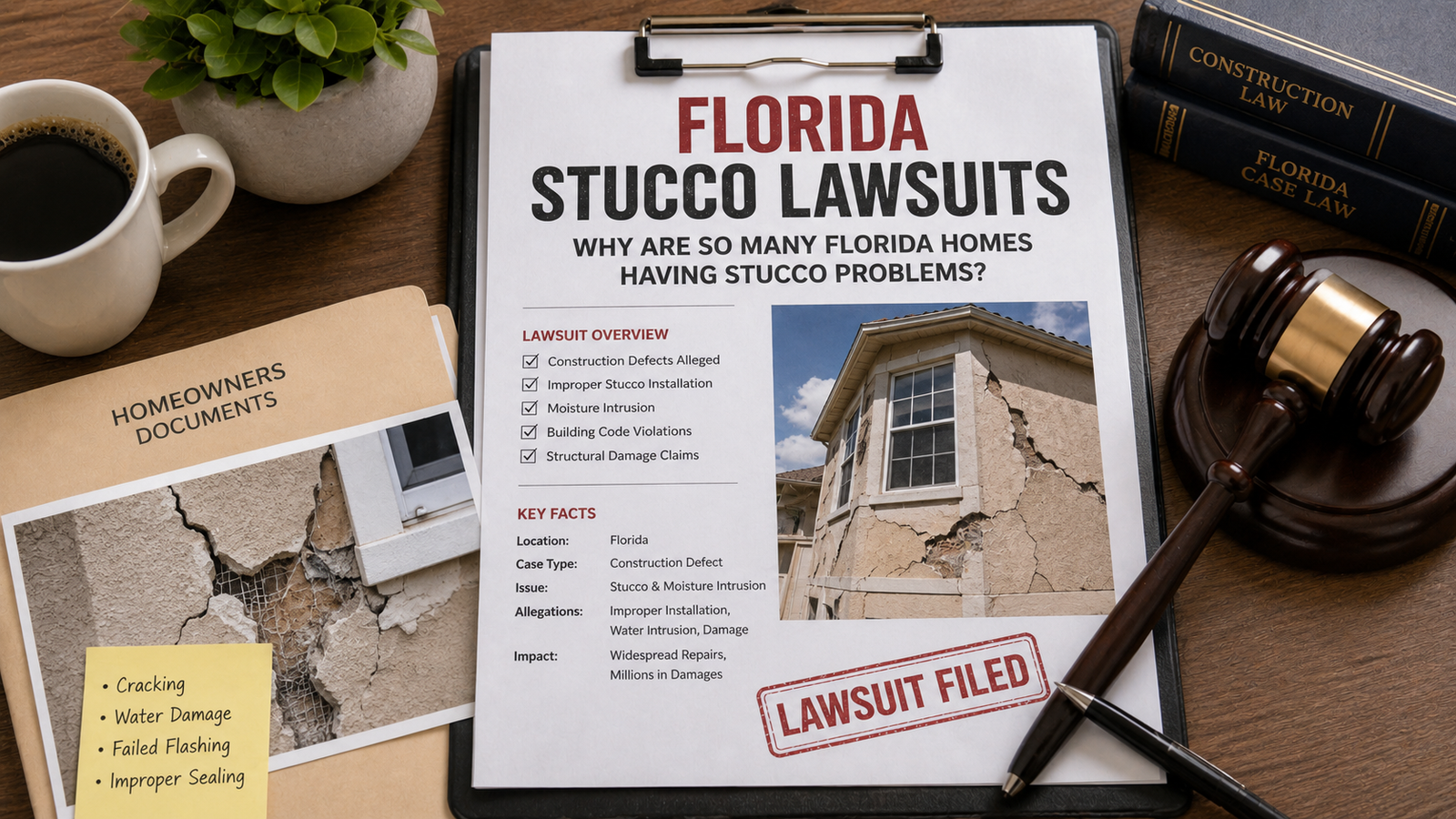
A 240-unit condominium community on Jacksonville’s Beach Boulevard, built between 2005 and 2009, became the subject of a lawsuit brought by its condominium association against the project’s developer and general contractor, D.R. Horton, Inc. – Jacksonville. The association alleged construction defects — including improperly applied stucco, along with issues involving windows and roofs — and asserted the construction violated the Florida Building Code. In 2016, a jury found the builder negligent and awarded the association $9.6 million in damages.
The builder appealed, and Florida’s First District Court of Appeal upheld the verdict: D.R. Horton, Inc. – Jacksonville v. Heron’s Landing Condominium Association of Jacksonville, Inc., 266 So. 3d 1201 (Fla. 1st DCA 2018). It’s worth being precise about what the appeal actually turned on: a significant part of the dispute concerned a narrower evidentiary question — whether the association’s expert could testify that stucco problems identified in a limited number of samples justified replacing stucco across the entire 220,000-square-foot property, a methodology known as extrapolation. The appellate court found that testimony admissible and upheld the verdict on that and other grounds. According to local news coverage of the case’s later resolution, the dispute concluded with the builder required to pay for repairs to the community, following further proceedings that reportedly brought the total closer to $14 million with accrued interest.
This case doesn’t establish that Florida stucco construction is generally defective, and it doesn’t mean every crack you see signals the kind of widespread, code-violating installation problem at issue in that dispute — most Florida stucco homes never see anything like it. What it does show is that the underlying pattern — improperly applied stucco leading to cracking and water damage — is a documented, litigated reality in this state, not a rare or theoretical one. That’s the reason some stucco conditions are worth a closer look before they’re simply painted over.
Stucco Is More Than the Surface You See
It helps to understand, in plain terms, what’s typically behind a stucco wall — because the finish coat is only the last layer of a multi-part system.
A conventional stucco wall assembly generally includes the stucco finish itself, applied over a reinforcing lath; the wall sheathing underneath; a water-resistive barrier, meant to stop water that gets past the stucco from reaching the sheathing; flashing at windows, doors, and other penetrations, meant to direct water back out rather than into the wall; sealants at those same penetrations and at control joints; and a weep screed at the base of the wall, meant to let any trapped moisture drain back out.
Florida’s building code addresses many of these details, and the specific requirements can vary meaningfully depending on the construction type, the wall assembly, and which edition of the code applied when a home was built. When these details are followed correctly, the system is designed to manage the water that inevitably gets past the finish coat during Florida’s rainy season. When one or more details is missed, water that would otherwise drain away can instead find its way into the wall cavity.
This is exactly why a crack visible on the surface doesn’t necessarily reveal the complete picture. It might be purely cosmetic, or it might sit over a compromised flashing or drainage detail — and there’s no way to know which from the surface alone. That’s also why we’re careful not to diagnose what’s happening behind your walls from a visual inspection.
The Most Common Stucco Problems Florida Homeowners See
Hairline Stucco Cracks
Thin, shallow cracks are extremely common on stucco homes, particularly as a home settles in its first several years. In many cases these are a normal result of shrinkage and settlement, and they’re a routine part of exterior preparation before painting.
Larger or Recurring Cracks
Cracks wide enough to fit a fingernail into, or cracks that keep reopening in the same place after being patched, deserve more attention. Recurring cracking in the same location often signals ongoing movement that a simple surface patch hasn’t addressed.
Cracks Around Windows and Doors
Transitions where stucco meets a window or door frame are common crack locations, in part because that’s exactly where flashing and sealant details matter most. This doesn’t mean every crack at a window indicates a hidden problem — but it is a location worth a closer look.
Peeling or Bubbling Paint
Paint failure on stucco can come from several causes: moisture trying to escape from behind the coating, poor preparation before a previous paint job, an incompatible coating system, or an old coating that’s simply chalked and lost adhesion. Persistent bubbling — especially bubbling that returns after being patched — is worth understanding rather than repainting over again. See our guide to why stucco paint peels in Jacksonville for a closer look at each cause. Proper preparation is one of the biggest differences between simply rolling on another coat and professional exterior house painting built for long-term performance in Northeast Florida.
Failed Caulking and Sealants
Caulk at joints, penetrations, and trim transitions isn’t permanent — Florida sun and thermal movement work it open gradually. Failed caulk is one of the more common entry points for water, and one of the more straightforward things to correct as part of routine maintenance.
Water Staining or Discoloration
Visible staining can come from something as simple as irrigation overspray, or it can indicate moisture moving through the wall. The source matters, which is why staining shouldn’t simply be hidden with another coat of paint.
Soft, Hollow, Loose, or Deteriorated Stucco
Stucco that sounds hollow when tapped, or feels soft or crumbly, generally indicates the material has separated from what’s behind it or has been compromised by sustained moisture, and typically needs repair before any coating is applied.
Previous Repairs That Keep Cracking
If a crack has already been patched and keeps returning, that’s a signal the original repair addressed the symptom rather than the movement or moisture behind it.
Cosmetic Stucco Crack or Something More Serious?
This is one of the more useful distinctions a homeowner can learn — with the understanding that these are general categories, not a diagnosis of your specific home.
Conditions often addressed during normal exterior preparation include:
- Minor hairline cracks
- Small, isolated surface defects
- Failed exterior caulk
- Minor coating deterioration, such as chalking
- Small, repairable stucco imperfections
- General weathering of an aging coating
Conditions that may warrant further evaluation before painting include:
- Significant or widespread cracking across multiple elevations
- Cracks that keep recurring after repair
- Active or suspected water intrusion
- Interior moisture staining associated with an exterior wall
- Large loose or delaminated stucco areas
- Persistent bubbling or peeling that returns after previous repairs
- Problems concentrated around windows, doors, or roof-to-wall intersections
- Any condition suggesting damage may extend behind the visible surface
We won’t try to diagnose which category your home falls into from a description alone. What we can tell you is this: sometimes a stucco problem is a painting and surface-repair problem, and sometimes it isn’t. If what we find during an exterior evaluation looks like it belongs in the second list, the responsible answer is recommending further evaluation — not proceeding with a standard repaint.
Can You Just Paint Over Cracked Stucco?
Sometimes, yes — and sometimes, no. Minor surface cracking can often be properly repaired and coated as part of a normal exterior painting project. Painting alone, however, should never be used to conceal an unresolved moisture, structural, installation, or building-envelope problem.
The right sequence looks like this: inspect the exterior, determine what falls within reasonable painting-preparation scope, repair what can be repaired, seal and caulk as needed, prime where appropriate, and apply the correct coating system. If something looks like it extends beyond that scope, we’ll say so before moving forward. Our Jacksonville exterior painters routinely encounter exactly this mix of conditions — old patches, failed caulk, hairline cracking — during exterior estimates, well before color or product ever comes up.
Does Elastomeric Paint Waterproof a Stucco House?
High-build and elastomeric coatings can provide real, useful exterior protection when properly specified for the wall’s condition and correctly applied — including bridging hairline cracks in a way standard acrylic paint can’t. But no coating, elastomeric or otherwise, should be understood as a substitute for correcting active water intrusion or a defective building-envelope component. A coating sits on top of the wall system; it doesn’t repair flashing, replace a compromised water-resistive barrier, or fix a drainage detail that was never installed correctly.
Whether elastomeric is the right choice depends on surface preparation, the extent of crack repair already completed, film thickness, compatibility with existing coatings, current moisture conditions, and manufacturer requirements. It isn’t automatically the better choice for every stucco home — sound stucco with minimal cracking often does better with a breathable premium acrylic system instead. An experienced Jacksonville exterior painting contractor should select a coating system based on the substrate, existing coatings, exposure, and repair history — not simply the brand or price of the paint. See our stucco painting guide for how we approach that decision.
What Should Be Repaired Before Painting a Stucco Home?
A responsible pre-paint scope on a stucco home typically addresses:
- Cracks appropriate for repair within painting preparation
- Loose or deteriorated stucco sections
- Failed prior patches
- Failed caulk at joints and penetrations
- Wood rot in adjacent fascia, trim, or siding
- Damaged siding where stucco meets another material
- Peeling or failing prior coatings
- Bare or exposed substrate
- Problem areas around windows, doors, and other penetrations
Our operating philosophy is simple: don’t use paint to hide a problem that should have been repaired first. A fresh coat over an unrepaired issue doesn’t just fail to solve it — it often makes the underlying problem harder to see until it’s more expensive to fix.
Why Surface Preparation Matters So Much on Florida Stucco
Preparation is where a stucco repaint holds up for a decade or fails within a few years, and it’s a longer process on stucco than on almost any other exterior surface. A thorough sequence includes washing to remove dirt, chalk, and contaminants; removing loose or failing coating; repairing appropriate stucco cracks and matching texture so patches don’t stand out; caulking failed joints and transitions; evaluating the condition of any existing coating; spot-priming bare, repaired, or porous areas with the correct masonry-appropriate primer; and applying a coating system genuinely suited to the substrate — commonly a premium 100% acrylic or an elastomeric system from Sherwin-Williams® or Benjamin Moore®, selected based on the wall’s actual condition rather than habit. During exterior estimates, we commonly find previous stucco patches, deteriorated caulking, and hairline cracking on homes that otherwise look sound from the street — which is exactly why this step happens before any conversation about color. See our full guide to why surface prep matters for more on how this applies across exterior surfaces generally, or explore our exterior house painters in Jacksonville page for the full scope of a professional exterior project.
Depending on the condition of the existing stucco and coating, our projects may use systems such as Sherwin-Williams® Loxon® XP, with Emerald® Rain Refresh™ used as an upgraded finish coat on selected projects. The appropriate system depends on the condition of the substrate, existing coatings, repairs, moisture conditions, and the performance goals of the project.
What About Newer Florida Homes?
It’s a common, understandable assumption that a relatively new home shouldn’t have exterior problems. Age alone, though, doesn’t determine how well a wall system performs. What matters more is the original installation quality, the materials used, the home’s sun and rain exposure, how well it’s been maintained, the condition of its sealants, and the condition of its coating.
This ties directly to the case discussed above: the community involved was, at the time problems surfaced, well within its first decade. That doesn’t mean every newer Florida home has a defect — most don’t — but it does mean “the house is new” isn’t, on its own, a reason to assume any cracking or staining is purely cosmetic without a real look.
What Jacksonville Homeowners Should Do Before Repainting Stucco
- Walk the entire exterior, not just the street-facing elevation.
- Photograph any cracks or problem areas you find, so you have a record over time.
- Look for signs of recurring repairs — patches that have already cracked again.
- Pay particular attention around windows and doors.
- Note any peeling or bubbling coating, and where it’s concentrated.
- Look for staining or discoloration that could suggest moisture.
- Check the condition of caulk at joints and penetrations.
- Inspect adjacent fascia, trim, siding, and other wood components for soft spots.
- Discuss anything you’ve found with your painting contractor before agreeing to a repaint scope.
- If conditions look like they extend beyond routine painting preparation, seek an appropriate specialist evaluation before proceeding.
Real Stucco Problems We See on Northeast Florida Homes
The conditions described throughout this article aren’t abstract — they’re what we find, repeatedly, during exterior estimates across the region. A few recent examples illustrate the range of what “normal” stucco preparation actually looks like.
On a recent stucco repaint in Hampton Park in Jacksonville, the exterior showed an aging coating, extensive failed and deteriorated caulking, and minor stucco cracking after years of Florida UV, rain, and humidity exposure. A significant amount of the work — exterior washing, extensive caulking at joints and transitions, stucco crack preparation, spot priming, and preparation of the soffits and fascia — happened before any finish paint was applied. That’s a good illustration of why coating longevity depends heavily on repairing and sealing the surfaces underneath, not just the topcoat itself.
In Coastal Oaks at Nocatee, a stucco home showed the fading, weathering, and normal cracking that comes with Florida sun exposure. The preparation followed the same sequence — cleaning, crack preparation, caulking, repairs, and priming where appropriate — before a professional stucco coating system was applied. Stucco homes in newer Northeast Florida communities still require this kind of maintenance; newer construction doesn’t eliminate normal coating deterioration, cracking, sealant failure, or environmental exposure.
In Eagle Harbor, Fleming Island, an aging exterior finish showed the effects of Florida humidity, UV exposure, and typical weathering. Cleaning, stucco preparation, crack repair where appropriate, caulking, and spot priming preceded the finish coat. The visible finish is only the final part of a successful repaint — the surface condition underneath determines both the preparation required and the coating approach that makes sense.
None of these projects involved structural defects, water intrusion, or building-envelope failures. They’re examples of the normal painting and preparation conditions we encounter on stucco homes throughout the region — which is exactly the kind of work this article is about.
How A New Leaf Painting Contractors Approaches Stucco Homes
A New Leaf Painting Contractors has served Jacksonville and Northeast Florida since 2001, and stucco is one of the surfaces we work on most, simply because it’s the dominant exterior material across so much of this region. That experience has taught us to look past the finish coat during every exterior estimate — checking for hairline cracking, deteriorated caulk, previous patches that have reopened, and wood deterioration near stucco transitions, before we ever talk about color or product.
Our approach on a stucco project includes a real exterior inspection, appropriate surface preparation, stucco crack repair within our scope, caulking, wood rot repair where needed, priming, and a professional coating system from Sherwin-Williams® or Benjamin Moore® matched to the wall’s actual condition. See our stucco repair, wood rot repair, and exterior painting services for how those pieces fit together.
If we believe a visible condition may indicate a problem outside the reasonable scope of painting and routine surface repair, the responsible answer is not simply to cover it with paint. We’ll tell you what we’re seeing and point you toward the right kind of evaluation instead.
Frequently Asked Questions About Florida Stucco Problems
Why does stucco crack so much in Florida?
Florida’s combination of heat, humidity, heavy rain, and daily thermal expansion puts more stress on stucco than milder climates do, which tends to reveal hairline cracking from normal curing and settlement faster and more visibly than it would elsewhere.
Are hairline stucco cracks normal?
In many cases, yes — hairline cracking from shrinkage and normal settlement is common, especially in a home’s first several years, and is typically addressed during routine exterior preparation.
Can water get behind cracked stucco?
It’s possible, particularly with larger or recurring cracks near windows, doors, and other penetrations. Whether a specific crack is allowing water intrusion isn’t something that can be determined from the surface alone.
Can painters repair stucco cracks?
Painting contractors routinely repair appropriate stucco cracks and surface defects as part of standard exterior preparation. Larger, recurring, or moisture-related issues may extend beyond that scope and warrant a different kind of evaluation.
Should cracks be repaired before painting?
Yes. Painting over an unrepaired crack doesn’t fix it — it hides it temporarily, and the crack typically telegraphs back through the new coating.
Can exterior paint stop water intrusion?
No. Paint and coatings can provide meaningful protection against moisture reaching the wall, but they cannot correct an active water intrusion problem or a defective building-envelope component that’s already allowing water in.
Is elastomeric paint best for Florida stucco?
Not universally. Elastomeric coatings are well suited to stucco with extensive hairline cracking, but sound stucco with minimal cracking often performs just as well, or better, with a breathable premium acrylic system.
Why does paint peel from stucco?
Peeling can result from several causes, including moisture trying to escape from behind the coating, poor preparation before a previous paint job, an incompatible coating system, or an aged coating that’s lost adhesion.
How often should a stucco house be painted in Florida?
Most stucco homes in Northeast Florida need repainting roughly every 8 to 15 years, depending on the coating system, sun exposure, and how well the wall was prepared and maintained. See our guide to how often you should paint your house for more detail.
Should I have serious stucco problems inspected before painting?
If you’re seeing significant or recurring cracking, suspected water intrusion, interior staining tied to an exterior wall, or large areas of loose or deteriorated stucco, it’s worth having that evaluated by the appropriate specialist before any painting project moves forward.
Related Stucco & Exterior Painting Resources
- Jacksonville Stucco Painting Guide — the complete reference on stucco painting in this market, for homeowners who want the fuller picture beyond this article.
- Why Stucco Paint Peels in Jacksonville — a closer look at the specific causes behind peeling and bubbling paint on stucco.
- Elastomeric vs. Acrylic Paint for Stucco — the full side-by-side comparison if you’re weighing which coating system fits your home.
- Best Exterior Paint for Stucco Homes in Jacksonville — product-level detail on the specific systems available and when each makes sense.
- Why Surface Prep Matters in Residential Painting — the case for why preparation, not paint alone, determines how long a project lasts.
- Exterior Paint Failure Guide — for homeowners already seeing peeling, bubbling, or other signs of failure and trying to diagnose the cause.
- Best Exterior Paint for Jacksonville, FL Homes — a broader product comparison across stucco, siding, and other exterior surfaces.
Concerned About Your Stucco Before Painting?
If you’re planning to repaint a stucco home in Jacksonville or Northeast Florida, A New Leaf Painting Contractors can evaluate the visible exterior surfaces, identify what falls within our preparation and repair scope, and build those needs into a professional exterior painting plan. For conditions that appear to extend beyond normal painting or surface repair, we’ll tell you — rather than simply covering the problem with paint.