In this article
- What "one-day" actually means
- Why preparation matters more than the clock
- When a garage floor can usually be done in a day
- When one day is not the right goal
- Not all garage floor coatings are the same
- What actually causes garage floor coatings to fail
- Jacksonville conditions worth factoring in
- What to ask before you hire a coating contractor
- Getting an honest read on your floor
- Related reading
By Thomas Drake, owner of A New Leaf Painting Contractors
A one-day garage floor coating makes sense because you get your garage back fast and end up with a floor that's easier to clean, resists stains and looks finished instead of like a bare slab. The fast-curing materials are real, and on a sound floor one day is a fair target. The catch is that one day describes what's possible on a suitable slab, not a promise for every garage in Jacksonville.
Our concrete coatings in Jacksonville, FL are built for hot tires, dropped tools, oil and the heat and humidity of a Florida garage. What a coating can't do is fix a problem in the concrete underneath, and that's the part worth understanding before you sign anything.
What "one-day" actually means
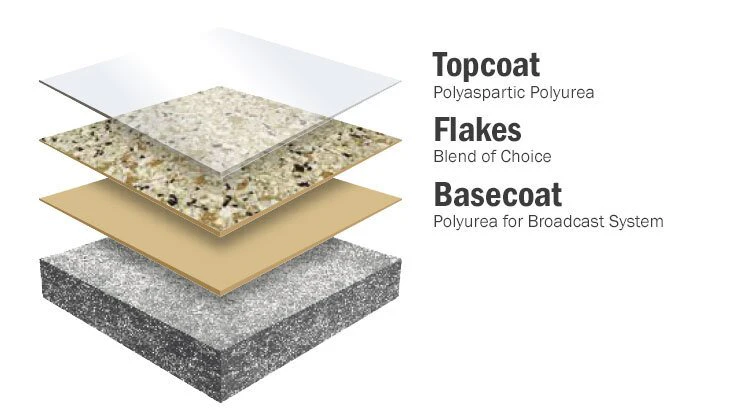
Traditional epoxy usually needs a long wait between coats, so an epoxy floor is often spread over several days. Polyurea and polyaspartic materials cure much faster, which lets a full system (base coat, flake and topcoat) go down in a single working day on a floor that's ready for it.
Two things to know. Walk-on and park-on times depend on the exact products, the temperature and the humidity, so we confirm your schedule before we start, based on what's going on your floor. And a fast install doesn't make prep fast. Prep is where the time goes, and it decides whether the floor holds.
The System We Currently Install
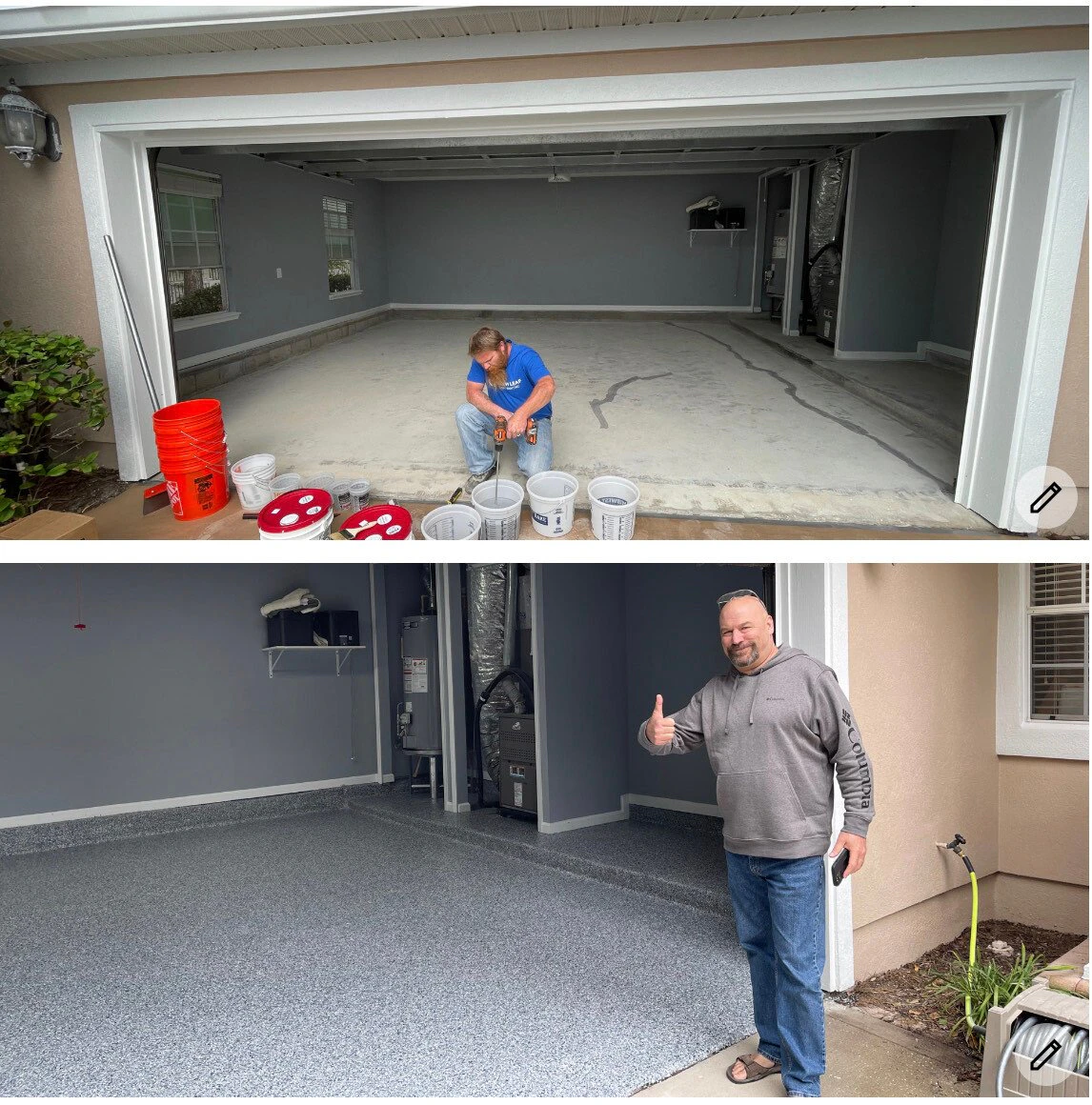
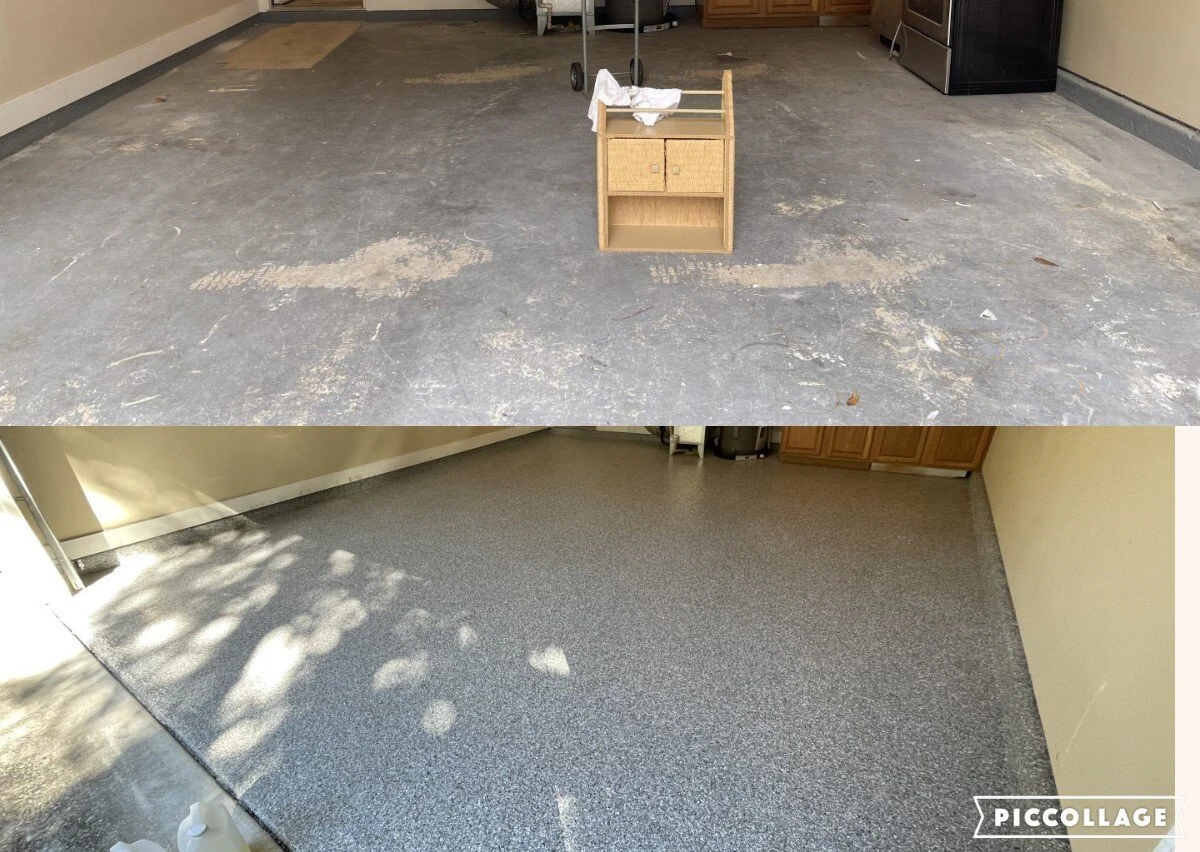
Before and after garage floor coating project in Palencia, St. Augustine, FL, showing diamond grinding preparation and the finished polyaspartic floor coating.
Polyurea base coat. It goes onto the prepared concrete, bonds to the slab and stays open long enough to take the flake. Polyurea has some flex, which helps on a slab that moves with the seasons and takes point loads from jack stands.
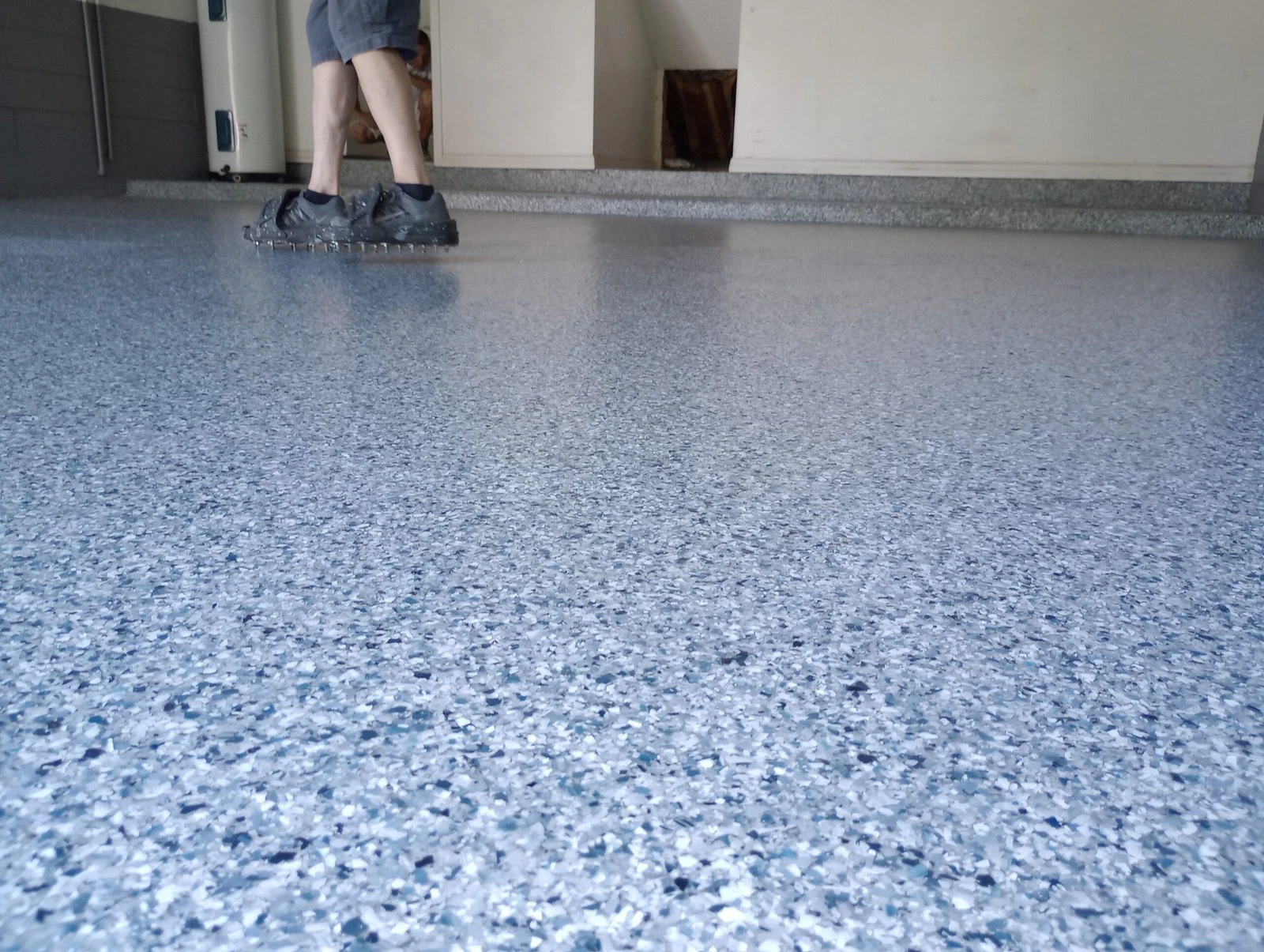
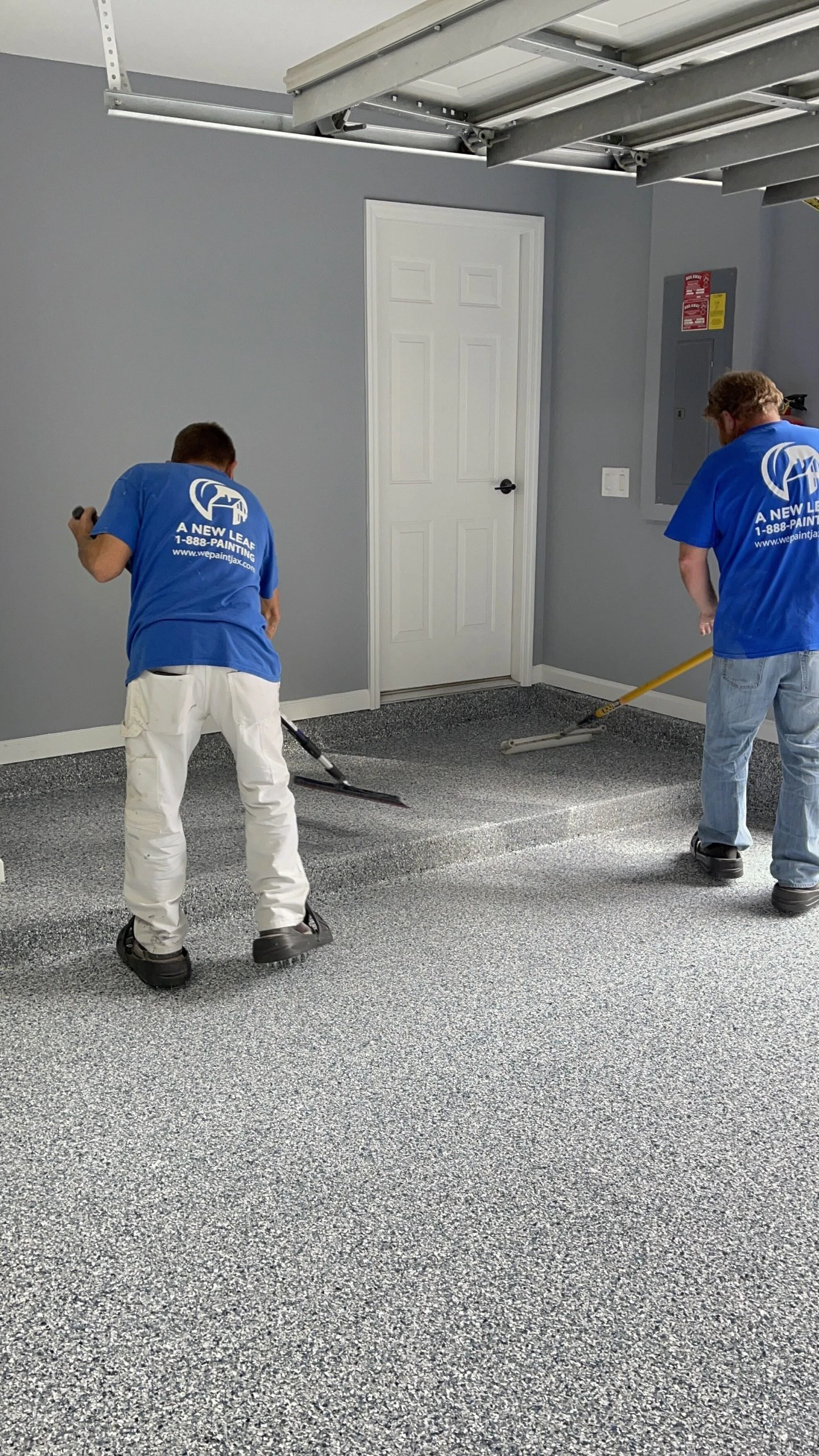
Full-broadcast flake. The flake is thrown into the wet base until it won't take any more, so the floor is covered, not sprinkled. After it cures, the extra is scraped and vacuumed off. You get even color with no base showing through, plus texture that hides everyday marks.
Polyaspartic topcoat. This is the wear surface. It seals in the flake and takes the tires, chemicals and scuffs. Polyaspartics are a type of polyurea that holds up in sunlight and cures hard, which is why they go on top.
Keep in mind that "polyurea" and "polyaspartic" are families of products, not guarantees. Two contractors can both say "polyurea system" and install quite different floors. The chemistry is part of the answer; prep and installation are the rest.
Why preparation matters more than the clock
If I were a homeowner, this is the section I'd read first. A coating can only bond to concrete that's been opened up and cleaned. We grind the slab with industrial diamond grinders, which opens the surface so the base coat can grip and removes contamination and any old coating or sealer.
Prep on a garage floor usually includes:
- Looking over the slab first: its age, condition and what's been put on it before
- Removing oil, grease and old residue
- Taking off old coatings that are failing or won't work with the new system
- Diamond grinding for a proper profile
- Sorting out which cracks are moving and treating them, not just coating over them
- Repairing spalling and surface damage
- Checking for moisture coming up through the slab
- Cleaning up all the grinding dust
We don't rush prep to call something a one-day floor. If your slab needs more than a day of work, it gets more than a day. A well-prepped floor that took two days beats one that finished on schedule and fails in year three, and I'd rather have that talk at the estimate than after.
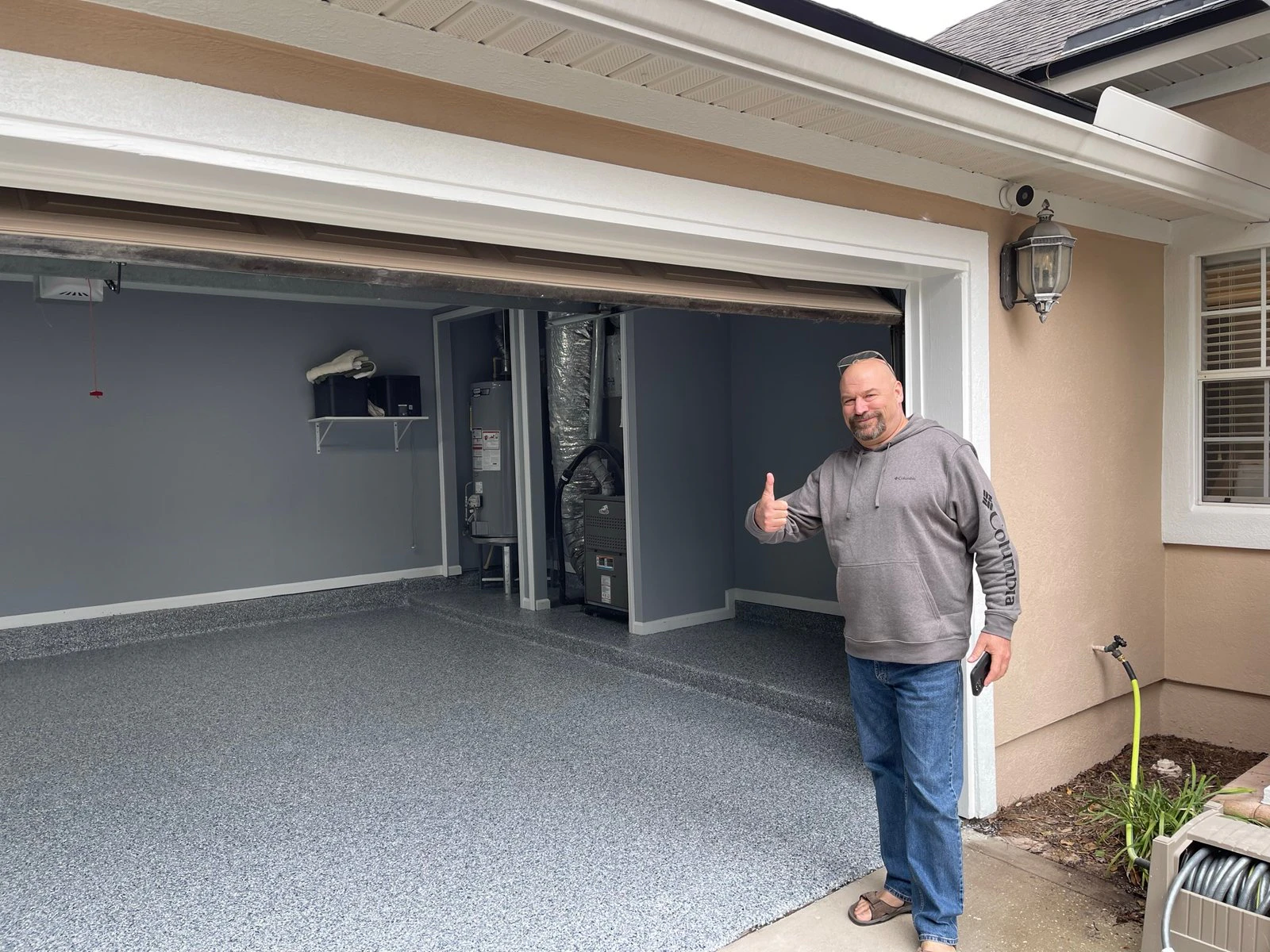 Real project
When a garage floor can usually be done in a day
Most garages in newer Northeast Florida homes fit this list. If yours does, one day is a reasonable expectation and we'll tell you so.
- The concrete is generally sound
- Cracking is limited and stable
- There's no old coating, or it comes off easily
- Repairs are small and local
- The moisture check doesn't raise a concern
- It's a typical one-, two- or three-car garage that can be cleared out
- The weather that day suits the materials
When one day is not the right goal
Some floors shouldn't be done in a day, and a contractor who says otherwise either didn't look closely or plans to skip something. These legitimately add time:
- Widespread cracking, especially cracks that are still moving
- Significant spalling that needs real concrete repair
- An old coating that's stuck in some spots and peeling in others
- Moisture concerns that call for a different approach
- Repairs whose own materials need to cure first
- Tight access, a space that can't be cleared, or an unusually large floor
- Weather outside what the materials call for
If we find any of these, we tell you at the estimate and price the extra work as its own line item so you can see it and decide.
Not all garage floor coatings are the same
Two floors can look alike in a photo and be very different underneath.
Epoxy is the long-established option. It builds thickness well and bonds strongly to properly prepared concrete. Most epoxies are fairly rigid, and many yellow and chalk in sunlight, which is why epoxy is often used as a base coat with a UV-stable topcoat over it. It's not a bad product; it has its own strengths and limits.
Polyurea cures fast and keeps some flex. Polyaspartic holds up in sun and cures hard, so it makes a good topcoat. Hybrid builds, such as an epoxy primer under a polyaspartic topcoat, are common and legitimate.
The label also doesn't tell you how much flake goes down, how the slab was prepped or how thick the coats are, so get those in writing.
For the garages we usually see here, we prefer a polyurea base, full-broadcast flake and a polyaspartic topcoat. Over well-prepared concrete it bonds well, flexes a little with the slab, resists garage chemicals and gives you the garage back quickly. Like any coating, it still depends on the concrete, the prep and the moisture under it.
What actually causes garage floor coatings to fail
When we look at a coating that let go, it's rarely bad product. It's usually one of these:
- Poor prep. By far the most common. Coating on a slab that wasn't ground bonds only to the weak top layer and takes it along when it lets go.
- Moisture in the slab. Water vapor coming up through the concrete can push a coating off. That's a slab condition to find before coating, not after.
- Old contamination. Oil that soaked in years ago is still there. Grinding removes a lot of it; deep stains may need more.
- Incompatible old coatings or a sealer that was never removed.
- Concrete problems left alone. Coating over active cracks or spalling just hides them until they come back.
- Application mistakes: material put on too thin, in the wrong conditions or past its working time.
Most of that list is about the concrete and the process, not the can.
Jacksonville conditions worth factoring in
Garages here get hot, and hot tires on a hot slab are a real test. Hot tire pickup, where the coating lifts under the tire, is tied more to thin films and weak bonds than to any one chemistry, which is another reason prep and proper thickness matter.
Humidity affects how these materials cure during the install. Slabs here can also hold more moisture than people expect, especially in older homes or where water drains toward the foundation. That's why we check the slab carefully first.
What to ask before you hire a coating contractor
Bring these to any estimate, including ours:
- What exactly is the base coat, and what is the topcoat?
- How will the concrete be prepped? Is it ground, and with what?
- What happens if you find cracks or spalling once you start?
- Do you check for moisture before coating?
- Is one day realistic for my floor, and what would stretch it out?
- Is the flake full broadcast or partial?
- When can I walk on it, and when can I park on it?
- What workmanship warranty applies, and what's excluded from this estimate?
Be wary of a flat walk-on or park-on time quoted before anyone has looked at your floor. The honest answer depends on the products and the conditions that day.
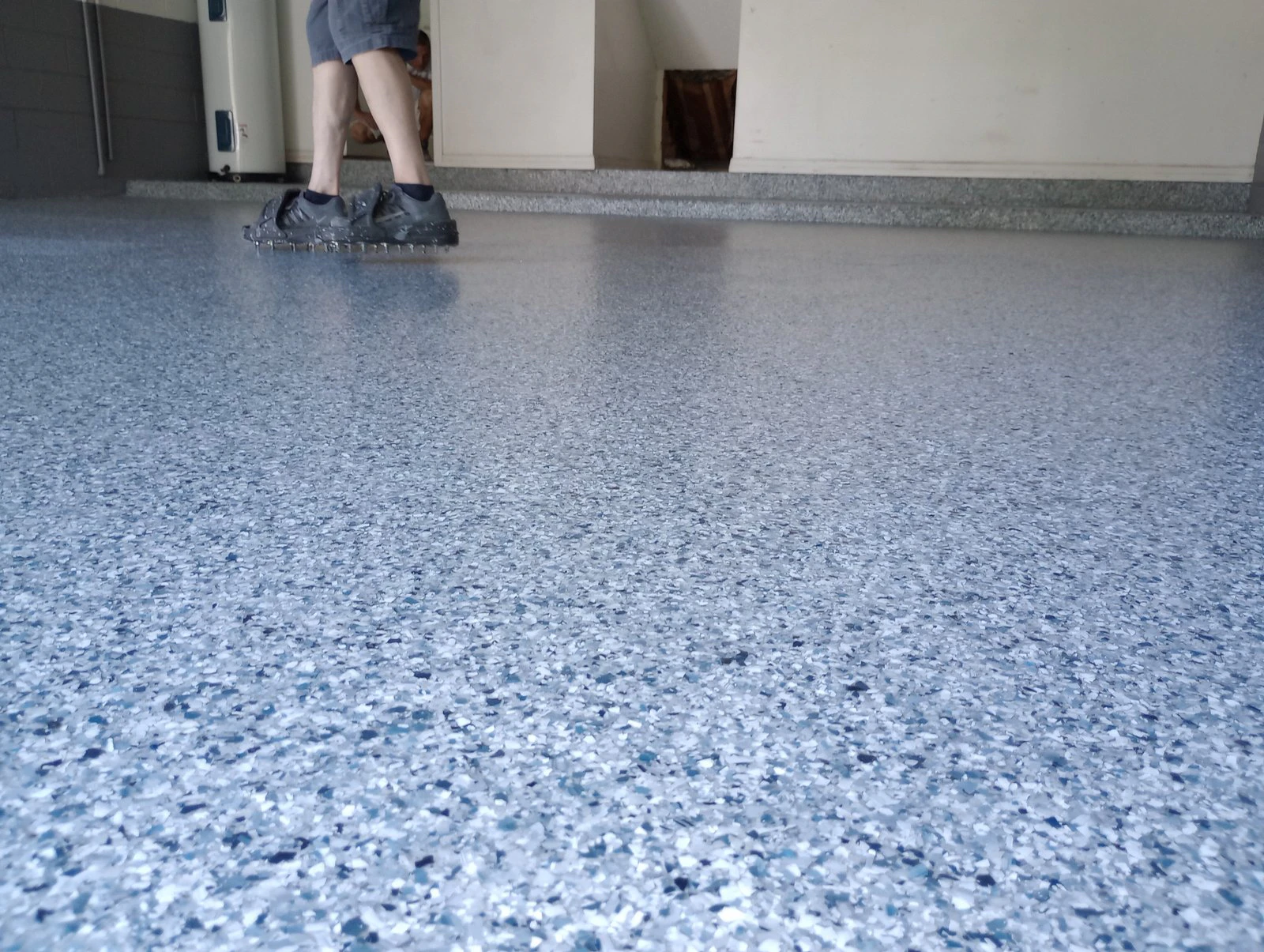 Real project
On a sound slab with limited, stable cracks and no moisture problem, yes. Floors that need concrete repair, have a failing old coating or show moisture take longer, and we tell you at the estimate.
Getting an honest read on your floor
The most useful thing we can do before any money changes hands is look at your slab and tell you what it needs, including whether it needs concrete repair or a moisture check before a coating.
You can see finished floors in our concrete coating portfolio, and our concrete coating cost guide covers what drives the price of a garage floor. The full process is on our concrete coating and garage floor service page, and workmanship warranty terms are on our guarantee and warranty page, with your project's specific terms included in your proposal.
A New Leaf Painting Contractors has served Northeast Florida since 2010, is licensed and insured, holds a Duval County Certificate of Competency and has 4.8 stars across 700+ reviews. We'll evaluate the slab, tell you whether one day is realistic for your garage and put the scope in writing. Request a free estimate or call or text (904) 615-6599.