
What Causes Stucco Paint to Peel in Jacksonville?
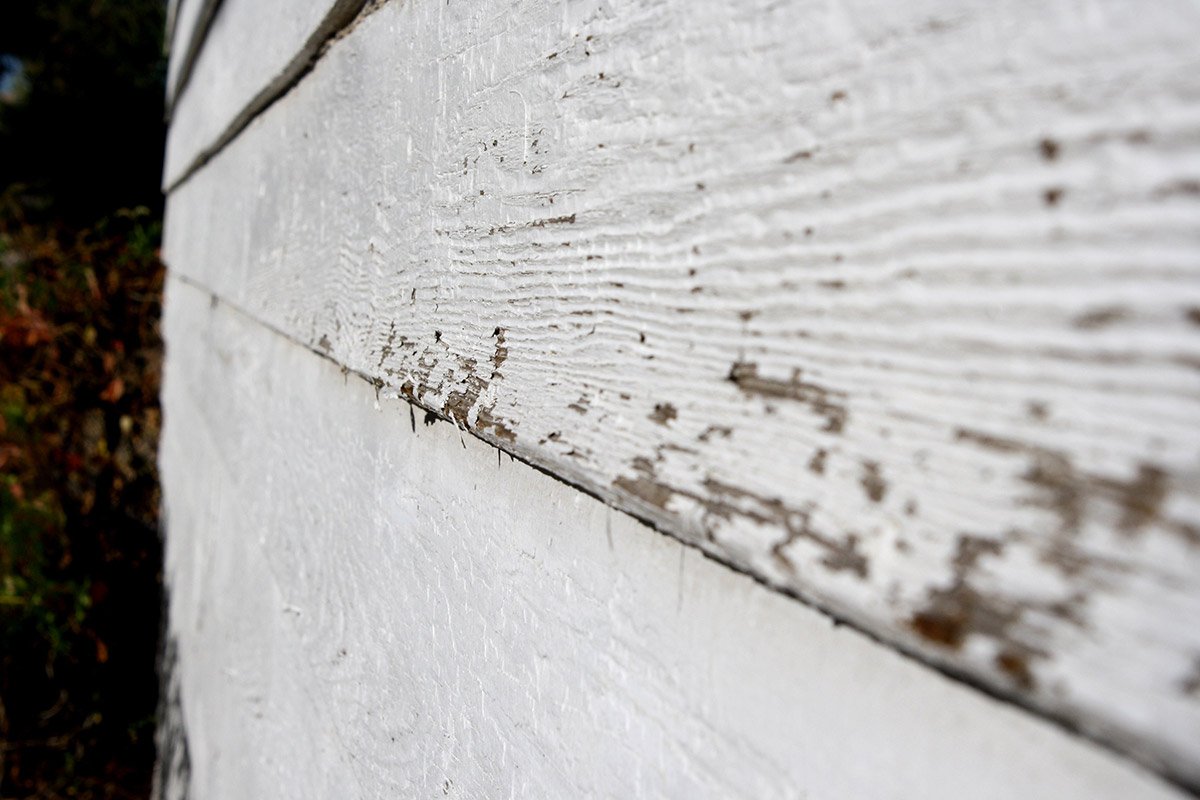
If you’re staring at peeling paint on your stucco home right now, you already know the feeling: frustration, confusion, and the sinking realization that something on the wall isn’t right. Maybe it’s a few small bubbles. Maybe it’s full sheets of paint coming off in your hand. Maybe it’s been like this for a while and you’ve been hoping it would stop.
It won’t stop on its own. Stucco paint peels for specific, identifiable reasons — and once peeling starts, it almost always gets worse. The good news: every cause of peeling stucco paint has a known fix. The not-so-good news: simply painting over the problem is the single most common mistake homeowners make, and it’s the one that guarantees the failure comes back within a year or two.
After more than 25 years painting and repairing stucco homes across Jacksonville, Ponte Vedra Beach, Nocatee, Fleming Island, St. Johns County, and the Beaches, we’ve diagnosed thousands of peeling paint failures. This guide explains why it happens, how to identify what’s actually going wrong on your home, and the right path to a fix that lasts.
Quick Answer
Why does stucco paint peel in Jacksonville?
Stucco paint peels in Jacksonville for six main reasons: poor surface preparation, painting over chalking stucco, trapped moisture inside the wall, incompatible coatings layered on top of each other, applying paint in the wrong weather conditions, or builder-grade paint failing prematurely under Florida sun and humidity. The fix depends on the cause — but in nearly every case, the failing paint has to be removed, the underlying problem corrected, and a proper system reapplied. Painting over peeling stucco without addressing the root cause guarantees the failure will come back within 12 to 24 months.
The Six Main Reasons Stucco Paint Peels in Jacksonville
Almost every peeling stucco paint failure we diagnose comes back to one or more of the following root causes. Understanding which cause you’re dealing with is the difference between a real fix and a temporary patch.
1. Poor Surface Preparation Before Painting
This is the single most common cause of stucco paint failure in Jacksonville, and it’s the one that’s hardest to identify after the fact because the prep happened months or years before the peeling started.
Proper stucco prep requires pressure washing to remove dirt, mildew, salt residue, and any loose existing paint. It requires identifying and removing any chalking from the existing surface. It requires sealing cracks, replacing failed caulk, and priming bare or repaired areas. When any of those steps are skipped or rushed, the new paint doesn’t bond properly to the substrate. The coating may look fine for the first 6–12 months, then start releasing in patches as the bond weakens.
If your home was painted within the last 1–3 years and is already peeling, poor prep is the most likely cause. The paint product itself may be fine — it just never had a real chance to bond to what was underneath it.
2. Painting Over Chalking Stucco
Walk to the side of your house that gets the most afternoon sun. Run your hand across the stucco surface. If white powder comes off on your palm, that’s chalking — and it’s one of the most common reasons new paint fails on Jacksonville stucco homes.
Chalking happens when the binder in older paint breaks down under UV exposure, leaving pigment particles loose on the surface. New paint applied directly over chalking has nothing to bond to except those loose particles, which release from the substrate at the slightest stress. The new coat looks fine going on, but within months it begins peeling — often in sheets that release with the chalking layer underneath.
The fix is specific: chalking surfaces must be pressure washed to remove the loose particles, and then sealed with a chalk-binding primer like Sherwin-Williams® Loxon Conditioner before any topcoat is applied. Skip that step and the new paint has the same fundamental problem the old paint developed.
3. Trapped Moisture Inside the Wall
This one is more serious because it usually points to a problem behind the stucco, not just on it. If your stucco is peeling in a specific area — particularly low on the wall, near windows, around chimney transitions, or in patterns that look like water tracking — the cause may be moisture migrating through the substrate from inside the wall outward.
Common sources of trapped wall moisture in Jacksonville homes include: failed flashing around windows or doors, roof leaks tracking down behind the stucco, plumbing leaks in interior walls, improper grading directing rainwater into the foundation, and irrigation systems spraying directly onto exterior walls. The water gets behind the stucco, has nowhere to escape, and pushes outward — taking the paint with it.
Painting over moisture-driven peeling without finding and fixing the water source is the most expensive mistake homeowners make. The new paint will fail again within months, and the underlying moisture damage continues to compound. If your peeling pattern suggests trapped moisture, the source needs to be identified and repaired before any coating work begins.
4. Incompatible Coating Layers
Stucco homes that have been painted multiple times over decades often have layers of different paint products on the wall — original elastomeric, a mid-life acrylic recoat, maybe another elastomeric on top, possibly with builder-grade paint somewhere in the stack. When those coatings have different flexibility, breathability, or adhesion characteristics, they can release from each other under stress.
The classic version: a thick, rigid coating applied over a more flexible coating underneath. The flexible layer wants to move with the substrate. The rigid layer can’t. Eventually the rigid layer cracks or releases from the flexible layer below.
This kind of failure usually shows up as paint releasing in distinct layers — the topcoat comes off but an older coat stays bonded, or vice versa. Diagnosis typically requires a contractor experienced with stucco coating systems to identify what’s on the wall and what’s compatible going forward.
5. Applying Paint in the Wrong Weather Conditions
Florida weather creates narrow application windows for exterior paint. Applying paint during high humidity, immediately before rain, in direct hot sun on a dark surface, or in temperatures outside the manufacturer’s specified range can cause the coating to cure improperly. The result is a paint film that never develops full strength — and that releases prematurely months or years later.
This is particularly common when projects get rushed. A crew under deadline pressure may paint through marginal conditions to finish on schedule, and the failure shows up much later when no one connects it back to that one rainy afternoon. Proper exterior painting requires enough schedule flexibility to wait for the right conditions, even when that means delaying a project by a day or two.
6. Builder-Grade Paint Failing Prematurely
Many Jacksonville homes — especially newer construction in master-planned communities — were originally painted with the most affordable contractor-grade paint available. That paint is built to look acceptable on day one of a sale, not to perform for 8–12 years under Florida conditions.
Builder-grade paint typically uses lower-quality binders, less UV-resistant pigments, and minimal mildew protection. Under Jacksonville sun and humidity, that paint can show significant chalking, fading, and peeling within 3–5 years. Many “premature peeling” failures are simply cheap paint reaching the end of its actually-short lifespan.
The fix is to remove the failing builder-grade paint, prep properly, and recoat with a premium acrylic — Sherwin-Williams® Duration, Sherwin-Williams® Emerald, Benjamin Moore® Aura, or Benjamin Moore® Regal — that’s actually engineered for Florida conditions. For a deeper breakdown of premium product options, see our guide on the best exterior paint for Florida sun and humidity.
Stucco peeling on your home right now? The longer you wait, the more substrate damage compounds. Schedule a free exterior painting estimate and we’ll diagnose exactly what’s causing your failure and recommend the right path forward.
How to Diagnose What’s Actually Causing Your Stucco Paint to Peel
Before you can fix peeling stucco paint, you need to know what’s causing it. Different causes require different fixes, and applying the wrong fix wastes money and time. Here’s how to start narrowing down the diagnosis on your own home:
Look at the Pattern of Peeling
The location and pattern of failure usually reveals the cause:
- Peeling concentrated low on the wall, near the foundation: Often points to ground moisture, irrigation overspray, or improper grading.
- Peeling around windows or doors: Usually indicates failed flashing or caulk allowing water entry.
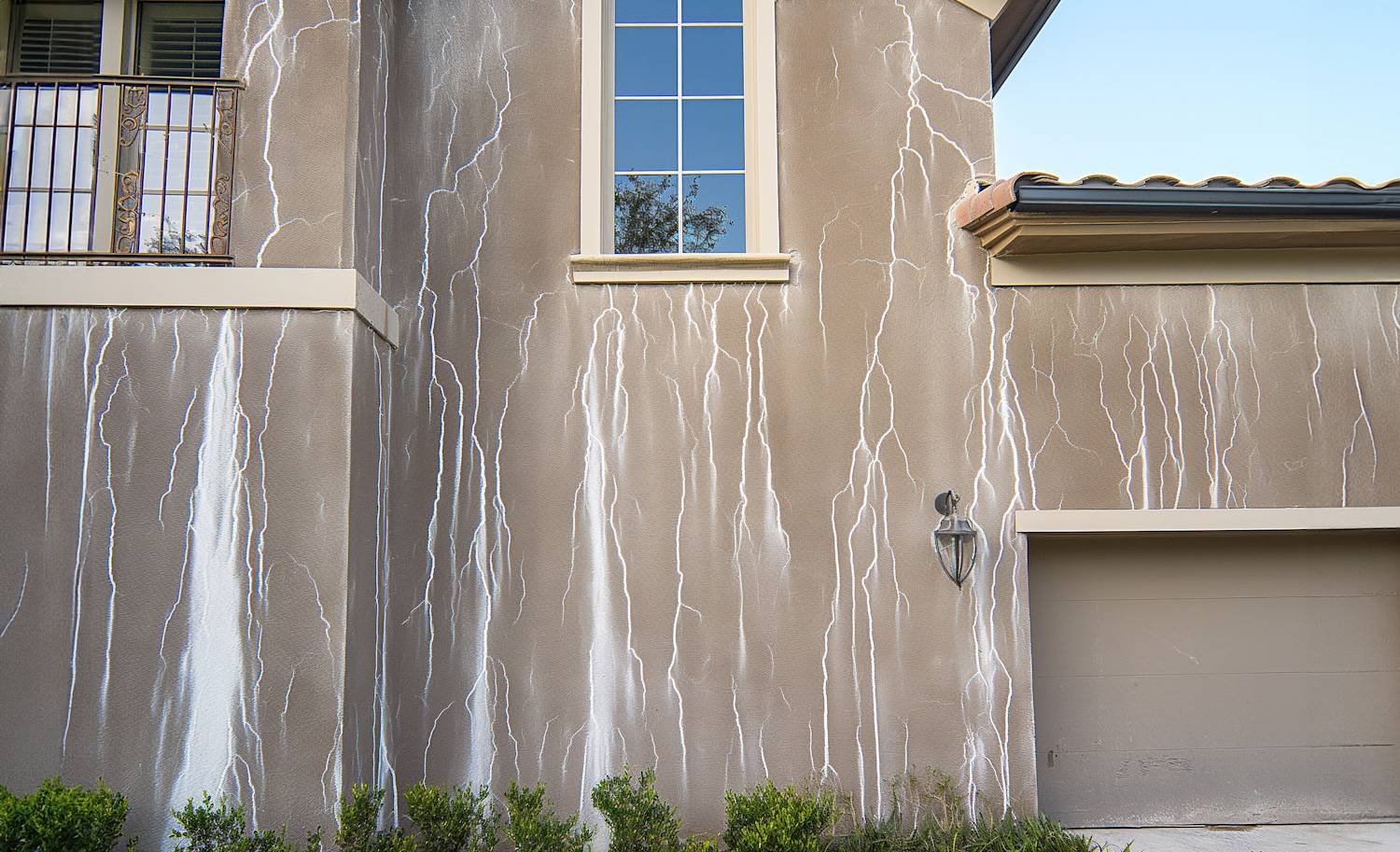
- Peeling in vertical streaks below the roofline: Often a roof leak tracking down inside the wall.
- Peeling concentrated on south- and west-facing walls: Usually UV-related — chalking, builder-grade paint failure, or dark color fade.
- Peeling across the entire home in patches: Most commonly poor original prep — the bond was weak everywhere from the start.
- Peeling in distinct layers (one coat releasing from another): Coating incompatibility between layered products.
Test for Chalking
Run your hand firmly across the stucco in several locations, particularly on south- and west-facing walls. If white powder comes off on your palm, the existing surface is chalking. Any new paint over a chalking surface without proper prep will fail prematurely.
Check for Active Moisture
Look for signs of ongoing water intrusion: dark staining, wet spots after rain that don’t dry quickly, efflorescence (white crystalline deposits) on the stucco, or musty smell along certain walls. If active moisture is present, the source has to be identified and fixed before any paint work begins.
Note Recent Painting History
How recently was the home painted? What product was used? Was it the same product across the whole home, or were different products used at different times? Recent painting failure usually points to prep or product issues. Long-term gradual failure often points to age and environmental wear.
The Right Fix Path for Peeling Stucco Paint
The temptation is always to just sand the rough spots, prime them, and paint over the problem. That approach almost never works on stucco. The right path depends on the diagnosis, but the framework is consistent:
Step 1: Stop the Source of the Problem
If trapped moisture is the cause, the source has to be repaired first — failed flashing, roof leaks, plumbing issues, irrigation overspray, drainage problems. No coating work proceeds until the water source is corrected and the wall is fully dry.
If chalking is the cause, the chalking must be removed and the surface sealed with a chalk-binding primer. Painting over it again without that step puts you right back where you started.
If incompatible coatings are the cause, the failing layers may need to be removed entirely down to a stable substrate before recoating begins.
Step 2: Remove the Failing Paint
Loose, peeling, or poorly bonded paint must be removed. Depending on the extent, this can range from spot scraping in localized areas to full-home pressure washing and chemical removal. Anything that’s already releasing or about to release needs to come off — leaving it in place creates failure points in the new coating.
Step 3: Repair the Substrate
Once the failing paint is off, the stucco itself gets evaluated. Cracks need to be sealed. Failed caulk at joints, transitions, windows, and doors needs to be replaced. Stucco damage — chips, gouges, areas of substrate failure — needs to be patched and allowed to cure properly.
If significant stucco repair is required, that’s a separate project that should be completed before painting begins. Rushing painting onto fresh stucco repairs that haven’t fully cured creates a new failure point. For more on stucco repair, see our stucco repair services in Jacksonville.
Step 4: Apply Proper Primer
Bare stucco, repaired areas, and surfaces that previously chalked all need appropriate primer before topcoat application. Skipping primer is one of the most common shortcuts that leads to repeat failure.
Step 5: Apply Two Full Coats of Premium Paint
The topcoat system depends on the home’s specific situation. For first-time stucco coatings or homes needing waterproofing protection, Sherwin-Williams® Loxon XP Elastomeric. For repaints on stucco that’s already been sealed and where color retention matters, premium acrylic — Sherwin-Williams® Duration or Emerald, or Benjamin Moore® Aura or Regal Select.
Two full coats applied at proper film build is non-negotiable. Skipping the second coat to save material is the fastest way to ensure the new paint fails prematurely.
When Peeling Means You Need Stucco Repair, Not Just Paint
Sometimes peeling paint is a sign that the stucco itself has problems beyond a coating failure. If you see any of the following, the home likely needs stucco repair work before any painting begins:
- Cracks wider than a hairline (visible separation, not just surface fissures)
- Hollow-sounding areas when tapped — indicates delamination from the substrate behind
- Chunks of stucco missing or coming loose
- Soft spots or areas that crumble under pressure
- Rust stains bleeding through from corroded mesh or fasteners behind the stucco
- Visible water damage extending beyond the surface
- Stucco pulling away from window frames, door frames, or transitions
Painting over compromised stucco doesn’t fix any of these problems — it just hides them temporarily. Proper repair of damaged stucco, followed by appropriate cure time, followed by a complete coating system, is the only path to a result that lasts.
What Not to Do When Stucco Paint Is Peeling
The most expensive mistakes homeowners make when dealing with peeling stucco paint:
- Don’t just paint over it. If the underlying problem isn’t fixed, the new paint will fail in 12–24 months — usually faster.
- Don’t accept “we can pressure wash and recoat” as the entire scope. Pressure washing alone doesn’t address chalking, doesn’t seal moisture sources, doesn’t repair cracks, and doesn’t fix coating incompatibility issues.
- Don’t pick the lowest bid without understanding the scope. A bid that’s significantly lower than the others is almost always lower because steps are being skipped — and those skipped steps are exactly the ones that determine whether the result lasts.
- Don’t try to stretch one more year out of failing paint. Peeling paint exposes the stucco substrate to UV, water, and biological growth. The longer the substrate sits exposed, the more secondary damage compounds.
- Don’t paint the same color over the same product if the original product is what failed. Replacing failed builder-grade paint with more builder-grade paint guarantees a repeat failure on the same timeline.
- Don’t ignore moisture sources before painting. No coating system in the world will hold up over a wall that has water continuously pushing outward through it.
Our Recommendation for Homeowners Facing Peeling Stucco Paint
After diagnosing thousands of stucco paint failures across Jacksonville, here’s how we approach a peeling stucco home:
- Diagnose before quoting. The first step is identifying what’s actually causing the failure. Quoting a paint job without that diagnosis means quoting the wrong scope — and the homeowner pays for it later.
- Address moisture sources first. If trapped wall moisture is part of the problem, no coating work proceeds until that’s repaired and the wall is dry.
- Remove what’s failing. Loose paint comes off completely — through pressure washing, scraping, or chemical removal as needed. Compromise on this step and the new coating fails on the same timeline.
- Repair the stucco substrate. Cracks, failed caulk, soft spots, and damage all get addressed before any paint goes on.
- Use a chalk-binding primer where needed. If chalking was part of the original failure, Loxon Conditioner or equivalent primer is non-negotiable.
- Spec the right topcoat for the situation. Elastomeric for waterproofing protection and stucco that needs sealing. Premium acrylic for repaints where color retention matters and the substrate is in good shape.
- Apply two full coats at proper film build. No shortcuts on coverage.
- Back the work with a real warranty. Done correctly, a stucco repaint should hold up for 8–12 years before needing serious attention. We back our work with our Iron-Clad Guarantee.
Frequently Asked Questions
Why is my stucco paint peeling after only a few years?
The most common causes of paint peeling within 1–3 years of application are poor surface preparation, painting over chalking stucco without proper priming, painting in marginal weather conditions, or using builder-grade paint that wasn’t engineered for Florida exposure. Recent peeling almost always points to prep or product issues rather than substrate problems.
Can I just paint over peeling stucco?
No. Painting over peeling stucco without addressing the root cause guarantees the failure will return within 12–24 months. The failing paint must be removed, the underlying problem identified and fixed, and a proper coating system reapplied.
What does chalking stucco mean?
Chalking is when the binder in existing paint breaks down under UV exposure, leaving loose pigment particles on the surface. You can identify it by rubbing your hand on the stucco — if white powder comes off, the surface is chalking. New paint applied over chalking without proper prep will fail because it has nothing solid to bond to.
How do you fix paint peeling from stucco?
The fix depends on the cause. The general framework: stop any moisture source, remove the failing paint, repair stucco damage and cracks, apply appropriate primer (chalk-binding primer if chalking was part of the failure), and apply two full coats of premium paint. Skipping any step in this sequence usually causes the failure to return.
Is peeling paint a sign of moisture damage?
Sometimes. Peeling concentrated low on walls, around windows and doors, or in patterns that look like water tracking often indicates trapped moisture in the wall. Peeling distributed evenly across the home is more commonly a prep or coating problem. A professional inspection can determine which cause applies to your specific situation.
How long should stucco paint last in Jacksonville?
Premium acrylic exterior paint on properly prepped stucco typically lasts 8–12 years in Jacksonville. Elastomeric coatings can last 7–10+ years. Builder-grade paint often shows significant wear or peeling within 3–5 years. Coating life depends heavily on prep quality, product choice, color, and exposure.
Should I use elastomeric paint to fix peeling stucco?
Sometimes, but not automatically. Elastomeric is excellent for waterproofing and bridging hairline cracks on stucco, but it’s not the right answer for every peeling situation. If the cause is poor prep or chalking, applying elastomeric over the same problem produces the same failure. The cause has to be addressed first. For more on when elastomeric is the right choice, see our guide to elastomeric paint for stucco homes.
Can stucco repair be done at the same time as painting?
Yes, when the project is properly sequenced. Stucco repairs are completed first and allowed to cure properly before any coating work begins. Rushing painting onto fresh stucco repairs creates new failure points. A complete repair-then-paint project is straightforward when sequenced correctly.
Helpful Resources for Your Stucco Repaint Project
Don’t Let It Get Worse
Stucco peeling on your home? Get an honest diagnosis and a real fix.
A New Leaf Painting has been the most reviewed painting contractor in Jacksonville since 2001. We’ll diagnose what’s actually causing your paint failure, recommend the right repair and coating system, and back the work with our Iron-Clad Guarantee.
Jacksonville Interior Painters & Exterior Painters
A New Leaf Painting serves homeowners across Jacksonville and Northeast Florida with professional exterior painting and interior painting services. Whether your home needs a full exterior repaint, stucco repair, cabinet refinishing, trim painting, ceiling painting, or a move-in interior refresh, our team helps you choose the right process and products for your home.
We serve areas including Jacksonville, Mandarin, Southside, Ponte Vedra, Nocatee, St. Johns, Fleming Island, Orange Park, The Beaches, Amelia Island, and surrounding communities. If you searched for “exterior painters near me” or “interior painters near me,” you’re probably trying to find a local painting company that serves your area, understands your home type, and can help you avoid surprises before the project starts.