In this article
- Bubbling Paint vs. Bulging Stucco
- What Is Stucco Delamination?
- What Causes Stucco Delamination on Florida Homes?
- Can Water Cause Stucco to Bulge or Delaminate?
- Why Does Stucco Separate From Concrete Block?
- Can Delamination Spread?
- Does Loose Stucco Have to Be Removed Before Painting?
- How A New Leaf Evaluates Bulging and Loose Stucco
- Frequently Asked Questions
- Not Sure If It Is the Paint or the Stucco?
- Related Exterior Painting Resources
Bubbling paint, bulging stucco and delaminated stucco can look the same from the driveway, but they're different problems. A bubble is usually the paint failing on top of sound stucco. A bulge, a hollow sound or stucco that moves means the stucco itself may have lost its bond to the wall behind it, and no paint will fix that.
So the first question before any paint decision is simple: is the coating failing, or is the surface you're about to paint failing? As Jacksonville exterior painters, that's the first thing we sort out on homes across Duval, St. Johns and Clay counties, because loose stucco needs stucco repair before exterior painting, not another coat.
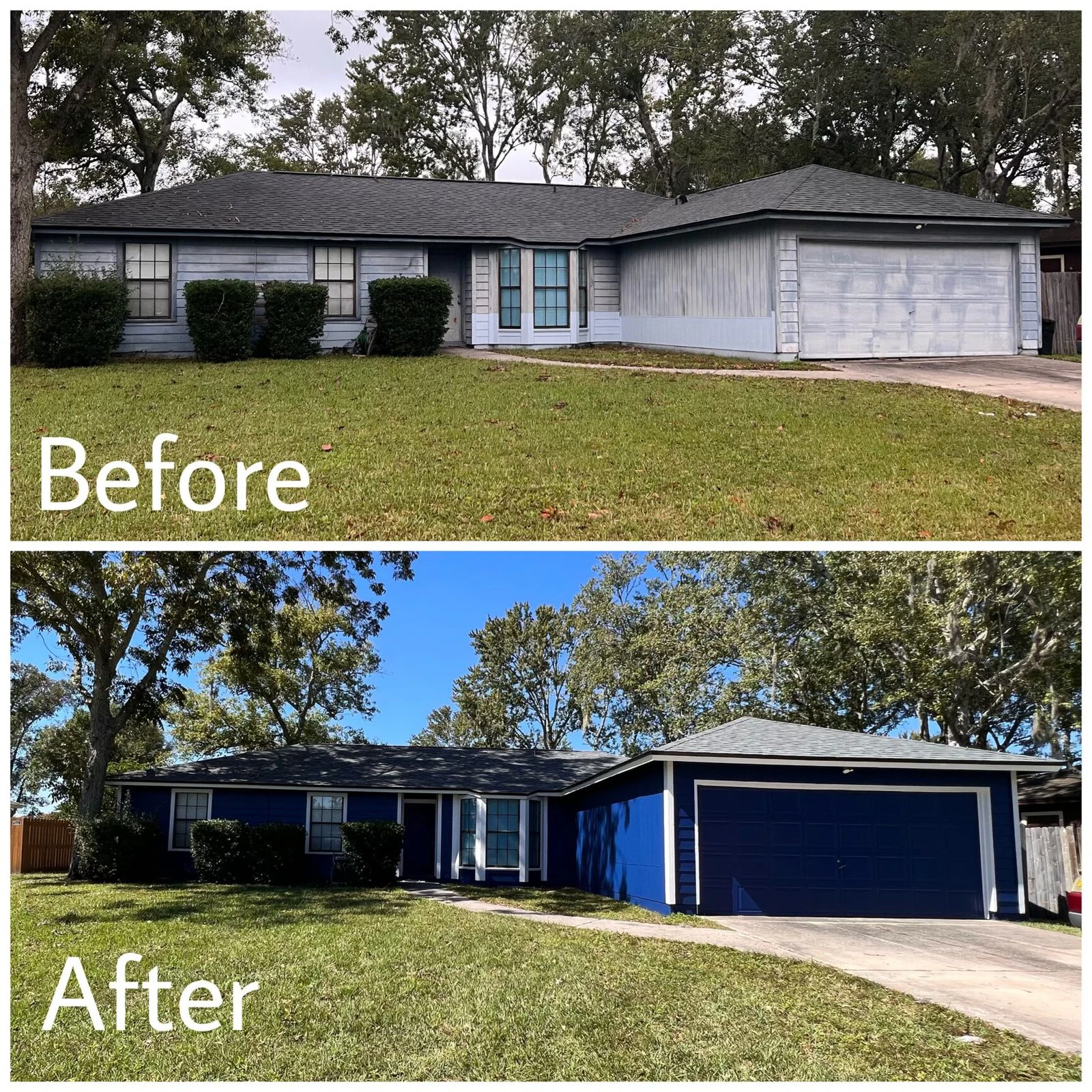
 Real project
Bubbling Paint vs. Bulging Stucco
Bubbling Paint
A raised blister in the paint film. It often tears or peels when you touch it, and the paint around the edges is still attached. Press gently around it: if the wall underneath is hard and doesn't move, the failure is likely in the paint, not the stucco.
Common causes are moisture behind the coating, painting over chalk or dirt, incompatible coatings, painting stucco before it was dry enough, too heavy a coat, or rushed prep. Our exterior paint failure guide covers how to tell those apart.
Bulging or Wavy Stucco
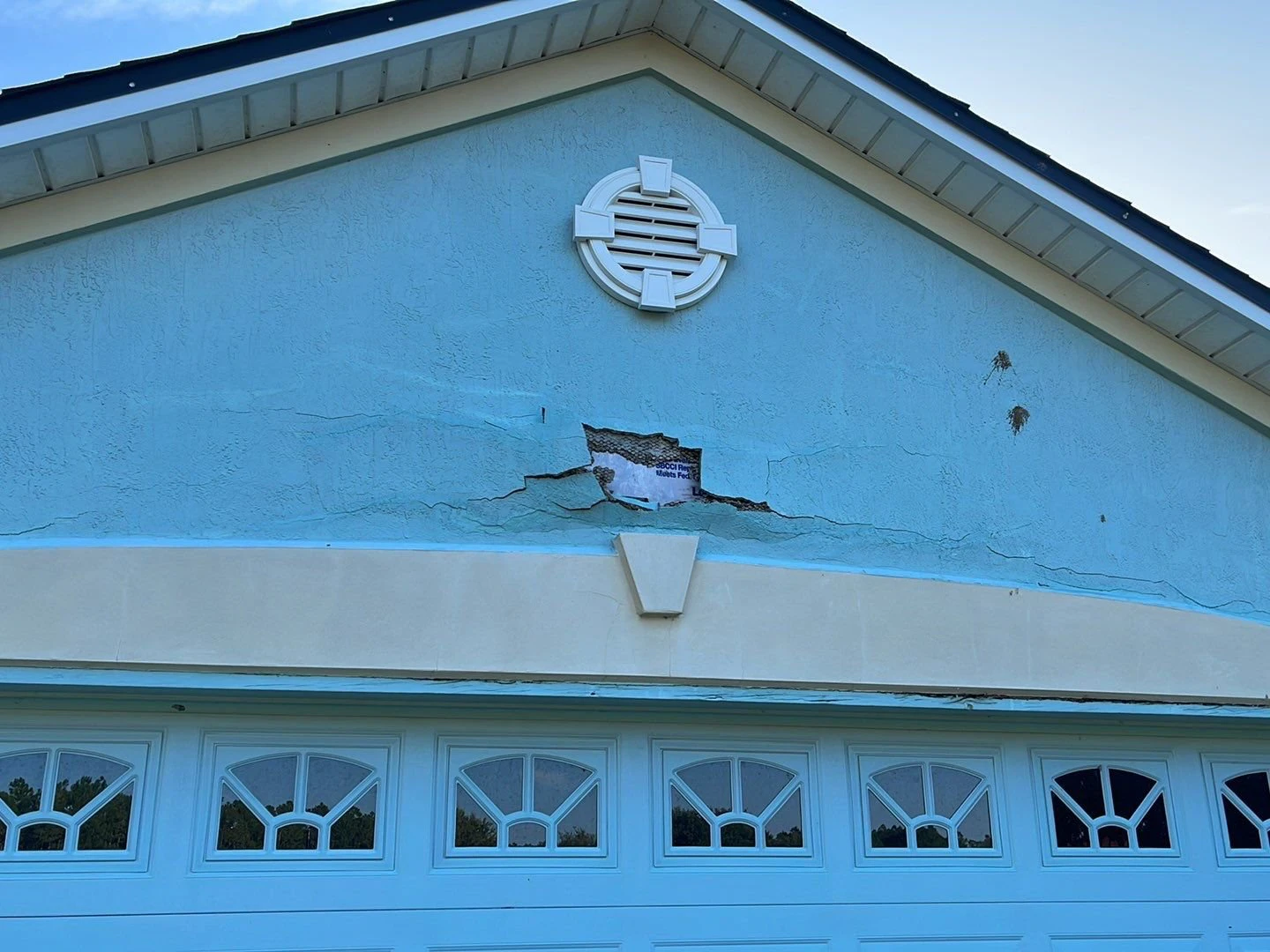
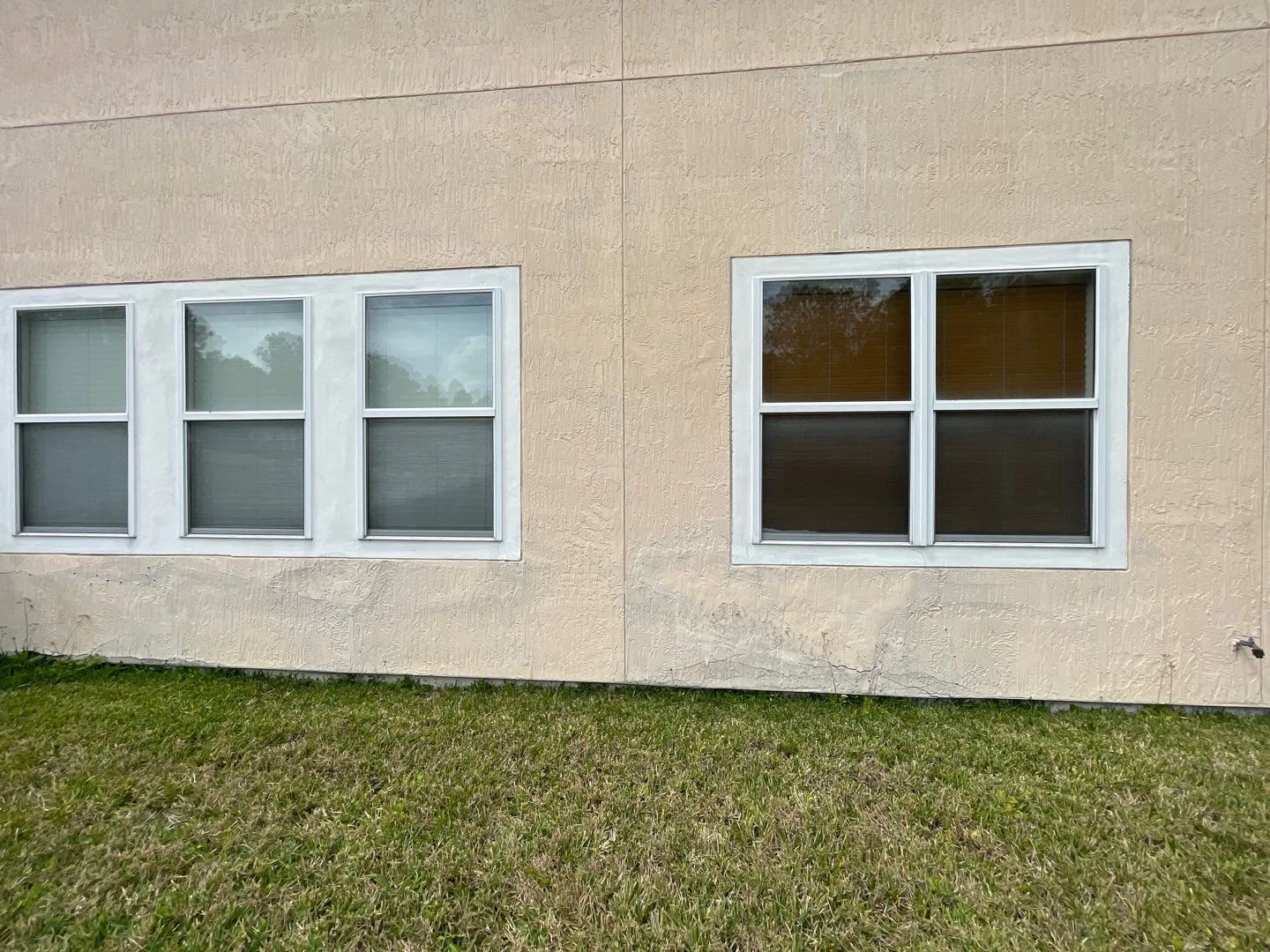
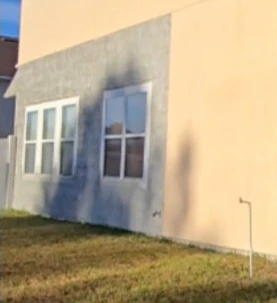
Here the wall surface itself sticks out, usually over a wider area than a paint blister: a swell or a wave you can see when you sight along the wall. Low morning or late-afternoon light makes it much easier to spot. Something has changed at the bond line or behind it. Paint doesn't restore adhesion; it just covers the bulge and moves with whatever the stucco does next.
Loose Stucco or Stucco Separating From the Wall
Stucco that flexes or gives when gently pressed, or shows a gap or lifted edge, has lost most of its bond in that spot. Don't pull at it. Loose stucco often runs well past the visible edge, and homeowners who pick at a loose corner often find the area is far bigger than they thought, with no plan to close it back up.
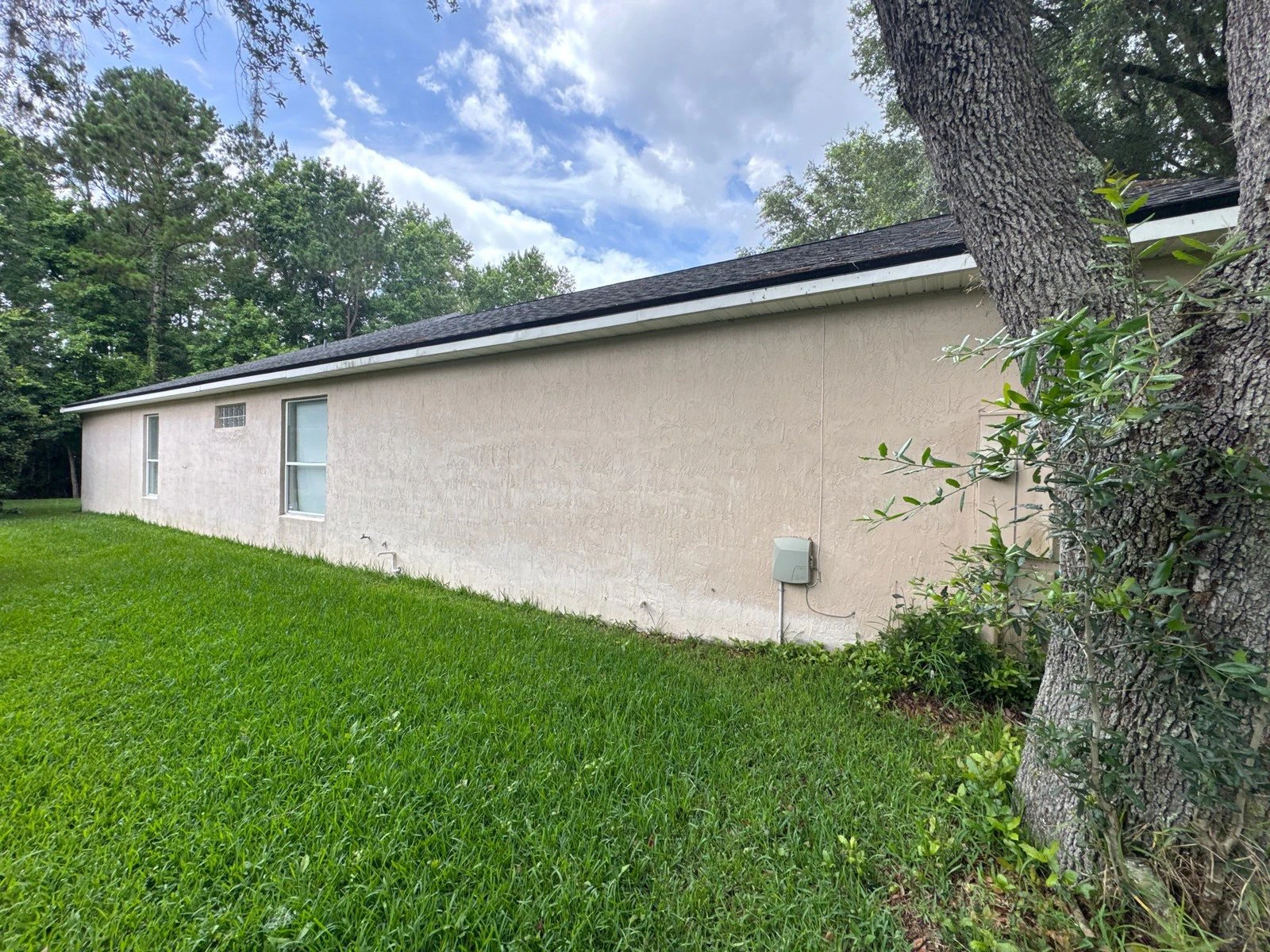
 Real project
What Is Stucco Delamination?
Delamination is a loss of bond: layers that should stay stuck together no longer are. On a stucco wall that can happen between the finish coat and base coat, between plaster layers, between the stucco and the block or concrete behind it, or between the stucco and its lath where there is lath.
Bond depends on how the surface was prepared, how the stucco was applied, and whether each coat cured enough before the next went on. That means some failures trace back to the original installation, not to anything that happened recently.
What Does Hollow-Sounding Stucco Mean?
Tapping is a real technique. Well-bonded stucco sounds solid and dull, while areas with voids or poor bond often sound hollow. Compare across the wall rather than judging one spot. A hollow sound tells you where to look closer, not why. It could be delamination, a void from the original application or an old patch that never bonded.
Tap gently with a knuckle or a plastic tool handle. Hitting a wall hard enough to find loose stucco is also hard enough to create it.
What Causes Stucco Delamination on Florida Homes?
Moisture is only one cause. Others include:
- Original bond problems: stucco applied over a dirty, sealed, painted or too-smooth surface, or a coat put on before the one beneath it had cured.
- Moisture behind the finish: water that keeps reaching the bond line.
- Corroding metal: lath, fasteners and corner beads expand as they rust, which can push stucco away from the wall.
- Movement: the structure behind the stucco moving more than the stucco can handle.
- Old repairs: a patch that never bonded, or one made with a material that doesn't match what's around it.
Can Water Cause Stucco to Bulge or Delaminate?
Yes, it can contribute, but assuming it's always water leads people to chase leaks that aren't there. When moisture is involved, water usually gets in through a crack, joint or opening, reaches the parts behind the finish, causes rust or deterioration at the bond line with repeated wetting, and the stucco eventually loosens there.
Common entry points are cracks, window and door edges, failed sealant, roof-to-wall transitions and pipe or vent penetrations. Northeast Florida's heavy, wind-driven rain pushes water into gaps that would otherwise shed it. For more on the window side of this, see cracks around stucco windows and doors.
What If the Stucco Is Bulging Around a Crack?
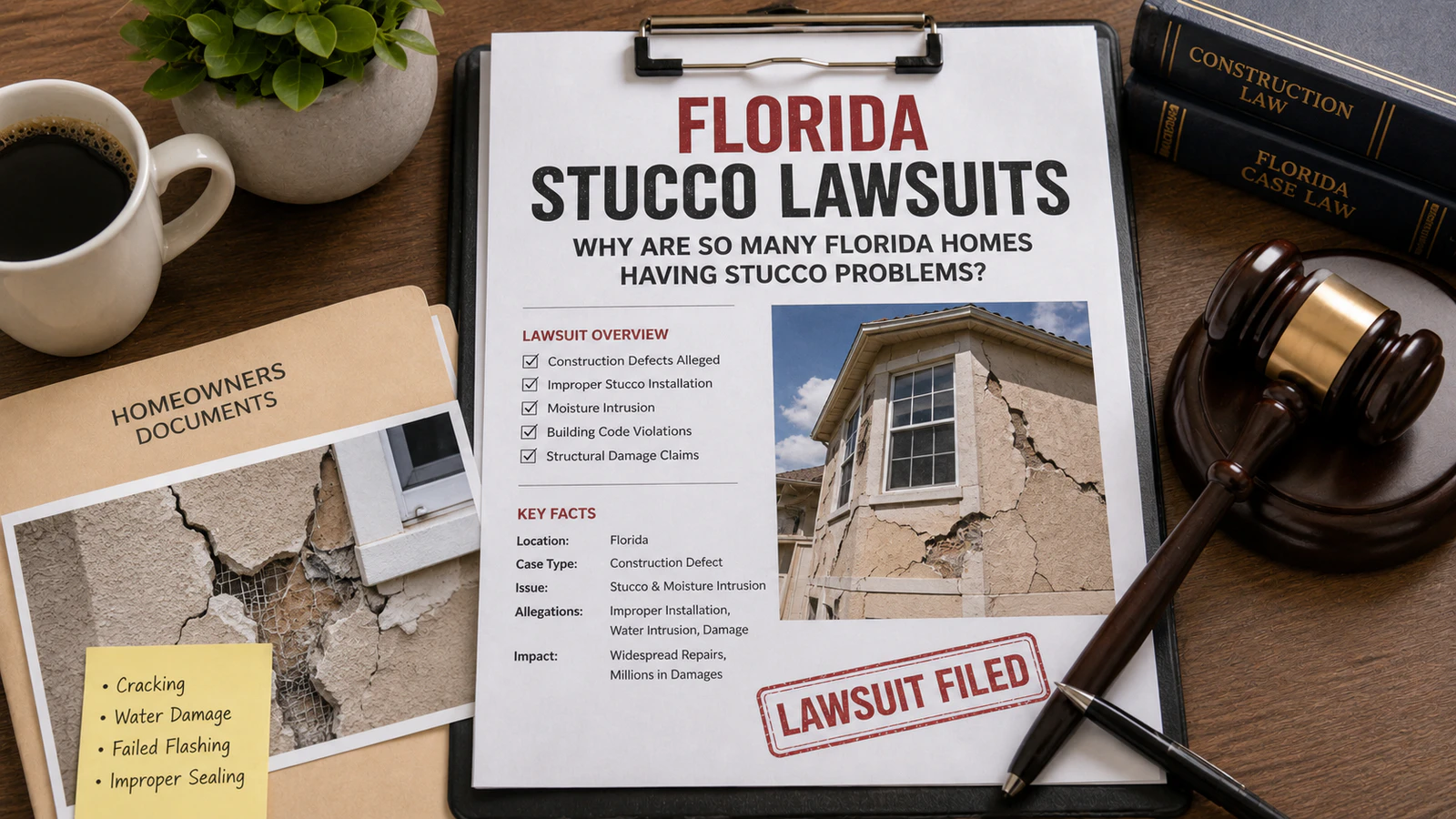
A crack on its own is often ordinary. A crack through an area that also bulges, sounds hollow or is offset is different: the crack may be the visible edge of a bond problem. That doesn't automatically mean structural failure, and nobody should diagnose that from a bulge alone. Our guide to types of stucco cracks covers how to read cracks by themselves.
What Do Rust Stains or White Deposits Mean?
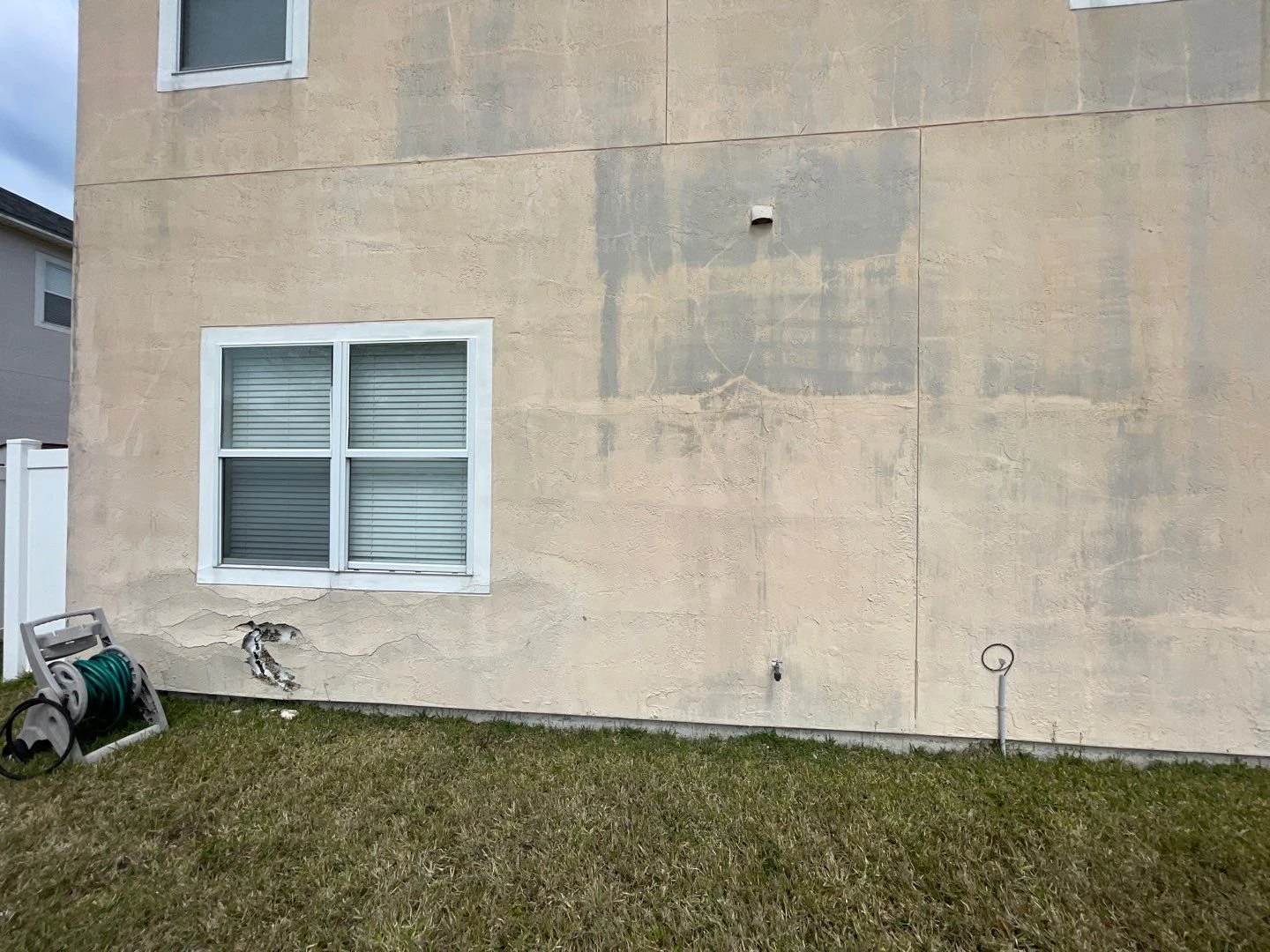
Orange or brown staining near a failing area points to rusting metal behind the finish. Rust next to bulging or hollow stucco is worth investigating rather than painting over, though on its own it doesn't prove the lath has failed everywhere.
White powder is often efflorescence, minerals carried out by water moving through the masonry. Next to a bulge it suggests water has been active there, so the source should be found before repair. See what efflorescence means on a Florida home.
Why Does Stucco Separate From Concrete Block?
Stucco applied straight onto concrete block is a normal, long-standing way to build, and it bonds well when the block is clean and porous enough to grip. Problems come when the block was sealed or painted first, was too smooth, had dirt or residue on it, or was so absorbent it pulled water out of the fresh stucco before it could cure. A later repair with a material that doesn't bond to the old stucco causes the same trouble.
Can Delamination Spread?
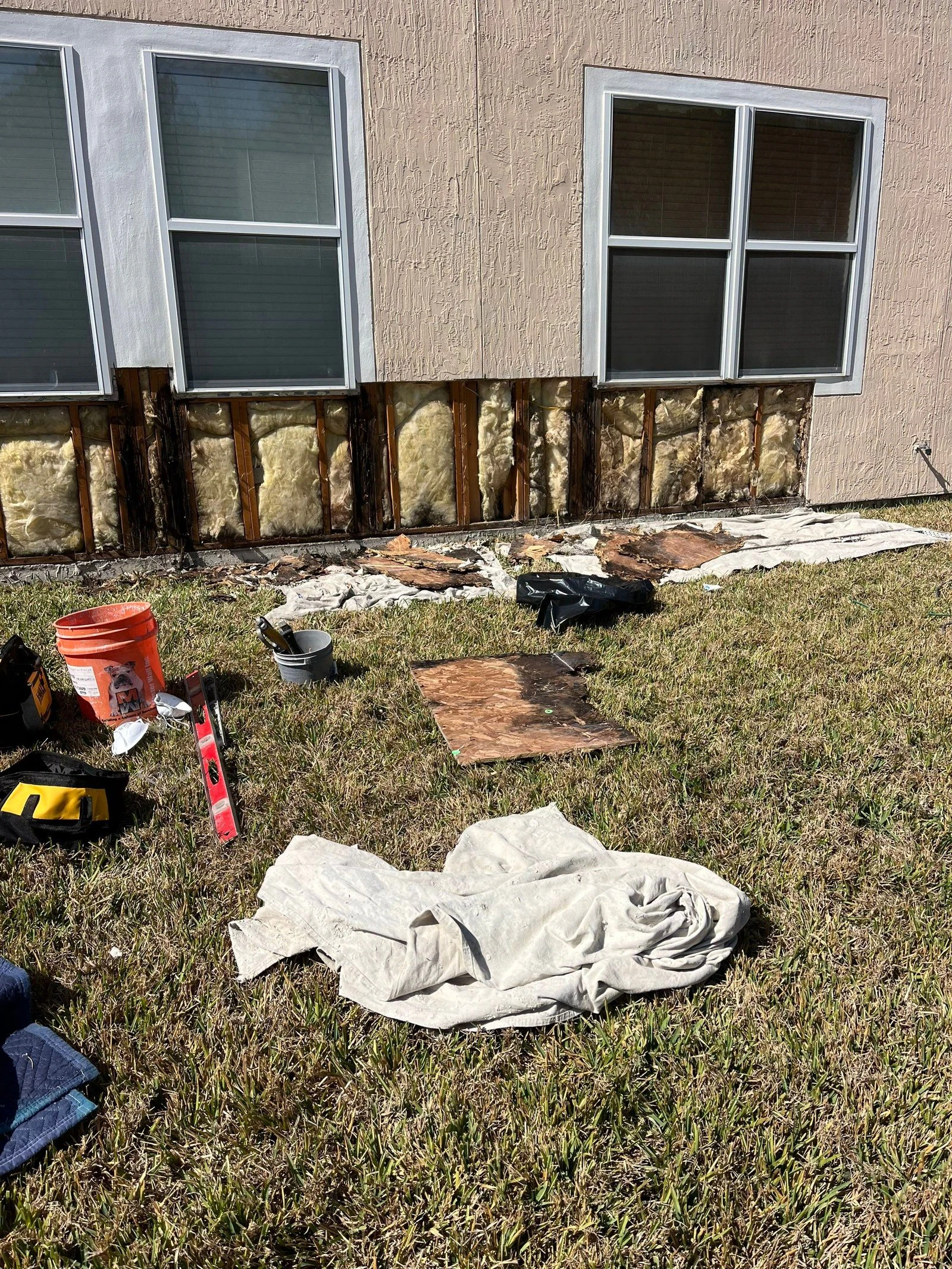
A small area can stay small for years, or it can grow if the cause is still at work: water still getting in, ongoing movement, or metal that keeps rusting as long as it stays wet. That's why the area has to be mapped before repair. Cut out an eighteen-inch square when the bad bond runs four feet, and the repair edge sits in unsound stucco and fails at the seam.
Often you can't tell the full extent from outside. Looking, tapping and examining the edges of a failed spot narrow it down, but where the problem looks large, opening up the wall or testing by a qualified professional is what settles it.
 Real project
Does Loose Stucco Have to Be Removed Before Painting?
Yes. Paint bonds to the surface under it, and if that surface is coming off the wall, no coating can reattach it. Elastomeric and high-build coatings have real uses, like bridging small stable cracks, but they can't restore bond, stop movement or fix rusted parts and active leaks. A heavy coating over delaminated stucco is a more expensive version of the same failure. Our comparison of elastomeric vs. acrylic paint for stucco covers where each fits.
Map the area
Find how far the loose or hollow stucco really runs.
Remove unsound stucco
Cut back to sound, bonded material and check what is behind it.
Fix the cause
Deal with the water source, rusted component or failed detail.
Rebuild and match texture
Patch with compatible materials and blend the texture as closely as practical.
Let it cure
This is the step that gets squeezed when schedules are tight, and squeezing it is how a good repair develops its own problems.
Prime and coat
Prime the repair properly for the system going over it, then paint.
How A New Leaf Evaluates Bulging and Loose Stucco
Coating failure and stucco failure can look nearly identical in a photo and lead to completely different jobs, so separating them is the first thing we do. We look at the whole wall, not just the spot that prompted the call, and check for cracks, staining, rust, efflorescence and failed sealant. Most of the time we find something in between: blisters over sound stucco, old patches, cracking around openings, or small loose areas that need repair before painting. Sometimes it's simply a paint problem on a sound wall, which is a common and good outcome.
We assess what's visible from outside. We don't do invasive moisture testing, bond testing or engineering, and we'll tell you plainly when a specialized stucco contractor, building envelope consultant or structural engineer should look first. Our Jacksonville stucco painting guide explains how coating choice follows the wall's condition, and why surface preparation matters covers the paint-side causes.
Frequently Asked Questions
Usually a void or poor bond behind that spot. It could be delamination, a void from the original application, or an old patch that didn't bond, and sound alone can't tell which.
Not Sure If It Is the Paint or the Stucco?
Before you call anyone, photograph the whole area from far enough back to show the pattern, then take close-ups of the edges. Note whether it's growing, and look for cracks, rust stains, white deposits and nearby windows, doors or pipes. Don't pull at loose material or paint over it.
A New Leaf Painting Contractors has served Jacksonville and Northeast Florida since 2010. We'll tell you what looks like paint failure and what looks like stucco failure, and when someone else should look first. Call or text 904-615-6599 for a free estimate.