In this article
- Are Cracks in Stucco Normal?
- What Causes Stucco to Crack?
- Common Types of Stucco Cracks
- How Can I Tell if a Stucco Crack Is Serious?
- Can Water Get Through Stucco Cracks?
- Should Stucco Cracks Be Repaired Before Painting?
- Can Elastomeric Paint Fix Stucco Cracks?
- When Is a Painter the Right Professional?
- How We Approach Stucco Cracks Before Exterior Painting
- Not Sure What You're Looking At?
You walk around the side of the house and there it is: a crack in the stucco that may have been there for months. It could be nothing, or it could be the kind of thing that gets expensive if you ignore it, and the crack alone won't tell you which. Its shape, width, direction, location, whether it's changing and whether it's been repaired before tell you a lot more.
Stucco cracks because it's a thin, fairly brittle cement shell over the structure. When the building moves, dries or heats up, the stucco relieves that stress by cracking. As exterior house painters in Jacksonville, FL, we look at stucco homes across Duval, St. Johns and Clay counties every week, and we see everything from harmless surface lines to areas that need stucco crack repair before painting. The crack is the symptom. The question is why it cracked.
Are Cracks in Stucco Normal?
Some cracking is expected in any cement-based finish. Industry guidance treats minor cracks at the corners of windows, doors and other stress points as normal. That's the material's known behavior, not a contractor excuse.
But "some cracking is normal" doesn't mean every crack is fine. What separates them is usually behavior over time. A stable crack stays the same length and width, with no staining and no new cracks joining it. An active crack keeps widening, lengthening or reopening after repair, which tells you whatever caused it hasn't stopped. One crack by itself says less than the pattern around it.
 Real project
What Causes Stucco to Crack?
There's rarely one cause. The usual contributors:
- Shrinkage as the cement dries, worse on hot, windy days, plus mix or application mistakes.
- Movement: settlement, framing drying out, and stucco, wood, concrete and metal all moving at different rates.
- Openings, whose corners concentrate stress, and control joints that are missing or too far apart.
- Water behind the finish, failed sealant, impact damage and bad earlier repairs.
Control joints give the wall planned places to move so it doesn't crack at random. The ASTM C1063 standard sets limits on panel size between joints for many stucco walls, but real requirements depend on how the wall was built, so a wall without visible joints isn't automatically defective.
Common Types of Stucco Cracks
Hairline cracks
Very narrow and often only visible when light hits at an angle. Usually from shrinkage, minor movement or aging, and usually the least concerning. Stable hairlines are normally handled during prep and coating. Just loading paint into them isn't a repair. Watch for one that widens, keeps coming back, stains or sits at a window corner.
Spider cracks and map cracking
A web of fine connected lines across a broad area, sometimes called crazing. It's usually a finish-coat issue from curing or application, not the structure. It changes how the wall should be prepped and coated, but nobody patches a hundred crazing lines one by one.
Vertical cracks
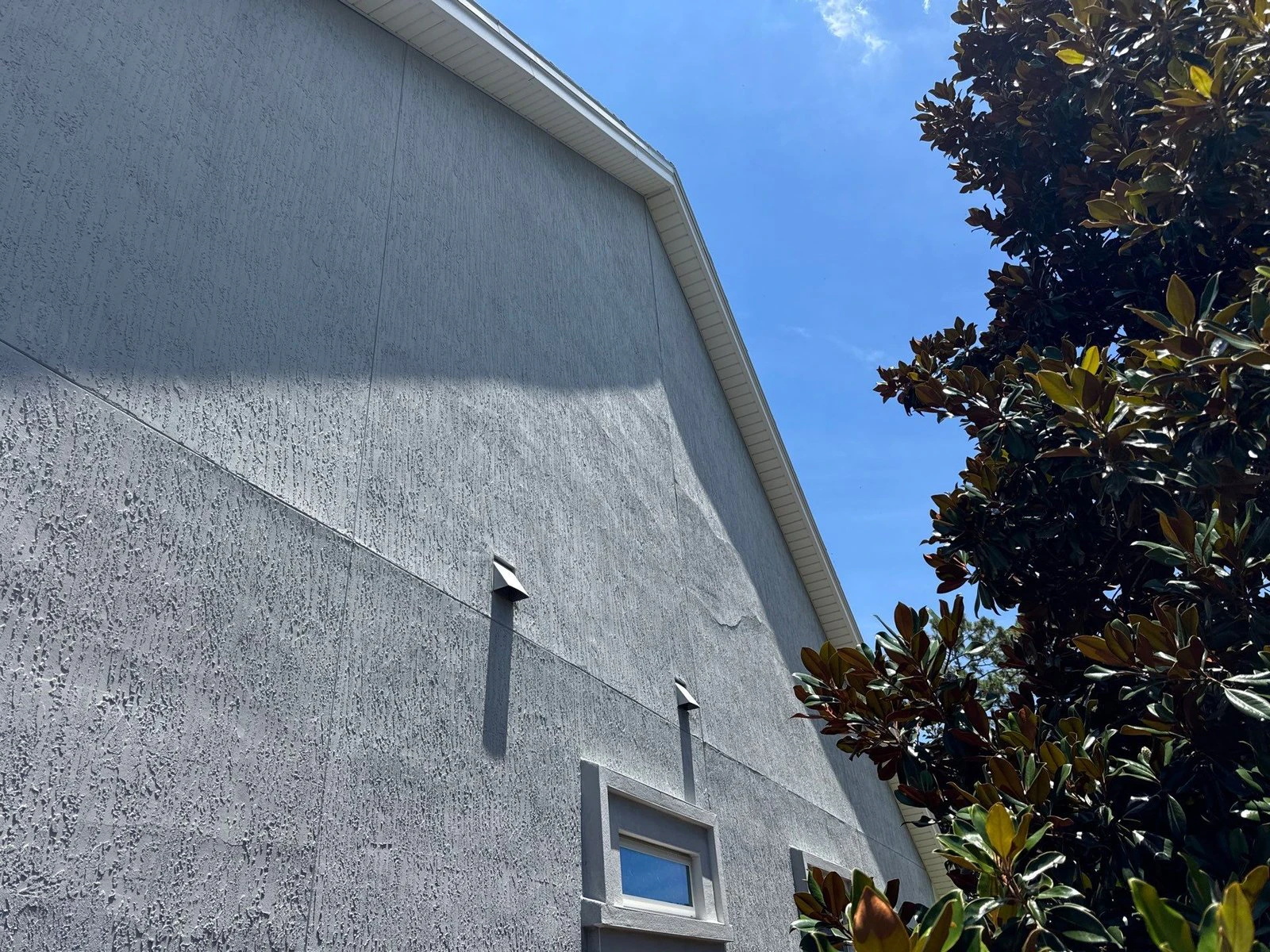
Often where a control joint should be or along a long wall. A vertical crack doesn't automatically mean foundation damage, but a long, widening one with one side offset deserves more than a patch.
Horizontal cracks
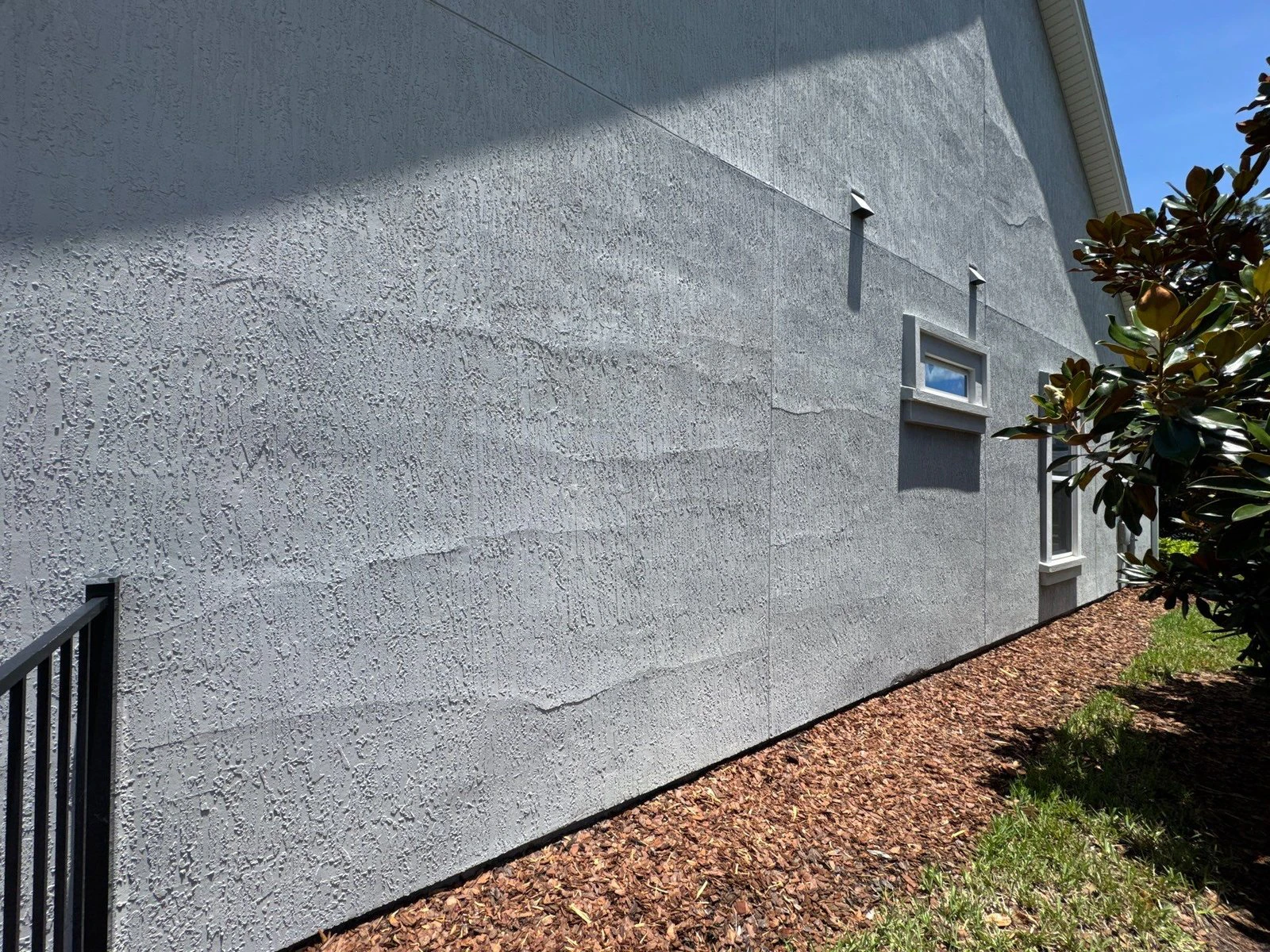
Often at floor lines or where the lath ends. They can come from water behind the finish, so look closer, especially with staining, bulging or a hollow sound when tapped.
Diagonal cracks
Usually angling out from a window, door or garage corner. A short one at a single corner is among the most common stucco cracks. Long diagonals or cracks from several openings running the same way are a different conversation.
Cracks Around Windows and Doors
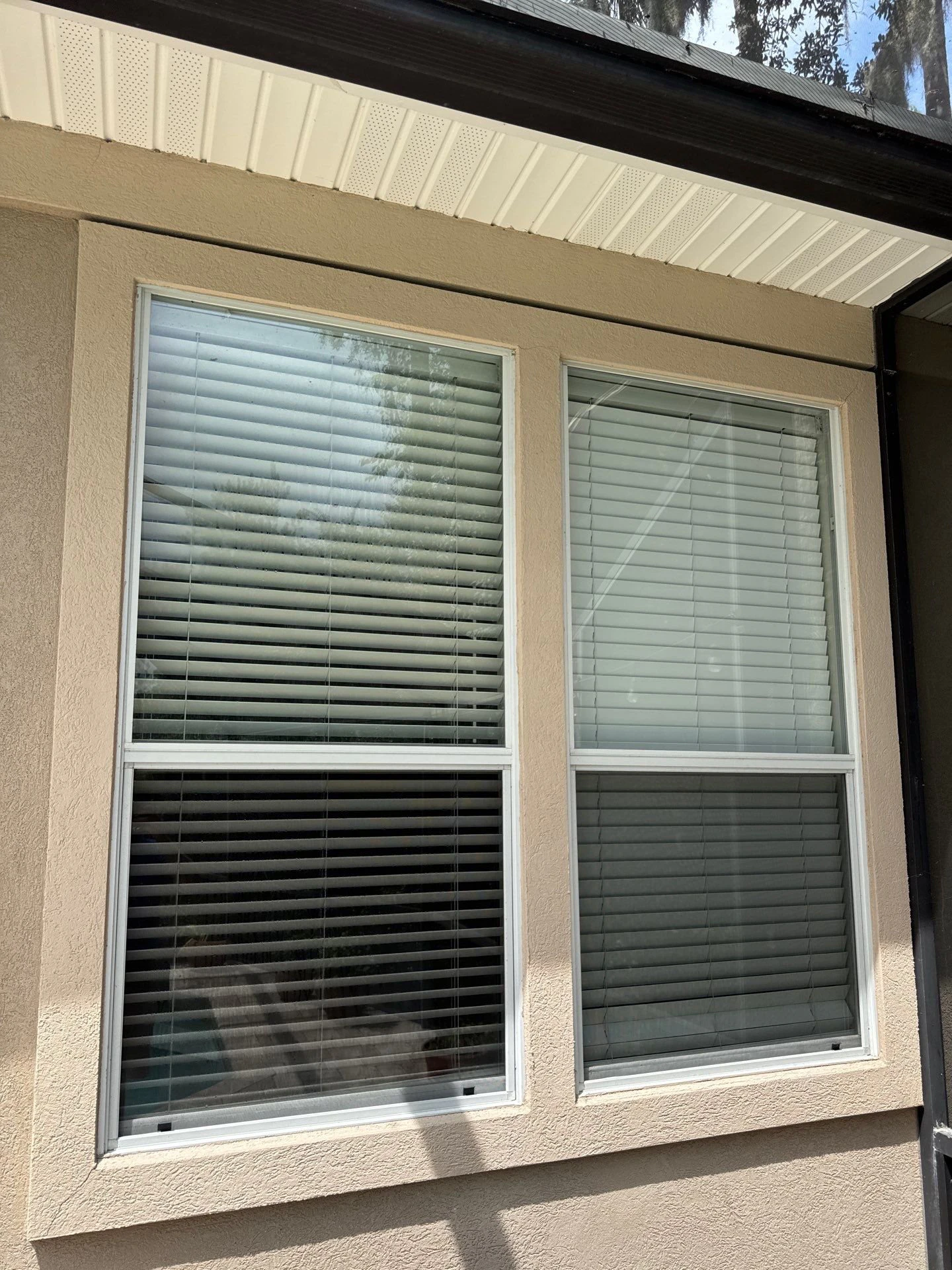
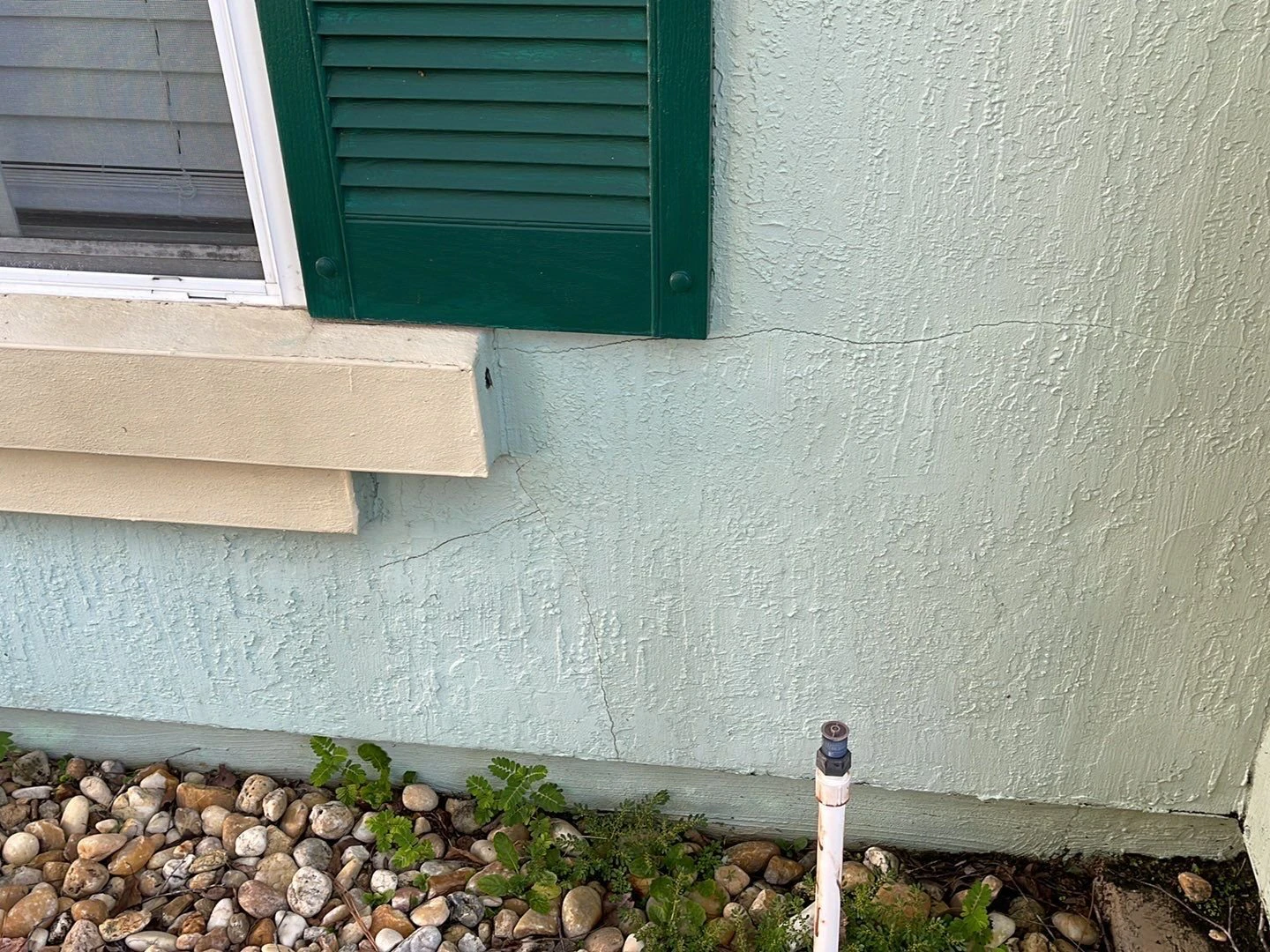
Openings are where the most serious stucco problems tend to start. Look for diagonal cracks at the corners, separation along the frame, sealant that has hardened or pulled away and staining below. Water that gets in at a window doesn't always show up there. It travels, and the stain can appear well below or beside the entry point. Caulking a crack at a window is sometimes the right fix and sometimes just hides a flashing or sealant problem, so check the sealant, staining and the inside of that same wall first.
Cracks Where Two Materials Meet
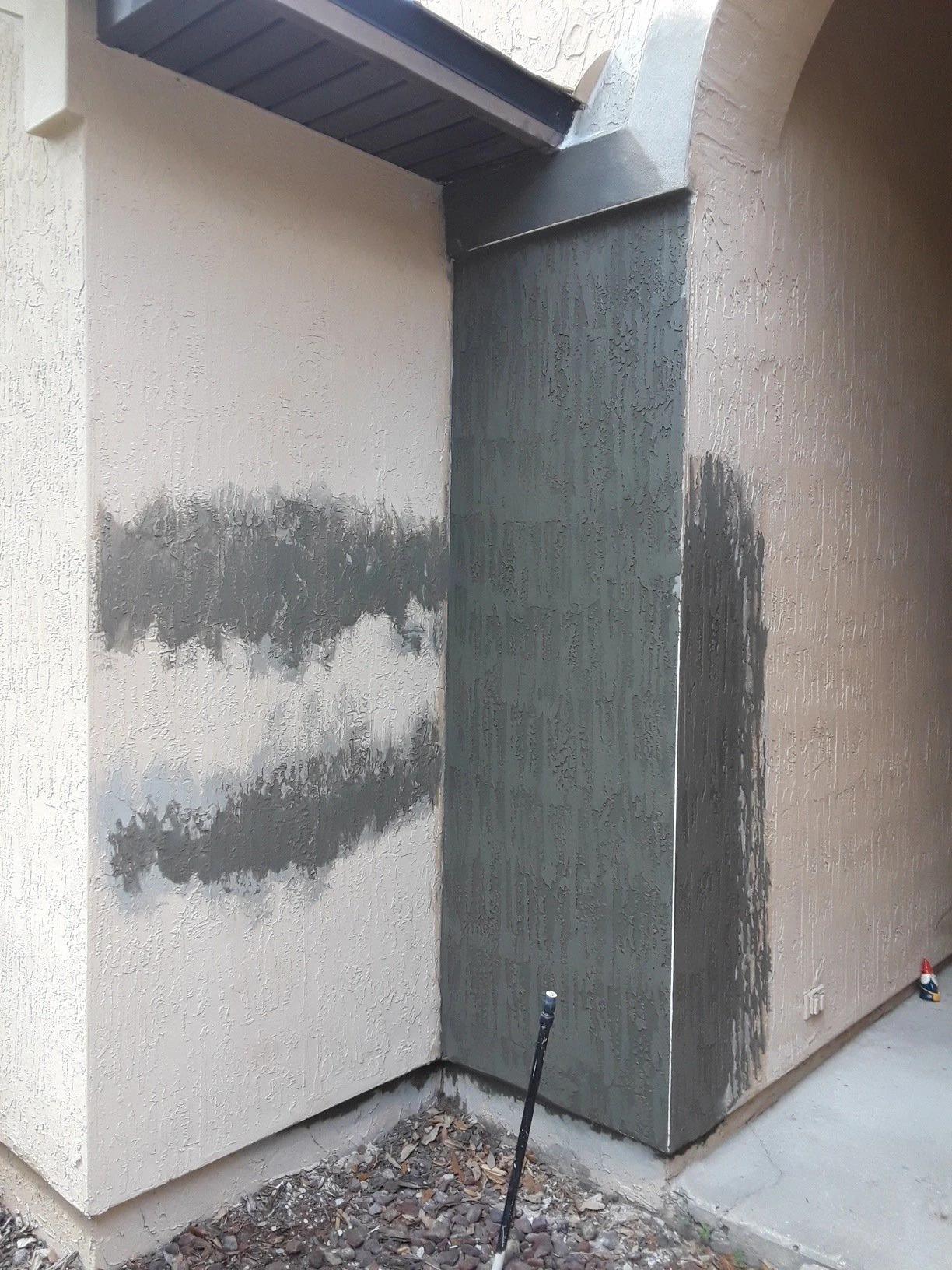
Stucco meeting concrete, wood trim, siding, an addition, a column or a decorative band will eventually separate at the seam, because the two materials move at different rates. That's physics more than a defect, and usually more maintenance than structure, but an open seam is a water path. It's also the clearest case of why rigid patching fails: a hard compound in a moving joint just cracks again within a season or two. These spots call for a flexible sealant and regular upkeep.
 Real project
Cracks That Keep Coming Back After Repair
A crack returning in the exact same line is useful information. Usually the movement never stopped, the patch was too rigid for that spot, the crack wasn't opened and prepared before filling, the fix sat on the surface, it's a joint that will always move, or water is still getting in. The right question isn't how to fill it again. It's why the last repair didn't hold.
How Can I Tell if a Stucco Crack Is Serious?
Not from a photo, and not from width alone. Look for combinations of symptoms. These deserve a closer evaluation:
- The crack is getting wider or longer
- Several cracks form a consistent pattern across one side of the house
- Large diagonal or long horizontal cracking
- Cracks reopening after a proper repair
- Bulging, wavy or hollow-sounding stucco
- Rust stains, white powdery deposits (efflorescence) or water stains at or below the crack
- Damp spots or stains on the inside of the same wall
- Loose or falling pieces, or one side of the crack sitting out past the other
Does the width matter?
It's one input, not the answer. A narrow crack that has grown for two years may matter more than a wider one unchanged since the house was built. So track it: photograph it with a coin or ruler beside it, date the photo, mark the ends lightly in pencil and photograph it again every few months and after storm season. That five-minute habit gives a contractor or engineer far better information than a description, and often the answer is reassuring: nothing has changed in a year and a half.
Can Water Get Through Stucco Cracks?
Yes, and this is where Jacksonville matters most. Stucco isn't a waterproof barrier by itself. It's one layer of a wall system built to manage water, and cracks give water a way past it. Our heavy summer storms and wind-driven rain push water against and into the wall, not just down it.
Much of the damage to cement stucco comes from water getting in through cracks, roofs and window and door openings. Behind the finish it can rot wood lath, rust metal lath and fasteners, and make the stucco pull away from the wall. Watch for paint bubbling near a crack while the rest of the wall is fine, and one spot that keeps failing. The visible crack isn't always where the water got in, which is why finding the source matters more than sealing the symptom.
 Real project
Should Stucco Cracks Be Repaired Before Painting?
Yes, where they need it, and new paint should never stand in for figuring out why a crack exists. In practice:
- Stable hairline cracking can often be handled within the right prep and coating system.
- Larger or open cracks get repaired with materials suited to how that spot moves.
- Recurring cracks need the reason found before another repair.
- Loose or hollow stucco has to be fixed, because a coating over unbonded stucco fails with it.
- Failed sealant gets cut out and replaced, not painted over.
- Moisture problems need the source found first.
- Patches and bare repairs get primed before the finish coats.
Can Elastomeric Paint Fix Stucco Cracks?
This is the most common misconception we run into, and it costs homeowners real money. Elastomeric coatings are a flexible, thick film that can bridge some small, stable surface cracks, depending on the product and how it's applied, and they add weather resistance in the right system. They can't stabilize a moving wall, repair failed stucco, reattach loose material or stop an active leak, and a crack that's still opening will come back through.
Sold as the answer to every crack, they add cost and can hide a problem that needed attention. Our stucco painting guide covers coating choice in more depth.
When Is a Painter the Right Professional?
A painting and stucco repair contractor handles stable cracking, prep, isolated patching, sealant, priming and repainting. Call in an engineer, stucco specialist or window and flashing pro when you see major offset across a crack, cracking that grows noticeably over months, sticking doors or out-of-level floors, large hollow or loose areas, moisture nobody can explain, or suspected foundation movement. Sometimes the right call is not to paint an area until it's been looked at. We'd rather say that than start a job that's going to fail.
How We Approach Stucco Cracks Before Exterior Painting
We check every side of the house for cracks, staining, hollow stucco and moisture, flag anything that needs another professional, repair and texture-match what's ours to fix, prime the repairs and apply the coating that suits the wall. Where conditions call for it, we use our Stucco-Armor Hybrid System: a Sherwin-Williams Loxon XP masonry base with an Emerald Rain Refresh topcoat. It's not a default. Plenty of sound stucco homes are well served by a quality masonry acrylic, and we'll tell you when that's the case. See our stucco repair services and exterior painting services for what's included.
Usually not, if they're stable and there's no staining, rust, white deposits or loose material. Keep an eye on one that widens, lengthens, reopens after repair or sits at a window or door.
Not Sure What You're Looking At?
Photograph the crack with something for scale, note the date and give us a call. We'll walk the outside of the house, look at the pattern rather than the one crack you noticed, and tell you honestly what we see, including when someone else should look at it first. Sometimes it's been stable for years and can wait for your next repaint.
A New Leaf Painting Contractors has served Jacksonville and Northeast Florida since 2010. Call or text 904-615-6599 for a free estimate.