In this article
- Are Cracks Around Windows and Doors in Stucco a Problem?
- Why Does Stucco Crack Around Windows and Doors?
- Common Crack Patterns Around Openings
- Is the Crack in the Stucco or in the Sealant Joint?
- Can Water Get In Around a Cracked Stucco Window?
- Can I Just Caulk the Crack Around My Window?
- When Is a Crack Around a Window Probably Cosmetic?
- When Should a Crack Around an Opening Get a Closer Look?
- Should Cracks Around Windows Be Repaired Before Painting?
- Can Elastomeric Paint Fix Cracks Around Windows?
- When Is a Painter the Right Professional?
- How A New Leaf Evaluates Stucco Cracks Around Windows and Doors
- Frequently Asked Questions
- Related Exterior Painting Resources
Are Cracks Around Windows and Doors in Stucco a Problem?
Usually not on their own. A short, thin diagonal running out from a window corner is one of the most common things on any stucco house, and it's often cosmetic. What matters is whether water is getting behind the stucco, and the crack alone won't tell you that. Its location, whether it's growing, the caulk around the frame and any staining below the opening will.
Our Jacksonville exterior house painting crews see these cracks on stucco homes all over Duval, St. Johns and Clay counties. Most are minor and get handled in normal prep. Some involve failed caulk, loose stucco or a crack that keeps moving, and those need proper stucco crack repair before painting. A few point to water getting in behind the wall, and those need a closer look before anyone paints.
Why Does Stucco Crack Around Windows and Doors?
A wall spreads stress across its whole surface. Cut a rectangular hole in it and that stress has to route around the opening, so it piles up at the corners. When it's more than the stucco can take, the corner cracks first. Small cracks at window and door corners are expected in cement-based stucco.
Other things add to it:
- Movement and shrinkage: settling, framing drying out, daily heating and cooling, and stucco shrinking as it cures.
- Different materials: stucco, aluminum or vinyl frames, wood trim and caulk all move at different rates. Where they meet, you usually get a gap along the joint rather than a crack through the stucco.
- How it was built: lath, flashing, how the stucco was finished against the frame and old repairs all play a part.
Common Crack Patterns Around Openings
Diagonal Cracks From Window Corners
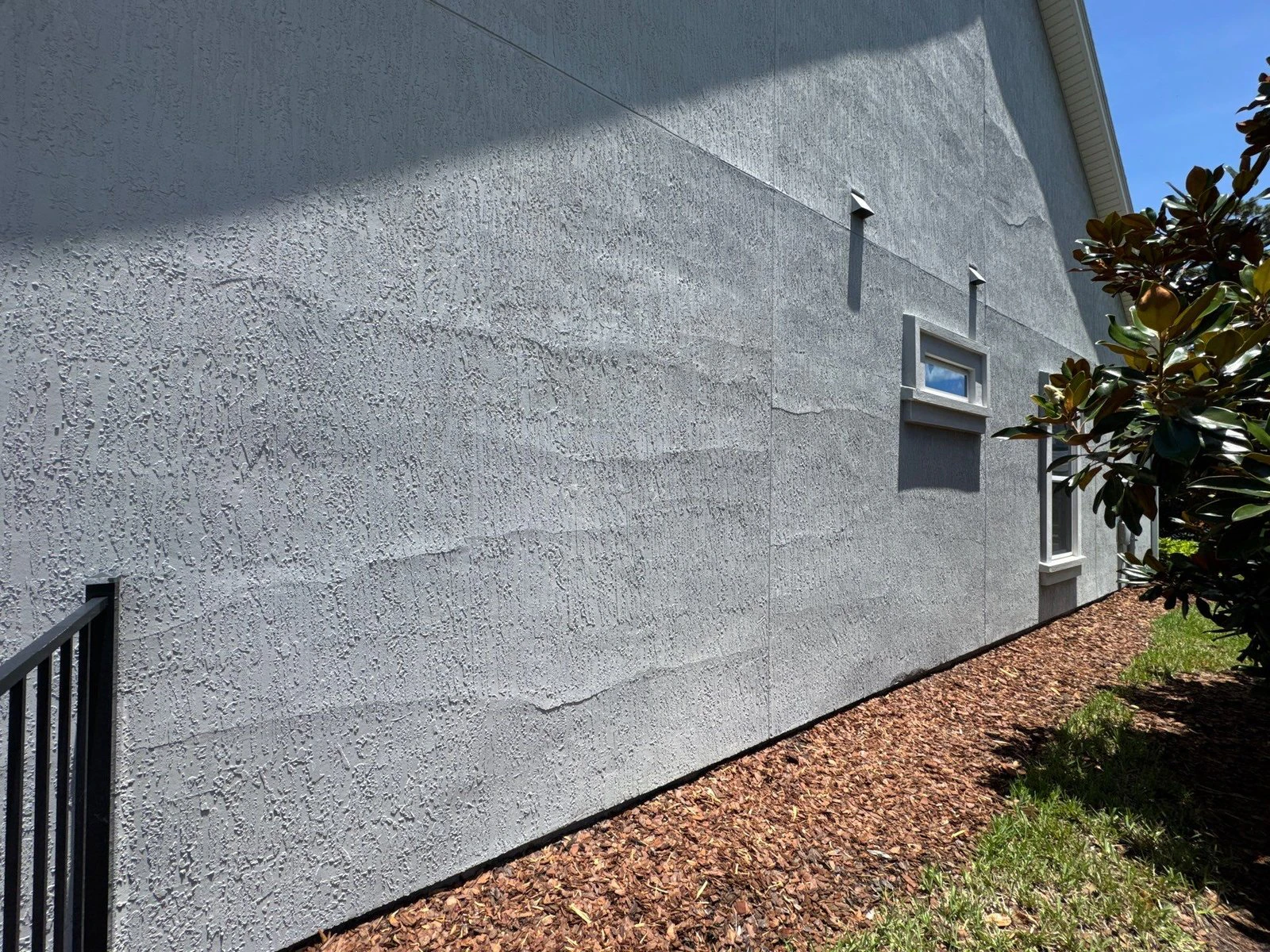
A crack running at about 45 degrees out from a corner, most often an upper one. One short, narrow, stable diagonal is usually something to watch and fix during the next repaint. Several long diagonals pointing the same way across multiple windows, one that's widening, or one where one side sits proud of the other is a different conversation. Our guide to types of stucco cracks compares the patterns across a whole wall.
Cracks Above or Below the Opening
A crack above a window doesn't automatically mean the header is failing. What's worth a closer look is a combination: a crack across the full width with one side offset, a window or door that has started to stick, or the same pattern at several openings of similar size.
Below the window, cracking at the sill often comes with staining. Keep in mind that water showing up below a window doesn't prove it got in right above that spot. Water travels inside the wall along framing and lath before it comes out, so a stain under a sill can start at the top of the window or at a side.
Separation Between Stucco and the Frame
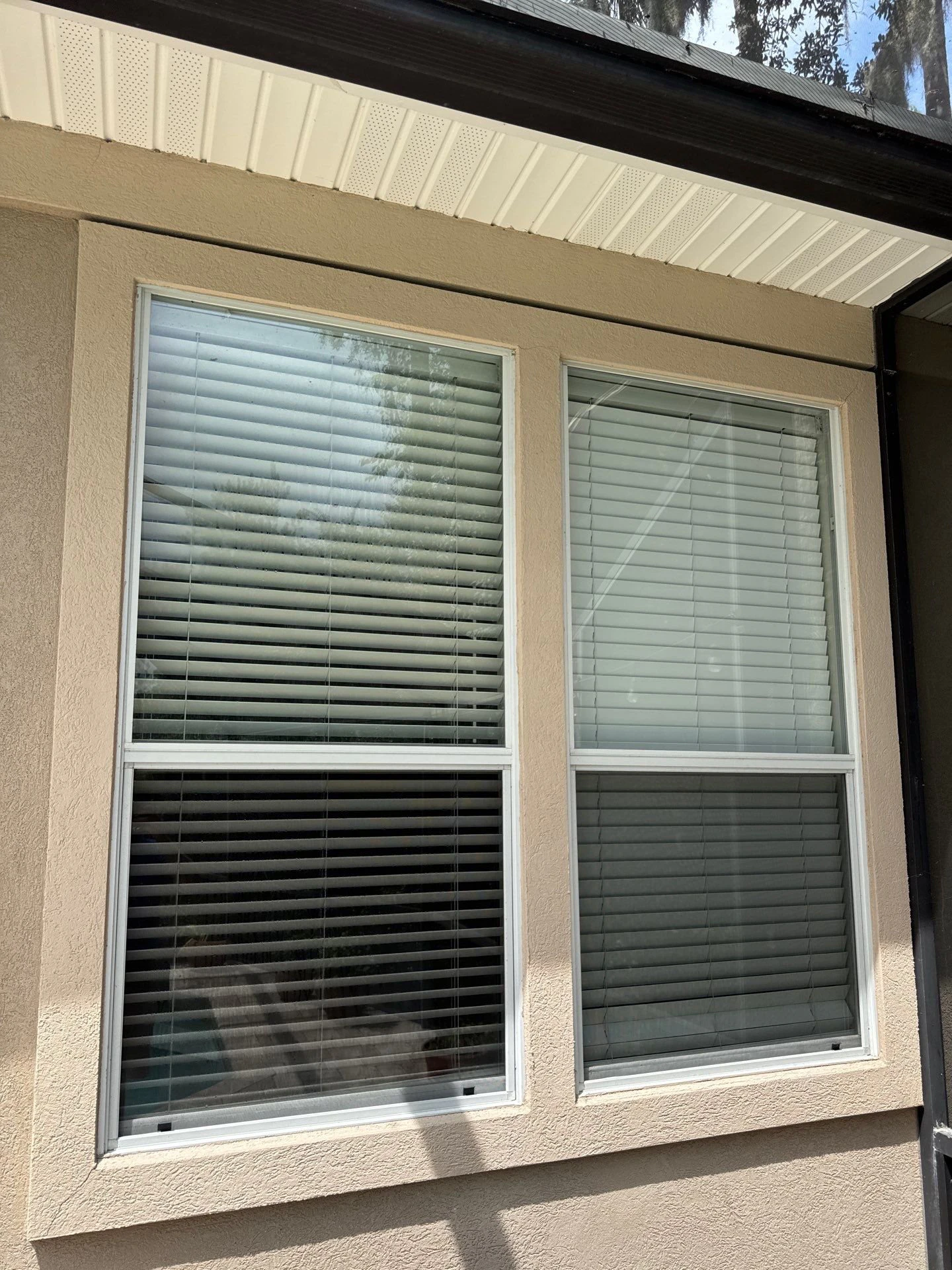
This one gets mistaken for a stucco crack all the time. It's a thin gap where the stucco meets the frame, or caulk that has hardened, split, shrunk or pulled away. The two materials move at different rates and the caulk has simply worn out, which UV speeds up in Florida.
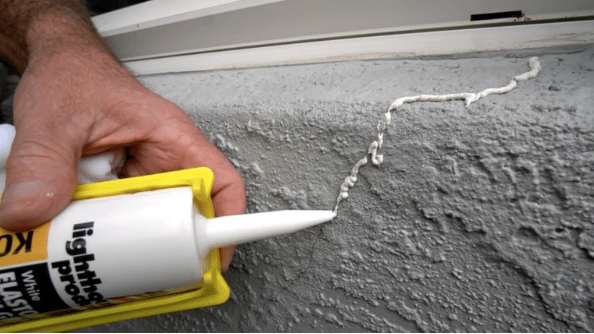
The fix is to remove the old caulk and reseal with a proper exterior sealant. Don't pack a rigid stucco patch into that joint. It's meant to move, and a rigid patch takes away the give, so it reopens within a season or two.

Water Staining and Peeling Around an Opening
- Dark streaks are often just dirt or mildew following the runoff path.
- White powdery deposits may be efflorescence, salts left behind as water moves through masonry. That means water has been moving through the wall.
- Rust-colored stains can mean metal lath, fasteners or window parts are corroding behind the finish. Investigate before coating over.
- Peeling or bubbling in a ring around one window while the rest of the wall holds up points to moisture coming from that opening. Our exterior paint failure guide covers how to tell the causes apart.
Is the Crack in the Stucco or in the Sealant Joint?
A stucco crack is a break through the stucco itself, in the wall or running out from a corner into the wall. A failed sealant joint is two materials that were joined coming apart at the seam. Nothing is broken; they just move differently.
A rigid repair belongs in a rigid stucco crack. A moving joint needs a flexible sealant made for that joint.
Can Water Get In Around a Cracked Stucco Window?
It can, and Jacksonville weather raises the stakes. Window and door openings rely on flashing behind the stucco, including pan flashing under the sill, to catch water that gets past the frame and send it back out. Where that flashing is missing or not working, cracks, failed caulk and open joints become paths in. Wind-driven summer rain makes small gaps matter more here.
If a home was built without it, the caulk around the windows is doing a job caulk can't do alone, and letting it fail matters. Caulk is maintenance, not the wall's waterproofing, and it has to be redone periodically.
Not every stain means a leak. It's the combination of signs in the list below that tells you something.
Can I Just Caulk the Crack Around My Window?
Sometimes. Caulk is usually right when the problem is the joint between stucco and frame, the old sealant has failed, and the spot is meant to move.
It's probably not the whole answer when the crack runs through the stucco itself, the stucco is bulging or hollow, there's a long diagonal with one side offset, there's staining, efflorescence or rust, the same spot has failed before, or you suspect a flashing problem. The thing to avoid is caulking over a symptom while the real water path stays open.
That's also why corner cracks keep coming back. Most often a joint that needs to move was filled with rigid compound, so it cracks again on the same line. Other times the crack was smeared over without being opened up, or water is still getting in behind the finish.
When Is a Crack Around a Window Probably Cosmetic?
When it's very narrow, at one corner of one window, unchanged for years, with no staining, no offset, flexible caulk around the frame and nothing showing inside. That describes a great many Jacksonville stucco homes.
 Real project
When Should a Crack Around an Opening Get a Closer Look?
- The crack is getting longer or wider
- It reopens after a proper repair
- Long diagonal cracks, or one side offset from the other
- The same pattern at several openings in the same direction
- Caulk failed around most of the frame
- Staining, efflorescence or rust below the opening
- Peeling or bubbling concentrated around the opening
- Dampness, staining or a musty smell inside on the same wall
- Loose or hollow-sounding stucco nearby
- The window or door has become hard to open or close
Should Cracks Around Windows Be Repaired Before Painting?
Yes, when the problem is open or active:
- Stable hairline cracks can often be handled in prep and the coating system.
- Failed sealant joints get cut out, prepped and resealed.
- Open or recurring cracks need a proper repair, and recurring ones need the cause found first.
- Loose or hollow stucco has to be fixed. Paint over it fails along with it.
- Moisture problems need the source found before anything goes on.
New paint should never stand in for understanding an active problem around an opening. More on that in why surface preparation matters.
Can Elastomeric Paint Fix Cracks Around Windows?
Elastomeric coatings can bridge some small, stable surface cracks, depending on the product. They can't fix a failed sealant joint, correct flashing, stop structural movement, reattach loose stucco or stop a leak. Around a window, a thick coating over a failed joint can be worse than nothing: it hides the gap while the joint keeps moving and letting water in. Our comparison of elastomeric vs. acrylic paint for stucco covers when each one fits.
When Is a Painter the Right Professional?
Stable cracks, small stucco patches and texture repair, failing paint, replacing perimeter caulk, prep and repainting are normal painting and stucco repair work. Suspected flashing or window installation problems, leaks the outside can't explain, major movement and large areas of loose stucco may need a window contractor, a building-envelope consultant, a waterproofing pro or a structural engineer.
We inspect what's visible from the outside. We don't do engineering analysis or open up walls, and we'll tell you when something is beyond what an exterior inspection can answer.
How A New Leaf Evaluates Stucco Cracks Around Windows and Doors
We look at the whole opening, the stucco and old repairs around it, the caulk on all four sides, and any staining or hollow spots, then check the other windows on the same wall. One window with a crack and failed caulk is usually a maintenance job. The same pattern at four windows on one side of the house tells us something about that wall and changes what we recommend. For stucco specifics, see our Jacksonville stucco painting guide.
 Real project
Frequently Asked Questions
Small cracks at window and door corners are expected in cement-based stucco. That doesn't make every one harmless: whether it's changing and what comes with it matter more than the crack itself.
Before you call, photograph the crack with a coin beside it, the whole opening and the wall below, then again in a few months. We can look at what's visible, tell you what falls within normal stucco repair and painting, and say plainly when something needs another specialist first. Sometimes the answer is that the crack has been stable for years and can wait for your next repaint. A New Leaf Painting Contractors has served Jacksonville and Northeast Florida since 2010. Call or text (904) 615-6599 or request a free estimate.