In this article
- What Is Efflorescence on Stucco?
- What Are You Seeing on the Stucco?
- Efflorescence vs. Paint Chalking
- Efflorescence vs. Mildew or Algae
- Where the Moisture Comes From on Jacksonville Stucco
- Does Efflorescence Mean Water Is Getting Into My Wall?
- Is Efflorescence Dangerous?
- Can You Paint Over Efflorescence?
- How Is Efflorescence Removed?
- When Should Efflorescence Get a Closer Look?
- When Is a Painter the Right Professional?
- How We Look at Efflorescence on Jacksonville Homes
- Frequently Asked Questions
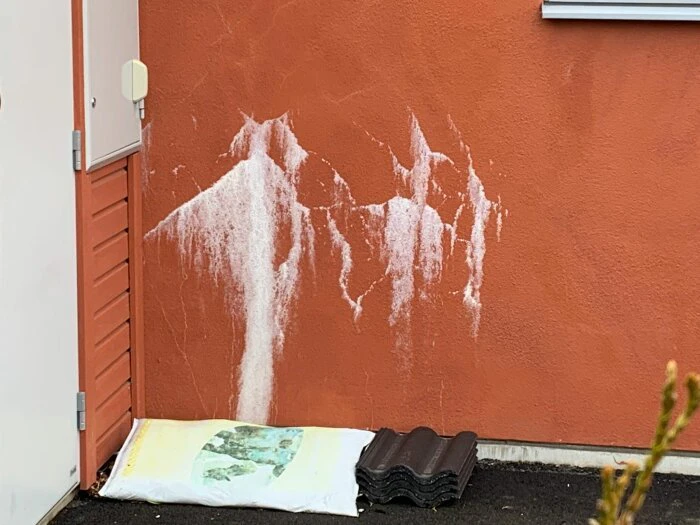
White powder on stucco is usually efflorescence: minerals that water carried out of the masonry and left on the surface when it evaporated. It isn't mold, and it usually isn't failing paint. The powder itself is mostly cosmetic. What matters is what it tells you: water has been moving through that wall.
Our professional exterior painting crews see efflorescence on stucco homes across Duval, St. Johns and Clay counties. The useful questions are where the water came from, whether it's still coming, and whether the wall needs a cleaning and repaint or real stucco repair before painting.
What Is Efflorescence on Stucco?
Stucco, mortar and concrete block are made with Portland cement, which contains salts that dissolve in water. When water moves through the wall, it picks up those salts. When it reaches the surface and evaporates, the salts stay behind and react with the air to form the white deposit.
Three things have to be present: salts in the masonry, water to carry them, and evaporation to pull them to the surface. Take away any one and efflorescence stops. You can't remove the salts or stop evaporation, so water is the one thing you can actually change. That's why cleaning alone rarely solves it.
What Are You Seeing on the Stucco?
- Fine white powder that brushes off easily is the lightest form and often recent or minor.
- White streaks running down the wall show the path the water took, which is a useful clue.
- Crusty, crystal-looking buildup usually means more water over a longer time, or many wet-dry cycles in one spot.
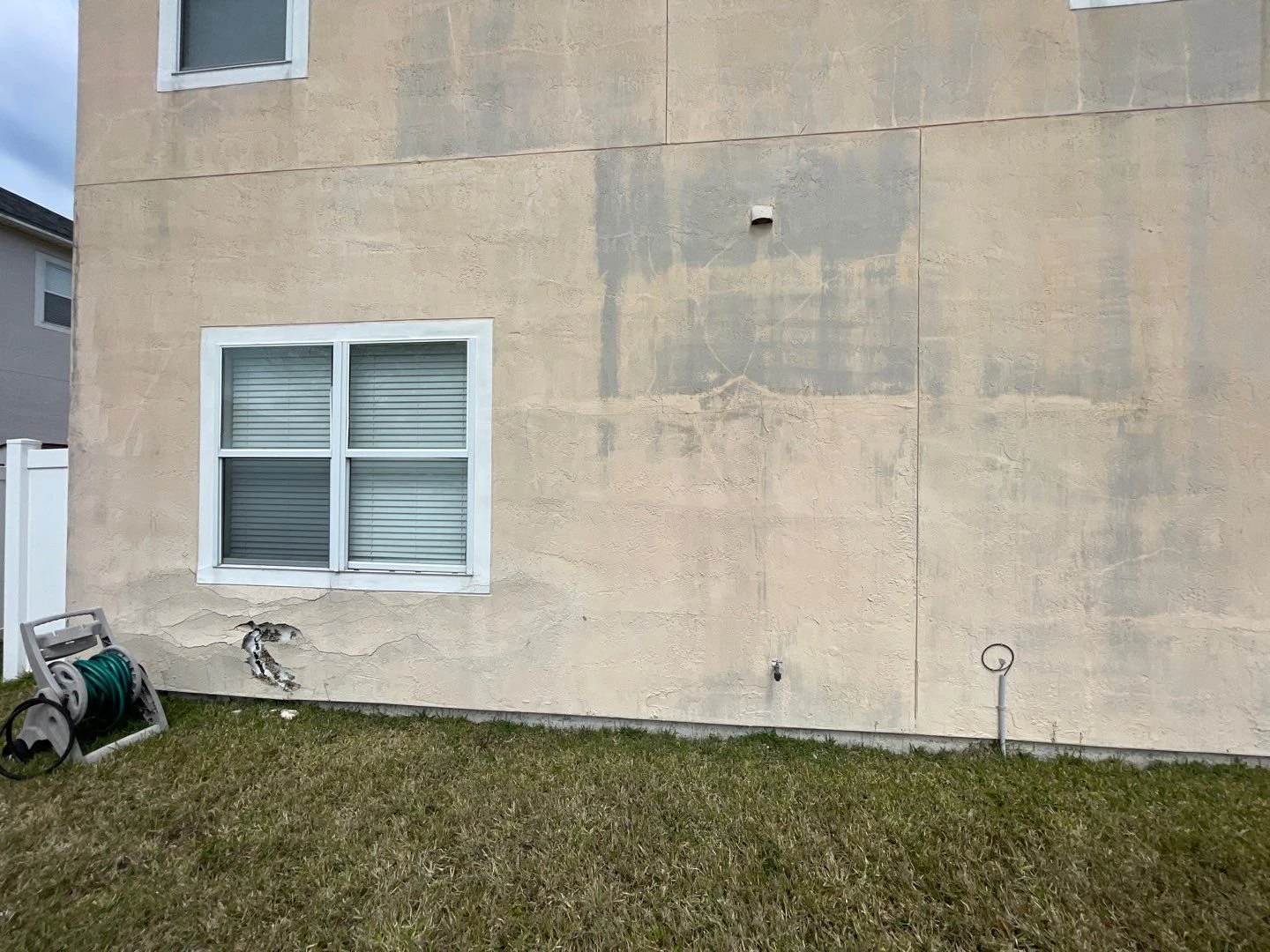
- White along a crack means the crack is acting as a water path. A crack ringed with white matters more than a clean hairline crack. Our guide to types of stucco cracks helps you read the crack itself.
- White below a window points to the opening, but water can enter at the top or side of a window and come out lower. See cracks around stucco windows and doors.
- A low band near the ground is often sprinklers, splashback or drainage, which are usually fixable.
Efflorescence vs. Paint Chalking
Efflorescence is white or off-white no matter what color your wall is, and it tends to show up in patterns: along a crack, under a window, in a band near the ground.
Chalking is the paint itself breaking down in the sun. The powder carries your paint color and is spread fairly evenly across the sunniest sides of the house.
A quick check: rub a dark cloth over it. White powder on a beige or gray wall, with intact paint around it, points to efflorescence. Powder tinted the wall color across a whole sunny side points to chalking. Our guide on exterior paint chalking covers that condition.
Efflorescence vs. Mildew or Algae
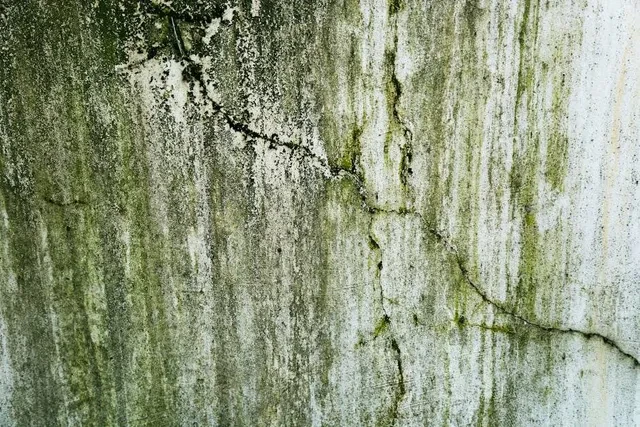
Mildew and algae are living growth. They also need moisture, so they can show up in the same spots, but they're usually green, gray or black, especially on shaded walls. Growth needs to be treated, not just rinsed, while mineral deposits are cleaned differently, so it's worth knowing which one you have before you start scrubbing.
 Real project
Where the Moisture Comes From on Jacksonville Stucco
- Cracks. Wind-driven rain during our summer storms gets pushed into small openings that would shed water in calmer weather.
- Windows and doors. Sealant ages in the Florida sun and eventually lets go, right where the wall is most vulnerable.
- Roof-to-wall joints. Runoff concentrates where a roof meets a wall. Staining there doesn't always mean bad flashing, but it's worth a look.
- Sprinklers. A head hitting the wall a few times a week keeps that stucco wet. If the deposits are low on one side of the house, watch a full irrigation cycle first.
- Splashback and drainage. Rain bouncing off a patio, grading that slopes toward the house, or mulch piled against the wall all keep the bottom of the wall wet.
- The masonry itself. Stucco and block are porous, and some moisture moves through them without any defect.
Does Efflorescence Mean Water Is Getting Into My Wall?
It means moisture has moved through the masonry. It doesn't tell you where it came from, how much, or whether anything is damaged. The real question is whether it happened once or keeps happening.
A light, even haze on new stucco or a fresh patch is often just the material drying out, and rain usually washes it away over time. Deposits that keep coming back after cleaning are different. Efflorescence fades as the salts near the surface run out, so if it returns, water is still moving through the wall.
Is Efflorescence Dangerous?
The deposit itself is not a health hazard and is not, by itself, a sign of structural failure. The reason to take it seriously is the moisture behind it. Water that keeps moving through a wall can lead to peeling paint, recurring stains, rusting metal lath and, over time, stucco losing its bond to the wall.
Can You Paint Over Efflorescence?
Not while it's active. Paint over salt deposits sticks to loose mineral instead of the stucco, and salts keep forming under the new paint as long as water keeps moving. That's how you get blistering and peeling in the same spot, and the same wall painted twice in five years.
- Find the likely water source and fix it
- Let the area dry out
- Remove the deposits with a method suited to the surface
- Repair cracks and replace failed sealant that are part of the path
- Prepare and prime the masonry where the system calls for it
- Apply the right coating system for the wall
Step one is the one that gets skipped. Our guide on why surface preparation matters covers the broader idea, and the Jacksonville stucco painting guide explains how the coating choice follows from the wall's condition.
How Is Efflorescence Removed?
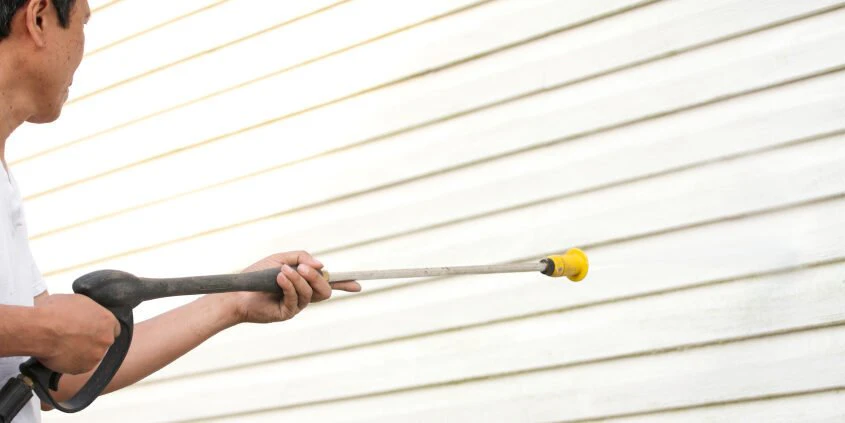
Start gentle. A dry stiff brush takes off light deposits and is often all you need. A low-pressure rinse can take care of what's left. Keep the pressure low: blasting stucco with a pressure washer can damage the finish and push more water into the wall.
For stubborn deposits, there are masonry cleaners made for the job. Follow the label for your surface, protect plants and nearby surfaces, and rinse well. Don't mix your own acid solution from something you read online, since the wrong product can etch stucco permanently. And if water is still moving through the wall, the deposits will be back no matter how well you clean.
When Should Efflorescence Get a Closer Look?
- Deposits come back after cleaning or after every heavy rain
- The affected area is growing
- Paint is peeling or bubbling in the same spot
- Rust stains appear nearby
- Stucco sounds hollow when tapped, or looks bulged or wavy
- There is staining or dampness on the inside of the same wall
When Is a Painter the Right Professional?
A painting and stucco repair contractor can handle cleaning off deposits once the water source is fixed, surface prep, minor crack repair, replacing sealant, isolated stucco repairs, and priming and repainting.
Persistent moisture with no visible cause, suspected window or flashing failure, large areas of loose stucco or structural movement call for someone else first: a waterproofing or window contractor, a stucco specialist or a structural engineer. We assess what's visible from outside. We don't do invasive moisture testing or engineering work, and we'll tell you so rather than guess.
 Real project
How We Look at Efflorescence on Jacksonville Homes
The question that shapes almost every recommendation is whether the deposits are old or whether water is still moving. A wall that dried out years ago and one that gets wet with every storm can look the same in a photo. We rule out chalking and mildew first, then look around the deposit for cracks, failed sealant, sprinkler spray, drainage problems, peeling paint and hollow spots. From there we tell you what's normal repair and painting work and what should go to another trade before anyone paints.
If you want to help that conversation along, take a close-up photo and a photo of the whole wall, note whether the deposits come back after rain, and watch your sprinklers run once. Sometimes the answer is that the deposits came from an old repair, the wall has been dry for years, and a clean and repaint is all it needs.
Frequently Asked Questions
No. Efflorescence is a mineral deposit from inside the masonry; mold and mildew are living growth. They can show up in the same damp areas but need different treatment.
A New Leaf Painting Contractors has served Jacksonville and Northeast Florida since 2010. If you're seeing white deposits on your stucco, call or text (904) 615-6599 or request a free estimate and we'll take a look.