
Why Is Exterior Paint Peeling Around My Windows?
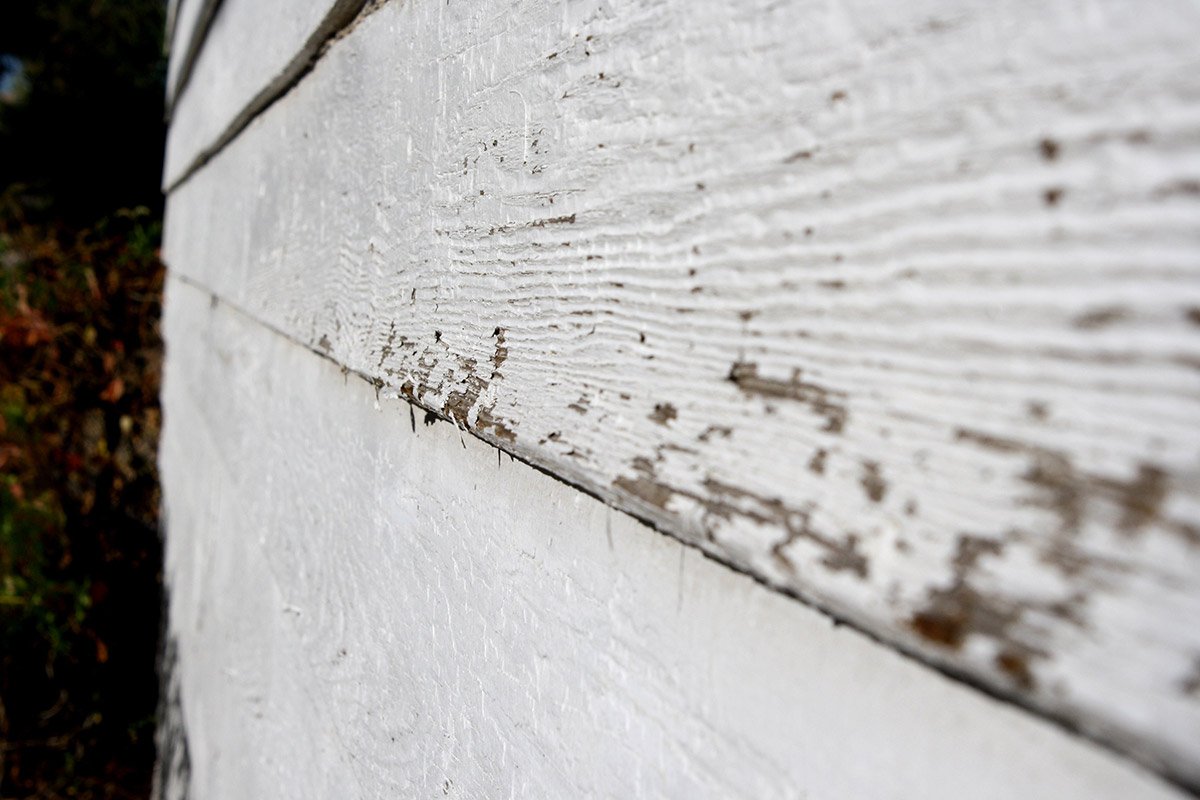
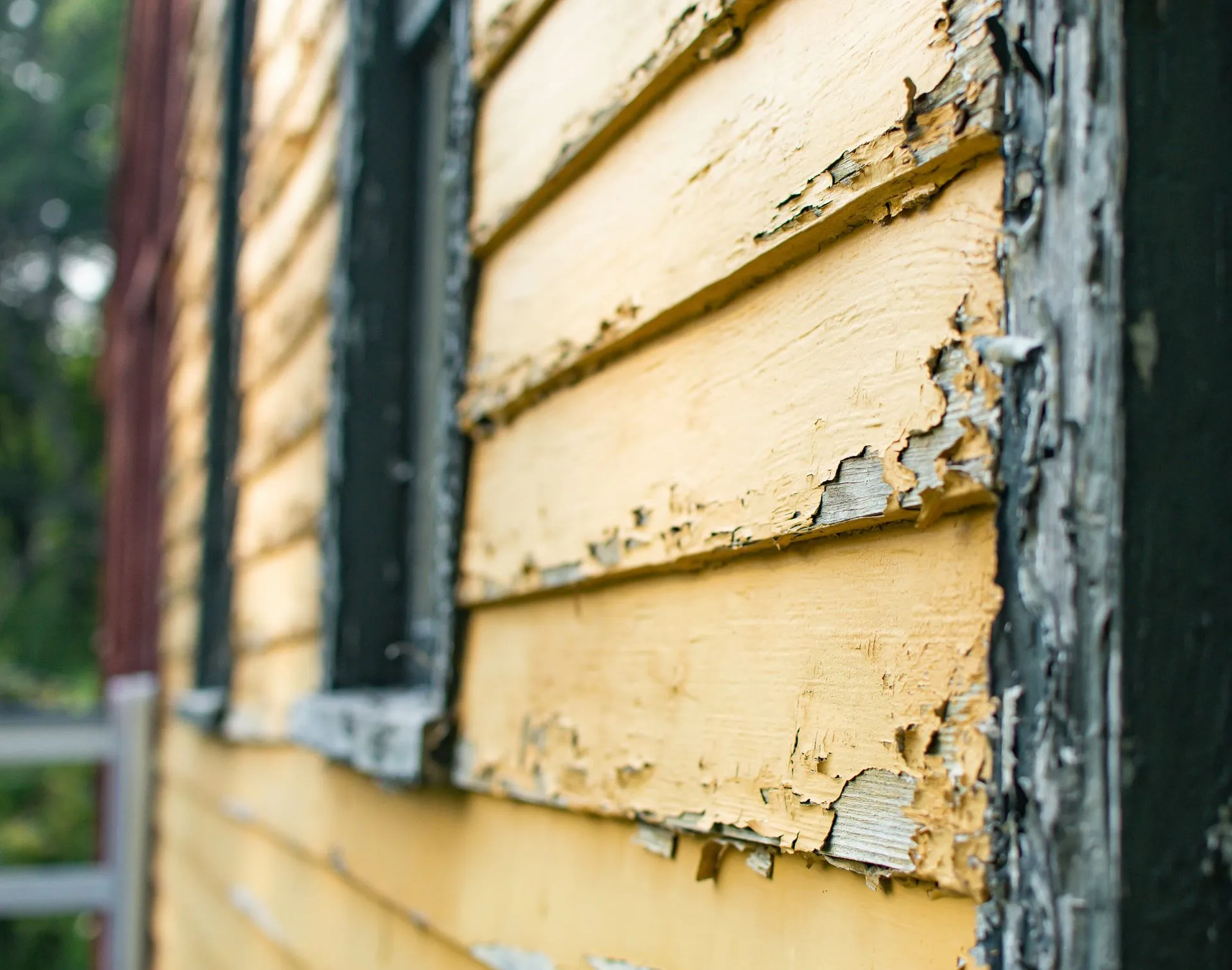
Exterior paint usually peels around windows because that area is one of the most vulnerable transition points on a home. Windows interrupt the wall system and create joints where stucco, siding, wood trim, caulk, flashing, sealants, and window components all meet. Our exterior painters in Jacksonville, FL often find that if water gets behind the coating, caulk has failed, the substrate was not prepared properly, bare material went unprimed, or incompatible products were used, the paint can begin peeling around the window while the rest of the wall still looks perfectly fine.
In Jacksonville, repeated rain, humidity, strong sun, irrigation, and slow drying on shaded elevations can make those underlying weaknesses show up sooner than they might elsewhere. After more than 25 years of exterior painting in Jacksonville, FL, we’ve learned that peeling around a window should not simply be scraped and covered with another coat until the actual source of the failure has been identified. If the cause is still there, the new paint may fail in the same area again. The caulk, surrounding stucco or siding, trim, moisture path, previous repairs, and existing coating condition should all be evaluated before determining the proper repair and repainting system.
Why Windows Are Common Paint-Failure Areas
A window opening brings several different materials together in one small area: stucco or siding, the window frame itself, wood trim where it’s present, caulk or sealant, flashing, fasteners, any previous repairs, and multiple layers of paint film — sometimes from different eras of the home’s life. These components expand, contract, absorb moisture, and weather at different rates from each other.
That’s exactly why paint so often fails first at these transition points rather than out in the middle of an open wall. Windows experience real movement between dissimilar materials, direct moisture exposure, ongoing caulk stress, drainage that has to work correctly to keep water moving away from the opening, a history of prior repairs, interrupted coating continuity where one material meets another, different porosity between materials sitting right next to each other, and different primer requirements depending on what’s actually there. An open wall is one continuous surface; a window is several different surfaces trying to act like one.
Failed Caulk Around Windows
This is one of the most common starting points for peeling paint at a window, and it deserves real attention. Caulk can crack, shrink, pull away cleanly from one side of the joint, turn brittle, or simply go missing in sections over time. Sometimes caulk was applied over a dirty or unstable surface to begin with and never had a real chance to adhere properly. Sometimes it’s an incompatible or paint-resistant sealant that was never going to hold a topcoat well. And sometimes old, already-failing caulk has been painted over repeatedly for years without ever actually being removed and replaced.
Once a caulk joint opens up, it creates a direct path for water to get behind trim, siding, or stucco at exactly the transition point where the coating is already under the most stress. It’s worth being clear that caulk isn’t the only thing keeping water out of a wall system — flashing, drainage, and the coating itself all play a role too — so failed caulk is one possible cause among several, not automatically the whole story. It’s also worth being clear that simply applying more caulk directly over failed caulk doesn’t solve the problem; the old material generally needs to be removed and the joint properly evaluated before new sealant and paint go on.
Can Water Get Behind the Paint?
Peeling around a window is very often a symptom of water getting behind the paint film rather than a problem with the paint itself. Possible sources include failed caulk, improper or damaged flashing, a leak originating from above the window, roof or gutter runoff directed at the opening, cracks in the surrounding stucco, sprinkler overspray hitting the area repeatedly, damaged trim, open joints anywhere around the frame, gaps in sealant, wind-driven rain during storms, or moisture that got trapped behind a previous repair that wasn’t properly sealed.
It’s worth stating plainly: paint is not a waterproof repair for an active leak. If moisture is genuinely entering from behind or above the window assembly, that source has to be identified and corrected before repainting does any real, lasting good — otherwise the new coating is just going to fail the same way the old one did.
Stucco Cracks Around Window Corners
This is especially relevant on Jacksonville homes, where stucco is the dominant exterior finish. Diagonal cracks running from window corners are a common pattern, along with general hairline cracking, visible previous patching, texture mismatches where a repair doesn’t quite blend with the surrounding wall, cracks that return again and again after a rigid, unyielding repair, and genuine moisture entry through cracks that were never properly sealed. Window openings are also natural points of movement in a stucco wall, which is part of why cracking shows up here more consistently than on an unbroken section of wall.
Not every diagonal crack at a window corner is structural — most aren’t — but they do need individual evaluation rather than a blanket assumption either way. Our guide on which stucco cracks are cosmetic and which are dangerous goes into that distinction in more depth.
Could the Wood Trim Be Rotting?
Wood trim and window sills can deteriorate from repeated moisture exposure well before it’s obvious from the paint alone. In a lot of cases, peeling paint is the visible symptom, not the actual root problem underneath it. Soft or spongy wood, swelling, joints that have opened up, and dark staining are all signs that point toward substrate damage rather than a simple coating issue.
Repainting rotten wood doesn’t restore it — the damaged material needs to be repaired or replaced before any new coating goes on, or the paint is just going to fail again on top of wood that’s still actively deteriorating underneath it. For more detail on identifying and addressing this, see our guide on wood rot repair and exterior painting in Jacksonville.
How Poor Surface Preparation Causes Peeling
Painting over dirt, mildew, loose paint, chalking, an already-failing previous coating, a glossy unprepped surface, bare wood, bare stucco repairs, unprimed patches, caulk that hasn’t fully cured, or a repair that wasn’t properly feather-sanded into the surrounding wall — any of these can lead directly to peeling, and windows are exactly where you’re most likely to find several of them stacked together at once. Between the frame, the trim, the caulk joints, and any prior repair work, the area around a window typically contains more transitions and more prep-sensitive spots than an open stretch of wall ever will. For more on why this step matters as much as the paint itself, see our guide on why surface prep matters in residential painting.
Was the Area Properly Primed?
Bare wood, repaired stucco, exposed masonry, patched areas, stains, and sometimes metal components around a window may all need an appropriate primer before finish paint goes on. This isn’t a case where every exterior repaint needs primer applied everywhere — primer needs are genuinely condition-specific, tied to what’s actually on that particular surface. But window areas, with their concentration of repairs and different materials, are disproportionately likely to have at least one spot that actually needs it, even if the rest of the wall doesn’t.
Can Chalky Paint Cause Peeling Around Windows?
Severely chalking paint creates weak adhesion, and that matters most exactly where a repair or a caulk joint meets the surrounding coating. If the surrounding paint is unstable and powdery, new paint applied at that transition is bonding to loose chalk rather than a sound surface underneath it — which sets the new coating up to fail at that exact seam, even if the repair itself was done correctly. See our guide on why stucco paint peels in Jacksonville for more on this specific failure pattern.
Why Only One or Two Windows May Be Peeling
This is one of the more common questions we get, and it usually has a real, identifiable answer. A window on one side of the house may simply take more direct rain, more intense afternoon sun, or sit on a shaded, slow-drying elevation compared to the rest of the home. It may be in the path of sprinkler overspray or roof runoff that other windows aren’t. It may have a different repair history, different caulk, or have been part of a replacement window installation that used different materials or products than the rest of the home. Nearby landscaping, a prior undetected leak, or a different trim material at that one opening can all explain why one specific window is struggling while the others look fine.
This pattern connects directly to something we cover in detail in our guide on why one side of a Jacksonville house fades faster than the others — every elevation of a home experiences its own combination of exposure, and a single window can have its own even more specific microclimate within that elevation.
Can Sun, Heat, and Movement Cause This?
Window frames and the materials surrounding them heat and cool at different rates from each other, and dark trim or shutters in particular can get considerably hotter than the surrounding wall in direct sun. That repeated heating and cooling stresses the joints around a window over time, and UV exposure gradually degrades both caulk and coatings sitting in direct sun. That said, it’s worth being careful not to default to “the sun did it” when moisture intrusion or inadequate preparation may actually be the primary cause — sun exposure is a real contributing factor, but it’s rarely the whole explanation on its own.
Can Sprinklers and Roof Runoff Cause the Problem?
Yes, and it’s worth checking specifically. Repeated wetting from a sprinkler head aimed at or near a window creates a cycle of localized moisture that can accelerate caulk deterioration, leave mineral deposits, encourage organic growth, and stain the lower wall and window area over time. Roof runoff directed at a specific window from an inadequate gutter or a poorly designed drip edge creates a similar repeated-moisture pattern. In both cases, part of the actual fix may be adjusting the irrigation pattern or correcting the drainage — not just repainting and hoping the same water stops finding its way to the same spot.
Peeling Paint vs. Mildew, Dirt, and Chalking
These conditions can look similar from a distance, but they’re genuinely different problems:
| Condition | What It Looks Like |
|---|---|
| Paint peeling | The coating itself is lifting, curling, flaking, or separating from the surface underneath. |
| Mildew | Surface growth, often dark spotting, that may clean away without any paint being involved. |
| Dirt / pollen | General surface contamination sitting on top of an otherwise sound coating. |
| Chalking | Powdery surface weathering as the coating’s top layer breaks down. |
| Staining | Discoloration from rust, water, irrigation, or runoff, concentrated in a specific area. |
More than one of these can be present at the same window at the same time — it’s genuinely common to find chalking paint, some mildew, and an actively peeling section all within the same few square feet around a single opening.
What Not to Do
A few responses that tend to make the underlying problem worse rather than better:
- Painting directly over peeling paint without removing the loose material first
- Simply caulking over failed, already-cracked caulk instead of removing and replacing it
- Applying more paint without first identifying whether moisture is actually involved
- Pressure washing aggressively directly around windows, which risks forcing water further behind the frame
- Sealing over an active, unresolved leak and hoping the paint holds anyway
- Repainting the visible surface while ignoring rotten wood underneath it
- Assuming every crack at a window corner is purely cosmetic without a real look
- Using the same primer on every material present without checking product compatibility
How Exterior Paint Peeling Around Windows Should Be Repaired
A proper repair generally follows a sequence like this, though not every project needs every step:
- Inspect the window and the surrounding wall closely
- Identify a moisture source, if one is present
- Evaluate the caulk, any cracks, the trim, flashing, and the substrate underneath
- Correct any leaks or drainage issues before doing anything cosmetic
- Remove loose and failing coating rather than painting over it
- Repair damaged wood, stucco, or trim
- Prepare and sand transition areas so repairs blend properly
- Re-caulk with a compatible, paintable sealant where needed
- Prime bare and repaired areas as the specific condition requires
- Apply a compatible exterior coating system
- Recheck drainage, sprinkler patterns, and surrounding conditions before calling it finished
Can You Repair Only the Affected Window?
Often, yes. Localized repair tends to work well when only one or two windows are actually affected, the surrounding coating elsewhere on the home is sound, the underlying moisture source has been identified and corrected, the repair can be blended acceptably into the surrounding surface, a realistic color and sheen match is achievable, and the rest of the exterior is in generally good condition. In situations like this, there’s no real need to repaint the whole house over a problem that’s genuinely contained to one opening.
When the Whole Exterior May Need Repainting
Broader repainting becomes the more sensible conversation when multiple windows are failing rather than just one, caulk is deteriorated throughout the home rather than in one spot, numerous repairs are needed across different areas, the original coating system is failing unevenly, or achieving a realistic color and sheen match at just one window isn’t practical.
Widespread chalking is another important clue. If a white or colored powder transfers to your hand when you rub the exterior, the existing coating may be deteriorating beyond the immediate window area. Heavy chalking also matters when it’s time to repaint because a new coating needs a clean, stable surface to bond properly. Our guide to exterior paint chalking shows a real East Hampton stucco home in Jacksonville where significant weathering, deteriorated caulking, and extensive surface preparation had to be addressed before the exterior was repainted.
When several of these conditions are happening at once, repairing one window may solve the immediate problem but leave the homeowner dealing with additional failures elsewhere. At that point, evaluating the condition of the entire exterior coating system usually makes more sense than treating each problem independently as it appears.
When to Have the Area Evaluated
If paint is peeling around one or more windows, the visible coating shouldn’t be the only thing looked at. The caulk, the stucco or siding, the trim, the moisture path, any prior repairs, and the surrounding paint all need to be checked before the area gets repainted — otherwise there’s a real chance the new coating fails the same way the old one did, for the same reason.
We’re glad to take a look and give you a straight read on what’s actually happening at that window. See our Jacksonville exterior painting services or explore the full Exterior Painting Resource Center for more homeowner guides like this one — including our guides on exterior paint failure, mildew on soffits, and annual exterior cleaning if those are also relevant to what you’re seeing on your home.
Call 904-615-6599 to schedule a free, no-pressure exterior evaluation.
Frequently Asked Questions
Why is paint peeling only around my windows?
Windows are transition points where multiple materials meet, which makes them more prone to moisture intrusion, caulk failure, and preparation-related peeling than an open section of wall.
Does peeling paint around a window mean there is a leak?
Not necessarily, but it’s worth ruling out. Peeling can come from failed caulk, poor prep, chalking paint, or wood damage as well as an active leak — an inspection is the reliable way to tell which one you’re dealing with.
Can failed caulk cause exterior paint to peel?
Yes — once a caulk joint fails, it can allow water behind the coating at exactly the point where the paint is already under the most stress from material movement.
Why does stucco crack at window corners?
Window openings are natural points of movement in a stucco wall, which makes diagonal cracking at the corners a common pattern — most are cosmetic, but each should be evaluated individually.
Can I just scrape and repaint the peeling area?
Not reliably. If the underlying cause — moisture, failed caulk, rot, poor prep — isn’t addressed first, new paint applied over the same conditions is likely to fail again.
Should bare wood around windows be primed?
Generally, yes — bare wood typically needs an appropriate primer before finish paint to support proper adhesion and durability.
Can sprinkler water cause paint to peel around windows?
Yes — repeated overspray hitting a window area can accelerate caulk deterioration and contribute to peeling over time, and adjusting the sprinkler pattern may be part of the actual fix.
Does mildew cause exterior paint to peel?
Not directly — mildew is surface growth that can often be cleaned away, whereas peeling involves the coating itself lifting or separating. The two can appear in the same area without being the same problem.
Can one window be repaired without painting the whole house?
Often, yes, when the issue is genuinely limited to that opening, the moisture source has been corrected, and the repair can be reasonably blended into the surrounding paint.
How do painters fix peeling paint around windows?
By identifying and correcting the underlying cause first — moisture, failed caulk, rot, or poor prep — then removing failing coating, repairing damaged material, priming where needed, and applying a compatible finish system.
What type of caulk should be used around exterior windows?
A compatible, paintable exterior sealant suited to the specific materials involved — the right product depends on what’s actually being joined at that specific window.
When does peeling paint indicate wood rot?
When the wood underneath feels soft or spongy, shows swelling, has open joints, or has dark staining — these are signs the substrate itself has been damaged, not just the coating on top of it.
A New Leaf Painting Contractors is one of Jacksonville, FL’s most-reviewed residential painting companies and painting contractors, serving homeowners and businesses throughout Northeast Florida since 2001 with 750+ five-star reviews and 5,000+ completed painting projects. If you’re looking for experienced painters in Jacksonville, FL, residential painters, house painters, interior painters, exterior painters, or commercial painting contractors, our licensed and insured painting company provides professional interior painting, exterior house painting, residential painting, commercial painting, cabinet painting and refinishing, drywall repair, popcorn ceiling removal, stucco repair, and wood rot repair. Our Jacksonville painting contractors serve Riverside, Avondale, Mandarin, Julington Creek, Nocatee, Ponte Vedra Beach, Jacksonville Beach, Fleming Island, Orange Park, St. Johns, St. Augustine, and communities throughout Northeast Florida. Every project is supported by our No-Chaos Painting Process and Iron-Clad Guarantee, along with Google Guaranteed status, EPA Lead-Safe Certification, and a Duval County Certificate of Competency. Need a trusted Jacksonville painter or painting contractor? Call 904-615-6599 to schedule a free, no-pressure painting estimate.