
Case Study: East Hampton, Exterior Painting Jacksonville, FL 32256
Exterior paint chalking is the powdery residue that develops as a coating’s surface layer gradually breaks down from weathering. On Jacksonville homes, UV exposure, heat, age, moisture, coating quality, and the substrate underneath all play a role in how quickly it develops. Light chalking can happen naturally as any exterior coating ages, and it isn’t automatically a sign of failure — but heavy chalking becomes genuinely important before repainting, because a new coating needs a clean, sound surface to actually bond to.
Our exterior painters in Jacksonville, FL recently worked on a stucco home in East Hampton, in Jacksonville’s 32256 area, that gives a real, specific example of what heavy chalking actually looks like, why it develops, and what preparation genuinely requires once a coating has deteriorated this far. Rather than another generic explanation of chalking, this article walks through that project directly, alongside the broader questions any Jacksonville homeowner facing a similar situation should be asking.
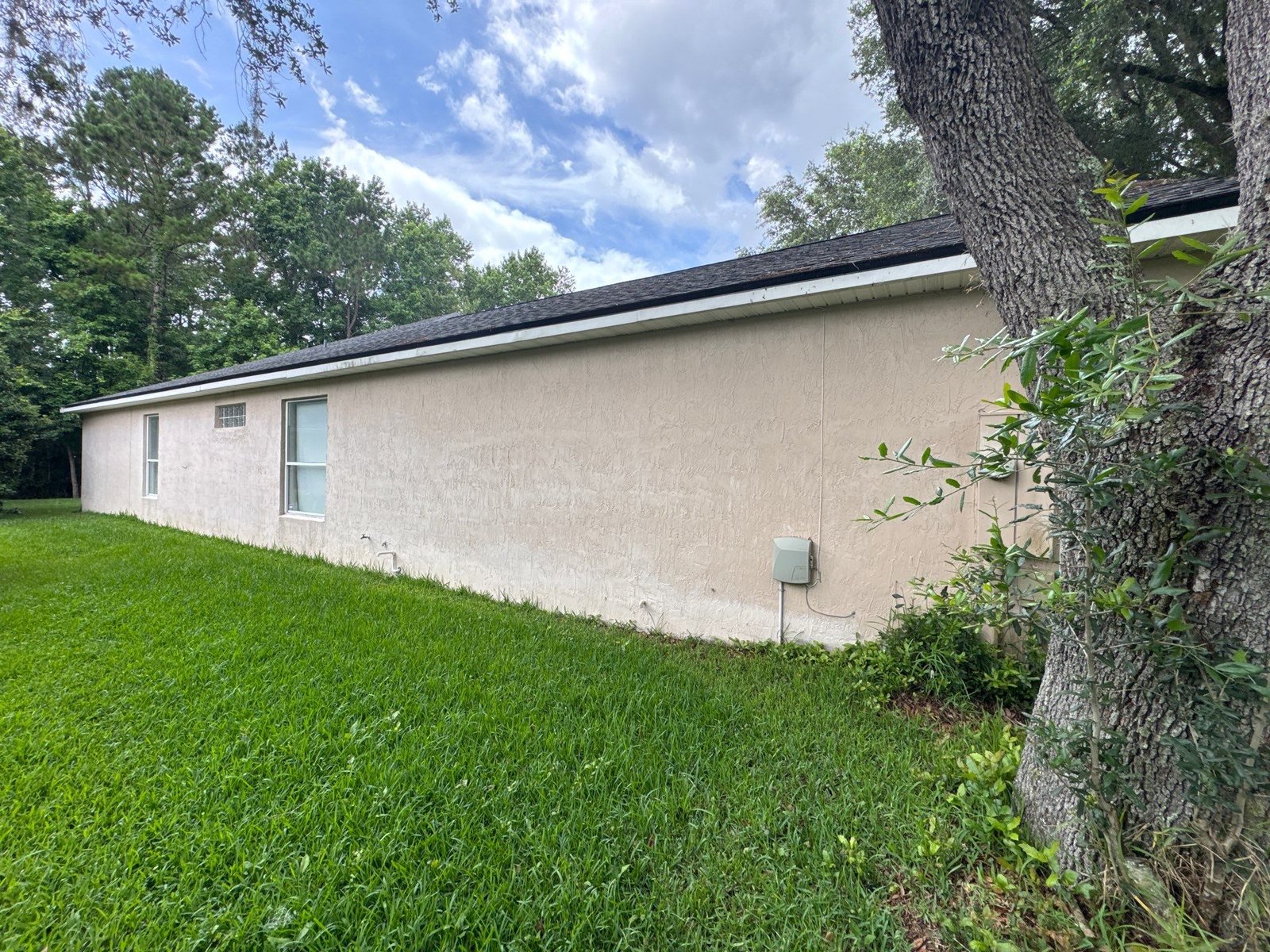
The East Hampton home before preparation — weathered stucco showing the kind of coating deterioration this article walks through.
Real Jacksonville Example: Heavily Weathered Stucco in East Hampton
This project involved a residential stucco home in East Hampton, Jacksonville, FL 32256, with a heavily weathered exterior. The existing coating showed significant deterioration and chalking, the stucco needed extensive preparation, and caulking throughout the home had aged well past the point of simply cleaning and repainting over it.
What stood out during the initial evaluation was how much the coating’s condition varied across the home — some areas were visibly powdery to the touch, others showed cracking and previous repair work, and the caulking at window and trim transitions had clearly been failing for some time. This is exactly the kind of condition we look for before recommending a full repainting system rather than a cleaning-and-touch-up approach.
How Can You Tell if Exterior Paint Is Chalking?
A simple hand test is the most practical way to check. Run a clean hand or a dark cloth across a dry section of the painted surface. If a powdery residue transfers onto your hand or the cloth, some degree of chalking is likely present.
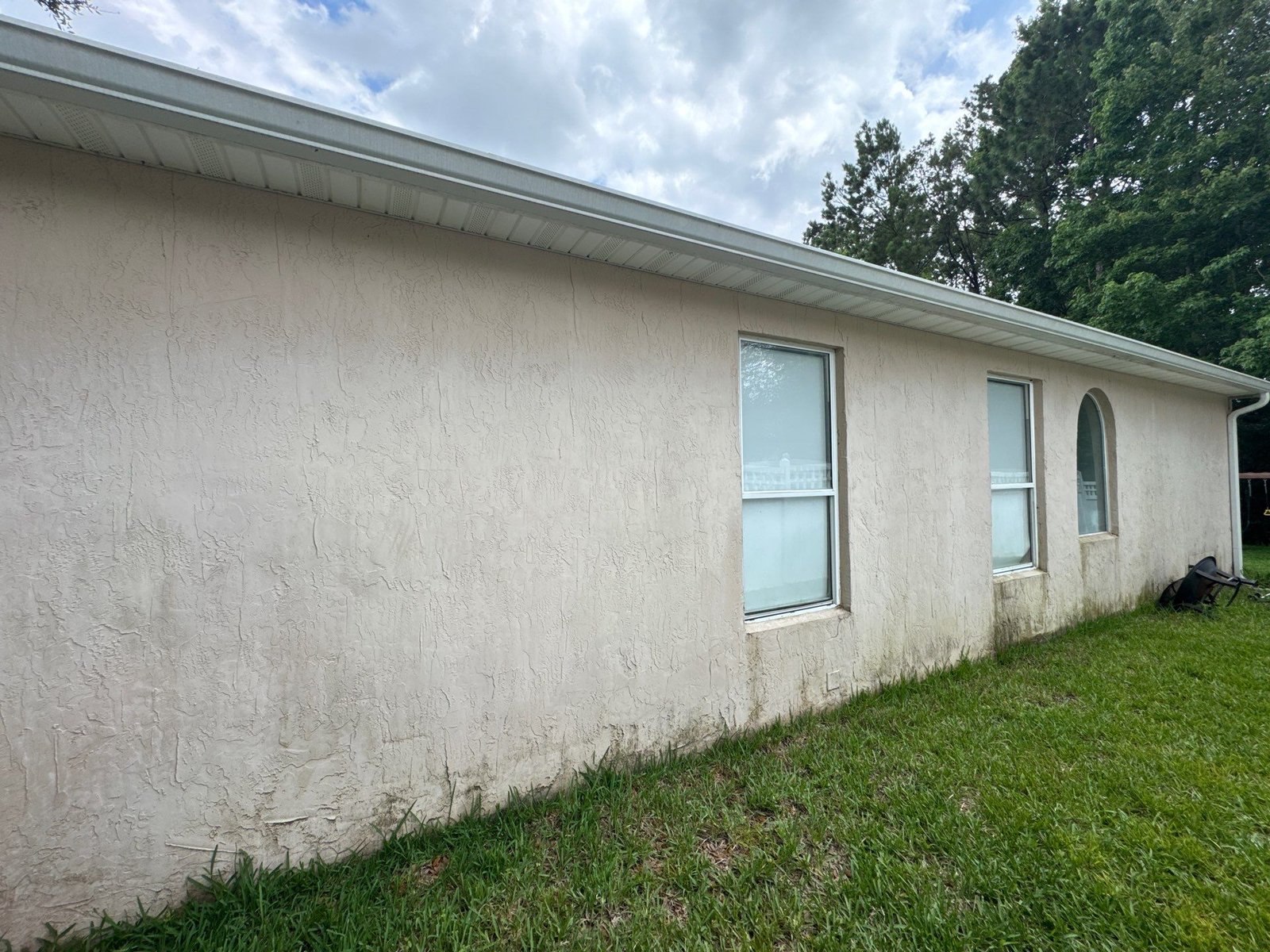
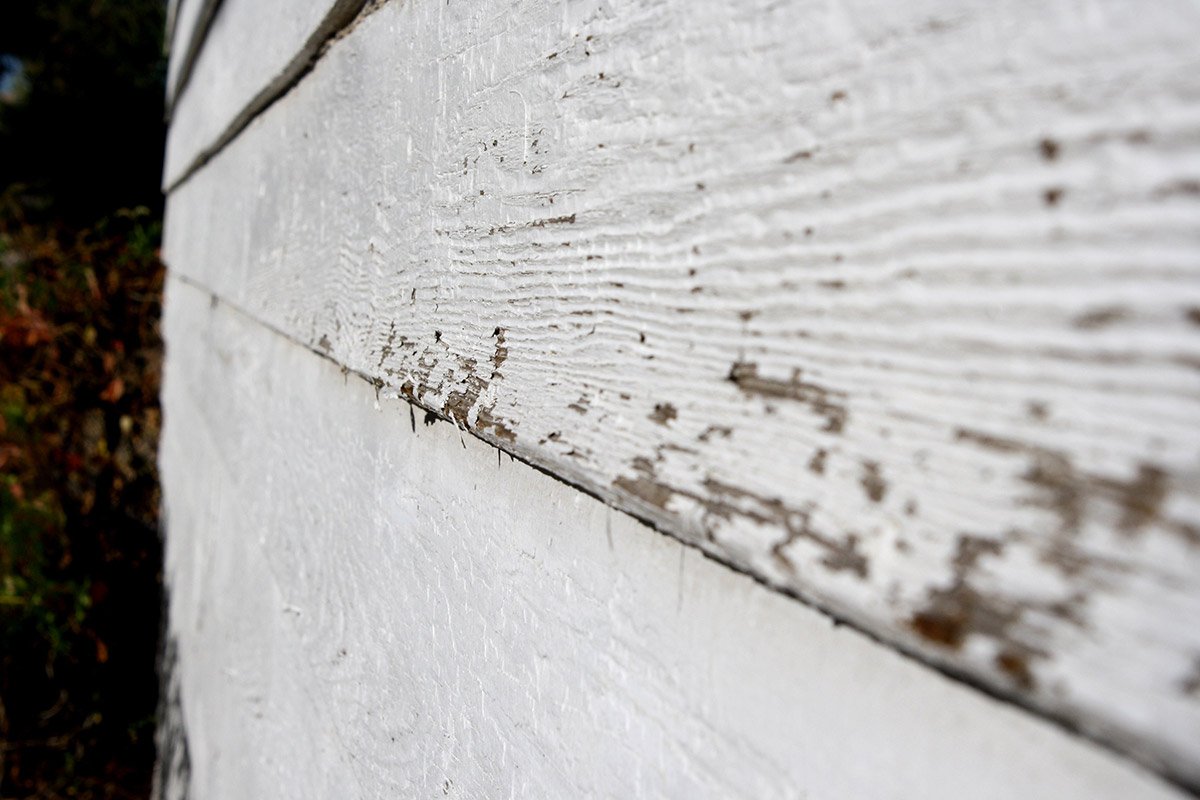
A close-up look at the chalking on the East Hampton home’s stucco — the powdery surface residue that develops as a coating weathers.
This test is a useful indicator, not a lab analysis. Surface dirt, pollen, mildew residue, and mineral or salt deposits can sometimes look similar to chalking from a distance, and it’s worth ruling those out before assuming the coating itself has broken down. Mild weathering might leave only a faint trace on your hand. Heavy chalking, like what we found on parts of the East Hampton home, leaves an obvious, visible layer of powder that keeps transferring even after a light wipe.
Chalking vs. Fading vs. Peeling vs. Mildew
These conditions can look similar at a glance but point to different underlying issues, and they call for different responses before repainting.
| Condition | What You May Notice | What May Be Happening | Why It Matters Before Repainting |
|---|---|---|---|
| Chalking | Powdery residue transfers to hand or cloth | Coating surface layer breaking down from weathering | New paint may not bond well to loose powder |
| Fading | Color looks washed out or lighter than original | Pigment breaking down under UV exposure | Often accompanies chalking but is a separate process |
| Peeling | Coating lifting, curling, or flaking off | Adhesion failure, often tied to moisture | Loose material must be removed before recoating |
| Mildew / organic growth | Dark, greenish, or spotted discoloration | Surface growth, often in shaded or damp areas | May clean off without indicating coating failure |
| Dirt / pollen | General surface contamination | Environmental buildup sitting on the coating | Usually resolves with proper cleaning |
| Efflorescence / mineral deposits | White, crusty residue on masonry surfaces | Soluble salts moving through the substrate | A different mechanism than chalking, worth distinguishing |
Why Is Exterior Paint Chalking Common on Jacksonville Homes?
UV exposure is one of the central mechanisms behind coating breakdown, and Jacksonville’s near-constant, intense sunlight puts real, ongoing stress on exterior paint. Heat, rain, humidity, coating age, and the quality of the original product all interact with that UV exposure to determine how quickly a given wall starts to chalk.
It’s worth being precise here rather than vague: Jacksonville’s overall climate creates demanding conditions for exterior coatings generally, but that doesn’t mean any single factor like humidity directly causes chalking on its own. The mechanism is weathering-driven surface breakdown, and our climate simply provides more of the conditions — sun, heat, moisture cycles — that accelerate it.
Different elevations of the same home often deteriorate at different rates, which is exactly what we found on parts of the East Hampton project — sections with more direct sun exposure showed heavier chalking than more sheltered areas. We cover this pattern in more depth in our guide on why one side of a Jacksonville house fades faster than the others.
Why You Shouldn’t Simply Paint Over Heavy Chalking
A new coating needs to bond to a stable surface. If a heavily chalked wall is painted without adequate preparation, the new paint ends up bonding partly to loose, powdery material instead of a sound existing coating or substrate — and that loose layer can eventually let the new paint separate along with it.
It’s a bit like trying to tape something to a dusty surface — the adhesion is only ever as good as what you’re actually sticking to. That said, heavy chalking doesn’t automatically mean stripping a wall back to bare stucco. The right level of preparation depends on how severe the chalking actually is and the condition of what’s underneath it, which is exactly why an in-person evaluation matters more than a blanket rule.
What This East Hampton Stucco Home Needed Before Painting
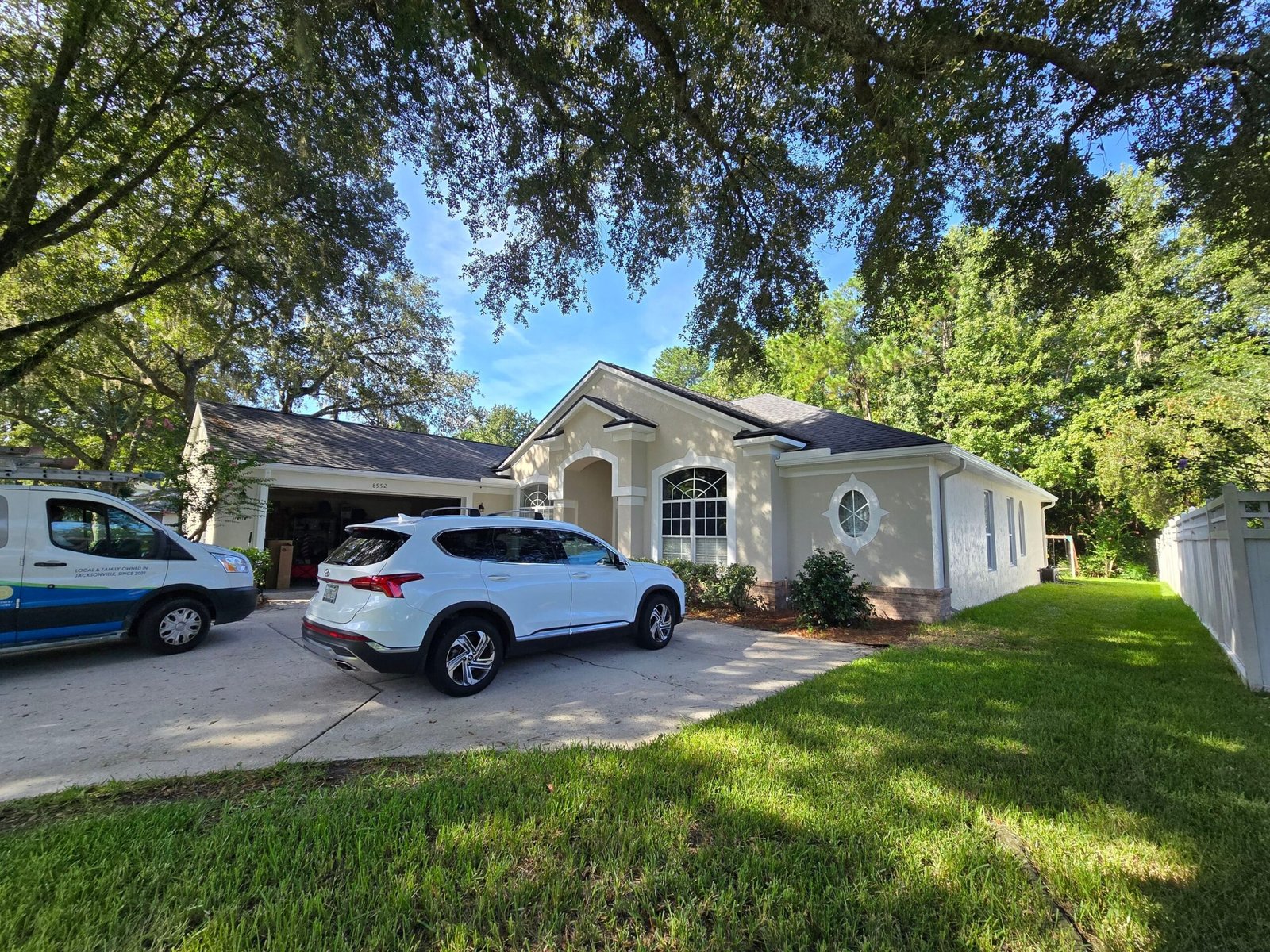
The completed front exterior of the East Hampton home, fully prepared and repainted.
Once we’d fully evaluated the existing coating and stucco condition, the preparation on this home followed a sequence that’s worth walking through conceptually, since it applies broadly to any heavily weathered exterior, not just this one:
- Evaluate the existing coating and stucco condition across every elevation
- Clean and remove surface contamination and unstable, loose material
- Identify deteriorated caulking throughout the home
- Address the stucco cracks and surface defects that needed attention
- Prepare weathered and previously repaired areas so they’d accept a new coating evenly
- Allow surfaces to reach appropriate condition before any coating went on
- Prime the specific areas where the substrate and condition actually required it
- Apply a coating system compatible with the prepared surface
None of these steps are optional shortcuts on a home in this condition — skipping any one of them is how a repaint ends up failing again within a year or two, on top of the same underlying problem that was never actually addressed.
Why the Caulking Mattered as Much as the Paint
This project had substantial caulking needs, and it’s worth understanding why that matters as much as the coating itself. Exterior sealants age on their own timeline — cracking, shrinking, separating from one side of a joint, turning brittle, and losing adhesion well before the surrounding paint shows comparable wear.
Simply smearing new caulk over badly failed material isn’t a real repair. The old, failed sealant generally needs to come out before new caulk goes in, particularly around windows, doors, trim, penetrations, and anywhere dissimilar materials meet — these transitions are where failed caulking causes the most actual damage, since they’re the points most likely to let water behind the coating. We go into this specific failure pattern in much more detail in our guide on why exterior paint peels around windows, which is worth reading if caulking and window-area peeling are part of what you’re seeing on your own home.
Why Chalking Matters on a Stucco Home
Stucco is a porous material, and that porosity changes how it holds contamination and residue compared to a smooth siding surface. Texture variations across a stucco wall can also mean chalking and weathering show up unevenly — heavier in some sections, lighter in others — which is part of why a full evaluation matters more than judging a stucco home’s condition from a single spot.
Cracks and previous repairs on stucco often need separate attention from the general chalking and coating condition, since a patched area can behave differently than the surrounding original material even after both get prepared and coated. Paint itself can’t repair structural issues in stucco — it can only address the surface once the substrate underneath is actually sound. For more on evaluating stucco cracks specifically, see our guide on which stucco cracks are cosmetic and which are dangerous, and for more on how stucco coatings fail more broadly, see why stucco paint peels in Jacksonville.
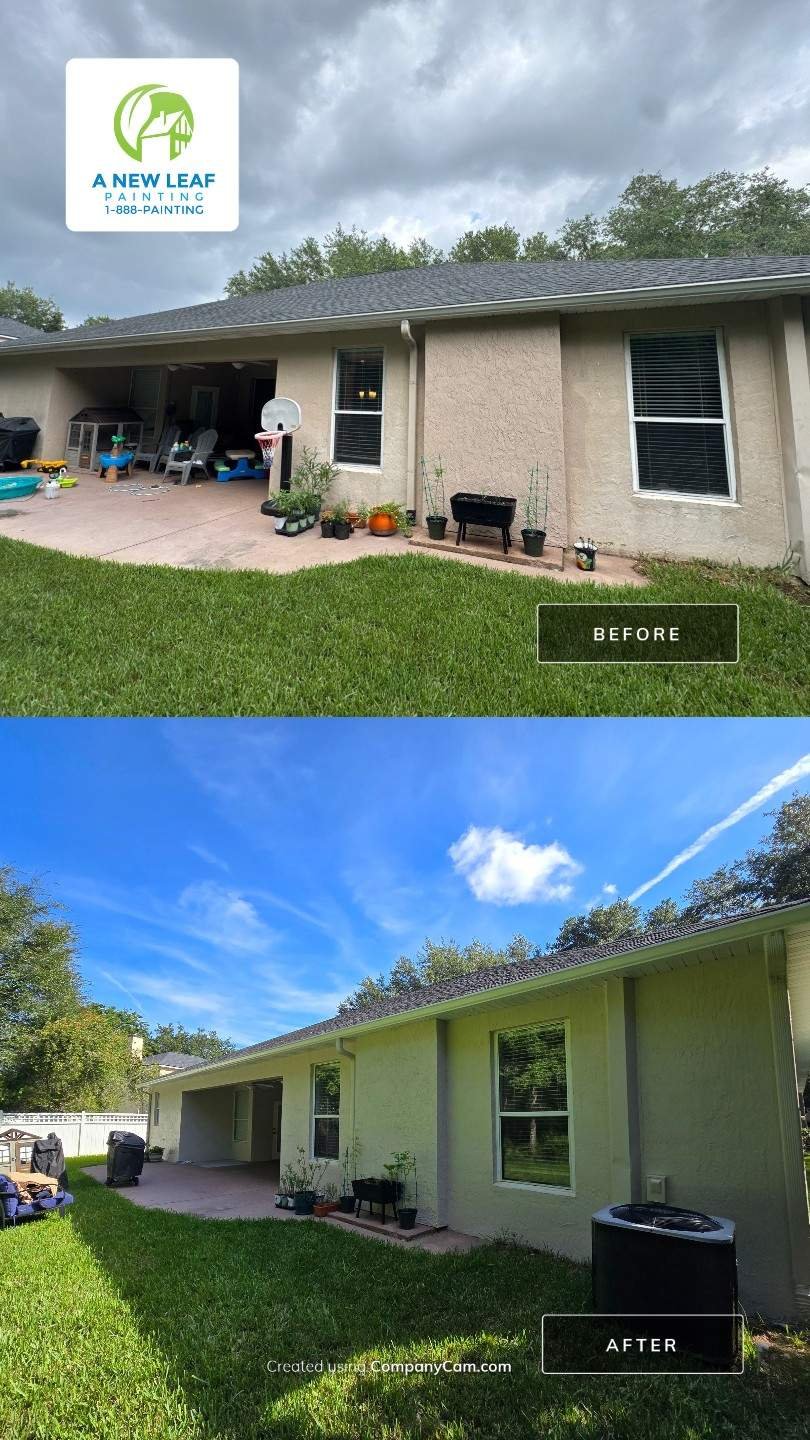
A before-and-after look at the East Hampton project, from weathered stucco to a fully prepared and repainted exterior.
When Is It Time to Repaint a Chalky Exterior?
Mild weathering on an otherwise sound coating may only call for monitoring, or a proper cleaning to see what condition actually remains underneath the surface residue. Broader coating deterioration is a different situation — heavy chalking across large areas, widespread fading, failed caulk throughout the home, multiple cracks or repairs, active peeling, exposed substrate, or coating breakdown that varies unevenly across elevations all point toward a full repaint rather than spot maintenance.
Age alone isn’t a reliable way to make this call. A coating’s actual condition tells you far more than how many years it’s been on the wall — which is exactly why an in-person evaluation, not a calendar, is what should drive the decision. Our guide on how often you should paint your house in Florida covers this in more depth.
Five Questions to Ask a Painter About a Chalky Exterior
- How are you determining whether the existing coating is sound enough to repaint over?
- How will the chalking actually be addressed before any coating goes on?
- Are any areas going to require primer, and specifically why?
- What failed caulking or stucco defects are included in the preparation scope?
- What coating system are you recommending for this substrate, and why that one?
These questions are useful even if you end up hiring a different contractor — a painter who can answer them clearly and specifically is telling you something real about how they’ll actually handle your home.
What Not to Do With a Chalky Exterior
- Don’t assume powdery residue is just dirt without actually testing it
- Don’t paint directly over heavy chalking without proper preparation first
- Don’t assume pressure washing alone resolves every chalking condition
- Don’t coat over caulking that’s actively failing
- Don’t assume every stucco crack is the same or needs the same repair
- Don’t use paint as a substitute for fixing an active water-intrusion problem
- Don’t choose a coating system based on brand name alone
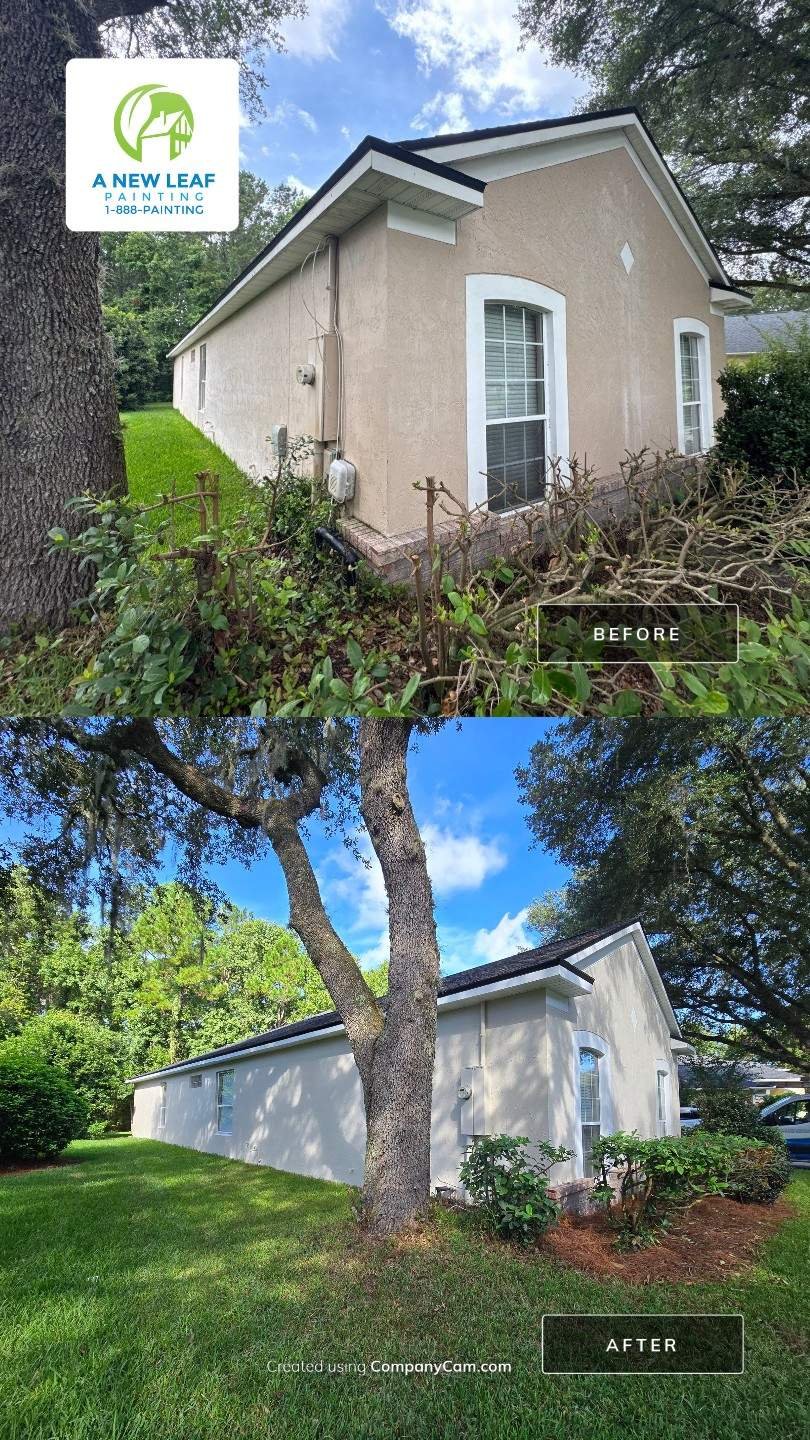
The East Hampton home’s transformation — from chalked, weathered stucco to a fully prepared and coated exterior.
The East Hampton Home, Completed
Once the chalking was properly addressed, the caulking replaced where it had failed, the stucco cracks evaluated and repaired, and the surface allowed to reach the right condition, the home received a full exterior coating system suited to the prepared substrate. The result is a stable, evenly coated exterior — not just a fresh color layered over the same underlying problems that caused the original coating to deteriorate.
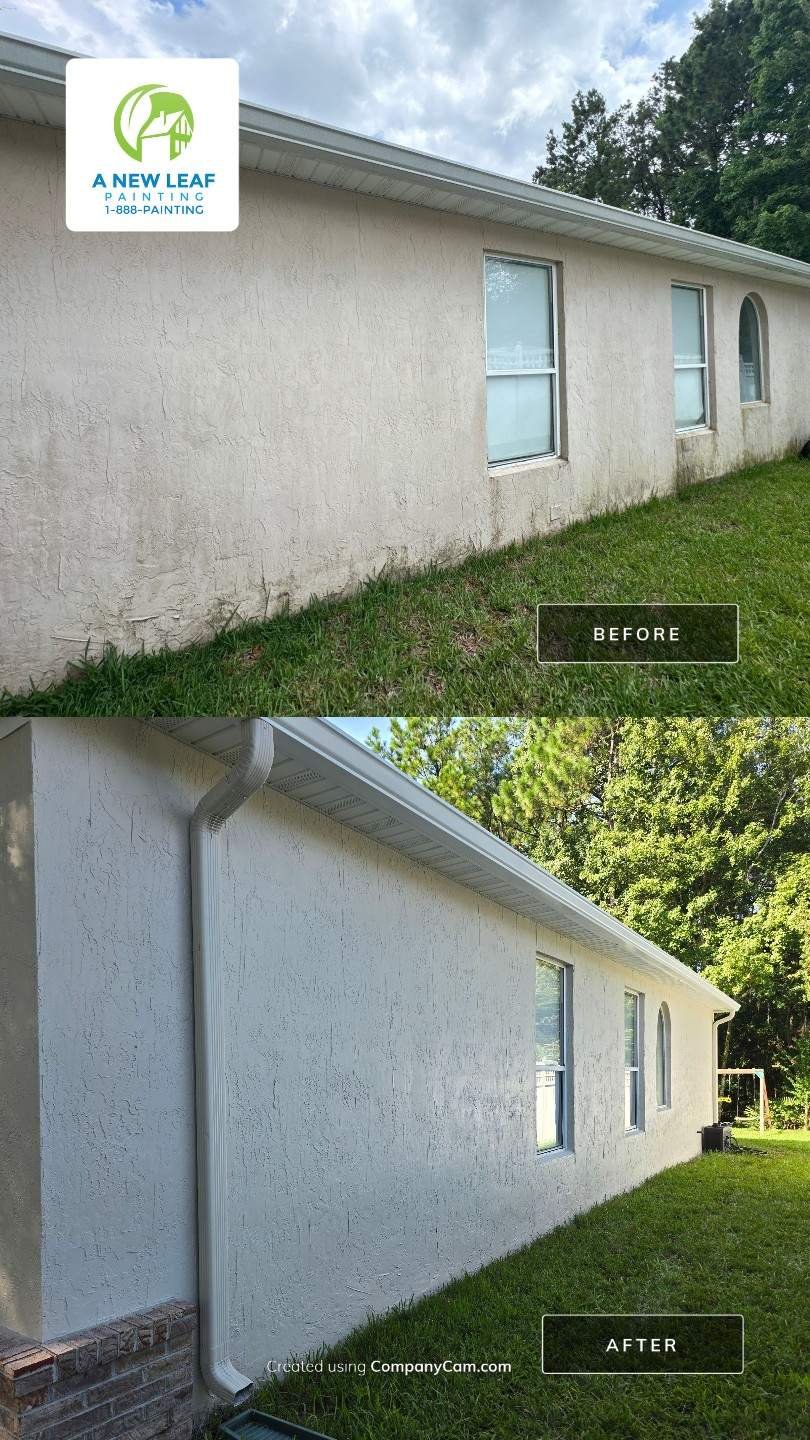
A before-and-after comparison of the completed East Hampton project — stucco fully prepared, caulked, and coated.
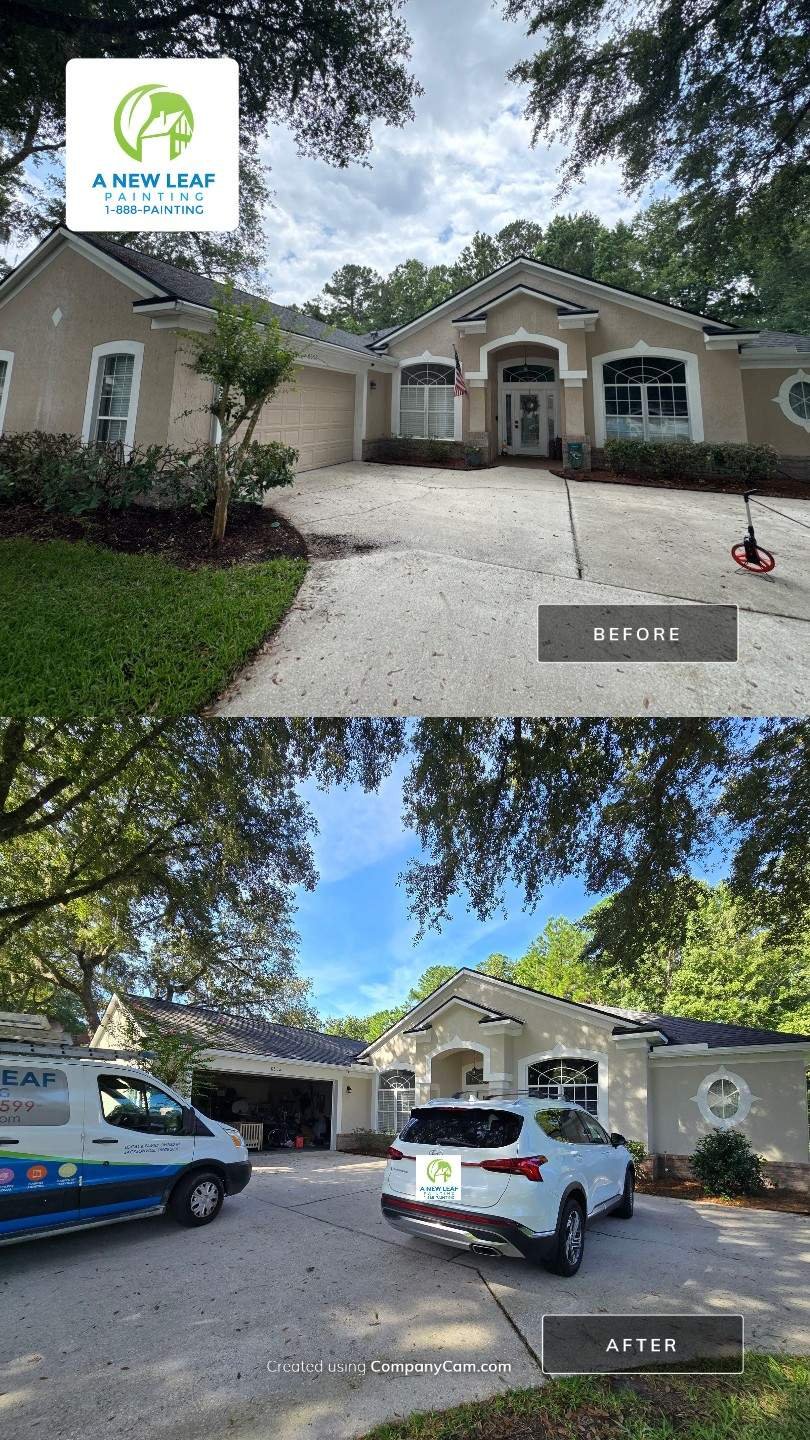
A wider before-and-after view of the completed East Hampton home in Jacksonville’s 32256 area.
Frequently Asked Questions
What is exterior paint chalking?
Chalking is the powdery residue that develops on a painted surface as the coating’s outer layer breaks down from weathering, typically driven by UV exposure and age.
Why does exterior paint turn chalky in Florida?
Jacksonville’s intense, near-constant sun exposure accelerates the UV breakdown that causes chalking, and heat, moisture cycles, and coating age all contribute alongside it.
Can you paint over chalky exterior paint?
Sometimes, but heavy chalking generally needs proper cleaning and preparation first — painting directly over loose, powdery residue risks the new coating bonding to unstable material rather than a sound surface.
How do you test exterior paint for chalking?
Wipe a clean hand or dark cloth across a dry section of the wall. If a powdery residue transfers, some degree of chalking is likely present — though this is an indicator, not a lab-grade test.
Does chalking mean the paint has failed?
Not automatically. Light chalking is a normal part of how exterior coatings age. Heavy, widespread chalking is a more significant sign that the coating has deteriorated and needs real attention before repainting.
Can pressure washing remove chalking?
Pressure washing can remove a meaningful amount of loose surface residue, but heavy chalking often needs additional preparation beyond washing alone before a new coating will bond properly.
Does chalking happen more often on stucco?
Stucco’s porous texture holds surface residue differently than smooth siding, and its texture can make chalking appear uneven across a wall, but the underlying weathering process is the same mechanism regardless of substrate.
Should chalky stucco be primed before painting?
Often, yes, particularly in heavily chalked areas — but the specific need depends on how severe the chalking is and the substrate’s actual condition, not a universal rule applied to every wall.
How can I tell the difference between chalking and mildew?
Chalking is a dry, powdery residue tied to coating breakdown, while mildew typically appears as dark, greenish, or spotted growth, often in shaded or damp areas. Testing with a dry cloth can help distinguish the two.
When should a chalky Jacksonville home be repainted?
When chalking is heavy and widespread, accompanied by failed caulk, multiple cracks, active peeling, or uneven coating breakdown across the home — condition matters far more than the coating’s age alone.
Ready to Have Your Exterior Evaluated?
If you’re seeing powdery residue, fading, failed caulk, cracks, or other signs of coating deterioration on a Jacksonville stucco home, the first step is determining what’s actually happening to the existing surface. A New Leaf Painting Contractors can evaluate the exterior, explain what preparation is appropriate, and provide an estimate based on the home’s actual condition. Licensed and Insured, and serving Jacksonville and Northeast Florida since 2001.
See our Jacksonville exterior painting services or explore the full Exterior Painting Resource Center for more guides like this one.
Call 904-615-6599 to schedule a free, no-pressure exterior evaluation.