Why Does One Side of My Jacksonville House Fade Faster Than the Others?
It is completely normal for one side of a Jacksonville home to age faster than the others. In fact, it is one of the most common conditions our exterior painters in Jacksonville, FL encounter during home evaluations.
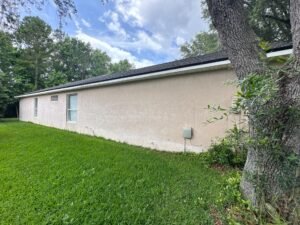
A homeowner may walk us around a house where the front elevation still looks presentable, the west side appears noticeably faded or chalky, and the shaded side has developed dark mildew streaks. That does not mean the same paint is randomly performing differently. Each side of a house develops its own microclimate based on sunlight, surface temperature, shade, moisture, airflow, landscaping, irrigation, and weather exposure.
After more than 25 years of exterior painting in Jacksonville, FL, we’ve learned that the key is identifying why an elevation looks older before recommending cleaning, repairs, or repainting. A wall weathered by intense afternoon sun requires a different solution than a shaded wall covered in mildew, a sprinkler-stained section of stucco, or an area experiencing true coating failure. Understanding the cause is what allows us to determine whether that elevation needs routine cleaning, localized maintenance, repairs, or repainting.
Homeowners researching these conditions can also explore our Exterior Painting Resource Center for detailed guides covering Florida exterior paint, stucco, surface preparation, coating problems, repairs, products, and ongoing maintenance.
Every Side of Your House Has Its Own Microclimate
It is tempting to think of a house as one exterior surface that should weather uniformly. In practice, no two elevations experience exactly the same conditions—even when they were painted on the same day with the same product.
Each wall is its own small environment, influenced by factors such as:
- Direct sunlight and UV exposure: How many hours the surface spends in full sun compared with shade.
- Surface temperature: How hot the wall itself becomes, which can be much different from the surrounding air temperature.
- Rooflines and overhangs: Architectural features can protect some areas while directing water or creating permanent shade in others.
- Drying time: A wall that dries quickly after rain behaves differently from one that remains damp for hours.
- Rain and irrigation: One elevation may receive direct rainfall or repeated sprinkler exposure while another remains relatively dry.
- Landscaping: Mature trees, shrubs and nearby structures can reduce sunlight and airflow.
- Surface material: Stucco, fiber cement, wood trim and previous repairs do not absorb or hold paint identically.
Compass direction is useful, but it is not a fixed rule. A west-facing wall shaded by mature trees may receive less afternoon sun than expected. A north-facing wall beside a reflective driveway may experience more heat and light than a shaded north wall on another property. Direction gives us a starting point; the actual conditions surrounding the home determine how the paint ages.
Why Afternoon Sun Can Fade One Wall Faster
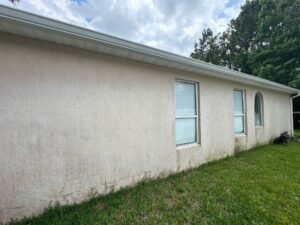
The most visibly faded elevation is often the side receiving several hours of strong afternoon sun. In Jacksonville, that exposure combines intense ultraviolet radiation with high surface temperatures and repeated heating-and-cooling cycles.
Exterior paint contains binders or resins that hold the coating together and keep its pigments attached to the surface. As UV exposure and weathering gradually affect that film, several changes may become visible:
- Color loss: The paint genuinely loses intensity rather than merely becoming dirty.
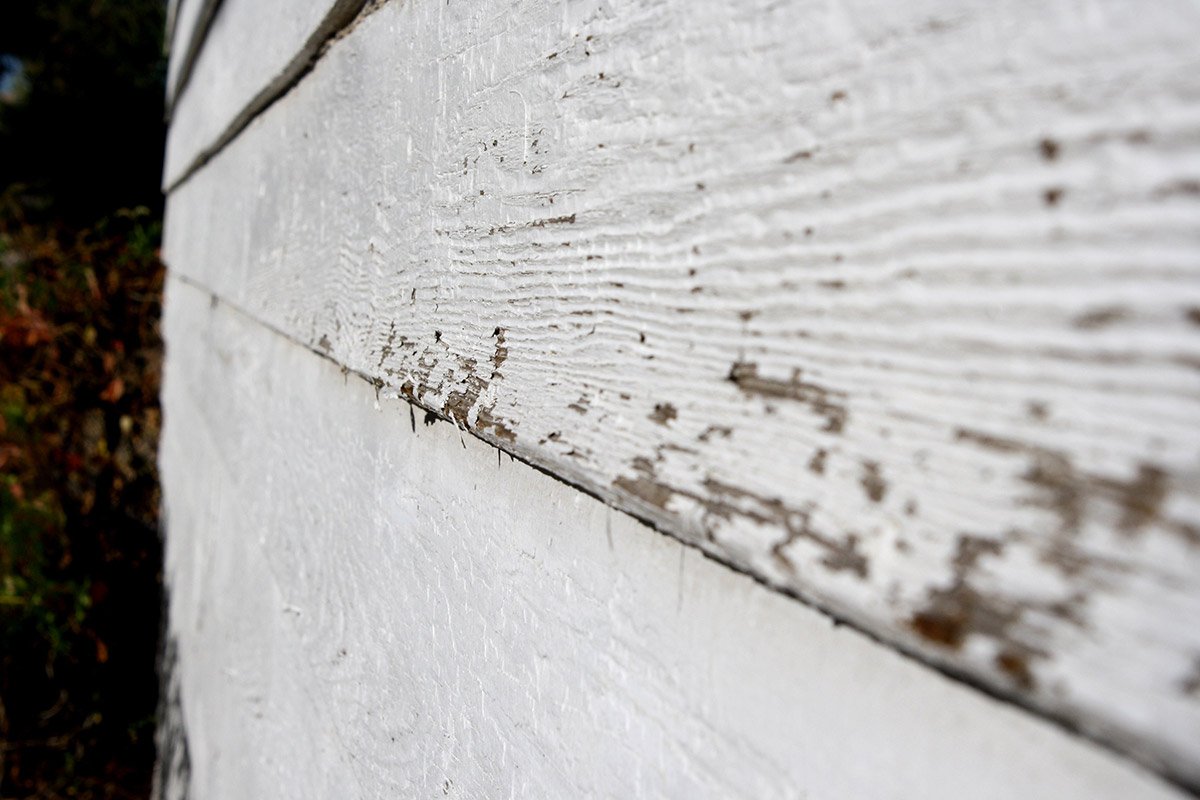
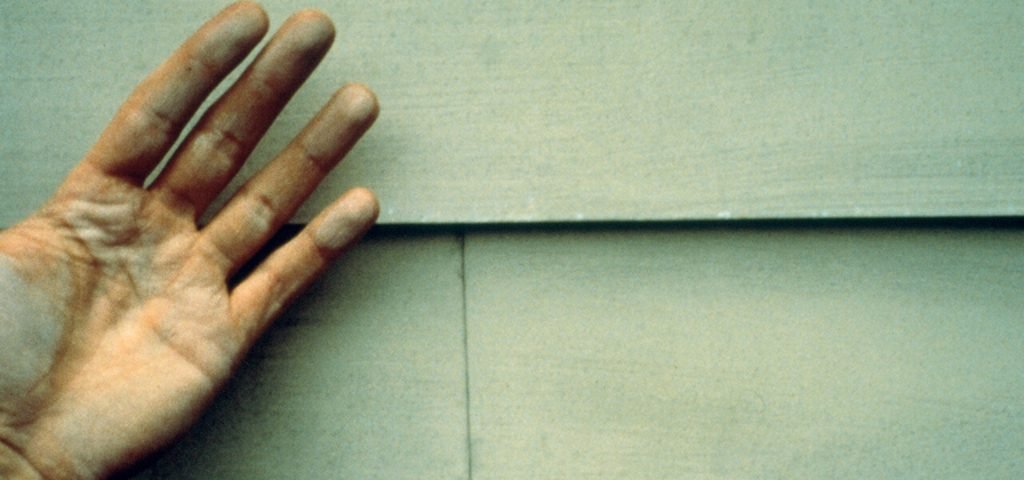
- Chalking: A powdery residue develops as the surface of the coating weathers.
- Loss of sheen: Satin or semi-gloss coatings may become noticeably duller.
- Uneven appearance: Repairs, touch-ups and different substrates may become more visible as the surrounding paint ages.
Doors, garage doors, shutters and trim sometimes show these changes sooner than the main body of the house. They may be painted a darker color, coated with a different product or exposed to more direct heat than the surrounding walls.
For a deeper explanation of the relationship between color, heat and UV exposure, see our guide to why dark exterior paint fades faster in Florida.
Do Dark Exterior Colors Always Fade Faster?
Not necessarily—but dark colors can behave differently under intense exposure.
Darker shades generally absorb more solar energy than lighter colors. On a heavily exposed elevation, that additional heat may increase the stress placed on the coating. However, color is only one part of the equation. Pigment selection, coating formulation, surface preparation, film thickness, product quality and actual exposure all influence long-term color retention.
This is why a dark accent door can show visible change while a lighter body color beside it still looks acceptable. The two surfaces may have different colors, materials, products and application histories even though they appear to be part of the same painted elevation.
Color choice is only one part of preserving an exterior finish. Product selection, preparation, application and maintenance all matter, as explained in our guide on how to keep exterior paint from fading.
Shaded Walls Age Differently—Not Necessarily Better
A shaded wall may retain its original color longer because it receives less direct UV exposure. That does not mean it will remain cleaner or require less maintenance.
Shaded elevations often dry more slowly after rain, morning dew or irrigation. When shade is combined with Jacksonville’s warmth, humidity, pollen and organic debris, the result can be an environment favorable to mildew and other organic growth.
Common conditions on shaded elevations include:
- Dark, greenish or gray mildew spotting
- Accumulated pollen and environmental dirt
- Moisture staining below rooflines or runoff areas
- Organic buildup near shrubs, trees and limited-airflow areas
- Darkened soffits and fascia beneath protected roof overhangs
Faded does not always mean failed. Dirty does not always mean failed. Mildew does not automatically mean the paint has failed.
A shaded wall may look worse than a sun-exposed wall while still having a serviceable paint film underneath the contamination. In that situation, cleaning and mildew treatment may be more appropriate than repainting.
More frequent gentle cleaning and closer attention to mildew can make a significant difference on shaded elevations. For many Northeast Florida properties, routine exterior washing is one of the simplest ways to control this buildup. Learn more about the benefits of an annual pressure wash and why cleaning can extend the useful appearance of an exterior finish.
Landscaping and Shade Change How Exterior Paint Weathers
Two walls painted by the same crew with the same coating can age differently simply because of what surrounds them.
Mature trees reduce direct sunlight but may also reduce airflow and extend drying time after rain. Dense shrubs close to the wall can hold moisture near lower sections of stucco or siding. Branches and plants can physically brush against painted surfaces, while leaves, pollen and organic debris collect in areas that already remain damp longer.
None of this necessarily means the landscaping must be removed. It means that a shaded, heavily landscaped elevation may require a different maintenance schedule than an open wall that receives more sunlight and airflow.
Sprinklers Can Make One Section Look Much Older
Irrigation is one of the most overlooked causes of localized discoloration on Jacksonville homes.
A sprinkler head repeatedly striking stucco, siding, doors or trim creates concentrated moisture exposure in the same area day after day. Depending on the water, substrate and coating, the visible results can include:
- Mineral deposits: Chalky or crusty buildup where water repeatedly dries on the surface.
- Localized staining: Discoloration that follows the shape of the sprinkler pattern.
- Organic growth: Mildew or algae concentrated in the area that remains damp.
- Dirt attraction: Damp surfaces hold airborne dirt and pollen more readily.
- Coating deterioration: Long-term exposure may eventually weaken the finish in that specific location.
We do not assume every irrigation mark is paint failure. In many cases, the first steps are cleaning the surface and adjusting the sprinkler so it no longer hits the house. Other times, years of repeated wetting have contributed to coating deterioration that should be addressed during repainting.
Your House Is Made From More Than One Surface
A typical Jacksonville exterior is rarely one uniform material. It may include:
- Stucco
- Fiber cement siding
- Wood fascia, trim and soffits
- Brick or masonry accents
- Metal doors, railings or decorative components
- Previously repaired stucco
- Replacement trim or siding installed after the original construction
- Different generations of caulk and patching material
These materials do not expand, absorb moisture or hold coatings in exactly the same way. Stucco is porous and behaves differently from James Hardie® fiber cement siding. Wood trim moves with humidity in ways masonry does not. Metal surfaces may require different primers and coatings altogether.
A patched area of stucco may also absorb primer and finish paint differently from the surrounding original material. Even if everything receives the same color, the underlying substrate was never truly uniform.
Previous Exterior Repairs Leave Their Own Fingerprint
Most homes carry a history of previous repairs, and those repairs may weather differently from the surrounding surface.
Stucco patches, crack repairs, wood replacement, spot priming, re-caulking and partial repainting can create differences in:
- Texture: A patch that does not match the original stucco texture remains visible even when the color is close.
- Porosity: New patching material and older painted stucco may absorb primer and paint differently.
- Sheen: Touch-ups performed later may reflect light differently from the original coating.
- Film thickness: Repaired areas may have more—or less—coating than the surrounding wall.
- Product type: Previous spot repairs may have used a different product from the original system.
None of this automatically means the previous work was performed poorly. It is often a natural consequence of repairing different parts of a home at different times.
This is also why proper surface preparation before residential painting is so important. The finish coat can only perform as well as the cleaned, repaired, sealed and primed surfaces underneath it.
Coating Quality and Application Matter More Than the Brand Name
Exterior paint performance depends on much more than the manufacturer’s name printed on the can.
Important factors include:
- Binder and resin quality: These components affect film strength, adhesion and resistance to weathering.
- Pigment and color-retention properties: Some formulations and colorants retain their appearance better under intense UV exposure.
- Product suitability: A coating appropriate for stucco may not be the correct system for wood, metal or another substrate.
- Surface preparation: Dirt, mildew, loose paint, failed repairs, and deteriorated coating residue must be addressed before repainting.
- Chalking deserves particular attention because the powdery material left by a weathered coating can interfere with adhesion if a new coating is applied over an unstable surface. If you’re seeing white or colored residue when you rub an exterior wall, our guide to exterior paint chalking explains what causes it, how to recognize it, and shows a real Jacksonville stucco home where extensive preparation was required before repainting.
- Film thickness and spread rate: Stretching a coating too far leaves less material available to withstand years of exposure.
- Number of coats: The specified coating system and actual coverage matter more than simply counting passes.
- Primer or conditioner: Bare, repaired, porous or heavily weathered areas may require additional preparation.
- Application and cure conditions: Temperature, humidity and approaching rain can affect application and curing.
No exterior paint is immune to weathering. A premium coating does not mean the color will never change. It should be selected and applied as part of a complete system designed to weather more slowly, remain better protected and maintain its appearance longer under the conditions present on that particular home.
Is It Fading, Chalking, Mildew, Dirt, Staining or Paint Failure?
These conditions can look similar from a distance, and more than one can exist on the same wall.
| Condition | What It Usually Looks Like | Possible Next Step |
|---|---|---|
| Fading | The color itself has visibly changed or lost intensity. | Evaluate exposure, coating condition and whether partial or complete repainting is appropriate. |
| Chalking | Powdery residue develops as the coating surface weathers. | Clean thoroughly, allow to dry and determine whether residual chalk requires conditioning or priming. |
| Mildew or organic growth | Dark, gray, greenish or spotted growth concentrated on damp or shaded surfaces. | Appropriate cleaning and mildew treatment may be sufficient if the coating remains sound. |
| Dirt, pollution or pollen | Surface contamination that dulls the finish but may wash away. | Clean and reassess the condition underneath. |
| Staining | Localized discoloration from irrigation, rust, roof runoff or moisture. | Identify and correct the source before treating the visible stain. |
| Paint failure | Peeling, blistering, flaking or physical loss of adhesion. | Determine the cause, remove unsound material and rebuild the coating system correctly. |
Chalking deserves particular attention because homeowners often mistake it for ordinary dirt or fading. If you are seeing powdery residue, peeling, blistering or other deterioration, our Jacksonville exterior paint failure guide explains common failure patterns and what may be causing them.
These conditions are not always easy to diagnose from a photograph. A wall can have fading and mildew at the same time, or dirt sitting over a chalking paint film. Cleaning a surface that actually needs repainting will not solve the underlying condition, while repainting a wall that only needed washing wastes money.
How Jacksonville’s Climate Produces Uneven Exterior Weathering
Several cause-and-effect relationships explain much of what we see during exterior painting estimates throughout Northeast Florida:
Strong sunlight creates prolonged UV exposure and high surface temperatures. The elevations receiving the most direct sun often show fading, chalking and loss of sheen first.
Humidity, rainfall and shade slow the drying process. These conditions support mildew and organic growth on elevations that receive less direct sunlight and airflow.
Irrigation creates localized moisture and mineral exposure. A sprinkler pattern can make one small section look dramatically older than the surrounding wall.
Jacksonville homes frequently combine several exterior materials. Stucco, fiber cement, wood trim, masonry and metal do not weather or hold coatings identically.
Previous repairs create differences in texture, porosity and film build. As the surrounding paint ages, those differences can become more visible.
These conditions do not act independently. They compound over years of exposure. Our guide to why Jacksonville’s climate is so tough on exterior paint goes deeper into how Northeast Florida’s sun, humidity, heat, rainfall and coastal conditions affect exterior coatings.
Does One Faded Side Mean the Whole House Needs Painting?
Not necessarily. The right answer depends on what is causing the difference and the condition of the remaining elevations.
- Sometimes cleaning is enough. Dirt, pollen and light surface mildew can often be removed without repainting.
- Sometimes mildew treatment is needed. Organic growth should be treated rather than simply covered with another coat of paint.
- Sometimes localized repair is appropriate. A stucco patch, failed caulk joint or damaged trim section may need attention without repainting the whole house.
- Sometimes one elevation is genuinely more weathered. The most heavily exposed side may need coating sooner than the protected elevations.
- Sometimes the entire coating system is reaching the end of its useful appearance. Painting one wall may create a noticeable difference in color, sheen or overall freshness.
If stucco cracking is part of the problem, our guide to cosmetic versus potentially serious stucco cracks explains which conditions generally warrant closer attention.
Peeling stucco paint is different from ordinary fading or surface mildew. When the coating is physically separating from the wall, see why stucco paint peels on Jacksonville homes for common moisture, preparation and adhesion issues.
When deteriorated fascia, soffits or trim are part of the problem, paint is not the repair. Damaged material should be addressed first. Our guide to wood rot repair before exterior painting explains why coating over compromised wood does not solve the underlying issue.
Can You Repaint Only the Faded Side?
Sometimes—but there are practical limitations.
The existing paint on the rest of the house may have changed in color and sheen since it was originally applied. Even if the exact paint name and formula are available, newly applied paint may look different beside a coating that has weathered for several years.
Possible causes of a visible mismatch include:
- UV-related color change
- Loss of sheen
- Different paint batches
- Different application methods
- Coating formulation changes
- Differences in texture and substrate absorption
Painting one elevation can still be a reasonable solution when the color is forgiving, the transition points are clean and the remaining sides are in good condition. In other cases, addressing the full exterior creates a more consistent result.
What We Look at Before Recommending a Solution
When one side of a Jacksonville home appears older than the others, we do not automatically recommend repainting the entire house.
We evaluate:
- Which elevations receive the strongest sunlight
- Whether the condition is fading, chalking, mildew, staining or coating failure
- Stucco, siding, wood and trim condition
- Previous patches and repairs
- Caulk joints around windows, doors and material transitions
- Sprinkler patterns and roof runoff
- Landscaping, shade and airflow
- Whether the coating remains firmly adhered
- Whether cleaning changes the appearance
- Whether one elevation can be painted without creating an unacceptable mismatch
The objective is simple: diagnose the condition first and recommend the scope second.
An experienced exterior painter walking the property can usually distinguish between surface contamination, UV exposure, substrate condition, previous repairs, normal coating weathering and genuine paint failure. That distinction determines whether the correct next step is cleaning, routine maintenance, localized repair, painting one elevation or repainting the entire exterior.
If one side of your Jacksonville home looks noticeably older than the rest, our Jacksonville exterior painting contractors can evaluate each elevation individually and explain what we see before recommending a scope of work. You can also explore our Exterior Painting Resource Center for more homeowner guides covering exterior paint failure, stucco, preparation, Florida weather, coating systems, repairs and maintenance.
Ready to have your home’s exterior evaluated? Call 904-615-6599 to schedule a free, no-pressure estimate.
Frequently Asked Questions
Is it normal for one side of my house to fade faster?
Yes. Each elevation receives a different combination of sunlight, shade, moisture, heat and airflow. Uneven exterior weathering is common, especially in Florida.
Does a west-facing wall always fade first?
No. West-facing walls often receive strong afternoon sun, but actual exposure depends on trees, neighboring structures, rooflines and the home’s orientation. A shaded west wall may age more slowly than a fully exposed south-facing elevation.
Why does the shaded side look dirty instead of faded?
Shaded surfaces receive less UV exposure but may dry more slowly after rain or irrigation. That creates favorable conditions for mildew, pollen and organic buildup. The underlying paint may still be in serviceable condition.
Can sprinklers affect exterior paint?
Yes. Repeated sprinkler exposure can produce mineral deposits, localized staining, dirt accumulation, mildew and, over time, coating deterioration in the specific area being hit.
Do darker exterior colors fade faster?
They can under intense exposure because darker colors generally absorb more solar heat. However, the specific pigment, coating formulation, product quality, preparation and sun exposure all affect performance.
Why does one wall look older if the entire house was painted together?
Different exposure, substrates, repairs, landscaping, irrigation and drying conditions can cause each wall to weather differently even when the whole house was painted at the same time.
How can I tell whether a wall needs cleaning or repainting?
Surface dirt and mildew may improve significantly with proper cleaning. Genuine fading, severe chalking, peeling, blistering and loss of adhesion point toward coating deterioration. Because these conditions can overlap, an onsite evaluation is the most dependable way to determine the proper solution.
Will painting only the faded wall match the rest of the house?
Sometimes. The result depends on the color, existing fading, sheen, texture, product and transition points. Newly applied paint may appear different beside paint that has weathered for several years.
A New Leaf Painting Contractors provides professional exterior painting in Jacksonville, FL and communities throughout Northeast Florida. Since 2001, our licensed and insured residential painters have helped homeowners protect and restore stucco, fiber cement siding, wood trim, fascia, soffits, doors, shutters and other exterior surfaces through careful preparation, appropriate repairs and professional coating systems. We serve Jacksonville, Nocatee, Ponte Vedra Beach, St. Johns, Fleming Island, Orange Park, St. Augustine and surrounding First Coast communities. For an exterior painting estimate, call 904-615-6599.