How Florida Sun Affects Dark Exterior Paint Colors
Dark exterior colors are everywhere right now. Charcoal, deep navy, bronze, rich brown, and especially black are all over Pinterest, Instagram, and home design magazines. They look stunning on the right home in the right setting. But in Florida, dark exterior paint comes with a real trade-off most homeowners don’t hear about until it’s too late: dark colors fade faster, and they fade unevenly, and they fade most aggressively on the parts of your home that take the worst of the sun.
After more than 25 years painting Northeast Florida homes — Jacksonville, Ponte Vedra Beach, Nocatee, St. Johns County, Fleming Island, the Beaches, and beyond — we’ve seen the same pattern over and over. A homeowner falls in love with a charcoal or deep navy exterior, has it professionally applied, and then watches the south- or west-facing walls go chalky and washed-out within a few years while the shaded sides still look fresh.
This guide explains why it happens, where it’s worst, and how to make a dark color choice that actually holds up under Jacksonville sun.
Quick Answer
Why does dark exterior paint fade faster in Florida?
Dark exterior paint fades faster in Florida because darker pigments absorb significantly more UV light and heat than lighter colors. On south- and west-facing walls — especially on stucco, garage doors, and dark accents — that absorbed energy accelerates pigment breakdown, surface chalking, and color loss. Premium acrylic exterior paints with UV-resistant pigment systems like Sherwin-Williams Duration, Sherwin-Williams Emerald, Benjamin Moore Aura, and Benjamin Moore Regal hold dark colors significantly longer than lower-grade paints or dark elastomeric coatings. Strategic use of dark colors — on doors, shutters, and accents rather than full body coverage — is often the better long-term choice in Northeast Florida.
The Real Reason Dark Paint Fades Faster
Color isn’t just a matter of preference. It’s physics. Light-colored exterior paint reflects most of the sunlight that hits it. Dark-colored paint absorbs most of it. That absorbed energy has to go somewhere — and where it goes is into the pigment system, the binder resins, and the substrate underneath.
UV radiation breaks down the chemical bonds in pigment particles. Every pigment fades over time, but darker pigments — particularly the organic pigments used to create deep blacks, charcoals, navies, and rich browns — break down faster than the inorganic pigments used in light earth tones, off-whites, and pastels. The molecular structure of the pigment determines how it reacts to UV exposure, and the dark pigments have less stable bonds to begin with.
On top of that, dark surfaces get hotter. A black exterior wall in direct Florida summer sun can run 40–60°F hotter than a white wall in the same conditions. That heat doesn’t just speed up pigment breakdown — it stresses the binder resins that hold the paint film together, accelerates chalking on the surface, and stresses the caulk joints, sealants, and substrate behind the coating.
The result: a dark exterior paint job that might last 12–15 years in a cool, low-UV climate often shows visible fading in Florida within 4–8 years. On the worst-exposed elevations, the difference is dramatic.
Why Florida Punishes Dark Paint Harder Than Most Climates
Northeast Florida creates a specific combination of conditions that compound the dark color fade problem:
- Year-round UV exposure. Many parts of the country get serious UV for 4–5 months a year. Jacksonville gets it 12 months a year. Coatings here never get a break from solar stress.
- High summer temperatures. Surface temperatures on dark exterior walls can reach extreme highs during peak summer afternoons, especially on south- and west-facing elevations. Heat accelerates every form of paint film breakdown.
- Constant humidity. Florida humidity creates ideal conditions for mildew growth on exterior surfaces, and mildew is more visible on dark colors. Even when the paint itself is holding up, the appearance can deteriorate from biological growth on the film surface.
- Wind-driven rain from afternoon storms. Summer thunderstorms drive water horizontally into exterior walls. The cycle of intense heat followed by sudden water cooling stresses the coating film and the substrate behind it.
- Coastal salt air. Homes in Ponte Vedra Beach, Atlantic Beach, Jacksonville Beach, and Amelia Island deal with salt-laden air that accelerates substrate breakdown and pulls coating life shorter than the manufacturer-rated maximum.
- Long cooling and heating cycles. Daily and seasonal temperature swings cause stucco, siding, and substrate materials to expand and contract continuously, stressing the paint film at the substrate interface.
This is why a coating that might perform beautifully in Vermont struggles in Florida, and why dark colors specifically struggle here in ways homeowners often don’t anticipate.
The South- and West-Facing Wall Problem
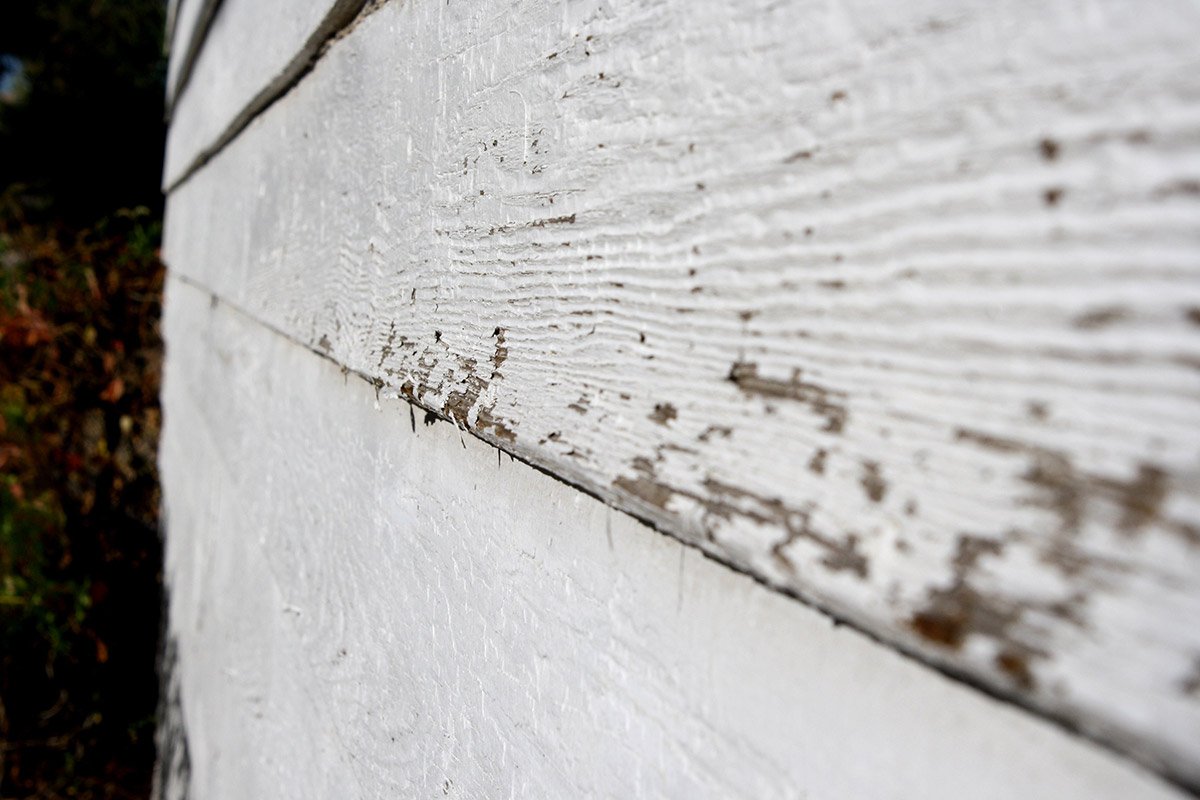
If you walk around any Jacksonville home with dark exterior paint that’s 5+ years old, you’ll see something striking: the elevations don’t match. The north- and east-facing walls usually look fine. The south- and west-facing walls look noticeably faded, sometimes dramatically so.
This is the most consistent pattern in Florida exterior fade failure. South-facing walls receive direct sun for the longest portion of the day, particularly in summer when the sun is highest. West-facing walls take the most intense heat exposure during afternoon hours, when ambient temperatures peak. East- and north-facing walls get significantly less direct UV exposure and stay cooler.
The visual result is a home where one or two elevations have faded from charcoal to a washed-out gray while the other elevations still hold the original color. It’s the most common reason we get called out to evaluate “premature paint failure” — and almost always, the failure is concentrated exactly where Florida sun hits hardest.
This pattern matters for color selection because it means a dark color that would look acceptable on a north-facing elevation might fail badly on the south face of the same home. If you can’t choose your home’s orientation, you can choose how aggressively to use dark colors on the elevations most exposed to UV.
Why Dark Elastomeric Paint Is Especially Risky
Elastomeric paint is excellent for waterproofing and crack bridging on stucco. It’s not the right product for dark color retention.
The reason: most elastomeric formulations weren’t engineered with the same UV-resistant pigment technology that goes into top-tier premium acrylic exterior paints. Elastomeric is built around film build, flexibility, and waterproofing. Color longevity in dark shades is often a secondary consideration.
The result: darker elastomeric colors can fade visibly within 4–6 years on Florida exteriors, particularly on south- and west-facing walls. We see this constantly on Jacksonville stucco homes that were repainted in trendy charcoal, navy, or black colors using elastomeric coatings. The waterproofing performs as expected. The color does not.
If you want a dark color on a stucco home in Florida, premium acrylic is almost always the better product choice. For a deeper breakdown of when elastomeric is the right call and when it isn’t, see our guide on elastomeric paint for stucco homes in Jacksonville, FL. For the head-to-head product comparison, see elastomeric paint vs acrylic paint: which is better for stucco?
Considering a dark exterior color in Jacksonville? Talk with our team about fade resistance, product options, and color placement before you commit. Schedule a free exterior painting estimate.
The Best Paint Products for Dark Exterior Colors in Florida
If you want a dark exterior color and you live in Northeast Florida, the product matters more than almost any other decision in the project. This is not the place to save money on builder-grade paint.
The premium acrylic product lines we recommend for dark colors on Jacksonville exteriors:
- Sherwin-Williams Duration Exterior — Engineered with PermaLast technology and UV-resistant pigments. One of the most durable consumer-available exterior coatings on the market for color retention.
- Sherwin-Williams Emerald Exterior — Premium-tier formulation with advanced UV protection and color stability. Strong choice for darker shades on stucco and properly prepped substrates.
- Benjamin Moore Aura Exterior — Color Lock technology specifically engineered for vibrant color retention under sun exposure. Excellent performance on darker shades.
- Benjamin Moore Regal Select Exterior — High-performance acrylic with strong UV protection at a slightly lower price point than Aura. Good option for darker accent applications.
The common thread across all four products: UV-resistant pigment technology, high-quality binder resins, and engineering specifically targeted at long-term color retention. These products consistently outperform lower-grade exterior paints — and most elastomeric formulations — on dark color durability under Florida sun.
The price difference between premium acrylic and budget exterior paint can seem significant on a quote. Across the actual life of the coating, premium acrylic on dark colors is almost always the better dollar-per-year value because the alternative is repainting in 4–5 years instead of 8–10. For a complete breakdown of premium product options for Florida exteriors across every substrate type, see our guide on the best exterior paint for Florida sun and humidity.
Smarter Dark Color Choices for Florida Homes
If you want the dark color aesthetic without the worst of the fade problem, the most reliable path is choosing slightly muted versions of trending colors rather than the most saturated, deepest examples. Here’s how that translates:
- Deep greige instead of true black. A warm dark gray with brown undertones reads almost as dramatic as black on the right home, but the lighter base value and earthier pigments hold up significantly better against Florida UV.
- Charcoal gray instead of pure black body. A genuine dark charcoal still creates strong visual impact while reflecting more light than a true black.
- Muted navy instead of bright navy. A grayed-down navy with more complexity in the undertones holds color better than a saturated, true blue.
- Bronze or warm taupe instead of dark brown. Earthy mid-tone browns hold up dramatically better than rich, dark chocolate browns.
- Deep green as accent, not full body. Dark forest greens are gorgeous on the right home, but they fade badly on full-body applications. Restrict to doors, shutters, or single accent walls.
- Darker doors and shutters instead of full-body dark colors. The single best strategy for getting the dark color aesthetic with minimal fade exposure — covered in detail in the next section.
Where Dark Colors Work Best on Florida Homes
The strategic answer to the dark color question in Florida is usually “yes, but in the right places.” The locations where dark colors hold up well — and where they create the strongest visual impact for the lowest fade risk:
- Front doors. A dark front door is the highest-impact, lowest-risk place to use a deep color. Small surface area, easy to repaint when needed, and it carries serious design weight.
- Shutters. Same logic as doors. Small surface area, replaceable, and they read as intentional design rather than a fading problem when they eventually need refresh.
- Small accent gables or single architectural features. Limited exposure, controlled placement, and high visual impact.
- Garage doors with caution. Dark garage doors look striking, but they take direct sun on most homes and can warp from heat exposure. Use only with premium products and full understanding of the maintenance reality.
- Shaded elevations. If your home has an elevation that genuinely doesn’t get direct sun — north-facing on a fully shaded lot, or under deep overhangs — dark body colors on that face are lower-risk.
- Trim accents. Dark trim against light body color is one of the most durable ways to use dark paint because the surface area is small and easily refreshed.
Where Dark Colors Are Riskier
Conversely, the situations where we recommend serious caution before committing to a dark color:
- Full-body dark stucco on south- or west-facing primary elevations
- Large, unshaded garage doors on west-facing fronts
- Coastal homes in Ponte Vedra Beach, Atlantic Beach, and Amelia Island where salt air compounds UV stress
- Homes in HOA communities with strict palette enforcement that may reject dark body colors
- Surfaces with prep concerns — chalking stucco, peeling existing paint, or substrate damage that hasn’t been addressed (for what causes peeling stucco paint and how to fix it, see our guide on why stucco paint peels in Jacksonville)
- Projects using elastomeric coatings instead of premium acrylic
- Any project where the homeowner expects 10+ years of consistent appearance from a budget-tier paint
HOA and ARB Considerations for Dark Exterior Colors
If your home is in an HOA community in Northeast Florida, the dark color question isn’t just about durability — it’s also about whether the architectural review board will approve the color in the first place.
Many Jacksonville-area HOAs restrict dark body colors as a matter of policy. Some communities require specific LRV (light reflectance value) thresholds — typically LRV 55 or higher for body colors, which excludes most dark shades. Others allow dark colors only on doors, shutters, or trim accents rather than full body coverage. Some explicitly prohibit black, deep navy, or near-black colors on residential exteriors.
Before you fall in love with a dark color, check your community’s current approved palette and architectural guidelines. A color that looks beautiful in a magazine may not be allowed in Nocatee, Sawgrass, RiverTown, Palencia, or many other master-planned communities across Northeast Florida. Submitting a dark color application without checking the palette first is one of the most common reasons for HOA paint denial.
For a complete breakdown of what ARBs look at and how to improve your approval odds, see our guide on why HOA paint colors get denied in Nocatee, Sawgrass, and St. Johns County. Our Jacksonville HOA paint color guide covers approved palettes for 23 communities, and our HOA paint submission packet checklist walks through every component your ARB application should include.
How to Make Dark Exterior Paint Last Longer in Florida
If you’ve decided dark is the direction for your home, here’s how to give the paint job the best shot at long-term performance:
- Use a premium acrylic exterior paint. Not builder-grade, not mid-tier. Top-tier products from Sherwin-Williams or Benjamin Moore — Duration, Emerald, Aura, or Regal Select. The product cost difference is small compared to the labor cost of repainting in 4 years instead of 9.
- Choose the slightly lighter version of your color. The difference between a true charcoal and a slightly lighter dark gray is barely perceptible to the eye but dramatic for fade resistance.
- Test samples in real sunlight on your actual home. Color looks completely different in afternoon sun than it does on a digital screen or a small chip in a paint store. Always test full-size samples on your actual elevation, in your actual lighting, before committing.
- Check LRV before committing — and before submitting to your HOA. A color’s LRV is a strong predictor of how it’ll perform in Florida sun. Lower LRV means more heat absorption and faster fade.
- Prep the substrate properly. Pressure wash to remove dirt, mildew, and any chalking. Address all peeling, blistering, or failing existing paint before the new color goes on. The best paint in the world will fail prematurely on bad prep.
- Use the right primer where needed. Some dark colors require specific tinted primers to achieve full coverage and color depth in two topcoats.
- Seal cracks and caulk joints properly. Failed caulk creates water entry points that accelerate coating failure regardless of paint quality.
- Avoid painting over chalking surfaces. If you can rub white powder off your existing paint, the surface needs to be cleaned and sealed before any new coating goes on.
- Apply two full coats. Skipping the second coat to save money is the single fastest way to ruin a premium paint job. Two coats is the minimum standard for proper film build.
- Maintain with gentle washing. An annual gentle wash to remove pollen, mildew, and debris extends the appearance life of the coating significantly. Skip pressure washing — soft wash only on finished paint.
- Inspect south- and west-facing walls yearly. Catch early signs of fade or coating thinning before they become full failures.
Our Recommendation for Dark Exterior Colors in Northeast Florida
After thousands of exterior repaints across Jacksonville, Ponte Vedra Beach, Nocatee, Fleming Island, St. Johns County, and the Beaches, here’s the honest read on dark exterior colors in Florida:
- Use dark colors strategically, not maximally. A dark front door, dark shutters, or a single accent area delivers the design impact homeowners are looking for without committing the entire south-facing elevation to fade.
- If you want a full-body dark color, commit to premium acrylic. Sherwin-Williams Duration, Sherwin-Williams Emerald, Benjamin Moore Aura, or Benjamin Moore Regal. Don’t compromise the product to save 10% on materials.
- Choose the slightly lighter version of the trending color. The visual impact is nearly identical. The fade performance is substantially better.
- Have an honest conversation about repaint timing. Even with the best products and best prep, dark exteriors in Florida often need attention sooner than light colors. Plan for that reality up front rather than being surprised by it later.
- Check HOA approval before falling in love with a color. Many communities restrict dark body colors. Submitting an unapprovable color creates weeks of delay and wasted effort.
Frequently Asked Questions
Why does dark exterior paint fade faster?
Dark pigments absorb more UV light and heat than lighter pigments. UV exposure breaks down pigment chemical bonds, and absorbed heat accelerates that breakdown along with the binder resins that hold the paint film together. Darker colors also typically use organic pigments with less stable bonds than the inorganic pigments used in lighter colors.
Does black exterior paint fade in Florida?
Yes, often dramatically. Black is the most extreme version of the dark color fade problem because it absorbs the maximum amount of UV and heat. Even premium acrylic black coatings show fading within 5–8 years on Florida exteriors, especially on south- and west-facing walls. Pure black exterior paint requires the most premium products and the most realistic expectations about repaint timing.
What exterior paint color fades the least in Florida?
Generally, lighter colors with cooler undertones fade least under Florida sun. Off-whites, light grays, soft taupes, and muted earth tones in the LRV 55+ range typically maintain their appearance longest. Pure white reflects the most UV but can show dirt and mildew more visibly than slightly tinted lights.
Is dark paint bad for stucco?
Dark colors aren’t inherently bad for stucco, but they create more thermal stress on the substrate due to heat absorption. On stucco specifically, dark colors can accelerate hairline crack formation and stress caulk joints faster than light colors. With premium acrylic and proper prep, dark stucco is achievable — it just requires the right product and realistic maintenance expectations.
What is LRV and why does it matter?
LRV (Light Reflectance Value) is a measurement of how much light a color reflects, on a 0–100 scale. LRV 0 is true black. LRV 100 is pure white. In Florida, LRV is a strong predictor of how a color will perform under sun exposure — higher LRV reflects more light, absorbs less heat, and typically fades less aggressively. Many Jacksonville-area HOAs require body colors at LRV 55 or higher for this reason.
Can my HOA reject dark paint colors?
Yes, frequently. Many Northeast Florida HOA communities restrict dark body colors through architectural guidelines, approved palette requirements, or LRV thresholds. Always check your community’s current requirements before falling in love with a dark color, and submit your application before scheduling any painting work.
What paint holds dark colors best in Florida?
Top-tier premium acrylic exterior paints — Sherwin-Williams Duration, Sherwin-Williams Emerald, Benjamin Moore Aura, and Benjamin Moore Regal Select — consistently outperform lower-grade paints and most elastomeric formulations for dark color retention under Florida sun.
Should I use elastomeric paint for dark exterior colors?
Generally no. Elastomeric is engineered for waterproofing and crack bridging, not color retention. Darker elastomeric colors typically fade faster than premium acrylic darks under Florida sun. If you need waterproofing protection AND a dark color, the better approach is usually targeted elastomeric application on vulnerable areas combined with a premium acrylic topcoat.
Helpful Resources for Choosing the Right Exterior Color
Get Color Guidance That Holds Up
Thinking about a dark exterior color in Jacksonville?
A New Leaf Painting has been the most reviewed painting contractor in Jacksonville since 2001. We’ll help you choose a color and product system that looks beautiful, performs well under Florida sun, and makes sense for your specific home — all backed by our Iron-Clad Guarantee.
Residential Painters in Jacksonville, FL
A New Leaf Painting serves homeowners across Jacksonville and Northeast Florida with professional exterior painting and interior painting services. Whether your home needs a full exterior repaint, stucco repair, cabinet refinishing, trim painting, ceiling painting, or a move-in interior refresh, our team helps you choose the right process and products for your home.
We serve areas including Jacksonville, Mandarin, Southside, Ponte Vedra, Nocatee, St. Johns, Fleming Island, Orange Park, The Beaches, Amelia Island, and surrounding communities. If you searched for “exterior painters near me” or “interior painters near me,” you’re probably trying to find a local painting company that serves your area, understands your home type, and can help you avoid surprises before the project starts.