Top Rated Residential Interior vs. Exterior Painting
Interior and exterior painting may sound like the same service performed in two different places, but they require very different planning. Interior painting involves protecting floors, furniture, fixtures, and living spaces while addressing drywall repairs, surface preparation, sheen selection, and the way each room is actually used. Exterior painting has to account for weather exposure, moisture, UV, mildew, substrate condition, caulk failure, stucco cracks, wood deterioration, and coating compatibility. A company that performs one well is not automatically equally experienced in the other.
Interior painting is about refreshing and protecting the spaces you live in every day. Exterior painting is about protecting your home from Florida sun, rain, humidity, mildew, and long-term surface wear. Homeowners who want to understand those differences in more detail can explore our Interior Painting Resource Center and Exterior Painting Resource Center.
A New Leaf Painting Contractors is a Jacksonville, FL residential painting company serving Northeast Florida since 2001. Our residential painting services include both interior and exterior projects, along with the repairs and preparation that often need to be coordinated before painting begins. This guide compares interior and exterior painting side by side so you know what to expect, what to ask, and how to plan whichever project your home needs first.
Both Matter, But They Solve Different Problems
Interior and exterior painting in Jacksonville, FL require different preparation methods, paint products, timelines, and surface evaluations because the inside and outside of a home face different conditions.
Interior painting freshens rooms, updates dated colors, improves resale appeal, covers everyday wear, repairs drywall damage, and updates trim, doors, and ceilings. The result is a home that feels cleaner and more finished. The pressures it deals with are human: fingerprints, furniture scuffs, kids, pets, and cleaning.
Exterior painting protects against weather, improves curb appeal, seals exterior surfaces, addresses fading, chalking, and peeling, protects wood trim and fascia, helps maintain stucco, siding, and masonry, and keeps you compliant with HOA color requirements. The pressures here are environmental and relentless: UV, moisture, heat, and salt.
That difference in purpose drives every other difference below.
Interior Painting Surfaces
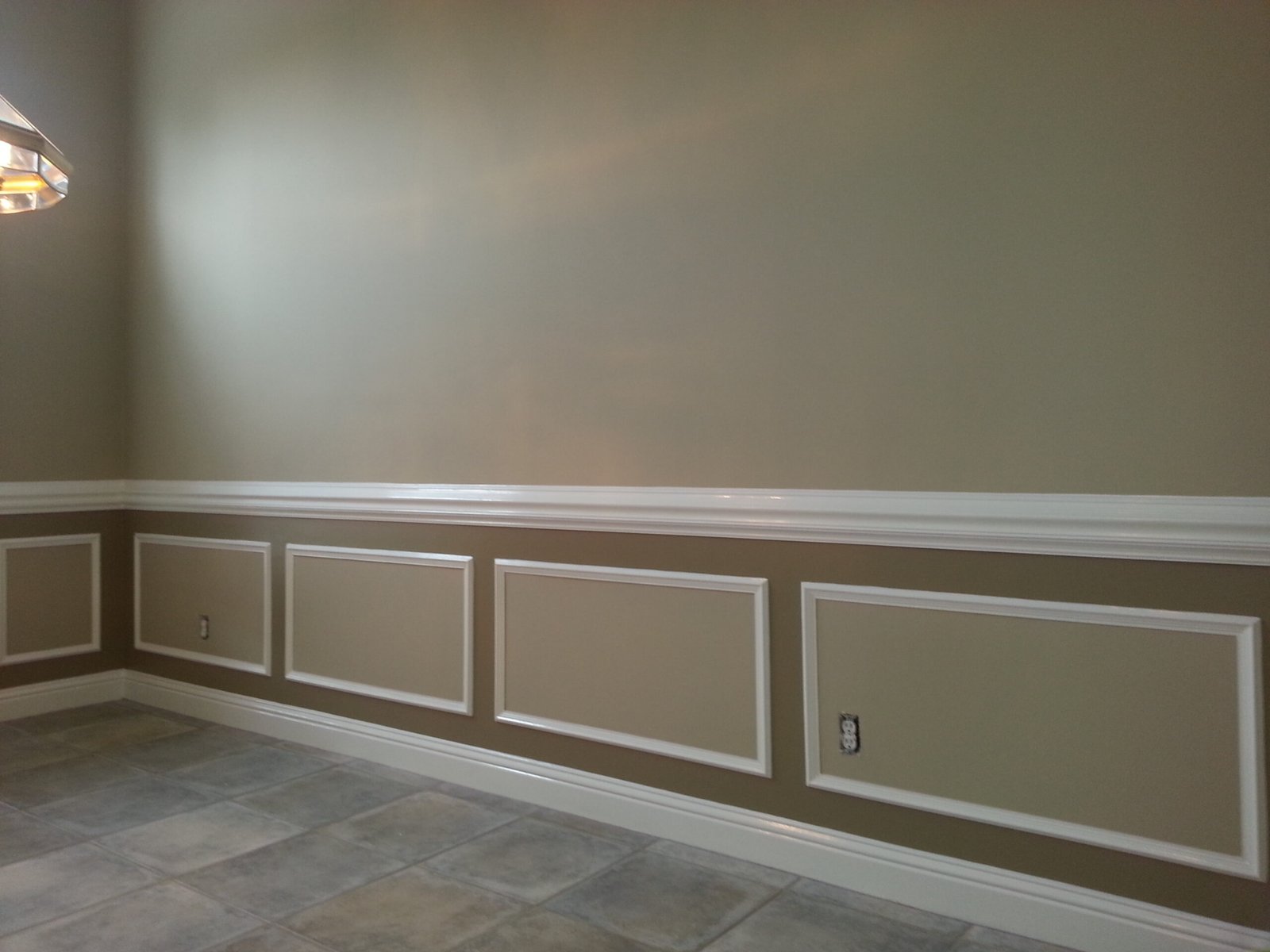
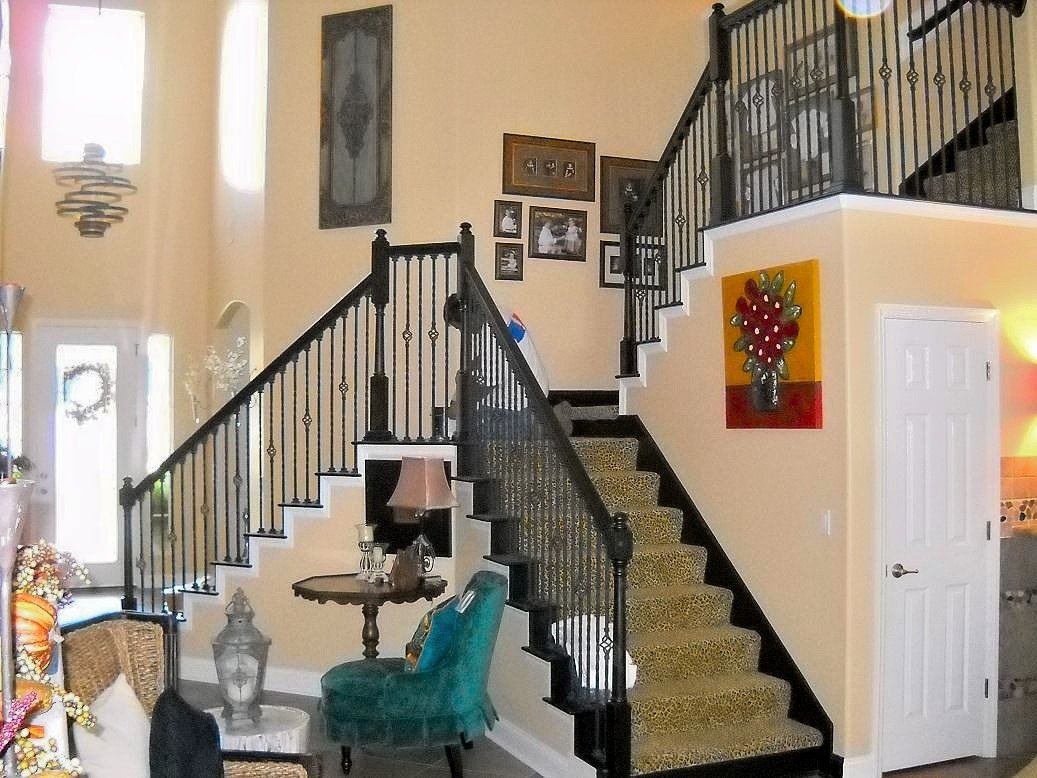
An interior scope can include walls, ceilings, trim, baseboards, crown molding, doors, closets, built-ins, and accent walls, across bedrooms, bathrooms, kitchens, living rooms, foyers, and stairways.
Interior work also commonly involves drywall repair, sanding, caulking trim gaps, stain blocking, and careful sheen selection room by room. Which surfaces are included should be listed explicitly, because ceilings, trim, and doors each add real prep time and material cost. Learn more about our interior painting services in Jacksonville.
Exterior Painting Surfaces
An exterior scope can include stucco, HardieBoard, wood siding, masonry, fascia, soffits, trim, doors, shutters, garage doors, porches, columns, exterior ceilings, and downspouts.
Gutters are the item most often assumed and least often specified. They may or may not be included depending on the written scope, and the same goes for pool cages, fences, and detached structures. Ask directly rather than assuming. See our exterior painting services in Jacksonville.
Interior Prep vs. Exterior Prep
Prep is one of the biggest differences between a quick paint job and a professional painting project. It’s also where the two services diverge most sharply.
Interior prep is about protection and precision inside an occupied home: moving or covering furniture, protecting floors, masking cabinets, counters, and fixtures, patching drywall, sanding repairs smooth, caulking trim gaps, spot-priming stains, preparing doors and trim for enamel, controlling dust, and cleaning up at the end of each day.
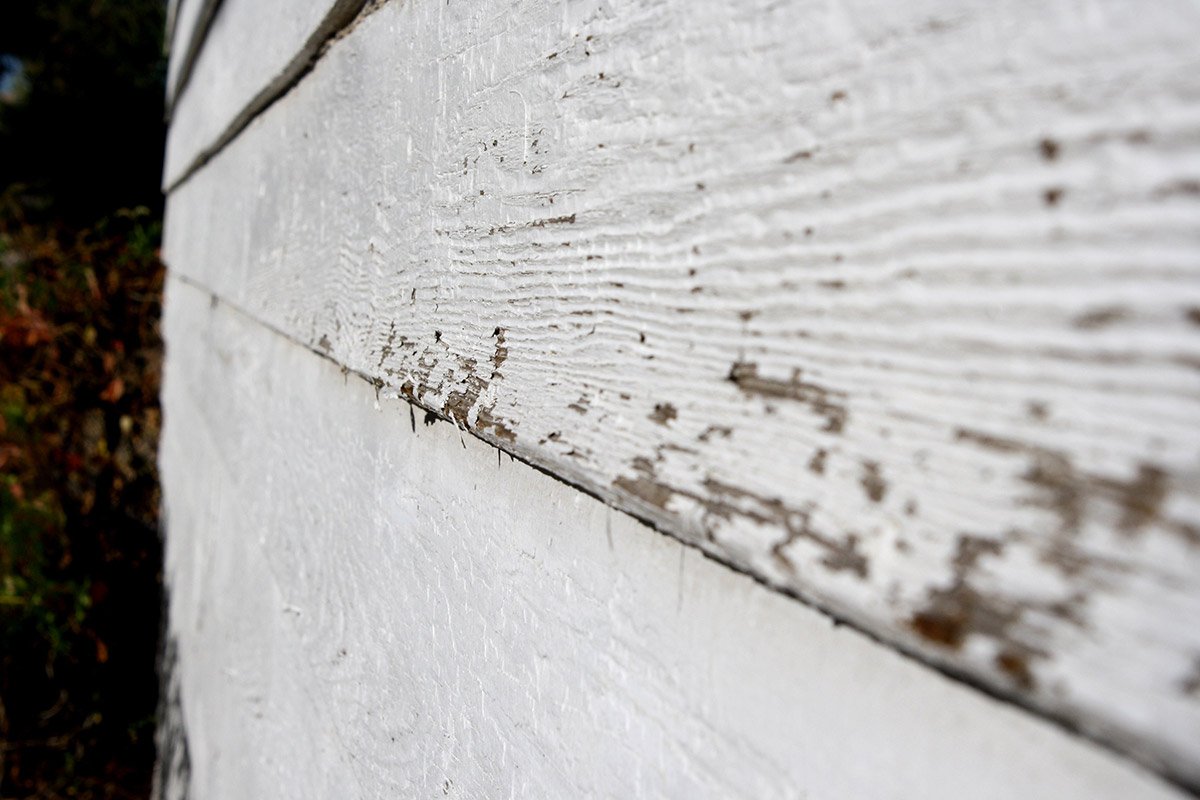
Exterior prep is about removing failure and restoring the substrate: washing to remove dirt, mildew, and chalking, scraping loose paint, sanding failed coatings, caulking gaps and joints, repairing stucco cracks, evaluating wood rot, priming bare wood and problem areas, and protecting landscaping, windows, pavers, and outdoor fixtures.
Interior prep protects what’s already in good condition. Exterior prep fixes what the weather has already damaged. Depending on what a walkthrough turns up, that may mean drywall repair before interior painting, stucco repair before exterior painting, or wood rot repair before painting.
Interior Paint Products vs. Exterior Paint Products
Interior and exterior paints are not interchangeable, and using one where the other belongs causes predictable failure.
Interior paint is formulated for washability, sheen consistency, easy touch-up, low odor in occupied homes, and durability against handling and cleaning. Bathrooms and kitchens need moisture tolerance. Trim and doors need a hard enamel finish. Products commonly used include Sherwin-Williams® ProMar 200, Duration Home, and Emerald Interior, along with Benjamin Moore® Regal Select and Aura.
Exterior paint is formulated for UV resistance, rain and humidity performance, mildew resistance, adhesion to difficult substrates, flexibility as surfaces expand and contract, and long-term color retention. Common choices here include Sherwin-Williams® Duration Exterior, Emerald Exterior, and Emerald Rain Refresh, with Loxon XP frequently specified for stucco and masonry.
These are quality lines with real performance characteristics, but no product overcomes poor preparation. Product selection should follow the surface and its exposure, not brand preference.
Paint Sheens: Interior vs. Exterior
Sheen affects appearance, durability, cleanability, and how much light bounces off a surface, and the right choice differs inside and out.
Inside: flat or matte works for ceilings and lower-traffic rooms where hiding imperfections matters. Eggshell or satin suits most walls. Bathrooms and kitchens often call for satin or semi-gloss depending on conditions. We typically recommend semi-gloss for trim and doors because it’s durable and cleans easily, unless a homeowner prefers a softer satin finish.
Outside: flat or low-sheen finishes work well on stucco because they minimize the appearance of surface imperfections across large walls. Satin is common for trim, doors, shutters, and garage doors where you want a little durability and reflection. Specialty coatings apply on certain substrates.
For a fuller breakdown of what each sheen does and where it belongs, see our paint finish and sheen guide.
Timeline Differences
Interior timelines depend on the number of rooms, how much furniture has to move, drywall repairs, the amount of trim and door detail, access in an occupied home, dry time between coats, whether colors are changing dramatically, and coat count. Interior work is predictable because it happens in a controlled environment. Rain doesn’t stop it.
Exterior timelines depend on home size, surface condition, weather, washing and drying time, stucco repairs, wood repairs, caulking, product dry times, HOA approvals, and accessibility on two-story elevations. Exterior work is far less predictable, because the environment is in charge.
In Jacksonville, that distinction matters most in summer. Afternoon storms, high humidity slowing dry times, and morning dew all compress the usable working window. A three-day exterior job in October can take a week in July, and a contractor who pretends otherwise is setting you up for frustration.
Disruption to the Homeowner
Interior painting is more disruptive to daily life. It affects your routines, access to furniture and rooms, pets that need containment, kids, home office schedules, odor sensitivity, and privacy while a crew works inside your home. Good crews minimize this by phasing rooms, containing dust, and cleaning up each day so the house stays livable.
Exterior painting is more disruptive to your property than your routine. It affects driveway access, outdoor furniture, landscaping, windows and doors that get masked shut for a day, pressure washing that requires everything to be moved and closed up, weather delays that shift the schedule, and HOA coordination that has to happen before work starts.
Either way, the difference between a manageable project and an exhausting one comes down to communication. You should know what’s happening tomorrow, every day.
Weather Concerns for Exterior Painting
Exterior painting in Northeast Florida is not just about picking a dry day. The surface needs to be clean, dry, properly prepared, and coated under the right conditions.
Several factors have to line up. Afternoon storms can cut a working day short with little warning during summer. High humidity extends dry and cure times well beyond what the label suggests. A surface that looks dry may still hold moisture from washing or overnight dew, and coating over it traps that moisture underneath. Direct sun on a hot elevation can cause paint to flash-dry before it levels properly, which affects the finish. Wind carries overspray and drops debris into wet paint. And coastal exposure near Atlantic Beach, Jacksonville Beach, Neptune Beach, Ponte Vedra, and Fernandina Beach adds salt to every one of those variables.
A crew that understands this works elevations by time of day, checks moisture rather than guessing, and sometimes stops early. That’s professional judgment, not lost time.
Pricing Factors for Interior and Exterior Painting
Interior pricing is driven by the number of rooms, ceiling height, whether trim and doors are included alongside walls, drywall repairs, dramatic color changes, coat count, how much furniture protection is required, paint quality, and the level of detail work like crown molding and built-ins. For local ranges, see our interior painting cost in Jacksonville guide.
Exterior pricing is driven by home size, number of stories, surface type, the condition of stucco, siding, or wood, wood rot and repairs, caulking needs, peeling or chalking paint, the coating system specified, accessibility, and HOA requirements. See our exterior painting cost in Jacksonville guide.
Homeowners often assume exterior costs more automatically. It usually does on a comparable home, largely because of prep and repair volume, but a detailed whole-home interior with ceilings, trim, doors, and heavy drywall work can easily exceed a straightforward exterior repaint. Condition drives price more than category does.
Should You Paint the Interior or Exterior First?
Paint the interior first if you’re moving into a new home and want it done before furniture arrives, you’re updating living spaces you use daily, drywall repairs are needed, you’re refreshing bedrooms, bathrooms, kitchen, or main living areas, or you’re preparing to sell and the inside is what buyers will judge first.
Paint the exterior first if paint is actively peeling or failing, stucco cracks are letting water in, wood trim is soft or damaged, your HOA has issued a notice, exterior color has faded badly, curb appeal is the priority, or conditions are favorable and you want to use the window.
The practical rule: if the exterior is failing, it moves to the front regardless of preference, because exterior failure gets more expensive the longer it waits. Interior paint that looks dated is a comfort issue. Exterior paint that’s peeling is a protection issue. Some homeowners schedule both together to consolidate protection and scheduling, while others phase the work across seasons for budget reasons. Both are reasonable.
Can One Painting Company Handle Both?
Yes, provided the company has genuine experience with both interior finishes and exterior coating systems. They’re different skill sets. Fine enamel work on trim and doors requires different technique than stucco preparation and elastomeric application.
The practical advantage of one company handling both is coordination. A single contractor can sequence interior painting, exterior painting, cabinet painting, drywall repairs, stucco repairs, wood rot repairs, and color consultation under one schedule and one point of contact, rather than leaving you to manage handoffs between trades.
Confirm the exact scope in writing either way. One company handling both doesn’t mean everything is automatically included.
Questions to Ask Before Hiring a Painter
- Do you provide both interior and exterior painting?
- Are you insured, and can you provide a certificate of insurance?
- What local credentials do you hold?
- What prep work is included, specifically?
- How many coats are included?
- What products do you use for interiors?
- What products do you use for exteriors, and why those for my surfaces?
- Are drywall repairs included?
- Are stucco or wood repairs included or priced separately?
- How will you protect my home, furniture, and landscaping?
- How do you handle weather delays?
- Who is my point of contact during the project?
- Do you provide a written warranty, and what does it exclude?
- Will there be a final walkthrough?
Red Flags When Comparing Estimates
Anyone can give you a cheap bid. Not everyone can provide peace of mind.
Watch for any of these when comparing bids:
- No written estimate
- No clear scope of surfaces included and excluded
- No detail about preparation when you ask directly
- No proof of insurance
- No written warranty
- A very low price paired with vague details
- An unclear or unstated number of coats
- Cheap paint products specified with no explanation
- No mention of repairs on a home that visibly needs them
- Slow or unclear communication during the estimate
- No final walkthrough in the process
- Pressure tactics or expiring discounts
Compare process, prep, protection, and accountability rather than price alone. The estimate stage is a preview of the project stage.
Why Jacksonville Homeowners Choose A New Leaf Painting Contractors
A New Leaf Painting Contractors is a Jacksonville-based residential painting company serving Northeast Florida since 2001. We provide interior painting, exterior painting, cabinet painting, drywall repair, stucco repair, wood rot repair, trim and door painting, pressure washing, color consultation, concrete coatings, and commercial painting.
Homeowners hire us for two decades of local experience, clear written estimates, careful preparation, thorough property protection, and product knowledge on both sides of the house. We’re insured, Google Guaranteed, EPA Lead-Safe Certified, and hold a Duval County Certificate of Competency, with 750+ verified five-star reviews. Every project includes communication from estimate through our process to a final walkthrough, backed by our workmanship warranty and Iron-Clad Guarantee.
If you’re weighing colors for either project, our complimentary color consultation includes large-format samples brought to your home, which matters more than most people expect given how differently color reads in Florida light.
Frequently Asked Questions
What is the difference between interior and exterior painting?
They differ in surfaces, preparation, products, exposure, timelines, and protection. Interior painting covers walls, ceilings, trim, and doors with paints chosen for washability and appearance, and requires protecting furniture and floors in an occupied home. Exterior painting covers stucco, siding, fascia, and trim with weather-resistant coatings, requires washing and substrate repair, and depends heavily on weather conditions.
Can the same painter handle both interior and exterior painting?
Yes, if the company has real experience with both interior finishes and exterior coating systems. They’re different skill sets, so ask about both specifically rather than assuming competence in one implies the other.
Is exterior painting more expensive than interior painting?
It depends on home size, surface condition, prep, repairs, number of stories, products, and scope. Exterior projects often cost more because they involve more weather-related prep and surface repair, but a detailed whole-home interior with ceilings, trim, doors, and drywall work can cost more than a straightforward exterior repaint.
What surfaces are included in interior painting?
Depending on scope, interior painting can include walls, ceilings, trim, doors, baseboards, crown molding, closets, built-ins, and accent walls throughout bedrooms, bathrooms, kitchens, living rooms, foyers, and stairways. Ceilings, trim, and doors should be listed explicitly rather than assumed.
What surfaces are included in exterior painting?
Depending on scope, exterior painting can include stucco, siding, masonry, fascia, soffits, trim, doors, shutters, garage doors, porches, columns, exterior ceilings, and downspouts. Gutters vary by estimate, so confirm them specifically.
What paint products are used for interior vs. exterior painting?
Interior paints are chosen for appearance, washability, sheen, touch-up ability, and low odor in occupied homes. Exterior paints are chosen for UV and weather resistance, adhesion, flexibility, mildew resistance, and color retention on specific substrates like stucco, wood, or fiber cement. They aren’t interchangeable.
Should I paint my interior or exterior first?
It depends on your goals, surface condition, weather, move-in timing, HOA requirements, and budget. If exterior paint is actively peeling or stucco is cracked, the exterior generally takes priority because that damage worsens and costs more over time. If you’re moving in or updating living spaces, the interior usually comes first.
How do I compare interior and exterior painting estimates?
Compare the written scope, preparation included, repairs covered, products and coat count, property protection, stated exclusions, warranty terms, communication process, and whether a final walkthrough is included. Two bids naming the same house can describe very different amounts of work.
Plan Your Painting Project With Confidence
If you’re planning interior painting, exterior painting, or a full residential painting project in Jacksonville, FL or anywhere in Northeast Florida, we can help you compare your options, choose the right products for each surface, and plan the work around realistic timing.
Helpful Painting Resources for Jacksonville Homeowners
Comparing painters or planning a project? These related services and guides answer the questions we hear most before homeowners pick up the phone.
Related services
- If you’re considering a cabinet update, see our cabinet painting and refinishing services for more on how that process differs from standard wall painting.
- For larger wall damage, texture issues, or patching, our drywall repair services can be handled before painting begins.
- Not sure how to coordinate colors between rooms? Our color consultation service helps you choose a palette that works with your lighting, floors, cabinets, trim, and furniture.
- You can also review our painting process to see what happens from estimate to final walkthrough.
Choosing a painter and planning your project
- How to Choose a Residential Painter in Jacksonville, FL — what to verify, what to ask, and the red flags worth walking away from.
- What Is Included in a Professional Residential Painting Project? — estimates, prep, protection, repairs, cleanup, and the final walkthrough.
- Residential Painting Services for Jacksonville Homes — walls, trim, cabinets, exteriors, drywall, stucco, and concrete coatings.
- Interior vs. Exterior Painting: What Jacksonville Homeowners Should Know — how prep, products, timelines, and pricing differ inside and out.
Cost, products, and timing
- Interior painting cost guide for Jacksonville homeowners.
- How much interior painting costs in Jacksonville
- Best interior paint for Florida homes
- A guide to interior paint finishes
- How often to paint your house in Florida — realistic repaint timelines by surface type, plus the warning signs that say it’s time.
Inside, outside, or both.
Get a written estimate with prep, products, coats, and warranty defined up front.