
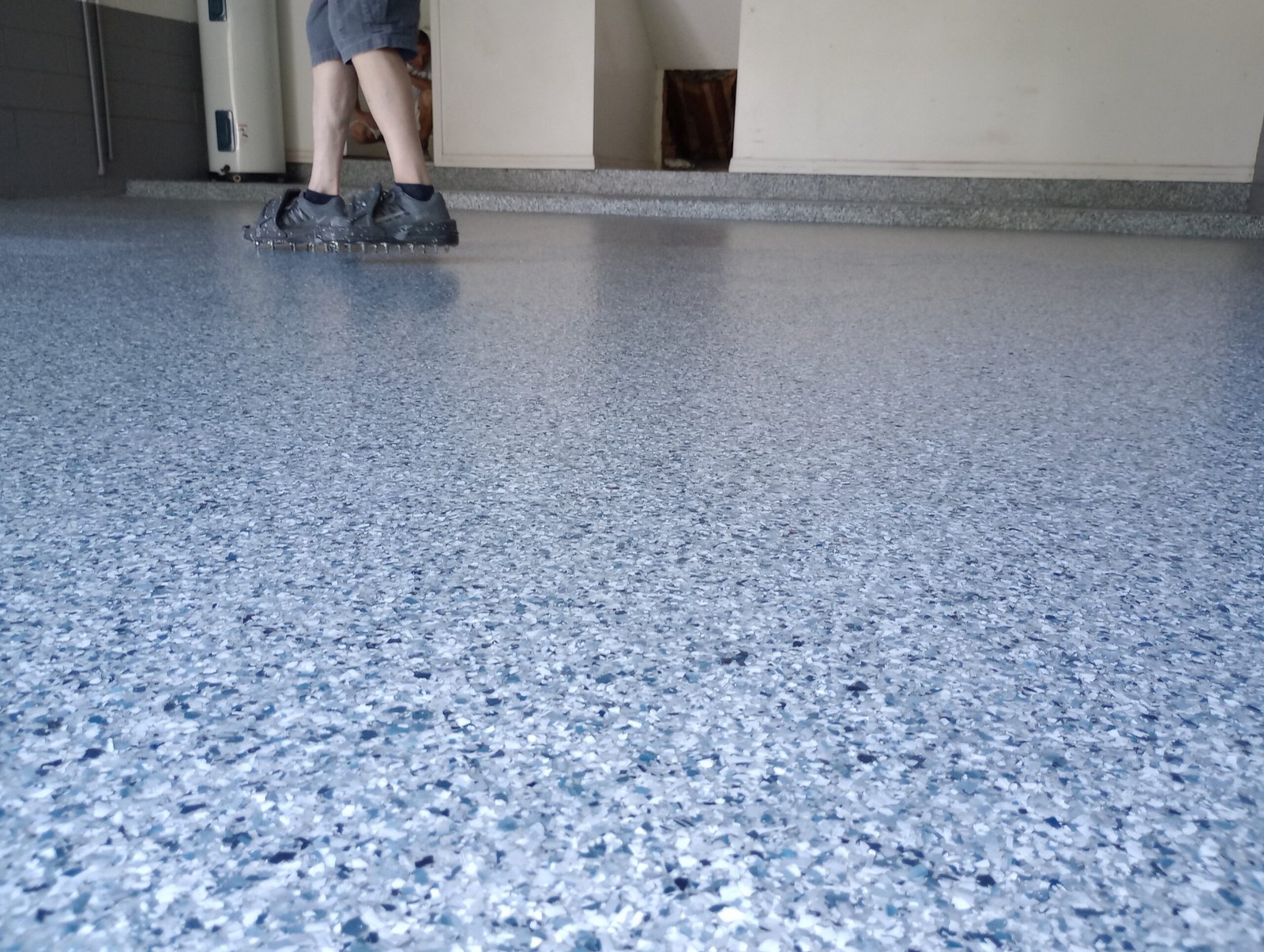
Your garage floor takes a beating every single day. Oil spills, hot tires, heavy tools, chemical exposure, and constant foot traffic all contribute to concrete deterioration. Over time, bare concrete becomes stained, dusty, and increasingly difficult to maintain. If you’re tired of sweeping concrete dust or trying to scrub stubborn stains from your garage slab, an epoxy garage floor coating might be exactly what you need.
But with so many coating options available and conflicting information about costs, installation methods, and DIY versus professional installation, how do you make the right decision for your Jacksonville home?
“Garages have quietly become prime real estate: a national survey reported by the U.S. Census Bureau found that a garage or carport is among the most common features in new single-family homes, with the vast majority of newly built houses including one – making the floor under your feet a feature worth protecting.”
— U.S. Census Bureau, Survey of Construction
This complete guide breaks down everything you need to know about epoxy garage floors, including real cost comparisons, different coating types, installation processes, and what you can expect from your investment in Florida’s unique climate.
How Much Does Epoxy Garage Flooring Cost in Jacksonville?
Understanding epoxy floor cost requires looking at both material expenses and labor, as well as the quality level you’re choosing. The price per square foot varies significantly based on whether you hire professionals or tackle the project yourself.
Professional Installation Costs
Professional contractor-installed garage floor epoxy typically costs between $7 and $9 per square foot in the Jacksonville area. For a standard 2-car garage (approximately 400-500 square feet), you’re looking at $2,800 to $4,500 installed. This pricing includes:
- Complete surface preparation (grinding or acid etching)
- Crack and imperfection repairs
- Primer coat application
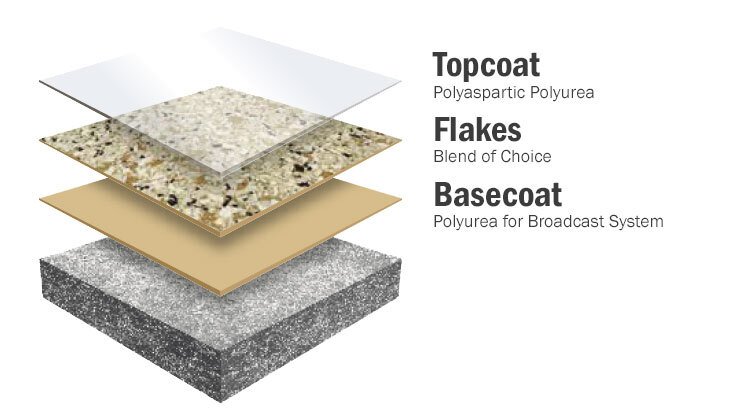
- High-build 100% solids epoxy base coat
- Decorative color flakes (if desired)
- Polyaspartic topcoat for UV protection and durability
- All materials and labor
- Cleanup and disposal
Material costs for a professional-grade epoxy job typically start at around $1,000, depending on the quality of materials and the degree of surface preparation required. The remaining cost covers skilled labor, proper equipment like industrial grinders, and the expertise that ensures your floor lasts decades rather than failing within a few years.
DIY Epoxy Kits Cost Breakdown
DIY epoxy kits can cost approximately $2.50 to $4.00 per square foot, which can save homeowners up to 80% compared to contractor pricing. For that same 400-500 square foot garage, you might spend $1,000 to $2,000 on materials.
However, DIY costs don’t include:
- Equipment rental (concrete grinder, typically $75-150 per day)
- Specialized tools (squeegees, spiked shoes, rollers)
- Your time and labor (20-40 hours for a typical garage)
- The risk of mistakes that require a complete redo
[DIY kit versus professional install for a typical 2-car Jacksonville garage, side by side.]
Understanding Different Types of Garage Floor Coatings
Not all garage floor coatings are created equal. Understanding the differences between epoxy, polyurea, polyaspartic, and other coating types helps you make an informed decision about which flooring solution best fits your needs and budget.
Epoxy Floor Coatings: The Gold Standard
Epoxy consists of a resin and a hardener that must be mixed in exact ratios and often requires an induction period to kickstart the chemical reaction. Once applied and cured, epoxy creates a dense, rigid layer that withstands heavy foot traffic, vehicle weight, and impacts.
The three main formulations of epoxy coatings are:
- Water-Based Epoxy: Water-based epoxy is beginner-friendly and affordable, with low odor and VOCs, but usually requires multiple coats to achieve adequate thickness. It works well for light-duty applications but may not provide the durability needed for heavy garage use.
- Solvent-Based Epoxy: Solvent-based epoxy contains higher VOCs and a strong odor, providing a tougher, glossier finish due to deeper penetration into the concrete. This option offers better performance than water-based formulations but requires proper ventilation during application.
- 100% Solids Epoxy: 100% solids epoxy is the thickest, most heavy-duty option that does not shrink as it cures and is extremely resistant to hot tire pickup, impacts, and chemicals. This professional-grade material creates the most durable garage floor coating available and is what most professional installers use for long-lasting results.
Polyurea and Polyaspartic Coatings: The New Generation
Polyurea coatings are often preferred over epoxy for garage floors due to their faster curing time and superior durability. These advanced coatings typically last longer than standard epoxy, which may show wear within 4-5 years under heavy use. Key advantages include:
- Rapid cure times (often walk-on ready in 4-6 hours)
- Superior UV resistance, preventing yellowing
- Excellent flexibility, reducing cracking
- Better chemical resistance than most epoxy formulations
- Lower VOCs than solvent-based epoxy
Polyaspartic floor coating represents the premium end of garage flooring. Many professional installers use a hybrid system combining 100% solids epoxy as the base coat with a polyaspartic topcoat to gain the benefits of both materials: epoxy’s thickness and build, plus polyaspartic’s UV resistance and fast cure time.
Urethane Floor Coatings
Urethane coatings offer excellent abrasion resistance and work well as topcoats over epoxy base layers. However, they typically don’t bond directly to bare concrete as effectively as epoxy does, which is why they’re most commonly used in multi-layer systems rather than as standalone coatings.
[The four main coating families compared on cure time, durability, and best use.]
Comparison: Which Garage Floor Coating Is Right for You?
Garage floor coatings can be categorized into several types, each offering different benefits and application methods:
- Budget-conscious homeowners: Water-based epoxy or DIY kits
- Maximum durability: 100% solids epoxy with polyaspartic topcoat
- Quick turnaround needed: Polyurea or polyaspartic single-day systems
- Heavy-duty industrial use: 100% solids epoxy with full broadcast flake system
- Aesthetic focus: Metallic epoxy or decorative flake systems
At A New Leaf Painting, our concrete coating services include consultation to help you select the right coating system for your specific garage conditions, usage patterns, and budget.
The Critical Importance of Proper Surface Preparation
Here’s the truth that many DIYers and cheap contractors don’t want to admit: surface preparation determines 90% of your floor’s success. You can use the most expensive epoxy on the market, but without proper concrete preparation, your floor will fail prematurely.
“Here’s the stance worth taking: a garage floor coating is only as good as the concrete grinding underneath it. Skip the mechanical prep to save a few hundred dollars and you haven’t bought a floor – you’ve bought a peeling problem with a one-year fuse.”
Why Surface Preparation Matters
Proper surface preparation is crucial for the longevity of garage floor coatings. Inadequate preparation can lead to peeling and failure of the coating, often within the first year. The concrete surface must provide a proper bonding profile—essentially a slightly rough texture that gives the epoxy something to grip.
Common Preparation Mistakes
Even small preparation mistakes can doom your epoxy garage floor:
- Insufficient cleaning: Oil and grease contamination prevents adhesion
- Inadequate acid etch: Light etching doesn’t create enough surface profile
- Skipping moisture testing: Moisture vapor transmission can push coatings right off the concrete
- Rushing the process: Proper prep takes time; shortcuts lead to failure
“The moisture warning is backed by hard standards, not opinion. Industry testing protocols set by ASTM International require concrete moisture vapor emission to fall below roughly 3 pounds per 1,000 square feet over 24 hours before a coating goes down – a level fresh slabs often need 60 to 90 days to reach. Skipping that test is how good epoxy ends up on the scrap heap.”
— ASTM F1869 moisture-testing standard
Step 8: Chemical-Resistant Topcoat
A polyaspartic topcoat or clear urethane sealer gets applied over the epoxy base to provide UV protection, chemical resistance, and additional durability. This final layer also provides high gloss finish that makes cleaning easy and protects the color flakes underneath.
Installation Timeline
Professional installation typically takes 2-3 days for a standard garage:
- Day 1: Surface preparation, crack repairs, cleaning (6-8 hours)
- Day 2: Primer and base coat application with flake broadcast (4-6 hours), plus overnight cure
- Day 3: Topcoat application (2-3 hours)
The floor is usually ready for light foot traffic within 24 hours and vehicle traffic within 3-5 days, depending on the coating system used and ambient temperatures.
[The professional install, day by day, from bare slab to driving on it.]
DIY Epoxy Garage Floors: Can You Do It Yourself?
Many homeowners consider DIY epoxy kits to save money. While DIY installation is possible, it’s important to understand what you’re getting into before committing to this labor-intensive project.
When DIY Makes Sense
DIY epoxy garage floor installation can work if you:
- Have realistic expectations about time investment (20-40 hours total)
- Can rent or own the necessary equipment (especially a concrete grinder)
- Feel comfortable following detailed instructions precisely
- Have help—this is NOT a one-person job
- Can work during optimal temperature conditions (60-80°F)
- Accept that the result may not match professional quality
DIY Epoxy Kits: What You’re Getting
Most big-box store epoxy kits include the following:
- Water-based or solvent-based epoxy (usually not 100% solids)
- Hardener component
- Decorative color flakes (sometimes)
- Basic application instructions
What they typically DON’T include:
- Concrete surface preparation materials
- Proper grinding equipment
- Professional-grade primers or topcoats
- Technical support when problems arise
- Warranty coverage
Common DIY Mistakes
DIY projects often fail due to:
- Insufficient cleaning: Oil and grease contamination prevents adhesion
- Inadequate acid etch: Light etching doesn’t create enough surface profile
- Skipping moisture testing: Moisture vapor transmission can push coatings right off the concrete
- Rushing the process: Proper prep takes time; shortcuts lead to failure
When to Hire Professionals
Professional installation makes sense when:
- Your concrete has existing coatings that need complete removal
- The slab has moisture issues requiring vapor barrier systems
- You want guaranteed results with warranty coverage
- Time is limited and you need the garage back quickly
- You’re seeking maximum durability and longevity
- The garage has challenging areas like drains, slopes, or uneven surfaces
How Long Do Epoxy Garage Floors Last in Florida’s Climate?
Florida’s unique climate presents specific challenges for garage floor coatings. High humidity, intense heat, and temperature fluctuations can affect coating performance if the wrong materials or installation methods are used.
Surprising fact
“Most homeowners are shocked to learn that concrete never fully stops releasing moisture – even a slab poured decades ago keeps wicking ground water up through its pores. In humid Florida, that invisible upward push is the number-one reason a beautiful coating can let go of a floor that looked bone-dry on the surface.”
Expected Lifespan of Quality Epoxy Floors
Epoxy garage floors can last 10-20+ years under normal residential garage traffic, significantly outperforming lower-quality coatings that may fail within 1-3 years. A properly prepared concrete surface is crucial for the longevity of epoxy garage floors, as inadequate surface preparation is a common cause of early failure.
Factors that extend epoxy floor life in Florida:
- Professional surface preparation: Mechanical grinding vs. simple cleaning
- 100% solids epoxy: Superior heat and chemical resistance
- Polyaspartic topcoat: UV protection and fast cure times
- Proper thickness: Adequate material application (not skimping)
- Climate-appropriate materials: Coatings designed for high-heat, high-humidity environments
With proper installation and reasonable care, professionally installed epoxy garage floors in Jacksonville regularly last 15-20 years or more, making them an excellent long-term investment for your home.
Benefits of Epoxy Garage Floors
Understanding the full range of benefits helps justify the investment in quality garage floor coating.
Durability and Protection
Epoxy garage floors provide a high-gloss, easy-to-clean surface that is resistant to wear, chemicals, moisture, and hot tires, making them suitable for heavy traffic areas. The coating creates a protective shield over your concrete slab, preventing the following:
- Oil and chemical stains
- Concrete dust and deterioration
- Moisture intrusion and damage
- Impact damage from dropped tools
- Tire marks and scuffing
Enhanced Aesthetics
Aesthetic benefits of epoxy include transforming a dull slab into a bright, showroom-like finish. The available color options range from solid colors to decorative flake systems to metallic effects that create stunning visual interest. Your garage becomes an extension of your home rather than an industrial afterthought.
Easy Maintenance
Epoxy provides easy maintenance due to its seamless surface, which prevents concrete dust and simplifies spill cleanup. Unlike bare concrete that absorbs stains and harbors dust:
- Spills wipe up easily with a mop
- No concrete dust tracked into your home
- Simple sweeping or occasional mopping keeps floors looking new
- Resistant to most household chemicals and automotive fluids
Choosing Color Options and Decorative Elements
One of the most exciting aspects of epoxy garage floors is the wide range of aesthetic customization available.
Solid Color Systems
Solid color epoxy creates a clean, uniform look that brightens the space. Popular choices include:
- Gray tones: Classic, professional appearance
- Beige/tan: Hides dust and dirt well
- Blue: Creates a cool, modern vibe
- Black: Bold, high-contrast look
Decorative Flake Systems
The full broadcast flake method involves covering the base coat entirely with decorative acrylic flakes, creating a multi-dimensional appearance that
- Hides imperfections in the concrete
- Provides slip resistance
- Creates visual interest and texture
- Masks any future wear or marks
Flake blends come in hundreds of color combinations, from subtle earth tones to bold color mixes.
Metallic Epoxy Effects
Metallic epoxy creates swirling, three-dimensional patterns that resemble marble, flowing water, or polished metal. These high-end finishes command premium prices but create truly stunning garage spaces.
Maintaining Your Epoxy Garage Floor
Proper care ensures your investment delivers maximum longevity:
- Regular sweeping or dust mopping: Remove dirt and debris that can cause abrasion
- Occasional wet mopping: Use mild soap and water for deeper cleaning
- Immediate spill cleanup: Don’t let chemicals sit on the surface
- Avoid harsh chemicals: Strong acids or bases can damage the coating
- Use protective mats: Place mats under heavy equipment or workbenches
- Inspect annually: Look for any signs of wear or damage and address promptly
[Simple habits that keep an epoxy floor looking new – and the ones that wear it out early.]
Ready for a Beautiful, Durable Garage Floor?
Epoxy garage floors transform your space from a dusty, stained concrete slab into a bright, professional-looking area that’s easy to maintain and built to last decades. While DIY options exist, professional installation ensures proper surface preparation, quality materials, and expert application that guarantees long-term performance—especially important in Jacksonville’s challenging climate.
“A better paint job starts before the first coat.”
— the philosophy behind A New Leaf Painting’s No-Chaos process, serving Jacksonville since 2001 with 5,000+ completed projects and 750+ verified 5-star reviews. The same prep-first standard that defines our paint work is what makes a concrete coating last.
Explore our full range of professional services or contact us at 904-615-6599 for a free consultation and estimate. Let’s create the garage floor you’ll be proud to show off.