
If you’ve looked into concrete driveway coating Julington Creek, you’ve probably noticed there are a lot of options—and a lot of big promises. In Northeast Florida, the right choice comes down to a few practical things: moisture, sun, traction, and how well the installer preps the slab.
This blog walks through the most common concrete coating options, what they’re designed to handle, and how to pick a system that fits your driveway, patio, garage floor, or pool deck.
Why Florida Concrete Needs A Coating In The First Place
Concrete is tough, but it’s also porous. In a humid place like Northeast Florida, moisture can move through the slab, and daily use adds wear. Over time, you may see stains, surface roughness, and a dull look that’s hard to clean.
Quality floor coatings help by creating a barrier. Done right, coatings are designed to resist common issues like oil drips, fertilizers, and tire marks. Many homeowners mainly want two outcomes: better appearance and less stress when spills happen.
The Big Performance Requirements: UV, Moisture, And Traction
Florida surfaces have three constant enemies:
- UV exposure: Sun can fade color and yellow some products. Look for a uv stable top layer. In plain terms, UV-protected coatings prevent yellowing and fading in sunlight.
- Moisture: Moisture tolerance is critical for driveway coatings in humid climates. If moisture vapor pushes up, weaker systems can lose adhesion.
- Wet weather traction: Slip-resistant coatings improve traction even when wet. Because rain is frequent, many pros recommend that coatings should include slip-resistant additives due to frequent rain.
These points apply whether you’re coating a driveway, a garage, or a pool area.
There’s a simple homeowner check for the moisture risk: tape a piece of plastic to the slab for 24 hours — if moisture shows underneath, the floor shouldn’t be coated yet, because “water pressure will break the bond.”
— Source: Family Handyman, “How to Paint a Garage Floor By Applying Epoxy”
Epoxy Vs. Polyurea Vs. Polyaspartic (What Most Homeowners Are Comparing)
You’ll often see epoxy, but many Florida installers steer people toward newer systems for better performance.
- Polyurea and polyaspartic coatings offer superior durability. They’re often chosen for longevity, chemical resistance, and fast cure times.
- Polyaspartic coating systems are superior to traditional epoxy in humid environments. That’s a big deal in Florida, where humidity can make curing and adhesion more finicky.
- Many buyers specifically ask about polyaspartic concrete coatings because they can cure quickly and hold color better outdoors.
The color-holding advantage is real chemistry, not marketing: a polyaspartic coating “is usually crystal clear and won’t yellow over time” — exactly what an open Florida driveway or sun-facing garage needs.
— Source: Bob Vila, “Our Favorite Garage Floor Coating Cures in 24 Hours”
You may also see companies market “industrial-grade” or “industrial-strength” builds. That’s not just hype when it’s backed by the system details: Poly Shield Coatings uses industrial-grade materials for durability, and the broader point is true that industrial-strength coatings withstand heavy use and chemicals when the system is properly built and installed.
Garage Floors: Hot Tires, Oil Spills, And Day-To-Day Wear
A coated garage is one of those upgrades you notice every day. A well-installed garage floor coating helps with cleanup and looks more finished than bare concrete.
It also tackles two common garage problems: garage floor coatings resist hot tire pickup and oil spills, and it’s worth noting again for performance buyers that polyurea and polyaspartic coatings resist hot tire pickup.
If you’re specifically comparing local options for concrete garage floor coating julington creek, ask what the installer uses for the topcoat and whether they include traction additives—especially if your garage floor gets wet from rainwater and cars.
Hot-tire pickup is the classic Florida coating failure: warm rubber grabs a low-grade product and peels it off the slab — the single best argument for a higher-performance system in a garage you park in daily.
Driveways And Outdoor Concrete: What’s Different From A Garage?
Driveways and patios are more exposed than garages, so UV and water matter more. A key reality in this state is that concrete driveway coatings must withstand moisture and UV rays in Florida. If a system is not designed for those conditions, it may fade, discolor, or lose bond sooner.
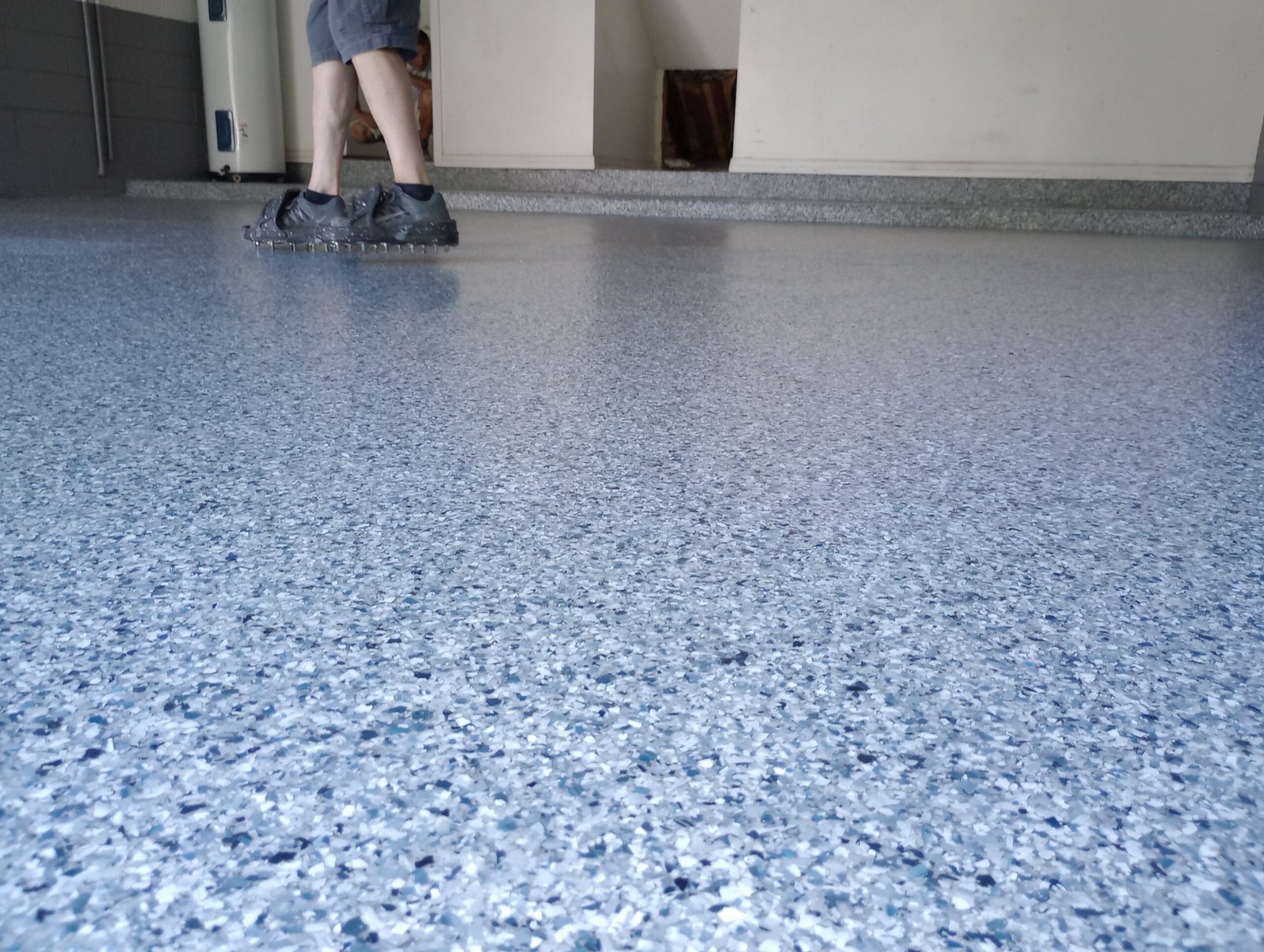
Decorative systems can help here, too: decorative flake systems enhance curb appeal and hide imperfections, which is useful if the slab has discoloration, small repairs, or older patches.
One practical comfort tip that’s easy to overlook: lighter colors in coatings can reduce thermal stress and improve comfort, which can matter on sunny driveways and patios.
On open Florida concrete, a lighter coating color is a comfort feature as much as a style choice — less absorbed heat means a cooler surface underfoot all summer.
What A Professional Installation Should Include (And Why Prep Is Everything)
Coatings fail early for one main reason: prep wasn’t done right. That’s why reputable installers emphasize this point: proper surface preparation is essential for optimal adhesion.
A solid install typically includes:
- Mechanical prep (not just rinsing)
- Cleaning and degreasing
- Repair work: cracks in concrete must be repaired before coating application
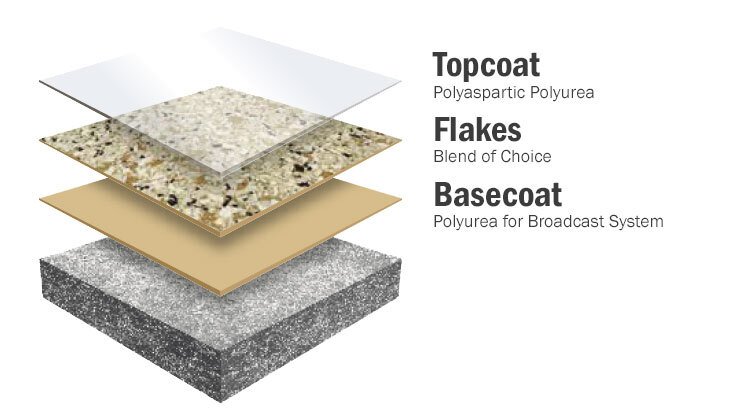
- Layering: installation includes a base layer, decorative layer, and top coat
The failure data points the same direction: “a high percentage of coating failures is due to improper surface prep” and a contaminated surface — which is why grinding, crack filling, and cleaning come before anything decorative.
— Source: Concrete Network, “Best Garage Floor Coating: Epoxy, Polyurea or Polyaspartic?”
If you’ve ever seen a coating peel in sheets, it usually traces back to poor prep or moisture issues.
You may also see local search wording like river concrete coating. That phrase can show up online, but it doesn’t change what matters: prep quality, moisture handling, and UV stability.
“One-Day” Garage Coating: Helpful Benchmark, Not A Guarantee
Many companies advertise speed, and sometimes it’s accurate:
- garage floor coatings can be installed in just one day
- most garage floor coatings are installed in one day
- The Coat Goat installs garage floor coatings in just one day
The key is not the slogan—it’s what happens before and after. If repairs are needed, or humidity is extreme, timelines can shift. The upside of modern polyaspartic systems is cure speed: polyaspartic coatings cure quickly often within 24 hours.
“One day” is a schedule, not a shortcut — the same prep, moisture checks, and repairs still have to happen before the fast-curing chemistry does its part.
Warranties And Longevity: What To Expect In Florida
How long coatings last depends on exposure, prep, and system quality. In general, higher-end systems are built for long service life, and you’ll see claims like: polyurea and polyaspartic coatings offer 15-year durability.
Warranties vary a lot by company, so it helps to compare examples you might run into while researching:
- Brightway Coatings offers a 15-year warranty on coatings.
- Garage Experts provides lifetime warranties on their flooring solutions.
Also, some contractors back their claims with volume and track record: Brightway Coatings has completed over 500 projects in Northeast Florida. That’s useful context, but it should never replace a clear scope of work and a written warranty you can read.
A warranty is only as strong as its fine print — the number on the flyer matters less than what’s actually covered, what voids it, and what maintenance it requires of you.
Maintenance: The Part People Skip (And Then Blame The Coating)
Even great coatings need basic care. Outdoors, grit and standing water can wear finishes down. That’s why it’s fair to say: periodic maintenance is required for driveway coatings to extend life.
If you keep the surface clean and address small issues early, coatings hold up better. This is also where system quality matters: high-quality coatings prevent moisture from entering concrete to avoid deterioration, which helps slow down long-term damage.
How To Vet Local Contractors Without Getting Sold To
Even though this is a blog, most readers eventually talk to contractors. If you’re comparing concrete floor coating contractors Julington Creek, keep the conversation practical:
Ask:
- What system do you recommend, and why (epoxy vs polyurea vs polyaspartic)?
- How do you handle moisture?
- What repairs are included?
- Will the topcoat be UV stable for driveways?
- Are slip-resistant additives included?
You’ll also see positioning statements online. For example:
- Poly Shield Coatings specializes in high-performance concrete coatings.
That kind of line can be true, but you want the details behind it: prep method, material specs, and warranty terms. Some websites also lean on emotional language like “choose us” and “feel confident.” Those phrases are fine, but what actually lets you feel confident is a clear process, documented materials, and a warranty you can hold onto.
Finally, remember Florida isn’t one-size-fits-all. What works great in a shaded garage in Jacksonville might need extra UV protection for an open driveway closer to Ponte Vedra. A good contractor should be comfortable talking through those differences and whether they cover nearby surrounding areas.
And yes—many homeowners prefer working with a family owned business. That can be a plus when it comes with consistent crews and accountability. Just make sure the system and prep plan are solid, too.
So What’s The Best Coating Choice For Florida?
If you want a simple rule of thumb: the best coatings for Florida climates are polyurea or polyaspartic systems. They’re popular because they cure fast, handle humidity better than many traditional options, and can be built with UV and traction features that match outdoor use.
As a final practical note: a quality garage coating should also handle real garage life—meaning garage floor coatings resist hot tire pickup and oil spills, not just look good on day one.
“Northeast Florida slabs fight sun, humidity, and storm moisture year-round, so we build every coating job around the fundamentals: test the slab, grind and repair it properly, then install a layered system with a UV-stable top coat that’s made for this climate. Get the prep right and the floor takes care of itself for years.”
— The team at A New Leaf Painting, Jacksonville, FL · 904-615-6599