In this article
- Can a 4–5-Year-Old House Really Need Exterior Painting?
- Why the Original Builder Paint System Matters
- Why New Stucco Homes Can Show Problems Early
- Why Is My Four-Year-Old Stucco Already Cracking?
- Caulk Can Fail Before the Wall Paint Does
- Thin or Uneven Paint Coverage Can Age Faster
- Jacksonville Sun, Heat, Humidity, and Rain Start Working Immediately
- Why One Side of a Newer House May Look Much Older
- Sometimes Your Four-Year-Old House Doesn’t Need Painting at All
- Chalking Is Different From Dirt or Mildew
- Does the Whole House Really Need Repainting?
- Can You Repaint Only One Side of the House?
- What We Inspect Before Recommending a Repaint
- How to Get Better Performance From the Next Exterior Paint System
- Frequently Asked Questions
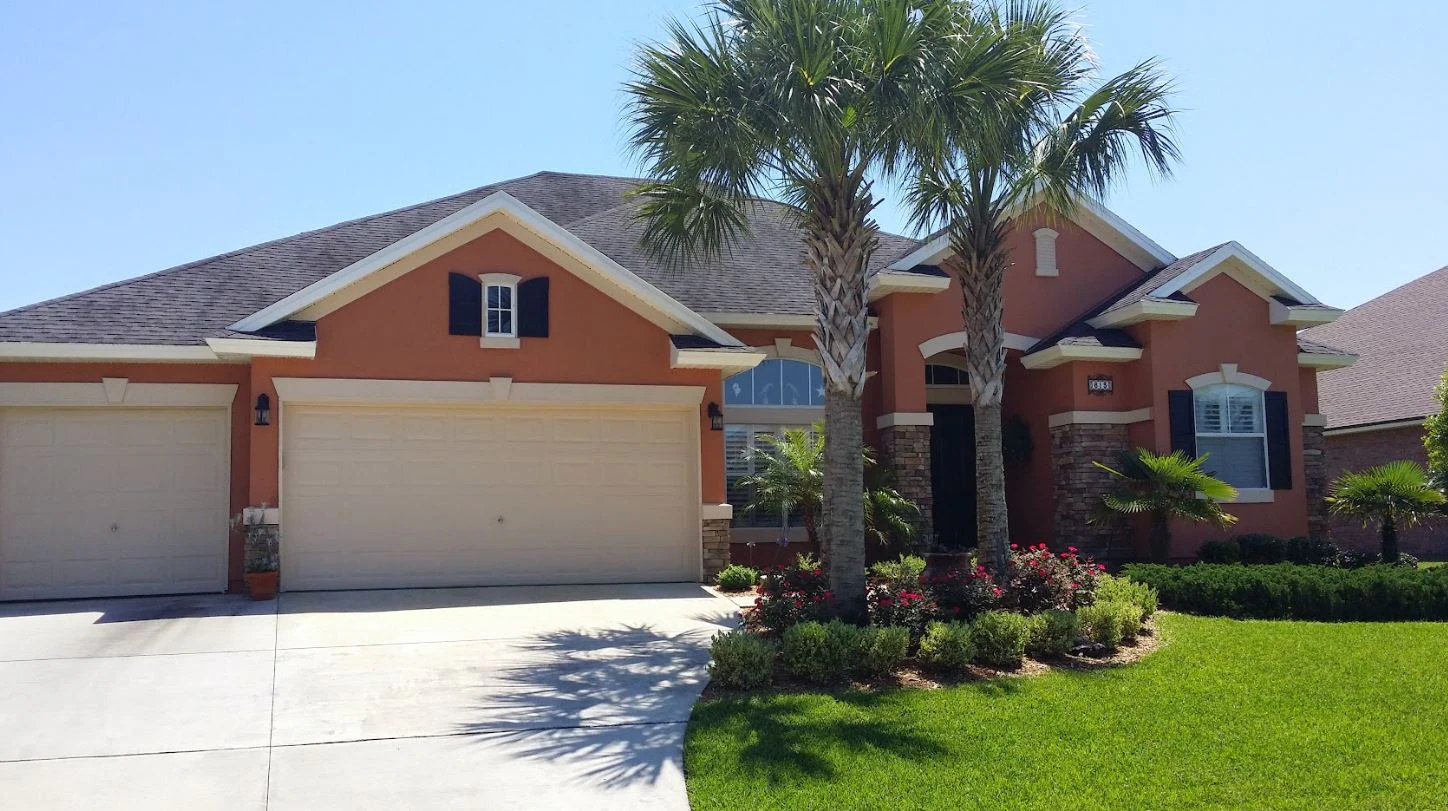
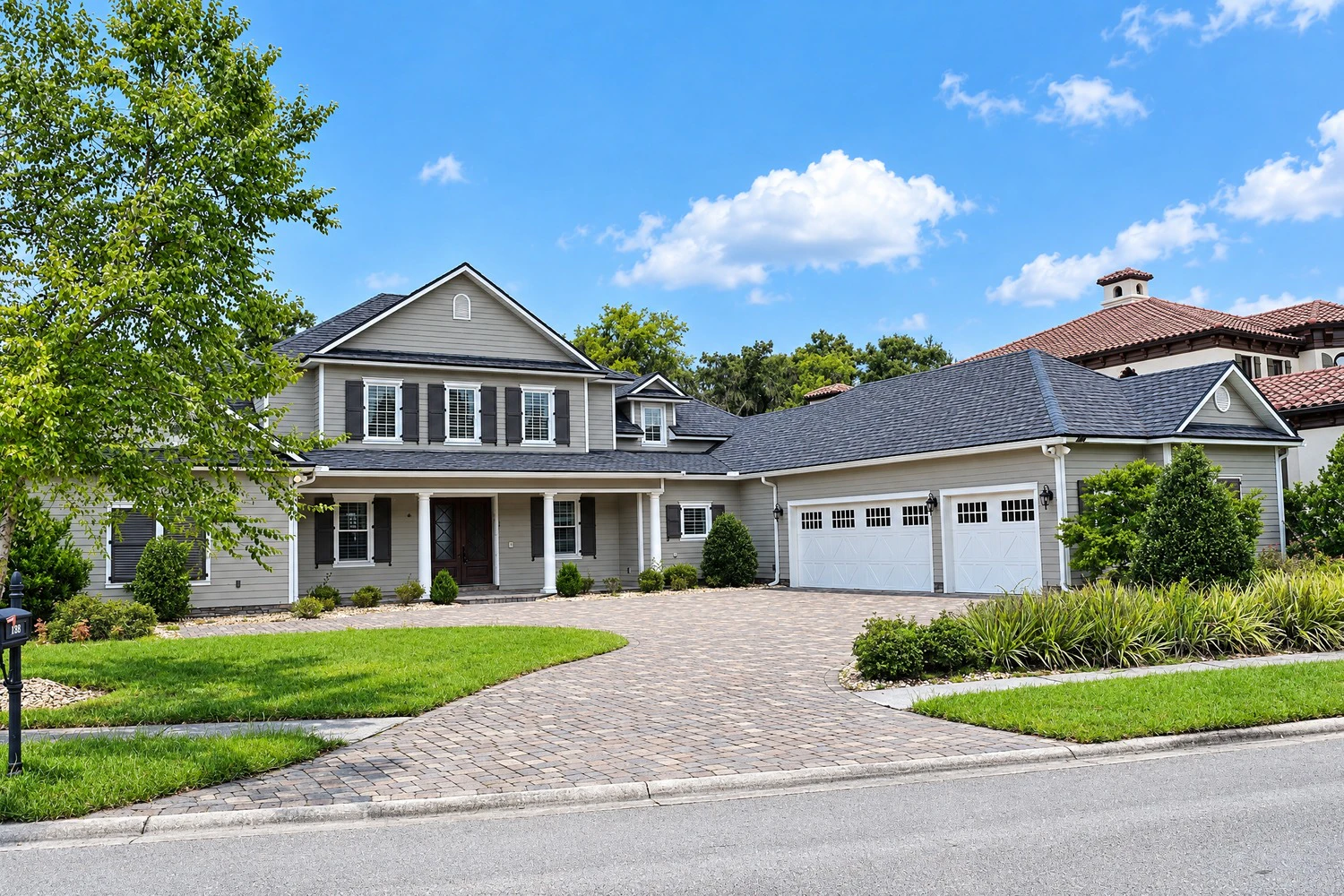
A Jacksonville house can really need exterior painting after only four or five years. That doesn't automatically mean it was built badly, and it doesn't mean the original paint has completely failed. Usually it's a mix: the original paint system, the prep, thin or uneven coverage, porous stucco or fiber cement, hairline cracks, caulk movement, strong Florida sun, heat and humidity, dark colors, sprinklers, landscaping, and very different exposure from one side of the house to another.
Doing exterior painting in Jacksonville, FL since 2010, we've seen two new homes in the same neighborhood age very differently. The better question than "how old is the house?" is: what paint went on, how was the surface prepared, what has the house been exposed to, and what shape is it in today? That's why our exterior painters in Jacksonville, FL look at the house before deciding whether it needs cleaning, repairs, a little maintenance or a full repaint.
Can a 4–5-Year-Old House Really Need Exterior Painting?
Yes, and it's one of the most common conversations we have in Jacksonville's newer neighborhoods. Homeowners often ask, almost apologetically, why a four-year-old house already looks like this.
The age of the house and the condition of its paint are two different things. A new home is painted on a production schedule that prioritizes speed, cost across many homes, a good look at closing and easy touch-ups before the final walkthrough. Those are reasonable priorities for a builder, but they aren't the same as repainting one house for long-term durability.
Why the Original Builder Paint System Matters
"Builder-grade paint" isn't one product. It varies by builder, subdivision, painting contractor and phase. What matters more is the whole original system: the coating used, the condition of the surface when it was painted, whether porous or repaired areas were primed, how far the paint was spread, how many coats went on and the weather while it dried.
Some production systems use economical paint, little priming and thinner coverage to keep construction moving. That doesn't mean every builder's painter did poor work. It means the paint was chosen for different goals than a repaint built to last. It's one reason surface preparation matters so much in residential painting: what's under the finish coat decides how it performs years later.
Why New Stucco Homes Can Show Problems Early
On a young stucco house we often see hairline cracks, visible patch lines, texture differences, fading, chalking, uneven sheen and mildew on shaded sides. Part of the reason is porosity: a repaired area, a dense section and a porous section of the same wall soak up primer and paint differently, even though everything looked even right after construction. Our Exterior Painting Resource Center has more Jacksonville guides on stucco painting, repairs and coatings.
Why Is My Four-Year-Old Stucco Already Cracking?
Not every crack is serious. Hairline cracks are common on stucco and come from shrinkage, normal movement, temperature swings, settling or movement around an old repair. The key is figuring out which kind you have. Our guide to cosmetic versus potentially serious stucco cracks in Jacksonville explains the difference.
Paint alone doesn't stop movement. Elastomeric and other high-build coatings help in the right situations, but they aren't a fix for every crack. The crack should be evaluated and prepared before the coating is chosen.
Caulk Can Fail Before the Wall Paint Does
Windows, doors, trim and spots where materials meet all rely on flexible caulk. Over time it shrinks, splits and pulls away while the wall paint still looks fine. A young house can look like it needs painting when what it mostly needs is caulk maintenance. Open joints can also let water behind trim and siding, and painting over them doesn't fix that.
Thin or Uneven Paint Coverage Can Age Faster
Paint can look fine the day it goes on and still weather fast if the dry film is too thin or uneven. Film thickness depends on how far the paint was spread, how porous the surface was, whether bare and patched areas soaked up extra, whether primer was used, how many coats went on and the application technique. Porous stucco takes paint differently from trim or fiber cement, and if nobody accounted for that, some areas weather sooner.
Spraying sometimes gets blamed unfairly. Sprayed paint applied at the right rate, and back-rolled where needed, holds up well. The problem is thin coverage, not the sprayer.
Jacksonville Sun, Heat, Humidity, and Rain Start Working Immediately
A new house gets no grace period from Florida weather. UV starts breaking down pigment and binder, which leads to fading, loss of sheen and eventually chalking. Heat makes the materials under the paint expand and contract, stressing joints, cracks and repairs. Humidity and rain keep shaded walls damp longer, which invites mildew. Our guide to why Jacksonville's climate is tough on exterior paint goes deeper.
Why One Side of a Newer House May Look Much Older
Every side of a house has its own conditions. One gets hours of afternoon sun, another sits in the neighbor's shade. One wall gets sprinkler spray every morning, roof lines send water toward another, and trees cut sun and airflow on a third. Walls painted the same day with the same paint can look very different four or five years later. More in Why Does One Side of My Jacksonville House Fade Faster Than the Others?
Dark colors add to it. They absorb more heat, and on a front door, shutters or a garage door facing afternoon sun, fading can show quickly. Pigment, formula and prep still matter, so not every dark color fails early. See why dark exterior paint fades faster in Florida.
Sometimes Your Four-Year-Old House Doesn’t Need Painting at All
Some young homes just look old because they're dirty. Mildew, algae, pollen, road dirt, sprinkler stains and mineral deposits can make sound paint look tired, and a proper cleaning can make a big difference. It's most common under overhangs and on shaded sides. Our guide to why soffits keep getting mildew in Jacksonville explains why.
For many Northeast Florida homes, a routine exterior wash is one of the simplest ways to keep paint looking good. See the benefits of an annual pressure wash.
A wall hit by sprinklers every day stays damp and collects stains and mildew. Sometimes the smartest first step is adjusting the sprinklers, cleaning, and then seeing what the paint really looks like.
Chalking Is Different From Dirt or Mildew
Chalking is a powdery residue that forms as the paint itself weathers. It isn't dirt sitting on sound paint, and new paint shouldn't go straight over a heavily chalking surface. The normal order is inspect, clean, let it dry, check again, then use a compatible masonry conditioner, bonding sealer or primer if chalk remains, before the finish coats.
If you also see peeling, blistering or loss of adhesion, our Jacksonville exterior paint failure guide explains how to tell these apart.
Does the Whole House Really Need Repainting?
Not automatically. For a fairly new home, the right answer might be cleaning and mildew treatment, caulk maintenance, a few stucco crack repairs, touch-ups, a sprinkler adjustment, fixing a roof-runoff or drainage problem, or repairing damaged wood.
Other times a full repaint really is the answer because the problem is everywhere: fading on several sides, heavy chalking, poor adhesion, failed caulk all around, bare spots or paint weathering unevenly across the house. Where fascia or trim is rotting, paint isn't the repair; the wood comes first. See wood rot repair before exterior painting.
Can You Repaint Only One Side of the House?
Sometimes, but there's a real risk of a visible mismatch. The other sides have had years of sun and rain, so even the same product and color can look different beside them because of fading, lost sheen, batch differences, formula changes, application method and texture. A single side can work well when there are natural stopping points and the color is forgiving. Other times a full repaint looks better.
What We Inspect Before Recommending a Repaint
When someone tells us "this house is only four years old," we don't assume it needs a full repaint, and we don't assume it doesn't. We go side by side: stucco, siding and trim, cracks and old patches, caulk, chalking, fading, mildew, sun and shade, sprinkler patterns, thin spots, adhesion, moisture signs, and the windows, doors, soffits and fascia. Then we decide whether it's cosmetic, maintenance, repair or true paint failure. Diagnose first, recommend second.
How to Get Better Performance From the Next Exterior Paint System
When repainting is the answer, the goal isn't just another coat over what's there. The new system should deal with what caused the problem. Depending on the house, that can mean cleaning and mildew treatment, removing loose paint, crack and stucco repair with texture matching, re-caulking, wood repair, spot priming bare and patched areas, masonry conditioner where needed, and a compatible finish applied at full coverage, usually two coats.
Product choice follows the surface too. Our systems may include Sherwin-Williams Loxon masonry products, Emerald Rain Refresh or other compatible coatings, depending on the surface. No one product is best for every house. Our guide to the best exterior paint for Jacksonville, FL homes explains how to choose.
Frequently Asked Questions
There’s no single number. It depends on the original paint system, prep, film thickness, surface, color, exposure and maintenance. Some homes look good for many years, while others show real wear much sooner.
If your four- or five-year-old home already looks faded, chalky, cracked or mildewed, another coat of paint isn't automatically the first step. Once you know whether it's dirt, maintenance, a few repairs or real paint failure, the right scope is clear. Our Jacksonville exterior painting contractors can look at every side of the house and tell you which. Call (904) 615-6599 for a free estimate, or browse the Exterior Painting Resource Center for more guides.
A New Leaf Painting Contractors' insured exterior painters have worked in Jacksonville and Northeast Florida since 2010, including Nocatee, Ponte Vedra Beach, St. Johns, Fleming Island, Orange Park and St. Augustine.