
Protecting Fleming Island Homes from Florida’s Heat, Humidity, Rain & UV Damage
Exterior paint is more than curb appeal. It’s a protective coating system standing between your Fleming Island home and Northeast Florida’s intense sun, heat, humidity, frequent thunderstorms, irrigation, mildew, and year-round weather exposure. Our exterior painters in Jacksonville, FL know that these conditions can expose weaknesses in surface preparation, caulking, repairs, film build, and coating selection long before homeowners expect them to become visible.
After more than 25 years of exterior painting in Jacksonville, FL, we’ve seen why the preparation underneath the paint matters just as much as the product that goes on top. A properly planned exterior repaint can protect stucco, fiber cement, wood, trim, fascia, soffits, and other painted surfaces while maintaining the appearance of the home. A poorly prepared coating system can fail prematurely, leaving homeowners dealing with peeling, chalking, fading, failed caulk, recurring cracks, or exposed substrates much sooner than expected.
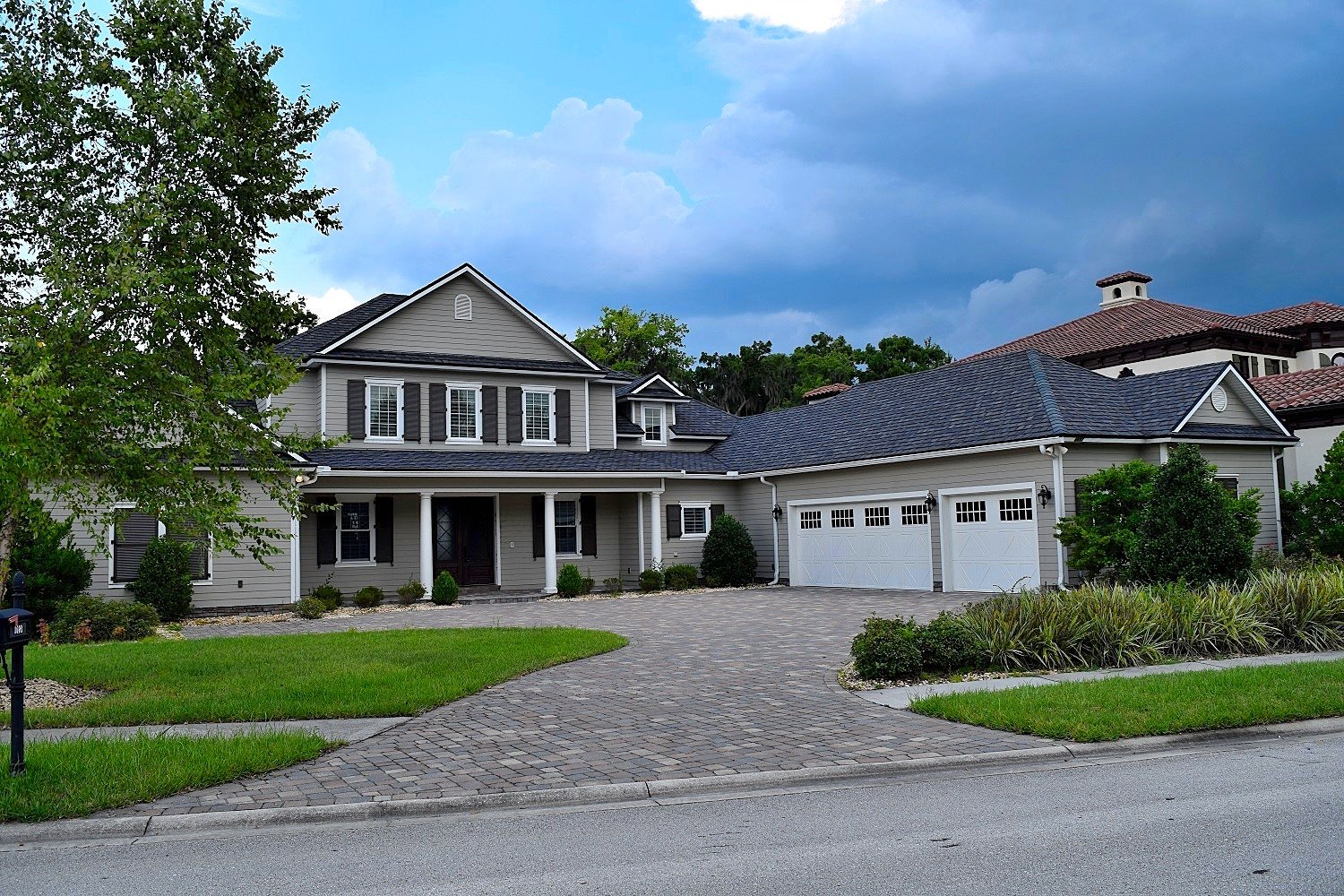
A New Leaf Painting Contractors has served Northeast Florida since 2001, with 750+ verified five-star reviews and thousands of completed residential projects, including homes throughout Fleming Island, Eagle Harbor, Pace Island, Fleming Plantation, and the Doctors Lake and Black Creek areas of Clay County. Homeowners researching painters in Fleming Island, FL should look beyond the brand of paint being proposed and consider the contractor’s preparation standards, repair process, coating knowledge, project management, and experience with homes in this part of Northeast Florida.
This guide covers what Fleming Island homeowners should know before hiring an exterior painter: how the local environment affects painted surfaces, the exterior problems we commonly encounter, proper surface preparation and repairs, choosing the right coating system, what to look for in an exterior painting contractor, and what it actually takes to produce a repaint designed to perform in Northeast Florida.
For more in-depth homeowner guides covering stucco, Florida weather, fading, chalking, mildew, surface preparation, exterior paint failure, repairs, coating systems, and ongoing maintenance, visit our Exterior Painting Resource Center.
Quick Takeaways
✓ Premium exterior paint can last 8 to 12 years in Fleming Island with proper preparation.
✓ Fleming Island’s inland location reduces salt-air exposure, but heat, humidity, rain, and UV still shorten paint life without the right product and prep.
✓ Pressure washing, repairs, caulking, and priming — not the paint alone — determine how long a paint job actually lasts.
✓ Stucco, wood trim, and caulking all need regular inspection between full repaints, not just when a problem is already visible.
✓ A professional inspection catches wood rot, cracking, and caulk failure while they’re still inexpensive to fix.
Why Fleming Island Homes Need Exterior Painting Attention
Fleming Island homeowners get one real advantage over their neighbors closer to the coast: being inland in Clay County means you’re not dealing with the airborne salt that accelerates coating failure in Jacksonville Beach, Ponte Vedra Beach, or other coastal communities. That difference alone can add meaningful years to a paint job’s service life compared to a beachside property.
But “less demanding than the coast” doesn’t mean easy. Fleming Island still sees enough heat, humidity, and storm activity that cutting corners on product or preparation catches up with a home quickly:
Humidity. Northeast Florida’s humidity sits high for most of the year, and that moisture works against paint film in two ways — it slows proper curing during application, and it feeds the mildew growth that shows up first on shaded, poorly ventilated walls.
UV exposure. Florida’s UV intensity is among the highest in the continental U.S. year-round, not just in summer. Unprotected or lower-grade coatings break down under that exposure noticeably faster than they would in most other states.
Heavy rain and thunderstorms. Clay County sees frequent, often intense afternoon thunderstorms for much of the year. Wind-driven rain during these storms finds any weak point in an exterior’s caulk joints or coating film and works its way behind the surface.
Temperature swings. Hot, humid summer days followed by cooler winter nights put exterior materials through repeated expansion and contraction, which is part of why caulk joints and coating film eventually crack or separate at trim and siding seams.
Tree coverage. Fleming Island is a heavily wooded, well-landscaped community, and many homes have mature trees and shrubs close to exterior walls. That shade looks great, but it also traps moisture against the surface and slows drying after rain — exactly the conditions mildew needs.
Mildew. Shaded, humid walls are where mildew shows up first on any Florida exterior. It’s common, not a sign your home is somehow different, but it does mean north-facing and tree-shaded walls need more frequent attention than sun-exposed elevations.
HOA expectations. Many Fleming Island communities — including sections of Eagle Harbor — have architectural review requirements for exterior color changes, while other parts of Fleming Island in unincorporated Clay County offer more color freedom than tightly governed communities elsewhere in Jacksonville. Knowing which situation applies to your specific address matters before you fall in love with a color.
Common Exterior Paint Problems We See in Fleming Island
Understanding what’s actually happening on your walls helps you catch problems early, before they turn into expensive repairs.
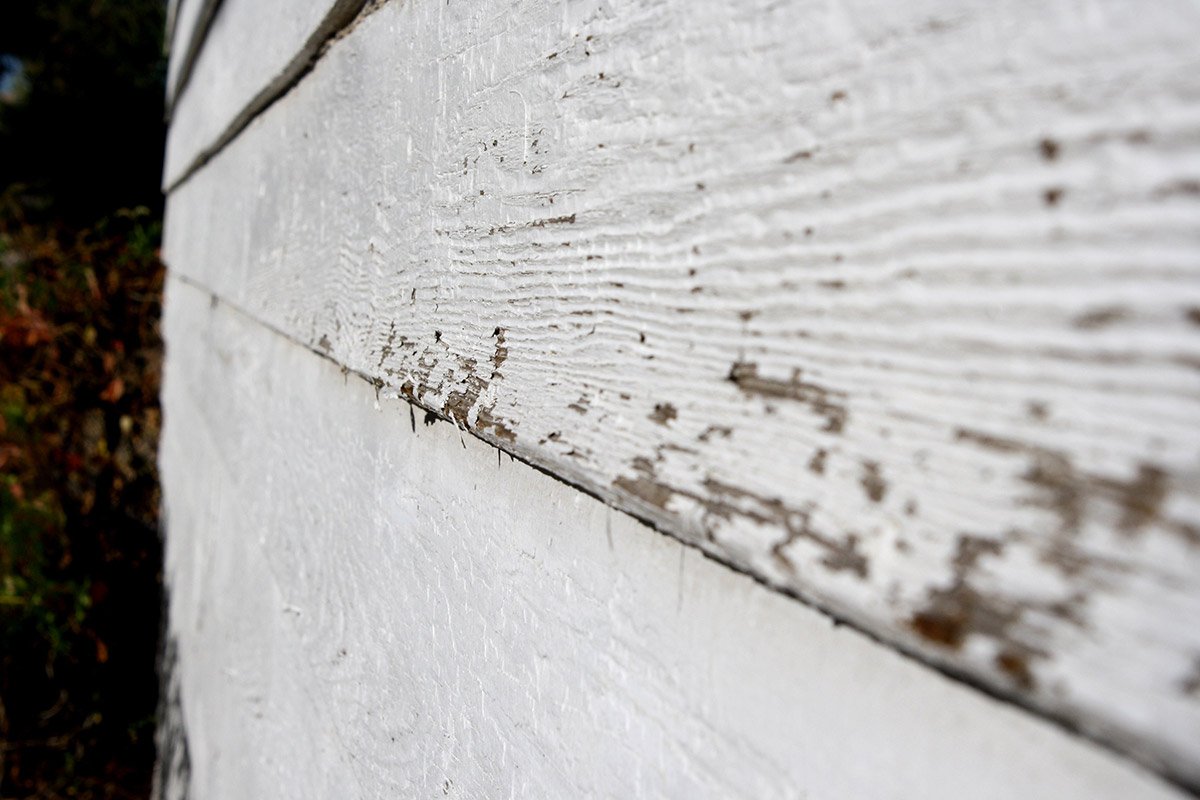
Peeling. Almost always a moisture or adhesion failure — paint applied over a damp surface, or over dirt and chalking that prevented proper bonding in the first place. Once moisture gets trapped beneath the film, it eventually pushes the paint loose.
Blistering. Small bubbles in the paint film, usually caused by moisture vapor trying to escape from behind the coating — often from painting a surface that wasn’t fully dry, or from humidity building up behind a coating that isn’t breathable enough for the substrate underneath.
Fading. Constant UV exposure breaks down pigment over time. South- and west-facing walls, which get the most direct sun, typically show fading first — a normal process that premium, UV-resistant coatings resist significantly longer than standard paint.
Chalking. A powdery residue that forms on the paint surface as the binder breaks down under UV exposure. Light chalking is a normal aging sign; heavy chalking usually means the coating is at or past the end of its service life.
Mildew. Dark spotting, usually on shaded or poorly ventilated walls, caused by mold and mildew growth feeding on humidity and organic debris on the surface. It needs to be properly cleaned and killed at the root during prep — not just painted over, or it returns through the new coat.
Wood rot. Occurs where moisture repeatedly contacts untreated or under-protected wood — commonly at fascia, trim, and any wood siding — and breaks the wood fibers down over time. Left unaddressed, it spreads and eventually requires more extensive carpentry repair.
Caulk failure. Caulk has a shorter service life than paint itself, even with quality products. As it dries out, shrinks, or pulls away from the surface, it opens a direct path for wind-driven rain to get behind trim, siding, and window and door frames.
Stucco cracking. Stucco moves slightly as a home settles and as temperatures swing, which produces hairline cracking over time. This is normal aging, not a sign of poor construction, but it needs proper repair before a new coating goes on — painting over an active crack just seals in the problem.
Oxidation. A chemical breakdown of the paint’s surface layer from prolonged UV and heat exposure, often showing up as a dull, chalky, or slightly discolored finish well before the coating actually fails structurally.
Rust stains. Usually caused by unprotected metal fasteners, hardware, or fixtures bleeding through the paint film as they corrode — common on older homes with original, uncoated exterior hardware.
Did You Know?
Most homeowners assume paint failure starts with poor-quality paint. In reality, most failures trace back to what happened — or didn’t happen — before the paint went on: trapped moisture, inadequate surface preparation, failed or skipped caulking, painting directly over mildew, and improper priming. The paint product is rarely the actual point of failure.
The Professional Exterior Painting Process
A quality exterior repaint follows a defined sequence, and skipping any step is exactly how a paint job fails early. Here’s what a proper process looks like, start to finish:
- Inspection. A full walk of every elevation — not just what’s visible from the street — to identify wood rot, stucco cracking, caulk failure, and any areas that need special attention before a quote is finalized.
- Protection. Landscaping, hardscape, windows, fixtures, and any surfaces not being painted are covered and protected before work begins.
- Pressure washing. Removes dirt, mildew, chalking, and loose debris so the surface underneath can be properly evaluated and prepped.
- Repairs. Wood rot replacement, stucco crack repair, and any siding repairs happen here, before anything else touches the surface.
- Scraping. Loose or failing paint is removed down to a stable, sound surface — painting over failing paint just guarantees an early repeat failure.
- Sanding. Smooths repaired areas and rough edges so patches disappear under the new coating rather than telegraphing through it.
- Caulking. Every trim joint, siding seam, and penetration gets resealed, since this is one of the most common points of water intrusion if skipped.
- Priming. Bare wood, repaired areas, and any surface that needs it gets primed so the topcoat adheres properly and cures evenly.
- Two coats. Applied at the manufacturer’s specified thickness — not stretched thin to save material — for full coverage and the durability the product is actually engineered to deliver.
- Final walkthrough. You inspect the completed work directly with our team, with any punch-list items addressed on the spot before the project is considered finished.
Why Surface Preparation Determines How Long Your Paint Lasts
This is the section that separates a paint job that holds up for a decade from one that starts failing in three years — and it’s also exactly where cheap painters cut corners, because prep is the labor-intensive part of the job that doesn’t show up in a quick photo.
Pressure washing removes the surface contamination — dirt, mildew, chalking — that prevents paint from properly bonding. Skip it, or rush it, and no amount of premium paint will adhere the way it’s supposed to.
Sanding creates the properly prepared surface texture paint needs to grip. Painting over a glossy, unsanded, or uneven surface is a common cause of early peeling.
Scraping removes what’s already failing. A painter who rolls a new coat directly over loose, cracking paint is guaranteeing that new coat fails on the same timeline the old one did.
Caulking seals the gaps that would otherwise let water behind the surface. This single step prevents a huge share of the wood rot and blistering we get called out to fix on homes painted by someone else.
Priming gives the topcoat something consistent to bond to, especially over repairs, bare wood, or stucco patches. Skipping primer on these areas is one of the most common causes of visible flashing and uneven wear within the first year or two.
Moisture and adhesion are the two threads running through nearly every paint failure. A surface that’s damp, contaminated, or improperly prepared will not hold a coating properly — no matter how good the product is. This is why we don’t shortcut prep to hit a lower price: it’s the actual determining factor in how long your investment lasts.
10 Mistakes Fleming Island Homeowners Make Before Painting
- Hiring based on price alone. The lowest bid usually gets there by cutting prep, not by being more efficient.
- Painting over mildew. Sealing mildew under a fresh coat doesn’t kill it — it returns and often shows through the new paint within a season.
- Skipping pressure washing. Dirt, chalking, and residue left on the surface prevent proper adhesion no matter how good the paint is.
- Ignoring wood rot. Small soft spots left unaddressed spread and eventually require far more extensive — and expensive — carpentry repair.
- Delaying caulking. Once a caulk joint fails, wind-driven rain has a direct path behind trim and siding until it’s resealed.
- Choosing the wrong sheen. A flat finish on high-touch trim or doors shows wear and cleans poorly compared to a satin or semi-gloss finish built for that surface.
- Waiting until paint visibly peels. By the time peeling is obvious, moisture has often already reached the substrate underneath.
- Using low-grade paint to save money upfront. Standard-grade paint typically requires repainting years sooner, costing more over time than a premium system would have.
- Ignoring stucco cracks. Painting over an active crack seals in the problem instead of solving it, and the crack usually reappears through the new coat.
- Not checking HOA approval first. Choosing a color before confirming your community’s architectural review requirements can mean redoing the work.
Choosing the Best Exterior Paint for Florida Homes
Product selection matters, but only after proper prep is complete. We work primarily with premium Sherwin-Williams® and Benjamin Moore® lines, selected based on your home’s substrate and sun exposure:
| Product | Best For | Key Strength |
|---|---|---|
| Sherwin-Williams Emerald® Rain Refresh | Premium homes, high-visibility elevations | Rain- and dirt-shedding technology |
| Sherwin-Williams Latitude® | Florida’s hot, humid application conditions | Wider application and cure temperature/humidity range |
| Sherwin-Williams Duration® | Most Fleming Island homes, shaded/tree-covered lots | Strong mildew resistance |
| Sherwin-Williams Loxon® XP | Stucco | High-build masonry protection, bridges hairline cracks |
| Benjamin Moore Aura® | Homeowners preferring Benjamin Moore’s color system | Deep, stable color retention |
| Benjamin Moore Regal Select® | Fiber cement and wood siding | Durable, moisture-resistant adhesion |
Each of these outperforms standard-grade exterior paint on UV resistance, fade resistance, mildew resistance, and overall longevity — the factors that matter most in Florida’s climate. The right choice for your home depends on substrate, sun exposure, and how much shade your specific lot gets, which is why product selection happens on-site during your estimate rather than off a generic list.
Exterior Painting for Stucco Homes
Stucco is a common exterior finish across Fleming Island, and it comes with its own set of considerations. Hairline cracking is normal as a home settles and as temperatures swing — it’s not a sign of poor original construction, but it does need to be addressed properly rather than simply painted over.
There’s a persistent myth that elastomeric coating is automatically the right answer for any cracked stucco. In reality, elastomeric coatings work best on stucco in good structural condition where the goal is bridging fine hairline cracking; they aren’t a substitute for proper structural repair on more significant cracking, and applying the wrong system can trap moisture rather than protect against it. Loxon XP offers a strong middle-ground option in many cases — a high-build masonry coating that bridges minor cracking while remaining compatible with a premium acrylic topcoat.
The right approach starts with properly repairing any active cracking, allowing repairs to cure, and then selecting a coating system matched to the stucco’s actual condition — not defaulting to the same product for every stucco home regardless of what’s really going on underneath the surface.
Wood Rot, Fascia & Trim Repairs Before Painting
Fleming Island’s mix of architectural styles means a higher share of wood and fiber cement trim and siding than many surrounding communities — which makes wood rot repair a routine part of exterior projects here.
Moisture intrusion is the root cause of nearly every wood rot situation — water repeatedly reaching untreated or under-protected wood, often starting at a failed caulk joint or a spot where paint has already worn through.
Replacing wood versus patching it comes down to how far the damage has spread. Small, isolated soft spots can sometimes be repaired with epoxy wood filler; more extensive rot means removing and replacing the affected board or trim piece entirely — patching over structurally compromised wood just delays a bigger repair.
Repair versus patch is a judgment call made during inspection, based on how much sound wood remains and how the piece functions structurally. Painting over either approach without addressing the underlying moisture source just means the rot returns.
Priming repaired and replaced wood is essential — bare or filled wood needs its own primer coat before the topcoat goes on, or you risk uneven absorption and premature failure right at the repair site.
Protection means addressing whatever let moisture in to begin with — often a caulk joint or a grading/drainage issue near the foundation — so the same repair isn’t needed again in a few years.
How Often Should You Repaint in Fleming Island?
Repaint timing depends heavily on your home’s exterior material. In general terms: stucco and fiber cement systems tend to hold up longest with proper prep and premium paint, while wood surfaces typically need attention sooner given their higher moisture sensitivity. Being inland in Clay County — without the salt air exposure that shortens coating life closer to the coast — works in Fleming Island homeowners’ favor across every material type.
For a full breakdown by exact material — stucco, wood, Hardie fiber cement, and brick — including specific year ranges and the warning signs that mean it’s time sooner than expected, see our dedicated guide, How Often Should You Paint a House in Fleming Island, FL?
Maintenance Schedule to Extend Your Paint Job
| Timeframe | Maintenance |
|---|---|
| Every year | Inspect caulk joints at trim, windows, doors, and siding seams for early shrinkage or gapping |
| Every 2 years | Gentle wash of the exterior to remove dirt, pollen, and early mildew before it affects the coating |
| Every 3–5 years | Re-caulk trim, window, and door joints, since caulk wears out well before paint does |
| Every 8–12 years | Full exterior repaint with premium paint over properly prepared surfaces |
Choosing Exterior Paint Colors in Fleming Island
A few practical factors matter more here than a generic color guide would suggest:
HOA approval. If your home falls within a governed community like sections of Eagle Harbor, confirm the color approval process before you commit to a choice. Other parts of Fleming Island in unincorporated Clay County offer more freedom, which is part of why the community has shown more varied color choices than many tightly governed Jacksonville neighborhoods.
Heat absorption and Light Reflectance Value (LRV). Darker colors absorb more heat and can accelerate coating wear on sun-exposed walls, particularly on stucco. A color’s LRV — how much light it reflects versus absorbs — is worth discussing with your painter if you’re drawn to a deeper shade, especially on south- and west-facing elevations.
Resale considerations. Warm neutrals and updated tans remain reliable, broadly appealing choices if resale value is a consideration, though Fleming Island’s larger lots and architectural variety give homeowners more room to make bolder choices than in more uniform communities.
Trim and front doors. Trim color and a front door accent are some of the most cost-effective ways to update curb appeal without repainting the entire body of the home — worth discussing even if a full repaint isn’t in the immediate plan.
A few color directions we see homeowners gravitate toward in Fleming Island specifically:
- Popular whites. Warmer, slightly softened whites tend to read better in Florida’s intense natural light than a stark, cool white, which can look flat or clinical under direct sun.
- Greiges. A balanced warm-cool neutral remains one of the most broadly appealing choices for body color, pairing well with both traditional and more modern trim and roof colors.
- Navy accents. Increasingly popular on front doors, shutters, and trim as a deeper accent color that pairs well with lighter body tones without darkening the whole exterior.
- Modern farmhouse palettes. Crisp white or light gray bodies with black or dark trim accents remain a strong, timeless choice for many of Fleming Island’s traditional and craftsman-style homes.
- Coastal-inspired colors. Soft blues, sandy neutrals, and muted greens — even though Fleming Island itself is inland, these palettes remain popular throughout Northeast Florida for their light, airy feel.
- Traditional Florida colors. Warm tans, soft yellows, and classic neutrals that have anchored Florida homes for decades remain a safe, reliable choice, particularly where resale is a consideration.
- HOA-friendly colors. If your community requires architectural approval, sticking within an approved or commonly approved palette range speeds up the process significantly compared to requesting an unusual or high-saturation color.
For a deeper look at what Fleming Island and surrounding Jacksonville communities have actually chosen recently, see our Jacksonville exterior color trends guide.
What Does Exterior Painting Cost in Fleming Island?
Costs vary too much home-to-home for one number to be meaningful, but the factors driving the price are consistent across nearly every Fleming Island project:
- Home size and number of stories — more square footage and multi-story elevations both add material and labor, and taller homes may require additional equipment for safe access
- Stucco condition — the extent of crack repair and masonry prep needed has a real impact on total project cost
- Wood rot and carpentry repairs — repair scope found during inspection adds labor beyond a standard two-coat repaint
- Paint selection — premium lines like Emerald Rain Refresh or Duration cost more per gallon than standard paint, though paint itself is a smaller share of total project cost than most homeowners expect
- Preparation scope — pressure washing, scraping, sanding, and caulking make up the majority of labor on a quality project
- Accessibility — mature landscaping, fencing, or difficult-to-reach elevations can add time to a project
The most useful habit when comparing quotes is to compare the written scope of work, not just the bottom-line number — two bids on the same home can vary significantly based on how much genuine preparation and repair work each one actually includes. Contact us for a free, detailed, on-site estimate specific to your home.
Frequently Asked Questions
How long does exterior paint last in Fleming Island?
With premium paint and proper preparation, most Fleming Island exteriors last 8 to 12 years — on the longer end of typical Northeast Florida ranges, since Fleming Island’s inland location avoids the salt air that shortens coating life closer to the coast.
What paint works best for Florida homes?
Premium acrylic systems with strong UV and mildew resistance — such as Sherwin-Williams Emerald Rain Refresh, Latitude, or Duration, or Benjamin Moore Aura — consistently outperform standard-grade paint in Florida’s climate.
What causes paint to peel?
Almost always a moisture or adhesion issue — paint applied over a damp surface, or over dirt and chalking that prevented proper bonding from the start.
How much prep is required for an exterior repaint?
More than most homeowners expect. A proper job includes pressure washing, repairs, scraping, sanding, caulking, and priming — all before the first coat of paint goes on. Preparation typically makes up the majority of the labor on a quality project.
Should I pressure wash before painting?
Yes — but pressure washing alone isn’t full preparation. It’s the first step, not a substitute for scraping, caulking, priming, and repairs.
When should wood rot be repaired?
As soon as it’s identified. Painting over wood rot doesn’t stop it from spreading — it just hides the problem until it’s more extensive and more expensive to fix.
What causes stucco cracks?
Normal home settling and temperature-driven expansion and contraction over time. It’s common and not a sign of poor construction, but active cracks need proper repair before painting.
Should I repaint before selling my home?
Often, yes, if the current exterior shows fading, chalking, or visible wear — a fresh, well-prepped exterior is one of the highest-return improvements before listing.
What colors last the longest in Florida?
Lighter colors with higher Light Reflectance Value generally show less heat-related wear than very dark colors, particularly on sun-exposed elevations, though premium paint narrows this gap significantly compared to standard-grade products.
When is the best time of year to paint an exterior in Fleming Island?
Spring and fall tend to offer the most consistent conditions, though experienced crews plan around daily weather and humidity regardless of season.
Does Fleming Island have salt air exposure like coastal Jacksonville?
No — being inland in Clay County, Fleming Island doesn’t face the salt air exposure that accelerates coating wear in Jacksonville Beach or Ponte Vedra Beach, which typically extends how long a quality exterior paint job lasts here.
How do I know if my home needs wood repair or just paint?
A professional inspection is the reliable way to tell. Soft spots, visible decay, or a screwdriver sinking easily into wood trim are signs repair is needed before painting, not just a fresh coat.
Do I need HOA approval to repaint in Fleming Island?
It depends on your specific community. Some Fleming Island neighborhoods, including parts of Eagle Harbor, have architectural review requirements; others in unincorporated Clay County do not. Confirm your community’s status before finalizing a color.
What’s the difference between elastomeric and standard acrylic coatings for stucco?
Elastomeric coatings are thicker and flexible, useful for bridging fine hairline cracking on stucco in otherwise good condition. They aren’t a substitute for structural repair on more significant cracking, and the wrong application can trap moisture rather than protect against it.
How often should caulking be redone?
Every three to five years, even with quality products — caulk wears out well before paint does, and checking it regularly prevents water intrusion damage that costs far more to repair later.
What’s the biggest mistake homeowners make with exterior painting?
Prioritizing a lower price over proper preparation. A cheap bid that skips scraping, caulking, or priming almost always fails years earlier than a properly prepped job, costing more in the long run.
Can landscaping close to my house affect my paint job?
Yes — vegetation in contact with exterior walls traps moisture, slows drying after rain, and can physically abrade the paint surface over time. Keeping plants trimmed back from walls helps protect a fresh paint job.
Do you paint garage doors and front doors as part of an exterior project?
Yes — garage doors, entry doors, and trim are all part of a complete exterior repaint and are prepped and coated using products suited to each surface.
How long does a full exterior repaint take?
Timeline depends on home size and the extent of repair work needed, but most single-family exterior projects run several days to about two weeks from prep through final walkthrough.
What’s included in a free estimate?
A full exterior inspection, a written scope covering prep, repairs, products, and coat count, and a clear price — so you can compare it honestly against other bids.
Do you offer a warranty on exterior painting in Fleming Island?
Yes — every exterior project is backed by a written workmanship warranty and our Iron-Clad Guarantee. See our full guarantee and warranty details.
Why Homeowners Choose A New Leaf Painting Contractors
A New Leaf Painting Contractors has served Northeast Florida since 2001 — more than 25 years of experience and 5,000+ completed projects, including extensive work throughout Fleming Island, Eagle Harbor, Pace Island, and the surrounding Clay County communities. We understand what Florida’s heat, humidity, and storm patterns actually do to an exterior, because we’ve inspected and repaired the results of both quality work and cut-rate jobs across hundreds of homes in this market.
Homeowners choose us for thorough preparation, careful protection of landscaping and property throughout every project, daily jobsite cleanup, clear communication from the first estimate through the final walkthrough, and premium Sherwin-Williams® and Benjamin Moore® coatings matched to each home’s specific surface and exposure. We’re licensed and insured, Google Guaranteed, EPA Lead-Safe Certified, and hold a Duval County Certificate of Competency, backed by 750+ verified five-star reviews and our No-Chaos Process from start to finish.
Helpful Resources
House Painters in Fleming Island, FL — our full local service area page, with everything you need to schedule a free estimate for your Fleming Island home.
How Often Should You Paint a House in Fleming Island, FL? — a detailed breakdown of repaint timing by exterior material, from stucco to wood to fiber cement.
Best Exterior Paint for Florida Sun and Humidity — a closer look at how the top Sherwin-Williams and Benjamin Moore product lines compare across Florida’s climate conditions.
Painting James Hardie® Siding & Fiber Cement Siding — essential reading given Fleming Island’s higher share of Hardie and fiber cement homes.
Jacksonville Exterior Color Trends — see what Fleming Island homeowners actually chose recently, neighborhood by neighborhood.
Exterior Painting Services — the full scope of our exterior painting work across Northeast Florida.
Stucco Repair — crack repair and recoating for stucco homes before the finish goes on.
Wood Rot Repair — fascia, trim, and siding repair before painting.
Pressure Washing — the first step in proper exterior preparation.
Color Consultation — free, in-home color guidance for your Fleming Island project.
Portfolio — see real exterior painting projects completed across Fleming Island and Northeast Florida.
Ready to protect your Fleming Island home? Whether you’re dealing with fading paint, stucco cracks, wood rot, or simply want to improve your home’s curb appeal, our experienced team is here to help. Schedule your free, no-pressure consultation and discover why homeowners have trusted A New Leaf Painting Contractors since 2001. Call 904-615-6599 today.