
Painting a New Construction Home in Nocatee: What Every Homeowner Should Know
Congratulations on the new home. Moving into a brand-new build in Nocatee is a genuinely exciting milestone — and often the first surprise arrives a year or two later, when the walls that looked perfect at closing start to scuff, mark, and wear in ways that feel premature for a home this new.
If that’s you, you’re not imagining it, and you’re not alone. Repainting a relatively new home is far more common than most buyers expect, and it isn’t a sign that anything went wrong with your house. It’s a predictable result of how production homes are finished. This guide explains why, when repainting makes sense, how to think about builder-grade versus premium paint, drywall settling, color, and how to get it done well.
If you’re searching for painters in Nocatee, FL who understand new construction specifically, A New Leaf Painting Contractors has worked in this community since it was being built.
Why Do So Many New Homes in Nocatee Get Repainted Within 3–7 Years?
Production builders work on tight timelines and defined budgets, and the paint package reflects that. Homes are built to meet a specification, not necessarily to maximize long-term durability, and the finishes are chosen to be cost-effective and look clean at closing rather than to hold up to a decade of family life.
That’s not a knock on the builder — it’s how the production model works, and it keeps new homes attainable. But it does mean the paint on your walls is usually the most basic tier available, applied quickly on a production schedule. Combine that with the normal settling every new home goes through in its first few years, and a repaint in the 3-to-7-year window is simply typical for the neighborhood.
What Is Builder-Grade Paint?
Builder-grade paint isn’t “bad” paint — it’s inexpensive paint doing exactly the job it was chosen for. It’s formulated to cover well, go on fast, and keep costs down across hundreds of homes. The tradeoffs show up later: lower durability, more difficulty cleaning, easy scuffing, less color depth, and lower stain resistance than a premium product.
The most common version is flat or matte white on the walls, which hides minor imperfections during construction but marks easily and can’t be wiped clean without leaving a shadow. Here’s how the two tiers compare:
| Factor | Builder-Grade Paint | Premium Residential Paint |
|---|---|---|
| Durability | Lower; wears faster in high-traffic areas | High; holds up to years of family use |
| Washability | Poor; marks smear when wiped | Strong; cleans without burnishing |
| Scuff resistance | Low; scuffs easily | High; resists everyday contact |
| Color depth | Thinner, less rich | Fuller, more consistent coverage |
| Stain resistance | Lower | Higher; better for kitchens and kids’ spaces |
| Expected lifespan | Shorter before it needs redoing | Longer between repaints |
What We Commonly See in Nocatee New Construction Homes
Because so many Nocatee homes were built by the same production builders in the same eras, they tend to share the same finishing characteristics. This isn’t criticism of the builders — it’s just what production construction looks like, and knowing the pattern helps you plan.
Most feature flat builder-grade paint on the walls, usually a single standard white or greige throughout. Minor nail pops appear as the home settles in its first couple of years — small raised bumps along studs where fasteners work loose. Light drywall imperfections, like faintly visible tape joints or corner-bead lines, show up as the house moves and dries out. And the color palette is almost always a neutral builder standard chosen to appeal to everyone rather than to reflect your taste.
The right way to think about a repaint here isn’t as a fix for poor construction — the homes are sound. It’s an opportunity to personalize the space and upgrade its durability at the same time, replacing a fast production finish with paint chosen for how you actually live.
Signs It’s Time to Repaint Your New Construction Home
Your walls will tell you. Common signals include builder paint visibly wearing thin, scuff marks that won’t wipe away, flat paint burnishing (shiny spots where it’s been rubbed or cleaned), fading in sun-exposed rooms, touch-ups that never blend because the original paint has no sheen to match, and hairline cracks and nail pops from settling. Lifestyle changes push it too — a new baby, pets, a home office, or simply living with the previous owner’s or builder’s color choices long enough to want your own.
Builder Warranty vs Paint Warranty
This is worth understanding before you assume repainting is on you. Most builders include a one-year warranty (terms vary by builder) that typically covers cosmetic settlement items — including nail pops and drywall cracks that appear as the home settles in year one.
That often means your builder will address the first round of nail pops and settlement cracks, sometimes with a single touch-up or repaint of affected areas near the end of the warranty period. It’s worth knowing what yours covers and using it. Where a professional repaint makes sense is after that window, or when you want more than the builder provides — better paint, your own colors, ceilings and trim included, or the whole home done properly rather than spot-patched. The builder warranty addresses defects; a repaint addresses durability and personalization, which are different things.
Should You Paint Before Moving In?
If your timeline allows it, painting before you move in is almost always easier — and it’s one of the most common questions new buyers ask.
The advantages are real: empty rooms mean no furniture to move or protect, the work goes faster and cleaner, complete color changes are simple with nothing in the way, and there’s zero disruption to your daily life because you’re not living there yet. It’s genuinely the ideal time to do a whole-home color change.
The constraint is timing. Between closing, scheduling, and move-in dates, the pre-move-in window can be tight, and not everyone has the luxury of leaving the home empty for a few days first. If the timing works, take it. If it doesn’t, painting an occupied home is completely normal — it just takes phasing and protection, which a professional crew handles routinely.
Interior Painting a New Construction Home
A new-construction interior repaint can go as far as you want. Beyond the walls, it can include ceilings (which builders often leave a basic flat white), trim and interior doors (frequently a quick builder coat that upgrades noticeably with proper enamel), closets, and even the garage. Nocatee’s open floor plans make whole-house repainting especially worthwhile, since color flows continuously from room to room and a single coordinated palette ties the whole main level together.
Many new owners start with the walls and are glad they added ceilings and trim once they see how much sharper the finished result looks. Learn more about our interior painting services, or read our full guide to residential interior painting in Nocatee for a room-by-room breakdown.
Should You Paint the Exterior Too?
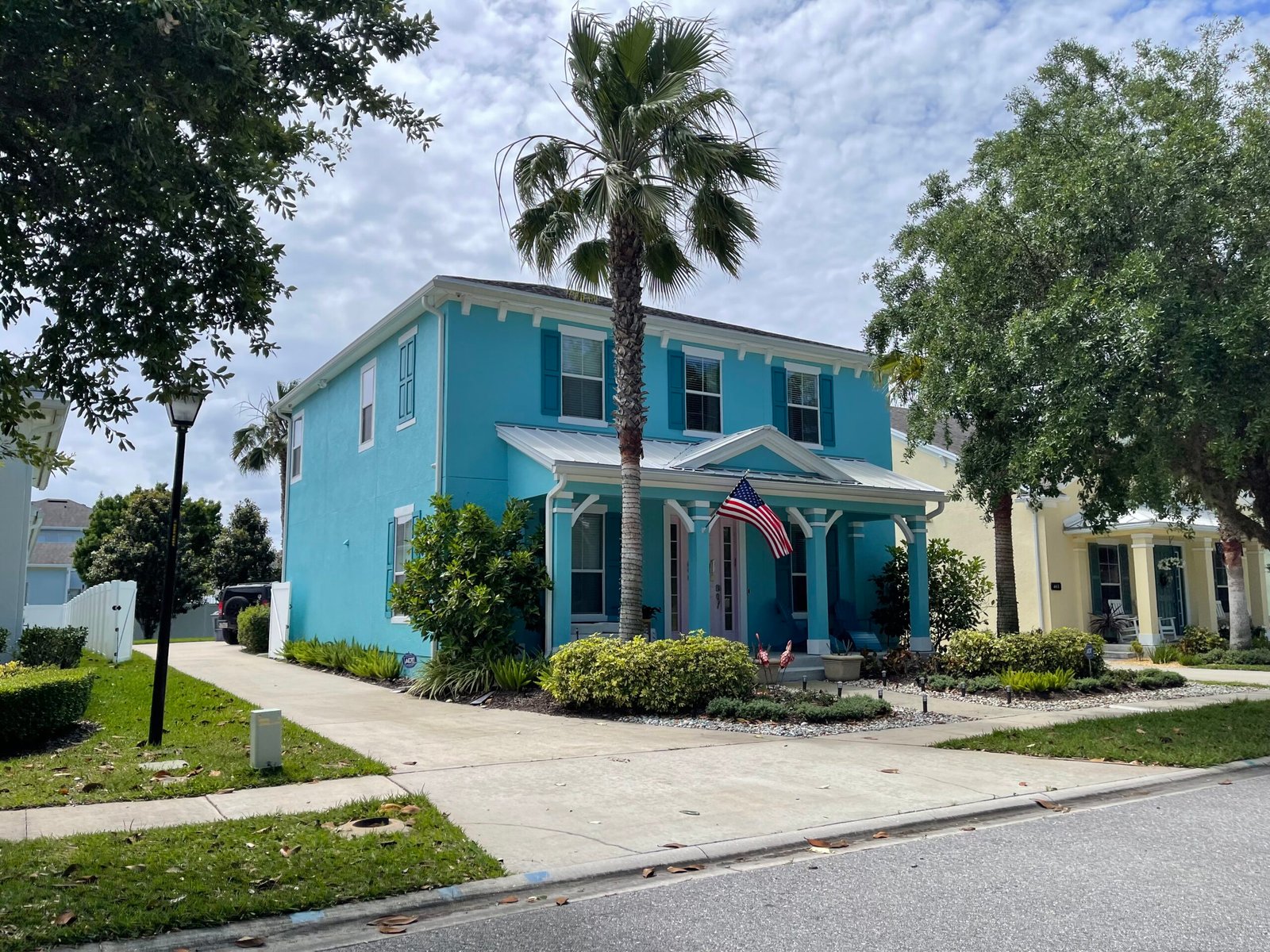
Usually not right away. The exterior coating on a new Nocatee home — stucco or fiber cement — is typically fine for the first several years, and there’s rarely a reason to repaint it early.
Florida weather does eventually catch up with any exterior, and builder exterior coatings aren’t premium, but the interior is where new owners see the fastest return. The sensible approach is an inspection: have the exterior looked at, keep up with maintenance washing to fight mildew and salt buildup, and plan an exterior repaint when fading, chalking, or failing caulk actually shows up rather than on a fixed schedule. When that time comes, our exterior painting services cover stucco, Hardie, trim, and full exterior systems — and our Nocatee-specific guides to stucco painting and James Hardie siding painting walk through what to expect for each substrate.
Common Drywall Issues in New Construction Homes
New homes move as they settle, and the drywall shows it. The usual issues in the first few years are settlement cracks (often above doors and windows), nail pops and screw pops along studs, tape joints becoming faintly visible, corner-bead lines, and minor texture inconsistencies.
None of these mean your home was built poorly — they’re the normal behavior of new construction drying and settling into place. What matters is that they’re repaired correctly before painting, not coated over. A nail pop painted over is still a nail pop; it needs to be reset and patched. Texture repairs need to match the surrounding wall — a smooth patch on an orange-peel or knockdown surface is as visible as the flaw it replaced. Proper drywall repair comes first, then paint.
The Importance of Surface Preparation
On a new home, preparation is less about undoing old damage and more about correcting settling and giving the walls a durable finish the builder didn’t. A professional prep sequence includes furniture protection, dust control, sanding repairs smooth, caulking trim gaps, spot-priming any patched or stained areas, completing drywall repairs, cutting clean lines, applying two full coats, and cleaning up daily.
Paint never hides drywall problems — it highlights them, especially in Florida’s bright natural light. The prep is what turns a fast builder finish into a repaint that looks and lasts like a premium home. See our drywall repair and interior painting services for how each step fits together.
Choosing Colors for Your New Nocatee Home
This is the fun part, and the place to move deliberately rather than quickly. Most new homes start as builder white or a single neutral greige — a fine blank slate, but rarely anyone’s actual choice.
The colors that consistently work in Nocatee homes are warm whites, greige, and soft coastal tones that suit the community’s light and architecture. Two things matter most. First, open floor plans mean colors have to flow between connected rooms, so choose adjacent spaces together rather than in isolation. Second, Florida light — both bright natural daylight and your installed fixtures — dramatically changes how a color reads, so always test large-format samples on your actual walls in morning, afternoon, and evening light before committing. Accent walls can add depth and personality without darkening an entire room. Our complimentary color consultation brings large samples to your home so you see real color at real scale.
Builder White vs a Custom Color Palette
The difference between a builder-white interior and a thoughtfully chosen palette is bigger than people expect. Builder white is safe and neutral, designed to offend no one — which also means it rarely feels like yours. A custom palette, coordinated across the open floor plan with the right warm neutrals and a considered accent or two, is what makes a production home feel custom.
It’s the single highest-impact change you can make to a new build short of renovation, and it costs a fraction of one. The walls go from “the house the builder handed me” to “the home I chose,” and in an open plan that shift is felt the moment you walk in.
Upgrading Trim, Doors, and Cabinets
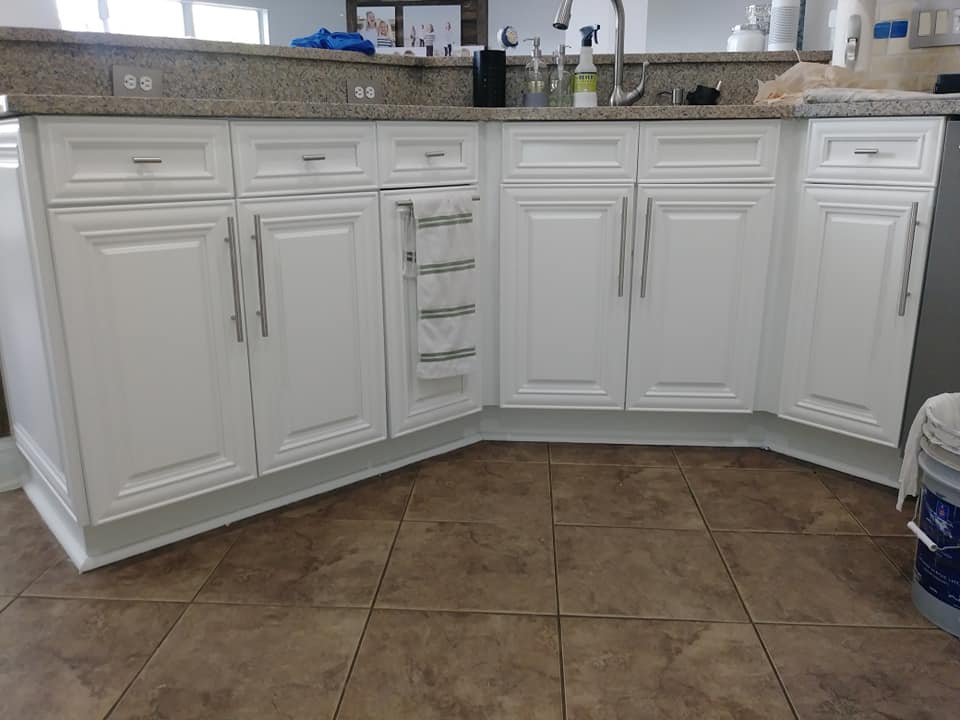
While a crew is already in the home, it’s the natural moment to go beyond walls. Trim and interior doors usually wear a quick builder coat that upgrades dramatically with a proper enamel finish. Kitchen cabinets and bathroom vanities can be refinished to transform those rooms without replacement — a huge value in a new home where the cabinets are sound but basic. Built-ins and the garage door round out the list.
Bundling these into the initial repaint is far more efficient than scheduling them separately later. Our cabinet painting and refinishing is a popular add-on for new owners who want the kitchen to match the fresh, personalized feel of the rest of the home.
Should You Upgrade Paint Products?
For most new homeowners, yes — this is the whole point of repainting a new home. Moving from builder-grade to a premium Sherwin-Williams® or Benjamin Moore® product buys you real, daily-life improvements: genuine washability so fingerprints and scuffs wipe clean, better durability against kids and pets, richer color, and a longer stretch before you’re repainting again.
The cost difference per gallon is modest against the labor of the whole project, and it’s almost always the better dollar-per-year value — a premium finish that lasts twice as long as builder-grade effectively halves the cost of the next repaint. For a full product breakdown by room, see our guide to the best interior paint for Florida homes.
How Long Does It Take to Paint a New Construction Home?
Timelines depend on scope and whether you’ve moved in. A vacant home moves fastest — no furniture, no phasing — and a whole-home interior might take several days. An occupied home takes a little longer because work is phased room by room to keep the household functional.
Adding ceilings, trim, doors, and cabinets extends the schedule but produces a far more complete result. Dry and cure times factor in too — paint is dry to the touch quickly but continues curing for days, which affects when furniture goes back against the walls. This is a big part of why painting before move-in, when you can, is so much simpler.
Mistakes New Homeowners Make
The avoidable ones: waiting too long, until scuffed builder paint is beyond touch-up; skipping drywall repairs and painting over nail pops and cracks; choosing colors too quickly off a small chip; hiring the cheapest painter and getting cheap-painter results; using flat paint everywhere, including rooms that need washable finishes; ignoring the builder warranty window and paying for repairs the builder would have covered; and painting before the permanent lighting is installed, since fixtures change how every color reads. A little planning avoids all of them.
Frequently Asked Questions
Can you repaint a brand-new house?
Yes. There’s no reason to wait years. Many owners repaint before or shortly after moving in to replace builder-grade paint with premium products and their own colors. New drywall does need to be fully cured and repairs completed first.
How soon can new drywall be painted?
New drywall and fresh mud need to be fully dry and cured before painting, and any settlement repairs should be completed first. In a finished new home this is generally already the case, but fresh patches need their cure time before a finish coat.
Should I paint before moving in?
If your timeline allows it, yes. An empty home is faster, cleaner, and easier for complete color changes, with no furniture to move and no disruption to your daily life. The main constraint is the window between closing and move-in.
Is builder paint low quality?
It’s not defective, but it is the most basic tier — chosen to be cost-effective across many homes. It scuffs easily, is hard to clean, and has less color depth and durability than premium residential paint. It does its job at closing; it just doesn’t hold up like an upgrade would.
Do I need primer?
Not everywhere. Sound, previously painted builder walls in good condition generally don’t need full priming for a repaint. Primer matters on bare drywall patches, repaired areas, stains, and dramatic color changes such as going bright white or deep and saturated.
Can I change colors immediately?
Yes. There’s no requirement to live with builder white. Changing colors is one of the most common reasons new owners repaint, and doing it before move-in is the easiest time.
Will painting void my builder warranty?
Repainting your walls does not typically affect your builder’s structural warranty, but warranty terms vary by builder — including any coverage of cosmetic settlement items like nail pops. If you’re within your first-year window, check your specific warranty and consider letting the builder address covered settlement items first.
How long does builder paint last?
It varies with traffic and household, but builder-grade paint commonly starts showing wear within a few years, which is why repaints in the 3-to-7-year range are typical for new Nocatee homes. High-traffic areas like hallways, kitchens, and kids’ rooms wear first.
Helpful Resources
More Nocatee Homeowner Guides
Repainting a new build often leads to the next question, and we’ve written a complete Nocatee guide for each major part of the home:
- Residential Interior Painting in Nocatee — room-by-room finishes, drywall repair, color, cost, and what a professional interior project includes.
- Residential Stucco Painting in Nocatee — when your stucco exterior is ready to repaint, plus prep, crack repair, and coating choices.
- Residential James Hardie Siding Painting in Nocatee — fiber cement prep, caulking, primer, and the right paint system for Hardie board homes.
Why Nocatee Homeowners Choose A New Leaf Painting Contractors
A New Leaf Painting Contractors is a residential painting company that has served Nocatee and Northeast Florida since 2001 — long enough to have painted homes here when the community was still being built. We understand new construction: the settling, the builder finishes, and how to turn a production interior into a home that’s genuinely yours. We prepare what matters underneath, not just what shows.
Homeowners here choose us for white-glove preparation, careful protection of brand-new homes, detailed written estimates, daily communication, and a final walkthrough before any job is called complete. We’re insured, Google Guaranteed, EPA Lead-Safe Certified, and hold a Duval County Certificate of Competency, with 750+ verified five-star reviews behind the work — all backed by our workmanship warranty and Iron-Clad Guarantee.
Make your new Nocatee home truly yours.
Schedule your free estimate — the easiest time to repaint is before the furniture arrives.