Should I Hire a Professional Painter or DYI the Painting Myself
A Jacksonville Homeowner’s Guide
An honest, project-by-project breakdown of when DIY painting works, when hiring a professional pays off, and how to decide for your Jacksonville, FL home.
Cost · time · quality | Florida-specific guidance | By Thomas Drake | Founder, A New Leaf Painting | 25+ years in Northeast Florida | 5,000+ projects completed | 750 Verified Reviews
After 25 years as licensed and insured house painters in Jacksonville, FL, I’ve answered this question hundreds of times for homeowners standing in the paint aisle at Sherwin-Williams holding a roller and wondering whether they’re about to save money or create a weekend they’ll regret. The honest answer isn’t “always hire a pro.” It’s “it depends on the project.”
This guide gives you the same straight breakdown I’d give a friend or family member: when DIY painting genuinely makes sense, when professional painting is worth the investment, and how to make the right call for your home, your timeline, and your wallet.
Quick Answer
Should you hire a professional painter or paint it yourself?
If you’re painting a small bedroom, accent wall, closet, or simple touch-up, DIY painting may be a good option. But if the project involves high ceilings, exterior surfaces, cabinets, drywall repair, stucco cracks, wood rot, major color changes, specialty coatings, or a tight timeline, hiring a professional painter is usually the better investment.
In Jacksonville, FL, exterior painting also requires extra attention to heat, humidity, UV exposure, mildew, stucco cracks, wood rot, failed caulking, and HOA paint color approvals — which is why most Northeast Florida exterior projects benefit from professional painters.
The 60-Second Summary
- DIY makes sense for: small rooms, accent walls, simple same-color repaints, low-risk spaces, and homeowners with time, patience, and basic skills.
- Professional painting wins for: whole-home interiors, exteriors, cabinets, two-story homes, high ceilings, stairwells, repairs, HOA projects, and homes going on the market.
- DIY costs aren’t just paint. Tools, supplies, prep materials, mistakes, and your time often equal or exceed a professional estimate.
- Most paint failures are prep failures. Surface preparation is the single biggest factor separating professional results from DIY frustration.
- In Florida’s climate, exterior painting is part of your home’s protection system — not just cosmetic.
When DIY painting genuinely makes sense
Let’s start where DIY actually wins. There are projects where painting it yourself is the right call — financially, practically, and from a quality standpoint. DIY painting can be a smart choice when the project is small, low-risk, easy to reach, and doesn’t require major prep or repairs.
Specifically, DIY tends to work well for:
- Small bedrooms, home offices, or guest rooms with simple walls
- Accent walls and feature walls
- Touch-ups using leftover paint from the original job
- Closets, pantries, and laundry rooms
- Simple same-color repainting on walls in good condition
- Low-stakes spaces where minor imperfections are acceptable
- Homeowners who genuinely enjoy painting and have the time to do it right
If that describes your project, you can absolutely save money doing it yourself — and the rest of this article is mostly about understanding what you’re signing up for.
When hiring a professional painter makes more sense
The bigger the project, the more value shifts away from “paint on the wall” and toward preparation, protection, speed, safety, and finish quality. Professional painting tends to be the better investment for:
- Whole-home interior repaints
- All exterior painting (especially in Florida’s climate)
- Two-story and three-story homes
- High ceilings, vaulted ceilings, and stairwells
- Cabinet painting and refinishing
- Detailed trim, doors, and architectural millwork
- Stucco homes, wood siding, brick, and Hardie board
- Major color changes (dark-to-light or light-to-dark)
- Homes going on the market or move-in painting before furniture arrives
- HOA exterior repainting with ARB approval requirements
- Homes needing drywall, stucco, or carpentry repair before paint
The reasons aren’t just speed or convenience — they’re about how the finished work performs over the next 5 to 10 years.
Cost: DIY vs. professional painting
This is where most homeowners think they understand the math. They don’t. DIY painting looks cheaper when you only count paint. It looks different when you count tools, prep supplies, time, repairs, mistakes, and the possibility of repainting sooner.
Here’s what each side actually costs:
What painting it yourself actually requires
- Paint (premium products run $60–$95 per gallon)
- Primer for repairs and color changes
- Brushes (good ones aren’t cheap)
- Rollers, trays, extension poles
- Drop cloths and plastic sheeting
- Painter’s tape (lots of it)
- Sandpaper and sanding blocks
- Caulk and patching compound
- Putty knives and scrapers
- Ladder rental or purchase
- Sprayer rental (for cabinets/exterior)
- Safety gear (mask, glasses, gloves)
- Cleanup supplies and disposal
- Your time (often the biggest cost)
- Mistake corrections and rework
What’s built into a Jacksonville pro estimate
- Skilled labor with years of experience
- Full surface preparation in writing
- Floor and furniture protection
- Premium Sherwin-Williams or Benjamin Moore products
- Two-coat application on every surface
- Primer where needed
- Repairs to drywall, stucco, or wood
- Professional tools and sprayers
- Ladders, scaffolding, safety gear
- Daily cleanup during the project
- Final walkthrough and touch-ups
- Workmanship and product warranty
- Insurance coverage during the work
- Project management and scheduling
- Time savings (days vs. weeks)
For a deeper breakdown of what professional painting actually costs in Jacksonville, FL, see our exterior painting cost guide and interior painting cost guide.
Time: how long will it really take?
Homeowners almost universally underestimate this. A room that looks like a “Saturday project” can easily turn into a full weekend or several evenings after work — especially once you factor in the steps that aren’t actually painting.
A realistic DIY interior painting timeline includes buying supplies, moving furniture out or to the center of the room, covering floors with drop cloths, taping baseboards and trim, patching nail holes and dings, sanding rough areas, cleaning walls, cutting in around edges and corners, rolling the first coat, waiting for proper dry time, applying the second coat, doing touch-ups, cleaning up, removing tape carefully, and moving furniture back. That’s not one Saturday. That’s most weekends.
Exterior painting takes much longer. Pressure washing requires drying time before any paint goes on. Scraping, caulking, and wood rot repair add days of prep work. Florida weather rarely cooperates for the full window — afternoon thunderstorms, humidity, and morning dew all create timing constraints. Add ladder work, masking pavers and pool cages, two-coat coverage on a full elevation, and exterior projects can take a DIY homeowner weeks of weekends to complete what a professional crew finishes in 4 to 7 days.
Why prep work matters more than paint
This is the section most DIY homeowners wish they’d read first. Most paint problems are not paint problems. They’re prep problems.
For interior projects, professional prep includes drywall patching for nail pops and dings, sanding patches smooth and feathered, caulking trim gaps that have opened up over time, stain blocking for water marks or smoke damage, cleaning walls in kitchens and bathrooms where grease and humidity have accumulated, protecting floors and furniture, removing outlet covers and switch plates, and using the right primer for the surface.
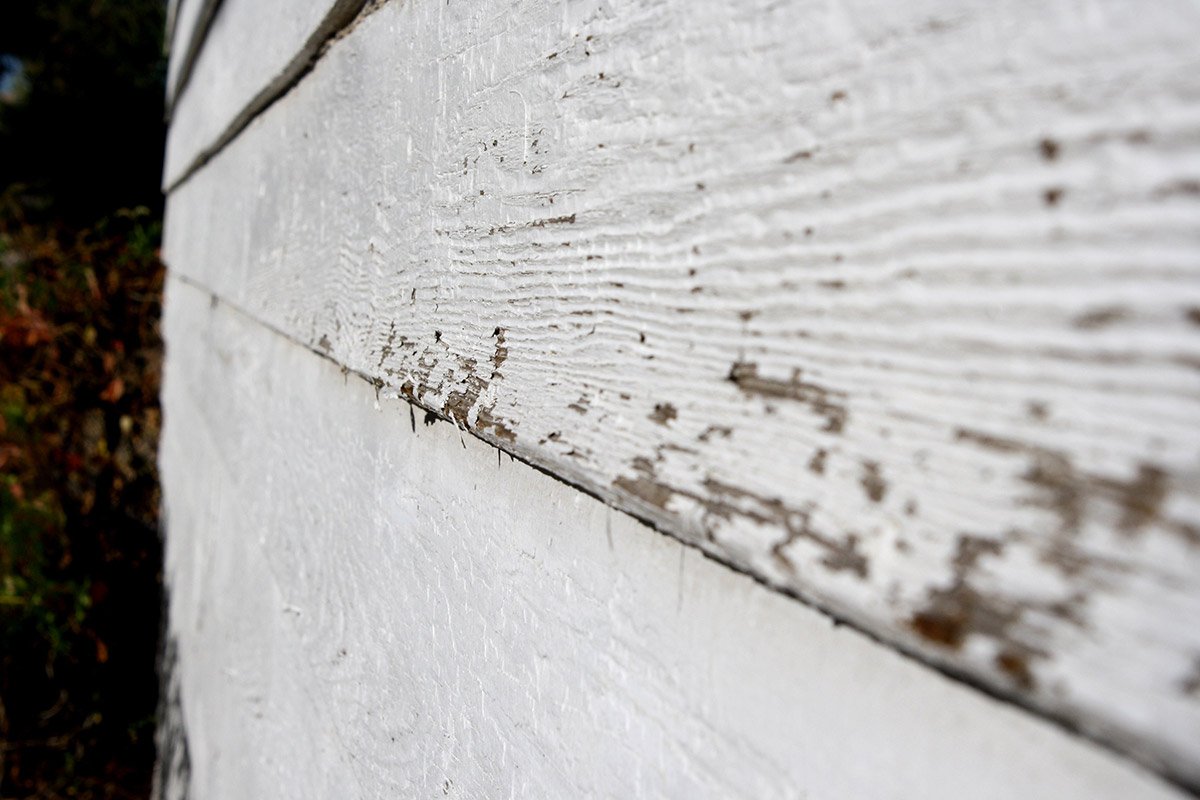
For exterior projects in Northeast Florida, prep is even more involved: pressure washing to remove chalking, mildew, and pollen; scraping loose or peeling paint; sanding scraped areas to create a sound substrate; stucco crack repair; failed caulk removal and re-caulking around windows, doors, and trim; wood rot repair on fascia, soffits, and trim; spot priming bare or repaired areas; and masking pavers, plants, pool cages, lighting, and irrigation.
A reliable testIf a painter can’t explain their prep process, they probably don’t have one. The same is true in reverse: if you can’t budget the time for proper prep on your DIY project, the paint job won’t last regardless of which product you buy.
Quality and finish: what homeowners notice after paint dries
Paint dries differently than it goes on. The mistakes only become visible the next morning — or the next week, when the lighting changes. Here’s what most DIY homeowners notice once the project is “done”:
- Roller marks and stipple texture inconsistencies
- Lap lines where wet paint met dry paint
- Uneven sheen, especially on flat or matte finishes
- Drips and runs around trim, corners, and window frames
- Brush marks visible in raked light
- Fuzzy or wavy cut lines where wall meets ceiling or trim
- Paint on baseboards, hinges, hardware, or floors
- Missed spots that show up only in certain lighting
- Flashing from unprimed patches
- Cabinet finishes that show every brush mark and chip within months of daily use
Professional painting isn’t just about getting paint onto a surface. It’s about making the finish look clean, even, protected, and intentional — the kind of work you don’t notice because nothing’s wrong with it.
Safety considerations before painting yourself
This part isn’t about scaring anyone — it’s about being honest about what’s actually involved, especially on exterior projects.
DIY painting risks include falls from ladders (the most common serious injury on home painting projects), unstable footing on uneven ground or wet surfaces, working near pool cages, screened lanais, and rooflines, electrical hazards around outlets and exterior fixtures, lead paint exposure in homes built before 1978, dust inhalation from sanding, paint fume exposure in poorly ventilated spaces, and equipment hazards from sprayers and ladders.
Many Jacksonville homes have tall elevations, two-story peaks, dormers, pool cages, screened lanais, paver patios, and dense tropical landscaping that make exterior painting more complicated and physically demanding than it appears from the ground. Professional painters carry insurance specifically because the work has real risk — risk that homeowners absorb personally when they DIY without proper coverage.
Tools and materials: what professionals bring that DIYers don’t
The right product matters just as much as the right color. Professional painters arrive with:
Professional painting tools and materials
- Extension poles for ceilings and high walls
- Professional-grade brushes and rollers
- Airless and HVLP sprayers
- Masking machines and high-quality drop cloths
- Multi-position ladders and scaffolding
- Moisture meters for exterior wood and stucco
- Power sanders for cabinets and trim
- Caulk guns, scrapers, and putty knives
- Stain-blocking and bonding primers
- Cabinet-specific coatings
- Masonry primers and elastomeric stucco coatings
- Premium exterior paints engineered for Florida
Premium paint products homeowners may not know to ask for include Sherwin-Williams Emerald (interior and exterior, 10-year warranty), Sherwin-Williams Duration (exterior, 7-year warranty), Benjamin Moore Aura (interior and exterior premium), Benjamin Moore Regal Select (mid-premium interior with excellent application), and Sherwin-Williams Emerald Urethane Trim Enamel for cabinets, trim, and doors when a factory-quality finish matters.
Project-by-project: DIY or professional?
Here’s how the decision typically plays out across the three most common painting projects.
Project Type 1
Interior Painting: DIY or Pro?
Interior painting is where DIY can genuinely work — for the right project. Small, simple, low-stakes spaces are reasonable DIY territory. Whole-home interior repaints, occupied homes with furniture, and detailed trim work tend to favor professional painters in Jacksonville, FL.
DIY may work for
- Small bedrooms or offices
- Simple wall repaints
- Same-color refresh
- Single accent walls
- Closets and pantries
Hire a pro for
- Whole-home interior
- High ceilings, stairwells
- Detailed trim and doors
- Drywall repairs needed
- Move-in or pre-sale projects
Project Type 2
Exterior Painting: DIY or Pro?
Exterior painting in Jacksonville isn’t just cosmetic — it’s part of your home’s protection system. Florida’s UV intensity, humidity, salt air, and afternoon thunderstorm cycles destroy paint that wasn’t formulated and applied for these conditions. Add ladders, two-story elevations, pool cages, stucco repair, wood rot, and HOA approvals, and exterior painting tilts heavily toward professional in almost every case.
DIY may work for
- Single-story shed or outbuilding
- Front door refresh
- Small fence sections
- Mailbox and trim touch-ups
Hire a pro for
- Full exterior repaints
- Two-story homes
- Stucco and Hardie siding
- Wood rot or stucco repair
- Any HOA-governed home
Project Type 3
Cabinet Painting: DIY or Pro?
Cabinet painting is one of the most common DIY projects homeowners regret. Cabinets get touched, opened, closed, splashed, and wiped down hundreds of times a week. The finish has to survive daily use — and the products and techniques that hold up are not the same as wall paint. Grease contamination, old coatings, sanding inconsistency, wrong primer, brush marks, and inadequate dry time all show up within months on a DIY cabinet job.
DIY may work for
- Bathroom vanity (small)
- Single utility cabinet
- Painted laminate touch-ups
Hire a pro for
- Full kitchen cabinets
- Kitchen island repaints
- Built-ins and custom millwork
- Color changes (dark to light)
- High-use family kitchens
Repairs: don’t paint over problems
This is one of the most expensive DIY mistakes we see. Paint can make a surface look better, but it doesn’t fix moisture, rot, cracks, or failed caulk underneath. Painting over a problem usually accelerates it — and turns a $400 repair into a $4,000 repair when the underlying damage gets worse.
The repairs that should be addressed before paint goes on:
- Drywall cracks and nail pops — usually settling or framing movement; needs proper patching, taping, and sanding before repainting
- Water stains — require stain-blocking primer; painting over without one will cause bleed-through
- Stucco cracks — common on Northeast Florida homes; require elastomeric crack repair before topcoat
- Rotted wood — fascia, soffits, trim, window frames; full board replacement is often needed before paint
- Failed caulk — old caulk separates from substrate; needs full removal and replacement, not just paint coverage
- Peeling paint — usually a prep or moisture problem; needs scraping back to sound material
- Mildew and algae — common on north-facing exterior walls; requires proper cleaning, not just pressure washing
- Rust stains — usually from nails or fasteners; requires stain-blocking primer and root-cause repair
If your project includes any of these, the conversation isn’t really DIY vs. professional painting — it’s whether you have the time, tools, and experience to handle the repair correctly before painting begins.
HOA approval and exterior painting in Jacksonville
If you live in an HOA community in Northeast Florida, this section matters more than the price quote. Most gated and master-planned communities in Jacksonville require written architectural review board (ARB) approval before any exterior paint work begins — including in Ponte Vedra Beach, Nocatee, Fleming Island, Julington Creek, Marsh Landing, Sawgrass, Glen Kernan, Queens Harbour, Deerwood, Palencia, RiverTown, and dozens of others.
Don’t buy paint or start the job until you know whether written approval is required. Painting without ARB approval can result in violation letters, daily fines, forced repaints in an approved color, and in some cases, liens against your property. We’ve documented exactly how that math plays out in our HOA paint fines vs. professional painting guide.
For ARB submission help, see our complete guide to HOA painting in Jacksonville, the HOA Paint Color Guide with approved palettes for 20+ Northeast Florida communities, and our HOA Directory with management contacts for nearly 100 Jacksonville-area communities.
Warranty, insurance, and accountability
This is the part of the DIY equation that’s easy to overlook until something goes wrong. When you paint it yourself, you own every mistake. There’s no workmanship warranty, no product warranty (manufacturer warranties only apply when products are applied to spec by qualified professionals), no insurance if something gets damaged, and nobody to call when the trim peels in 18 months.
A reputable Jacksonville painting contractor should provide a written estimate with clear scope, current Florida license and insurance certificates, a workmanship warranty, a final walkthrough at project completion, and a clear correction process if something isn’t right. When you hire the right professional, you should have a process, a warranty, and someone accountable for the result.
The stress factor: is DIY worth your weekend?
Sometimes the real cost of DIY isn’t money. It’s stress, time, mess, and unfinished work. The honest version of a DIY painting project includes:
- Living in a half-painted room for days or weeks
- Paint supplies stacked in your living areas
- Furniture pulled to the center of rooms
- Disagreements with your spouse about color, technique, or pace
- Weekends consumed by a project that looked like a Saturday
- The realization, mid-project, that you bought the wrong sheen or color
- The fear of messing up cabinets or exterior surfaces you can’t easily redo
None of that shows up on the savings calculation when you’re standing in the paint aisle. All of it shows up when you’re three weeks into a project that should have been done by now.
The decision checklist: DIY or hire a pro?
If you only remember one section of this guide, make it this one.
You can confidently say yes to most of these
- The room or surface is small
- The walls are in good condition (no major repairs)
- You have meaningful time available
- You actually enjoy painting
- You already own the basic tools
- The project is low-risk (interior, accessible)
- You’re comfortable with minor imperfections
- It’s a same-color refresh or simple change
Any of these apply to your project
- The project is large or whole-home
- The home is occupied and needs protection
- You have high ceilings or stairwells
- The exterior needs painting
- Cabinets are part of the project
- Drywall, stucco, or wood repairs are needed
- You need a clean, professional finish
- You’re selling or moving in soon
- You live in an HOA community
- You want warranty and accountability
Why Jacksonville homeowners trust A New Leaf Painting
The standards every estimate includes
We’ve spent 25 years building a Jacksonville house painting company we’d want our own families to hire. Every estimate includes complete written scope, named premium products, full surface preparation, two coats on every surface, and our Iron-Clad Guarantee on workmanship.
- Serving Northeast Florida since 2001
- 5,000+ residential and commercial projects
- 750+ verified five-star reviews
- Licensed and insured in Florida
- $5M liability coverage
- Sherwin-Williams & Benjamin Moore products
- Free color consultation
- HOA submission support included
- Iron-Clad Guarantee on workmanship
- Interior, exterior, and cabinet painting
- Stucco repair and carpentry repairs
- Drywall repair and refinishing
DIY vs. professional painting: questions answered honestly
Is it cheaper to hire a painter or DIY?
For small, simple projects with minimal prep, DIY is almost always cheaper. For larger projects — whole-home interiors, exteriors, cabinets, or projects requiring repairs — professional painting is often comparable or cheaper once you factor in tools, prep supplies, time, mistakes, and the durability of premium products applied correctly.
The math also shifts dramatically over time. A DIY exterior paint job using contractor-grade paint can fail in 3 years; a professional exterior using Sherwin-Williams Emerald can last 8–12 years. Annualized, the professional job often costs less per year of protection.
How long does it take a professional to paint a house in Jacksonville?
Interior painting timelines depend on size and scope. A typical 2,500 sq ft home interior runs 3 to 7 working days. Exterior painting on a similar-sized Jacksonville home runs 4 to 8 working days, depending on prep, repairs, and weather. Cabinet painting typically takes 4 to 7 working days for a full kitchen.
DIY equivalents run 3–5x longer because of supply runs, learning curves, weather windows, and the inability to work full days continuously.
What paint do professionals use in Jacksonville, FL?
The most reliable performers in Jacksonville’s UV and humidity are Sherwin-Williams Emerald (interior and exterior, 10-year warranty), Sherwin-Williams Duration Exterior (7-year warranty), Benjamin Moore Aura (interior and exterior premium), and Benjamin Moore Regal Select for mid-premium interior projects. For cabinets, Sherwin-Williams Emerald Urethane Trim Enamel and Benjamin Moore Advance produce factory-quality finishes.
For stucco and masonry, specialty products like Loxon XP handle waterproofing and crack-bridging that standard exterior paints cannot.
Should I paint my own kitchen cabinets?
Cabinet painting is one of the most common DIY projects homeowners regret. The finish has to survive daily use — opening, closing, splashing, wiping — and the products and techniques that hold up aren’t the same as wall paint. Grease contamination, the wrong primer, brush marks, and inadequate dry time all show up within months.
For a small bathroom vanity, DIY can work. For a full kitchen, a kitchen island, or any cabinet that gets daily use, professional cabinet painting almost always pays off long-term. See our cabinet painting and refinishing services.
Should I paint the exterior of my Florida home myself?
Generally, no — for most Jacksonville homes. Exterior painting in Florida requires pressure washing, mildew removal, scraping, sanding, stucco crack repair, wood rot repair, failed caulk replacement, primer, and two coats of premium product applied during the right weather windows. Add ladder safety, two-story elevations, pool cages, and HOA approvals, and exterior painting tilts heavily toward professional in almost every case.
Small exceptions: front door repaints, small fence sections, and mailboxes are reasonable DIY projects.
What happens if I paint my house and don’t like it?
If you painted it yourself, you start over — supplies, time, and all. If a professional painter did the work, a reputable contractor will typically discuss touch-ups or color corrections as part of the final walkthrough. Free color consultation included with our estimates is one of the biggest reasons homeowners choose professionals — getting the color right the first time avoids this problem entirely.
Do professional painters guarantee their work?
Reputable Jacksonville painting contractors should provide both a workmanship warranty (covers application errors) and information about the manufacturer’s product warranty (covers paint failure when applied to spec). Both should be in writing.
A New Leaf Painting’s Iron-Clad Guarantee covers workmanship for the duration of the manufacturer’s product warranty on every project.
Can a professional painter help with HOA color approval?
Yes. Most experienced Jacksonville painting contractors can provide the technical product information your HOA’s ARB submission requires — manufacturer name, color codes, LRV, sheen specifications, prep scope, and license/insurance documentation. The homeowner submits the application; the painter provides the technical content.
For more on HOA approval requirements, see our complete guide to HOA painting in Jacksonville.
Still deciding?
Get an honest assessment of your painting project — DIY or professional.
25 years. 5,000+ Northeast Florida projects. 750+ verified five-star reviews. We’ll look at your project, explain what prep is needed, and provide a free estimate so you can decide what makes the most sense for your home, budget, and timeline. If DIY is genuinely the right call for your project, we’ll tell you that too.