In this article
- Why Are Stucco Problems So Common in Florida?
- Florida's Stucco Litigation History, in Brief
- Stucco Is More Than the Surface You See
- The Most Common Stucco Problems Florida Homeowners See
- Cosmetic Stucco Crack or Something More Serious?
- Can You Just Paint Over Cracked Stucco?
- Does Elastomeric Paint Waterproof a Stucco House?
- What Should Be Repaired Before Painting a Stucco Home?
- Why Surface Preparation Matters So Much on Florida Stucco
- What About Newer Florida Homes?
- What Jacksonville Homeowners Should Do Before Repainting Stucco
- Real Stucco Problems We See on Northeast Florida Homes
- How A New Leaf Painting Contractors Approaches Stucco Homes
- Frequently Asked Questions About Florida Stucco Problems
- Related Stucco and Exterior Painting Resources
Stucco itself isn't a flawed exterior. Properly installed, flashed, sealed and coated stucco holds up well in Florida, on old homes and new ones. Most of the problems behind Florida's stucco lawsuits come from weak spots in the whole wall system: flashing, drainage, the water barrier behind the stucco, or how the stucco was applied. Our climate tends to expose those weak spots faster than a milder one would.
So when you see cracks, stains or peeling paint on your stucco, the question is which kind of problem it is. Some are a routine part of getting a house ready to paint. Others deserve a closer look before anyone paints over them.
A note on scope: this is general information, not legal, engineering or home-inspection advice. A New Leaf Painting Contractors is a painting and surface-prep company. Good exterior painters in Jacksonville, FL should look past color and product and tell you when something is outside their lane.
Why Are Stucco Problems So Common in Florida?
Heavy seasonal rain, wind-driven rain in hurricane season, strong UV, high heat and daily expansion and contraction all work on stucco and the parts behind it. That doesn't mean Florida weather makes stucco fail. It means a marginal flashing detail or a skimpy water barrier that might go unnoticed for years somewhere drier tends to show itself sooner here.
Florida's Stucco Litigation History, in Brief
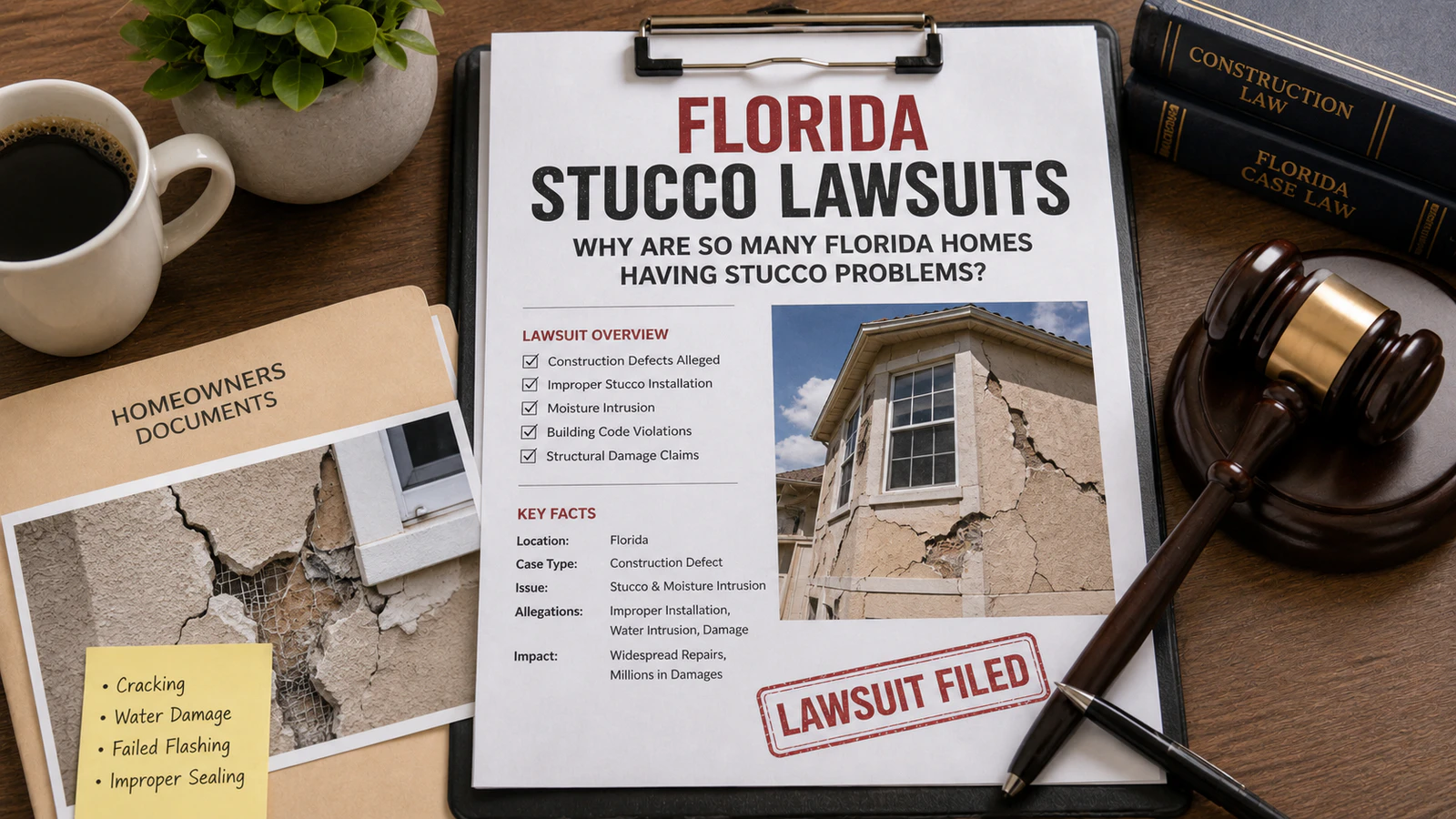
Stucco defect cases have gone all the way through Florida's courts, including here in Jacksonville. In one well-known case, the association of Heron's Landing, a 240-unit condominium community on Beach Boulevard, sued the builder, D.R. Horton, over construction defects including improperly applied stucco, windows and roofs. In 2016 a jury found the builder negligent and awarded the association $9.6 million. Florida's First District Court of Appeal upheld the verdict in 2018 (D.R. Horton, Inc. v. Heron's Landing Condominium Association of Jacksonville, 266 So. 3d 1201).
Most stucco homes never see anything like it. But it shows that badly applied stucco leading to water damage is a real, documented problem here, which is why some conditions deserve a closer look before they're painted over.
Stucco Is More Than the Surface You See
The finish coat is only the last layer. Behind a typical stucco wall you'll find reinforcing lath, the wall sheathing, a water-resistive barrier to stop water that gets past the stucco, flashing at windows, doors and other openings to steer water back out, sealants at those openings and at control joints, and a weep screed at the bottom of the wall to let trapped moisture drain.
Done right, those details handle the water that gets past the finish. Miss one, and water can end up inside the wall. A surface crack might be cosmetic or might sit over a bad flashing detail, and you can't tell which from outside.
The Most Common Stucco Problems Florida Homeowners See
- Hairline cracks. Thin, shallow cracks are very common, especially in a home's first several years as it settles. Usually they come from shrinkage and settlement, and fixing them is routine prep before painting.
- Larger or recurring cracks. Cracks you can fit a fingernail into, or ones that reopen after patching, point to ongoing movement a surface patch hasn't fixed.
- Cracks around windows and doors. That's exactly where flashing and sealant matter most. Not every crack there means a hidden problem, but it's worth a closer look.
- Peeling or bubbling paint. Causes include moisture escaping from behind the coating, poor prep on an earlier paint job, incompatible coatings or an old, chalky coat that has lost its grip. Bubbling that comes back after patching is worth understanding before repainting. See why stucco paint peels in Jacksonville.
- Failed caulk. Sun and movement slowly open caulk joints, and they're a common way in for water. It's also one of the easier things to fix.
- Water stains. Sometimes it's just sprinkler overspray; sometimes it's moisture moving through the wall. Find the source before covering it.
- Soft, hollow or crumbly stucco. Stucco that sounds hollow when tapped has usually separated or been damaged by moisture, and needs repair before any coating goes on.
Cosmetic Stucco Crack or Something More Serious?
These are general categories, not a diagnosis of your home.
Conditions often addressed during normal exterior preparation include:
- Minor hairline cracks
- Small, isolated surface defects
- Failed exterior caulk
- Minor coating deterioration, such as chalking
- Small, repairable stucco imperfections
- General weathering of an aging coating
Conditions that may warrant further evaluation before painting include:
- Significant or widespread cracking across multiple elevations
- Cracks that keep recurring after repair
- Active or suspected water intrusion
- Interior moisture staining associated with an exterior wall
- Large loose or delaminated stucco areas
- Persistent bubbling or peeling that returns after previous repairs
- Problems concentrated around windows, doors, or roof-to-wall intersections
- Any condition suggesting damage may extend behind the visible surface
Sometimes a stucco problem is a painting and surface-repair problem, and sometimes it isn't. If what we find during an exterior evaluation belongs in the second list, the responsible answer is to recommend further evaluation, not to go ahead with a standard repaint.
Can You Just Paint Over Cracked Stucco?
Sometimes. Minor surface cracks can usually be repaired and coated as part of a normal exterior paint job. Paint should never be used to hide an unresolved moisture, structural or installation problem.
The right order is: inspect, repair what falls within paint prep, caulk, prime, then coat. If something looks bigger than that, we'll say so first. Our Jacksonville exterior painters find old patches, failed caulk and hairline cracks on most stucco estimates, well before color comes up.
Does Elastomeric Paint Waterproof a Stucco House?
Not by itself. Elastomeric and other high-build coatings can give real protection when they suit the wall and go on correctly, and they bridge hairline cracks in a way standard acrylic paint can't. But a coating sits on top of the wall. It doesn't fix flashing, replace a damaged water barrier or add a drainage detail that was never installed.
Elastomeric isn't automatically the better choice either. Sound stucco with few cracks often does better with a breathable premium acrylic. Our stucco painting guide and elastomeric vs. acrylic comparison go deeper.
What Should Be Repaired Before Painting a Stucco Home?
- Cracks appropriate for repair within painting preparation
- Loose or deteriorated stucco sections
- Failed prior patches
- Failed caulk at joints and penetrations
- Wood rot in adjacent fascia, trim, or siding
- Damaged siding where stucco meets another material
- Peeling or failing prior coatings
- Bare or exposed substrate
- Problem areas around windows, doors, and other penetrations
Our rule is simple: don't use paint to hide a problem that should have been repaired first. A fresh coat over an unrepaired problem doesn't solve it, and it often hides it until it costs more to fix.
Why Surface Preparation Matters So Much on Florida Stucco
Prep decides whether a stucco repaint lasts or fails early, and on stucco it takes longer than on almost any other surface. A good sequence is: wash off dirt and chalk, remove loose coating, repair cracks and match the texture so patches don't show, caulk failed joints, spot-prime bare and repaired areas with a masonry primer, then apply a system suited to the wall, usually a premium 100% acrylic or an elastomeric from Sherwin-Williams or Benjamin Moore.
Depending on the wall, we may use systems such as Sherwin-Williams Loxon XP, with Emerald Rain Refresh as an upgraded finish on some projects. More in our guide to why surface prep matters.
What About Newer Florida Homes?
Age alone doesn't decide how a wall performs; installation, exposure and maintenance matter more. Most newer homes have no defect, but "the house is new" isn't a reason to assume every crack or stain is cosmetic.
What Jacksonville Homeowners Should Do Before Repainting Stucco
- Walk the whole exterior, not just the front.
- Photograph cracks and problem areas so you have a record over time.
- Look for patches that have already cracked again, especially around windows and doors.
- Note where paint is peeling or bubbling, and any staining.
- Check caulk at joints and openings, and press on nearby fascia and trim for soft wood.
- Go over what you found with your painting contractor before agreeing to a scope, and get a specialist's opinion if it looks like more than paint prep.
Real Stucco Problems We See on Northeast Florida Homes
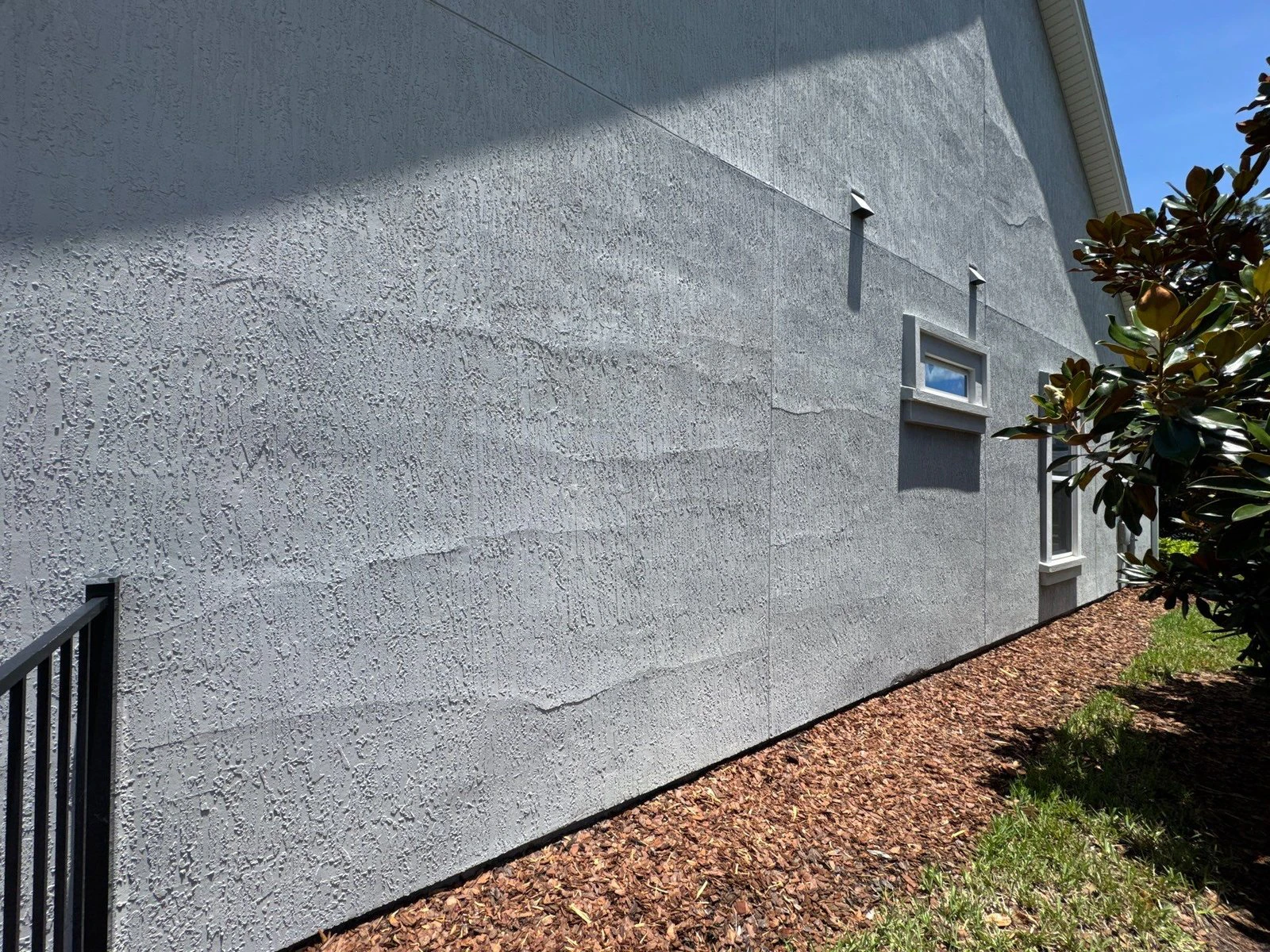
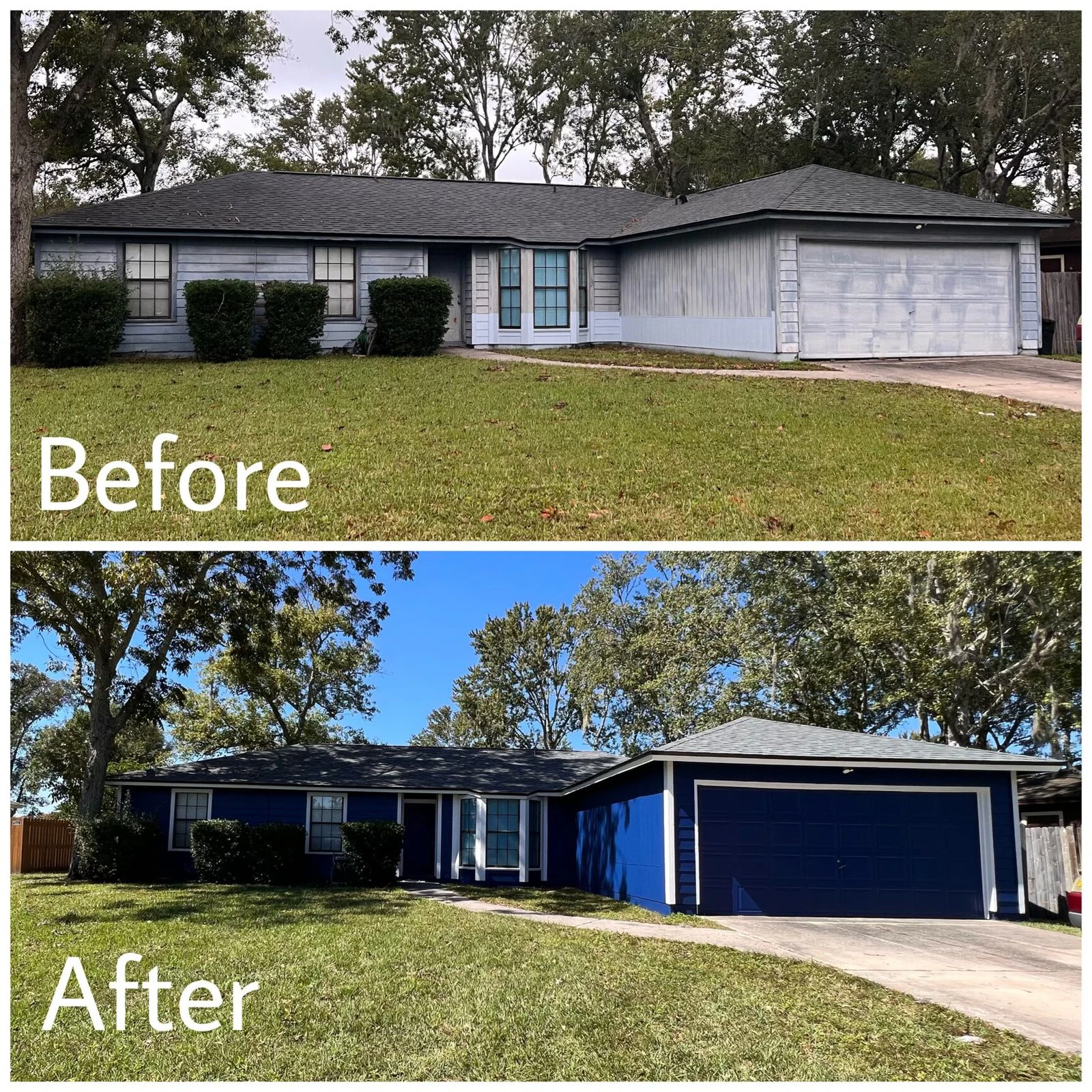
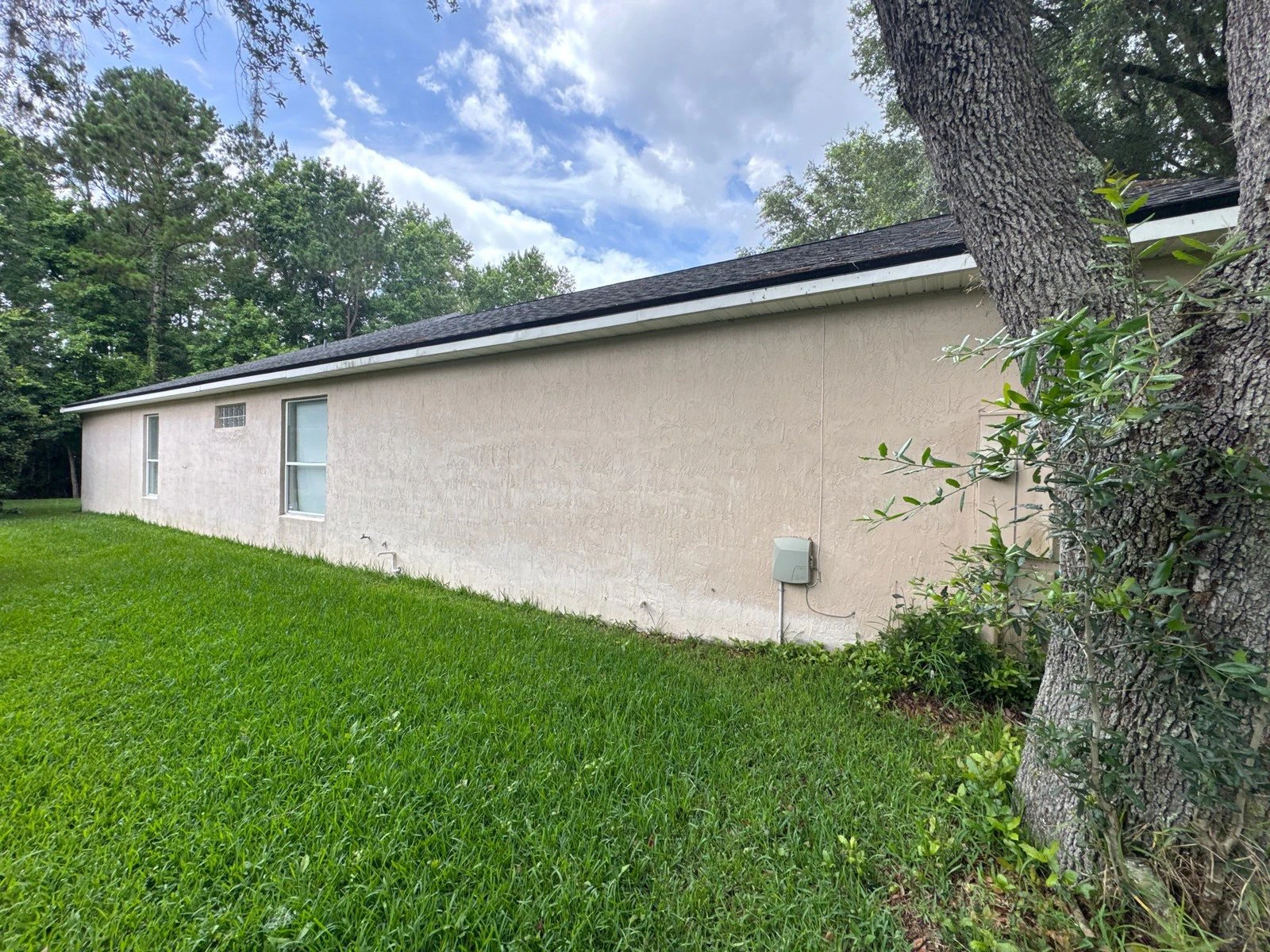
On a recent repaint in Hampton Park in Jacksonville, the house had an aging coating, a lot of failed caulk and minor cracking, and most of the work (washing, caulking, crack prep, spot priming) happened before any finish paint went on. A newer home in Coastal Oaks at Nocatee and an older one in Eagle Harbor on Fleming Island got the same sequence. None involved structural defects or water intrusion; this is normal stucco prep around here.
How A New Leaf Painting Contractors Approaches Stucco Homes
We've served Jacksonville and Northeast Florida since 2010, and stucco is one of the surfaces we work on most. On every estimate we look past the finish coat for hairline cracks, worn caulk, reopened patches and wood rot where stucco meets trim. A stucco project with us includes the inspection, prep, stucco repair within our scope, caulking, wood rot repair where needed, priming and a Sherwin-Williams or Benjamin Moore system matched to the wall. If something looks like it's outside painting and routine repair, we'll tell you what we see and point you to the right kind of evaluation.
Frequently Asked Questions About Florida Stucco Problems
Often, yes. Hairline cracks from shrinkage and settlement are common, especially in a home's first years, and are usually handled during routine exterior prep.
Related Stucco and Exterior Painting Resources
Concerned About Your Stucco Before Painting?
If you’re planning to repaint a stucco home in Jacksonville or Northeast Florida, A New Leaf Painting Contractors can evaluate the visible exterior surfaces, identify what falls within our preparation and repair scope, and build those needs into a professional exterior painting plan. For conditions that appear to extend beyond normal painting or surface repair, we’ll tell you, rather than simply covering the problem with paint.