
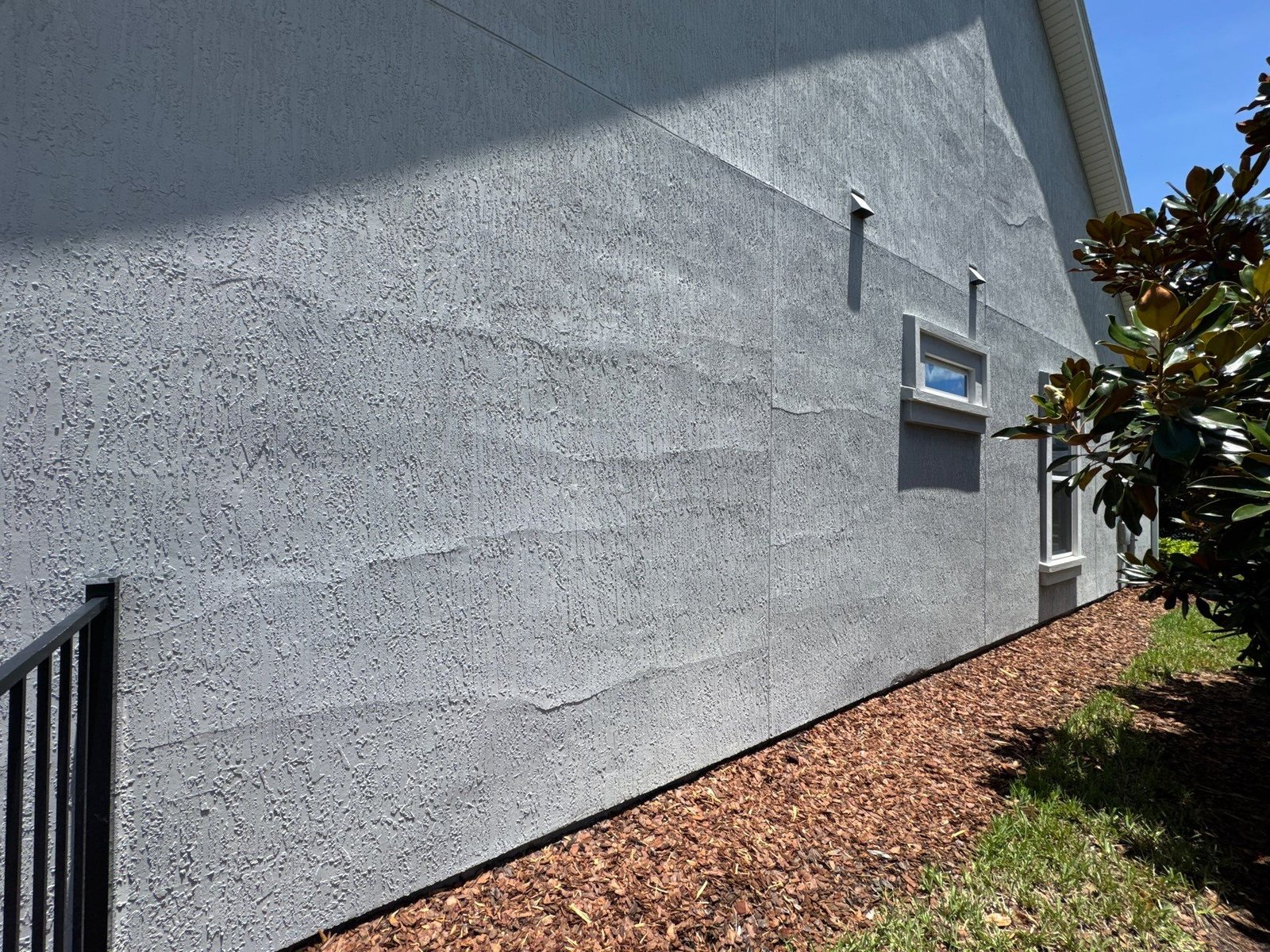
A homeowner in Mandarin notices a hairline crack running from the corner of a window. A homeowner near Jacksonville Beach sees bubbling paint near the bottom of an exterior wall. Someone in St. Johns has repaired the same stucco crack twice, only to watch it come back a third time.
For Jacksonville homeowners, these situations all raise the same question: is this normal exterior maintenance, or evidence of a bigger stucco problem? Florida’s history of stucco-related construction disputes has made homeowners understandably more alert to cracking, staining, and coating failure than they might be elsewhere. But not every stucco crack indicates defective construction, water intrusion, or a serious building-envelope problem — some conditions are routine maintenance, and others genuinely deserve a closer look. The challenge is knowing the difference, and that’s what this article walks through.
For homeowners preparing to repaint, experienced exterior painters in Jacksonville, FL should look beyond color and product selection. Cracks, failed caulking, peeling coatings, deteriorated stucco, and previous repairs all deserve a real evaluation before a new exterior coating system goes on.
Why Jacksonville Stucco Homes Deserve Special Attention
Northeast Florida’s environment is demanding on any exterior wall system: high humidity, intense UV, heavy seasonal rainfall, wind-driven rain during storm season, and the constant wet-dry cycling that comes with our climate. Coastal areas add salt exposure on top of that.
None of this means Florida weather causes defective stucco. What it does mean is that this kind of environmental exposure can accelerate normal deterioration and expose weaknesses that already exist — in the stucco itself, in coatings, in caulking, in flashing at windows and doors, or in a previous repair — faster and more visibly than a milder climate would. A marginal detail that might go unnoticed for years somewhere drier tends to show itself sooner here.
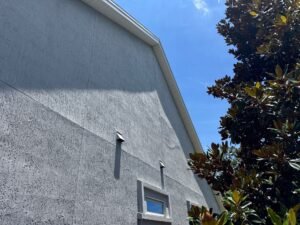
Why Have There Been So Many Florida Stucco Lawsuits?
Florida has a documented history of construction-defect disputes involving stucco — allegations concerning installation, cracking, water intrusion, water-resistive barriers, flashing, sealants, and window and door transitions. Some of these disputes, including one involving a Jacksonville condominium community, have been litigated all the way through the appellate courts.
That history doesn’t mean every Florida stucco home has a defect, and it isn’t the focus of this article. For a deeper look at Florida’s stucco litigation history, wall-system issues, and why these problems became so widespread, read our complete guide to why so many Florida homes have stucco problems. This article is focused on something more immediate: what any of this means for your own home, before you repaint it.
Not Every Stucco Crack Means Your Home Has a Serious Problem
Stucco can develop cracks for a number of reasons — minor shrinkage as it cures, normal settlement, ordinary thermal expansion and contraction, movement around window and door openings, a previous repair that didn’t fully address the cause, or in some cases, an installation or moisture-related issue underneath.
The size of a crack is only one clue, and not always the most important one. Location, whether it keeps recurring, any evidence of moisture nearby, and the condition of the surrounding stucco all matter more than crack width alone. We’re not going to diagnose the cause of a specific crack from a description — that’s exactly the kind of guesswork this article is trying to steer you away from. What we can offer is a framework for what to look at.
8 Stucco Warning Signs Jacksonville Homeowners Should Watch
1. Hairline Cracks
Thin, shallow cracks are common, especially on homes in their first several years, and are often part of routine exterior preparation before painting.
2. Cracks That Keep Coming Back
This deserves particular attention. If a crack has already been patched once or twice and keeps reopening in the same spot, repeatedly filling the surface without understanding why it keeps returning usually isn’t a lasting fix.
3. Cracks Around Windows and Doors
These transitions are common crack locations. That alone doesn’t make them a construction defect, but they’re worth a closer look — more on this below.
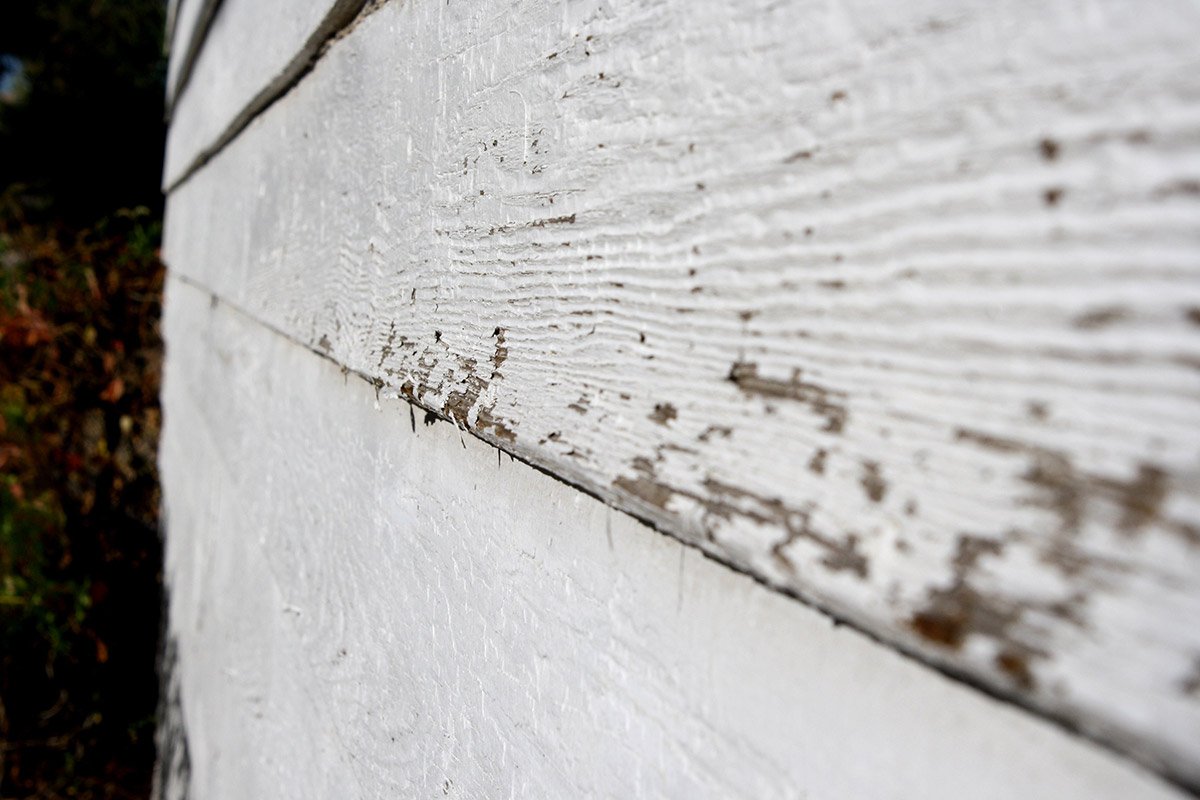
4. Peeling Exterior Paint
Peeling can trace back to poor prior surface preparation, chalking, moisture, an aging or incompatible coating, or simply age.
5. Bubbling or Blistering Paint
Trapped moisture is one possible cause of bubbling, but it isn’t the only one — application conditions and coating compatibility can also play a role.
6. Water Stains or Discoloration
Staining can come from something as simple as sprinkler overspray, or it can point to moisture moving through the wall. Painting over it without understanding the source isn’t the right first step either way.
7. Failed Caulking Around Openings and Penetrations
Caulk at windows, doors, pipe penetrations, and fixtures isn’t permanent, and failed caulk is one of the more common ways water finds its way in.
8. Loose, Hollow, Soft, or Deteriorated Stucco
Stucco that sounds hollow when tapped or feels soft generally needs repair before any coating is applied.
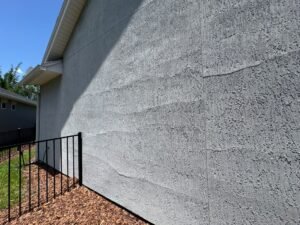
Pay Special Attention Around Windows and Doors
Windows and doors interrupt the exterior wall system and create transitions between different materials, which is exactly why they’re common trouble spots. Around these openings, homeowners may notice diagonal cracks running from the corners, failed or separated caulk, staining, peeling coatings, cracks that keep recurring, or evidence of previous patchwork.
None of that automatically means water intrusion is happening. But these areas deserve a careful look before repainting rather than a quick fill-and-coat, since a compromised detail at a window or door transition is one of the more common starting points for a bigger problem.
What Does Peeling or Bubbling Paint on Stucco Tell You?
Paint failure on stucco rarely has one single cause. It can result from poor surface preparation on a previous paint job, chalking, an incompatible coating, the wrong or missing primer, excessive moisture, simple age, a failed substrate underneath, or application problems at the time it was painted. See our full breakdown of why stucco paint peels in Jacksonville for a closer look at each cause.
The important takeaway: a new coat of premium paint cannot compensate for an unstable surface underneath it. If the surface itself isn’t sound, the paint on top of it won’t hold up regardless of how good the product is. This is one of the biggest differences between simply rolling on another coat and professional exterior house painting built to actually perform in Northeast Florida’s climate.
Can Jacksonville Painters Repair Stucco Before Painting?
Yes — many normal stucco repairs can be incorporated directly into a professional exterior painting project. That commonly includes minor cracks, small deteriorated areas, failed previous patches, general surface imperfections, caulking, removal of loose coating, appropriate patching and texture matching, spot priming, and related repairs to adjacent wood trim, fascia, or siding. Our Jacksonville exterior painters routinely encounter exactly these conditions — previous stucco patches, deteriorated caulking, hairline cracking, and wood deterioration adjacent to stucco surfaces — during exterior estimates, well before color ever comes up.
There are limits, though, and the next section covers where those limits are.
When a Stucco Problem May Be More Than a Painting Problem
Certain conditions may warrant a closer look before a painting project moves forward:
- Significant or recurring cracks
- Widespread cracking across multiple elevations
- Active or suspected water intrusion
- Interior moisture staining associated with an exterior wall
- Significant loose or delaminated stucco
- Major deterioration beyond what routine patching can address
- Persistent coating failure that returns after prior repairs
- Problems concentrated around multiple openings
- Any evidence suggesting deterioration extends behind the visible surface
- Conditions suggesting significant, ongoing movement
These conditions don’t automatically prove a major construction defect. They may, however, justify further evaluation before repainting. Sometimes the most professional thing a painter can tell a homeowner is: don’t paint this yet.
Should You Paint Over Stucco Cracks?
For minor, repairable cracking, the answer is straightforward: repair, prepare the surface, prime where appropriate, and coat.
For recurring or suspicious cracking, the sequence should be different: investigate first, determine the appropriate next step, and paint only after the underlying concern has been reasonably addressed. Simply filling every crack in sight and covering it with paint isn’t always responsible exterior preparation, even when it’s technically possible to do.
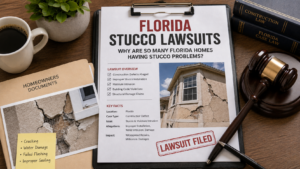
Does Exterior Paint Waterproof Stucco?
Quality exterior coatings can help protect a properly functioning wall against weather exposure. But exterior paint is not a substitute for correcting active water intrusion, defective flashing, failed building-envelope components, or other underlying construction problems. A coating protects a sound wall — it doesn’t fix one that isn’t.
What About Elastomeric Coatings?
Elastomeric coatings are thicker, more flexible products capable of bridging hairline cracks within the limits specified by the manufacturer, which makes them a reasonable option on stucco with a meaningful amount of fine cracking. Whether one is the right choice depends on surface preparation, the extent of crack repair already completed, compatibility with any existing coating, current moisture conditions, and the manufacturer’s own requirements.
Elastomeric isn’t automatically the best choice for every Florida stucco home, and it doesn’t solve water intrusion — it’s a coating decision, made after the wall’s actual condition has been assessed, not a fix for what’s happening behind the wall. See our full elastomeric vs. acrylic comparison for how that decision actually gets made. An experienced Jacksonville exterior painting contractor should select a coating system based on the substrate, existing coatings, exposure, and repair history — not simply the brand or price of the paint.
What Should Happen Before a Jacksonville Stucco Home Is Repainted?
- Exterior inspection — evaluating the visible condition of the stucco, coating, and trim.
- Pressure washing and cleaning — removing dirt, mildew, and chalking as appropriate.
- Identifying coating failure — peeling, blistering, or loose paint.
- Identifying stucco damage — locating cracks, deterioration, and previous repairs.
- Completing appropriate stucco repairs — within a reasonable painting-preparation scope.
- Repairing wood rot and exterior carpentry — fascia, trim, and siding adjacent to the stucco.
- Addressing failed caulking — at windows, doors, trim transitions, and penetrations.
- Priming appropriate surfaces — bare, repaired, or otherwise porous areas.
- Selecting the appropriate coating system — commonly a premium Sherwin-Williams® or Benjamin Moore® acrylic or elastomeric system, matched to the wall’s actual condition.
- Applying finish coatings properly — following manufacturer requirements for coverage and application.
Stucco Repair and Exterior Painting in Jacksonville’s Climate
Many Jacksonville homes don’t have a single exterior material — a stucco home might have wood or Hardie trim, a garage door, and painted fascia and soffits all needing their own preparation approach, and some older homes carry a coquina-textured stucco finish that behaves a little differently than a smooth modern application. We work across traditional stucco, previously painted stucco, James Hardie® siding, T1-11, wood siding, fascia, soffits, trim, exterior doors, and garage doors.
One of the reasons we inspect the entire exterior before developing a painting scope is that a stucco home rarely consists of stucco alone. Fascia, soffits, wood trim, siding, and doors often need their own repairs and preparation before painting begins, and treating a combined exterior as one uniform substrate is how inconsistent results happen. This is the kind of detail that separates a quick estimate from Jacksonville exterior painting services built around the home’s actual mix of materials.
Coastal homes near Jacksonville Beach and Ponte Vedra Beach may experience different environmental exposure than homes farther inland in Mandarin, Arlington, or Orange Park — but every exterior should be evaluated based on its actual condition rather than location alone.
What Jacksonville Homeowners Should Look for Before Calling a Painter
Before your estimate, walk around your home and photograph:
- Cracks, wherever you find them
- Areas that have been previously repaired
- Peeling or bubbling paint
- Failed or missing caulk
- Staining or discoloration
- Window and door transitions
- Deteriorated wood trim, fascia, or soffits
- Damaged siding
- Any area that seems to keep failing no matter how many times it’s fixed
Bring those photos to your estimate, and walk your contractor through them directly rather than leaving it to a driveway glance.
Questions to Ask a Painting Contractor Before Repainting Stucco
- How will the stucco actually be prepared?
- Are the visible cracks I’ve pointed out included in the estimate?
- How will failed caulking be addressed?
- What happens if you find additional damaged stucco once work begins?
- Will bare or repaired areas be primed?
- How will peeling or chalking coatings be handled?
- What paint system are you recommending, and why that one for my home?
- Are wood rot and siding repairs included in the scope, or priced separately?
- What happens if you discover something that looks like it’s outside normal painting repair?
How A New Leaf Painting Contractors Approaches Stucco Homes
A New Leaf Painting Contractors has served Jacksonville and Northeast Florida since 2001. On every stucco project, that means a careful exterior inspection, an honest scope developed from what we actually find, thorough preparation, stucco repair within our scope, wood rot and siding repair where needed, caulking, priming, and premium coating systems from Sherwin-Williams® and Benjamin Moore® — applied by a crew that communicates clearly and leaves a clean job site. See our full stucco painting guide for how we approach coating selection across a range of stucco conditions. We provide professional exterior painting in Jacksonville with that full scope built in, rather than treating repairs as an afterthought.
We don’t believe in using paint to hide a problem that should have been repaired first. And when visible conditions suggest a concern beyond routine painting and surface repair, we’ll tell you rather than simply covering it with paint.
Frequently Asked Questions
Are cracks in Florida stucco normal?
Hairline cracking from shrinkage and normal settlement is common, especially in a home’s first several years, and is often part of routine exterior preparation.
When should I worry about cracks in stucco?
Pay closer attention to cracks that are wide, that keep recurring after repair, that are widespread across multiple walls, or that come with staining, bubbling, or other signs of moisture.
Can painters repair stucco cracks?
Yes, minor and moderate cracks are routinely repaired as part of professional exterior preparation. Larger, recurring, or moisture-related cracking may need a different kind of evaluation first.
Should stucco cracks be repaired before painting?
Yes. Painting over an unrepaired crack hides it temporarily at best — it typically telegraphs back through the new coating.
Can water get behind stucco?
It’s possible, particularly at cracks near windows, doors, and other penetrations. Whether it’s actually happening on a specific home isn’t something that can be determined from the surface alone.
Why does paint peel from stucco?
Peeling can result from poor prior preparation, chalking, an incompatible coating, missing primer, moisture, or simple age — often more than one factor at once.
Can you paint over repaired stucco?
Yes, once repairs have properly cured and any needed primer has been applied, repaired stucco can be painted as part of a normal exterior project.
Does elastomeric paint waterproof stucco?
No coating, elastomeric or otherwise, should be treated as a waterproofing fix for an underlying moisture or building-envelope problem. Elastomeric can help bridge hairline cracks, but it protects a sound wall rather than repairing a compromised one.
What is the best exterior paint for stucco in Florida?
It depends on the wall’s condition. Sound stucco with minimal cracking often does well with a premium breathable acrylic; stucco with extensive fine cracking may be a better fit for elastomeric. See our guide to why surface prep matters for more on how that decision gets made.
How often should Jacksonville stucco homes be repainted?
Most stucco homes in this area need repainting roughly every 8 to 15 years, depending on the coating system, sun exposure, and how well the wall was prepared and maintained. See our guide to how often you should paint your house.
Can a painter tell whether I have water damage behind stucco?
A painting contractor can identify visible signs that may suggest a problem — cracking patterns, staining, hollow or soft areas, recurring coating failure — during an exterior estimate. But a visual estimate has real limits: it can’t confirm what’s happening inside a wall cavity. When what we see points toward that possibility, the right next step is recommending evaluation by an appropriately qualified professional, not guessing.
Concerned About Your Stucco Before Repainting?
If you’re planning to repaint a stucco home in Jacksonville or Northeast Florida, A New Leaf Painting Contractors can evaluate the visible exterior surfaces, identify preparation and repair items within our scope, and develop an exterior painting plan based on the actual condition of your home.
We believe problems should be addressed before they’re covered with paint. If visible conditions suggest something outside the normal scope of painting or surface repair, we’ll tell you.