Can You Paint Vinyl Siding? What Homeowners Need to Know Before Painting
Yes, most vinyl siding can be painted when it’s clean, dry, stable, and properly prepared. The coating has to be specifically approved for vinyl, and the new color needs to be chosen carefully — excessively dark colors can absorb more heat than the siding was originally designed to handle, potentially leading to warping or distortion. Our exterior painters in Jacksonville, FL consider the existing siding color, condition, sun exposure, surface temperature, and coating manufacturer’s vinyl-safe color requirements before recommending a paint system.
After more than 25 years of exterior painting in Jacksonville, FL, we’ve learned that vinyl siding can often be repainted successfully, but paint will not fix siding that’s cracked, brittle, loose, warped, or already failing. Product selection, thorough surface preparation, color choice, application conditions, and Jacksonville’s heat, humidity, and intense sun all influence how well the finished coating performs. This guide walks through those factors in detail so homeowners can determine when painting vinyl siding makes sense — and when the siding itself needs attention first.
For more Jacksonville homeowner guides covering exterior siding, stucco, surface preparation, paint products, Florida weather, fading, coating failures, repairs, and ongoing maintenance, visit our Exterior Painting Resource Center.
Can You Paint Vinyl Siding?
Quick Answer: Yes, most stable, structurally sound vinyl siding can be painted successfully with a coating specifically approved for vinyl. Painting changes the appearance and can restore curb appeal, but it does not repair cracked, warped, brittle, or failing siding — those issues need to be addressed separately, not painted over.
Most stable vinyl siding is a reasonable candidate for painting. Homeowners typically choose to paint vinyl siding for reasons like:
- Fading from years of sun exposure
- An outdated color they’re ready to move on from
- Uneven appearance across different walls or elevations
- Replacement panels that no longer match the original color, since many vinyl colors get discontinued over time
- Cosmetic staining
- General loss of curb appeal
- Wanting an affordable way to update the exterior without full replacement
Painting changes how the siding looks. It does not restore structural integrity — if the siding itself has a real problem, paint sits on top of that problem rather than solving it.
What Types of Vinyl Siding Can Be Painted?
Standard vinyl siding
Generally paints well when it’s stable, clean, and properly prepared beforehand.
Older vinyl siding
Age by itself doesn’t disqualify siding from being painted, but older siding should be specifically checked for brittleness, cracking, loose panels, oxidation, and any warping before committing to a paint plan.
Previously painted vinyl siding
Often can be repainted, as long as the existing coating is firmly bonded to the vinyl and the new product is compatible with what’s already there.
Insulated vinyl siding
May be paintable, but check the manufacturer’s specific requirements and warranty conditions before proceeding — insulated siding systems sometimes carry different guidance than standard vinyl.
Textured vinyl siding
Wood-grain textures, laps, seams, and deeper grooves all affect how thoroughly the siding can be cleaned and how much coverage it takes to properly coat every recess.
When Is Painting Vinyl Siding a Good Idea?
Painting tends to make real sense when:
- The siding itself is structurally sound
- The color has badly faded but the material underneath is fine
- You want a moderate color change rather than a dramatic one
- Matching replacement siding to the original color has become difficult or impossible
- The existing siding still has plenty of useful life left in it
- The primary goal is improving curb appeal
- Full replacement isn’t necessary or isn’t financially practical right now
In these situations, painting is a genuinely practical cosmetic solution — as long as the underlying material is stable.
When Should You Not Paint Vinyl Siding?
Replacement or repair, rather than paint, is usually the better call when you’re dealing with:
- Cracked or brittle siding
- Severe warping
- Loose or missing panels
- Widespread impact damage
- Significant hail damage
- Water intrusion behind the siding
- Rot or sheathing damage underneath
- Mold or moisture problems within the wall system
- Melted or heat-damaged sections
- Major installation problems
- Siding that’s genuinely near the end of its usable life
- Manufacturer restrictions that would affect your warranty coverage
Paint should never be used to conceal siding that’s actually failing — it doesn’t stop the underlying deterioration, and it can make the real problem harder to diagnose later.
Can You Paint Faded Vinyl Siding?
Yes — faded vinyl is one of the most common reasons homeowners consider repainting it. Years of UV and weather exposure can cause fading, oxidation, and chalking, and the deterioration may be uneven. South- and west-facing elevations often receive substantially more direct sunlight than shaded areas, which can leave noticeable color differences around the same home.
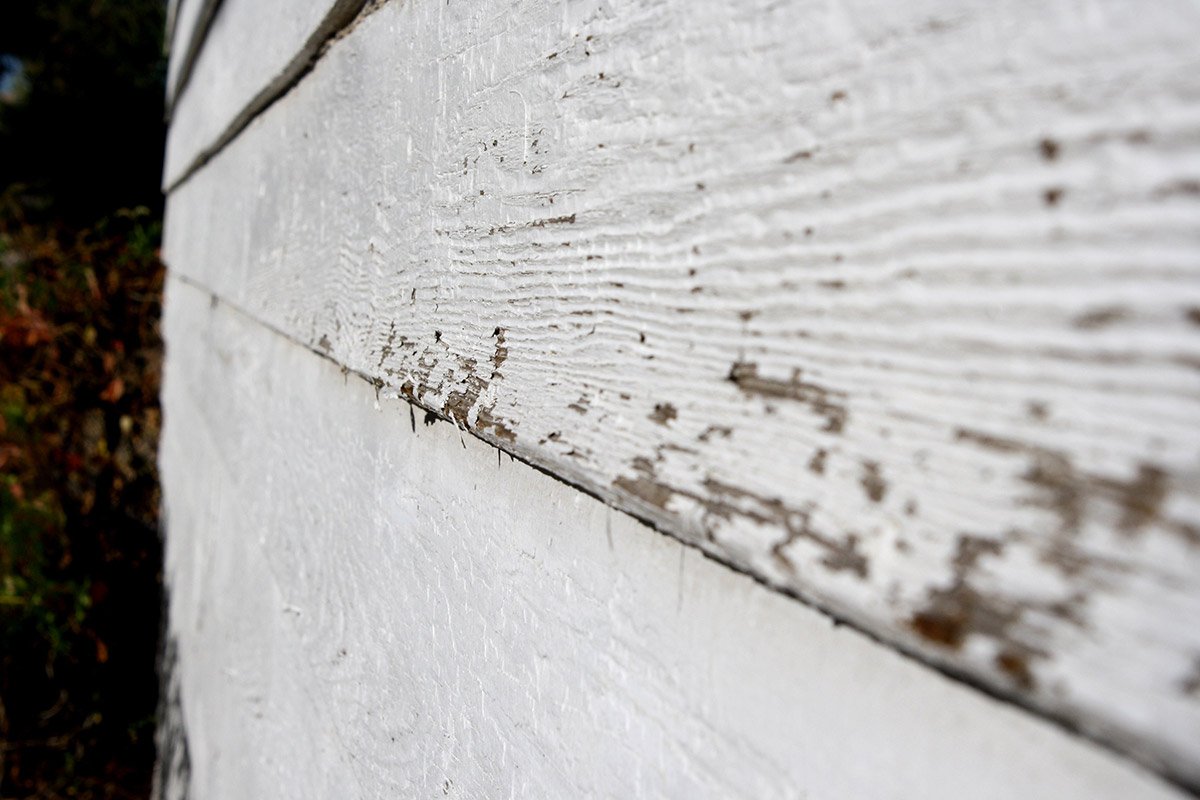
Before painting, however, it’s important to determine whether you’re looking at simple fading, surface oxidation, or a heavier chalking condition. If white or colored powder transfers to your hand or a cloth when you rub the siding, the surface may be chalking. Our guide to exterior paint chalking explains how to recognize it, why it matters before repainting, and shows a real Jacksonville exterior project where extensive preparation was required before a new coating could be applied.
Faded siding still needs thorough cleaning and appropriate preparation before painting, even when the material itself remains in good condition. A new coating needs to bond to a clean, stable surface—not loose oxidation, chalk residue, dirt, mildew, or other contamination. That’s why simply painting over faded siding without first evaluating and preparing the existing surface can lead to adhesion problems later.
Can You Paint Old Vinyl Siding?
Age alone doesn’t determine whether vinyl siding is paintable — condition does. Older siding should be evaluated for:
- Flexibility versus brittleness
- Any existing cracks
- Loose panels
- Visible distortion or warping
- Chalking
- Previous coatings already applied
- Moisture damage
- Failed caulking
- Signs of poor original installation
Stable older siding, once properly evaluated, often paints just as well as newer siding. Brittle siding is the real concern — it can crack during cleaning or preparation, which is exactly why this evaluation step matters before committing to a project.
Can You Paint Vinyl Siding a Darker Color?
This is the single most important thing to understand before repainting vinyl siding, so it’s worth explaining clearly: darker colors absorb significantly more solar heat than lighter colors. Vinyl siding was engineered and installed with a specific range of expected temperatures in mind, and pushing it beyond that range with an excessively dark, heat-absorbing color can cause real problems — warping, buckling, visible distortion, siding pulling away from its fasteners, or expansion beyond what the installation was designed to accommodate.
The safest approach is to choose from colors specifically approved for vinyl siding and to follow the coating manufacturer’s stated color and heat-absorption restrictions rather than picking any shade that catches your eye. Sherwin-Williams’ VinylSafe color technology, for example, is built around formulating vinyl-siding colors with pigments engineered to reduce how much solar heat the finish absorbs compared to a standard paint in that same visual shade — meaning two colors can look visually similar side by side while performing very differently once they’re on a sun-exposed wall.
To be direct about this: the fact that a can of paint is labeled “exterior paint” does not mean any color from it is safe to use on vinyl siding. Color approval specifically for vinyl is a separate consideration from whether a paint is generally rated for outdoor use.
How Much Darker Can You Paint Vinyl Siding?
There’s no single, universal number of shades darker that applies safely to every home — this depends on too many variables to reduce to one rule of thumb. What actually determines the safe range includes your original siding color, the specific new color under consideration, that color’s light reflectance value (LRV), your home’s solar exposure, your local climate, the specific vinyl formulation your siding is made from, and the siding and paint manufacturers’ own instructions.
The reliable approach is choosing from an approved vinyl-safe color collection specifically designed for this use, rather than judging safety by how a color simply appears on a swatch or a screen.
What Is the Best Paint for Vinyl Siding?
The right paint for vinyl siding needs to be:
- Specifically approved for use on vinyl siding
- Strongly adhesive to a non-porous plastic surface
- Flexible enough to expand and contract along with the vinyl through temperature swings
- Resistant to fading under UV exposure
- Resistant to mildew
- Formulated appropriately for the specific color you’ve chosen
- Suited to your local climate
- Compatible with any existing coating already on the siding
High-quality 100% acrylic exterior paints are commonly chosen for vinyl siding projects because of their flexibility and durability. It’s worth being clear, though: not every exterior paint is appropriate for vinyl, and not every color within an approved product line is automatically safe for vinyl either. Manufacturers like Sherwin-Williams and Benjamin Moore offer both products and color guidance specifically for vinyl siding, but the right product and color combination for your specific project should be verified directly rather than assumed — this isn’t a category where guessing is a reasonable approach.
Do You Need to Prime Vinyl Siding Before Painting?
Not always. On clean, unpainted vinyl, an approved direct-to-vinyl coating often doesn’t require a separate primer step. Primer becomes more relevant in specific situations, including:
- Bare repair areas where a panel has been replaced
- Visible staining
- Rust bleeding from nearby metal fixtures or fasteners
- Previous coating failure
- Adhesion concerns on the existing surface
- Difficult or dramatic color changes
- Repaired sections that need to blend with surrounding siding
- Incompatible existing coatings
- Any exposed non-vinyl materials mixed into the siding system
Worth clarifying: a “paint and primer in one” product does not eliminate every situation above where a dedicated primer would genuinely help — it’s a convenience option for certain straightforward cases, not a universal substitute.
How Do You Prepare Vinyl Siding for Painting?
This is where the actual outcome of the project gets decided. Here’s what real preparation looks like:
1. Inspect the siding
A full walk of the home checking for cracks, warping, loose panels, impact damage, mildew, chalking, failed caulking, and any signs of water problems.
2. Complete repairs first
Replace any damaged panels and correct loose or improperly installed sections before moving forward with painting prep.
3. Protect nearby surfaces
Windows, doors, roof surfaces, landscaping, fixtures, brick, concrete, and neighboring property all need protection before cleaning and painting begin.
4. Clean the siding thoroughly
This means actually removing dirt, mildew, algae, spiderwebs, pollen, general pollution residue, chalk, oxidation, and any insect residue — not just a quick rinse.
5. Use pressure carefully
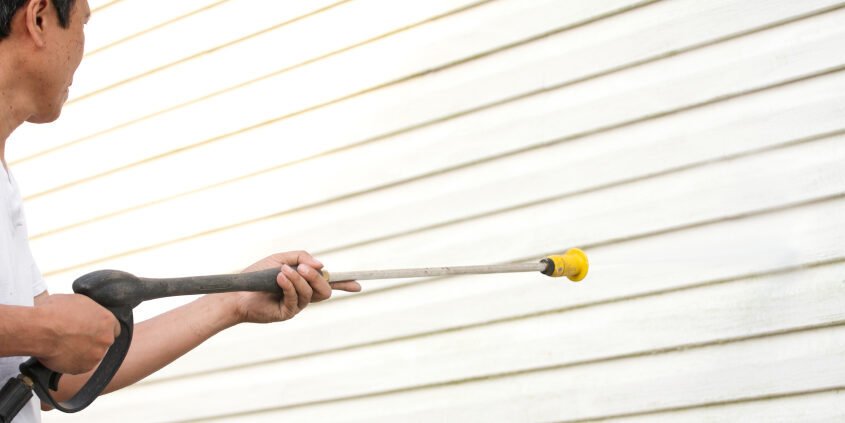
Excessive pressure during cleaning can force water behind the siding, physically damage panels, loosen siding from its fasteners, or drive water around windows and doors where it doesn’t belong. Soft washing, low-pressure rinsing, and hand cleaning are all reasonable alternatives depending on the siding’s condition — pressure washing isn’t automatically the right or only method here.
6. Allow the siding to fully dry
Water can remain trapped behind laps and seams and continue draining out for some time after the visible surface looks dry — rushing this step is a common cause of adhesion problems.
7. Remove loose paint
On previously painted siding, any failed coating needs to be scraped or removed carefully, without gouging or damaging the vinyl underneath.
8. Address mildew and biological growth
Mildew needs to be properly treated, not simply painted over — painting over active mildew growth means it typically returns through the new coating.
9. Check caulking and penetrations
Some joints genuinely need attention before painting. But it’s worth understanding that vinyl siding is designed with specific movement and drainage paths built in — these shouldn’t be indiscriminately sealed shut without understanding what they’re there for.
Should Vinyl Siding Be Sanded Before Painting?
Generally, no — aggressive sanding is usually the wrong move on vinyl, since it can scratch, polish, distort, or otherwise damage the material’s surface. Very light abrasion is sometimes used on specific problem spots or on a stubborn previous coating, but as a general rule, thorough cleaning and choosing a genuinely compatible product matter far more than sanding bare vinyl ever would.
How Is Paint Applied to Vinyl Siding?
Application methods include spraying, rolling, brushing, and often a spray-and-back-roll combination, with careful cutting-in around windows and trim. Professional spray application is common on vinyl siding projects for a few good reasons: it delivers a more uniform finish, covers efficiently, reaches into laps and texture better than a brush or roller alone, and reduces visible brush or roller marks on a surface where they’d otherwise be noticeable.
Overspray protection and correct spray technique both matter here — this isn’t a surface where a rushed or careless spray job goes unnoticed. Painting along the siding’s horizontal direction and paying close attention to panel edges, laps, and seams all affect how uniform and durable the finished result actually is.
Can You Spray Paint Vinyl Siding?
Yes — professional airless spray equipment is commonly used for vinyl siding projects, and it’s worth being clear that this is meaningfully different from using aerosol spray cans, which aren’t a practical or appropriate approach for a whole-home siding project.
Proper spray application on vinyl siding involves real technique: controlling overspray, accounting for wind conditions, thorough masking of anything not being painted, choosing the correct spray tip for the product and job, applying evenly across the surface, and back-brushing or back-rolling where needed to work the coating properly into seams without letting it pool or build up excessively in the recesses.
How Many Coats of Paint Does Vinyl Siding Need?
This depends on several factors: your existing color versus the new color, the paint’s opacity, how faded the current siding is, overall surface condition, whether primer was used, the specific product’s own coverage instructions, and how the paint was actually applied.
Two finish coats are often appropriate for uniform coverage and durability, though some coating systems may specify differently. One important clarification: applying one excessively heavy coat is not a substitute for two properly applied coats — it tends to look uneven and doesn’t perform the way a correctly built film does.
What Weather Is Best for Painting Vinyl Siding?
Several factors matter beyond just “is it a nice day out”: air temperature, the siding’s actual surface temperature (which can run much hotter than the surrounding air), direct sun exposure, humidity, chance of rain, wind, overnight moisture and dew, and any rapid temperature swings expected during the drying window.
Vinyl siding in direct sunlight can reach surface temperatures significantly higher than the surrounding air temperature — which is part of why experienced painting crews often work around a house strategically, following shade rather than painting whatever wall happens to be next in sequence regardless of sun exposure. Rather than relying on a universal temperature rule, the right approach is following the specific coating manufacturer’s technical requirements for the product you’re using, since these vary by formulation.
Can You Paint Vinyl Siding in Hot Weather?
It’s risky, and here’s specifically why: excessive heat can cause paint to dry too quickly before it has a chance to properly level and bond, which can prevent proper film formation, create visible lap marks where wet edges met partially-dried paint, and leave an uneven overall appearance. Hot vinyl siding can also physically expand slightly while it’s being painted and then contract as it cools later, which can reveal thin unpainted edges at panel joints that weren’t visible during application.
Working in shade, choosing the right time of day, monitoring actual surface temperature rather than just air temperature, and planning the project around the weather rather than a fixed calendar date all matter here.
Can You Paint Vinyl Siding in Humid Weather?
Humidity alone doesn’t automatically rule out painting, but high humidity slows drying time and increases the risk that dew, ambient moisture, or unexpected rain affects the coating before it’s properly cured. In Florida specifically, this means accounting for afternoon thunderstorms that show up reliably during much of the year, morning dew that can linger longer than expected, our extended wet season, coastal humidity for homes near the water, and how quickly weather conditions can shift here compared to more stable climates.
How Long Does Paint Last on Vinyl Siding?
There’s a realistic range, but it genuinely depends on your specific home. Factors that affect how long paint lasts on vinyl siding include the quality of preparation, the product itself, the color chosen, number of properly applied coats, sun exposure, local climate, mildew exposure, any surface movement, the condition of any prior coating, ongoing maintenance, and how well the application itself was done.
We won’t promise a specific number of years here — too many variables genuinely affect individual results. What’s consistently true is that south- and west-facing walls tend to fade sooner than shaded elevations, simply due to greater sun exposure over time.
Does Painted Vinyl Siding Require Maintenance?
Yes, though it’s generally modest. Ongoing care includes periodic gentle washing, addressing mildew when it appears, inspecting for any early peeling, checking caulking at joints and penetrations, watching for early signs of warping, cleaning irrigation staining before it sets in, touching up any damaged areas promptly, and avoiding excessive pressure when cleaning painted siding down the road. Regular maintenance both preserves the appearance and, just as importantly, helps you catch underlying problems early rather than after they’ve become bigger issues.
Will Painting Vinyl Siding Void the Warranty?
It can, depending on several factors — the siding’s age, the specific manufacturer, the product line, the color chosen (particularly dark colors and heat absorption), the terms of your existing warranty, and the conditions under which the siding was originally installed. This varies enough by manufacturer and product that there’s no universal answer that applies to every home. Before painting, review your actual warranty documentation directly, or contact the manufacturer to confirm how painting affects your specific coverage.
Painting Vinyl Siding vs. Replacing It
Painting tends to make sense when:
- The siding is structurally stable
- Any damage present is minor
- The core issue is cosmetic — fading, dated color, uneven appearance
- You want a color update without a full exterior overhaul
- Replacement genuinely isn’t necessary yet
Replacement tends to make more sense when:
- The siding has become brittle
- Panels are cracked
- Warping is widespread across the home rather than isolated
- There’s active water intrusion
- Insulation or sheathing underneath needs repair
- You’re planning a complete exterior upgrade anyway
Cost, project disruption, expected longevity, final appearance, and the siding’s actual structural condition should all factor into this decision — and the honest answer varies enough home to home that a direct inspection is worth more than a general rule.
Can You Paint Vinyl Siding Yourself?
DIY may be reasonable when: the home is a single story, the siding is genuinely stable, needed repairs are minimal, the color change is modest rather than dramatic, you understand the product and color restrictions covered above, and you’re able to manage proper safety and preparation.
Professional painting tends to be the better call when: the home is two or more stories, the siding shows heavy oxidation, you’re considering a darker color, spray application is the right approach for the job, there are repairs or moisture concerns to address alongside painting, overspray protection would be complicated given the property layout, or weather conditions in your area make timing the project difficult without flexibility.
Common Vinyl Siding Painting Mistakes
- Choosing an unapproved dark color — leads directly to the heat-related warping risk covered above.
- Painting warped or brittle siding — paint doesn’t fix these issues, and working with brittle siding risks causing further damage.
- Skipping cleaning — dirt, oxidation, and residue prevent proper adhesion regardless of paint quality.
- Painting directly over chalk and oxidation — the new coat won’t bond properly to an unstable, chalky surface.
- Using paint not approved for vinyl — even a good-quality exterior paint can fail if it isn’t formulated for vinyl specifically.
- Applying paint to a hot surface — causes the drying and lap-mark issues covered above.
- Painting before the siding is fully dry — traps moisture and compromises adhesion.
- Using excessive pressure during cleaning — risks damaging panels or forcing water where it shouldn’t go.
- Forcing water behind the siding — often a direct result of overly aggressive pressure washing technique.
- Ignoring mildew — it returns through fresh paint if not properly treated first.
- Applying paint too heavily — leads to uneven texture, longer cure times, and a less durable result than correctly applied thinner coats.
- Sealing siding’s drainage paths — interferes with how the siding system is designed to manage water.
- Painting loose panels without repairing them first — cosmetic work over an unresolved structural issue.
- Ignoring manufacturer warranty requirements — can result in losing coverage you didn’t realize was at risk.
- Spraying without proper overspray protection — risks damaging windows, landscaping, vehicles, or neighboring property.
Professional Vinyl Siding Painting Process
- Inspect the siding thoroughly
- Identify any damaged or warped panels
- Confirm whether painting is actually the appropriate solution
- Select an approved vinyl-safe coating and color
- Protect landscaping and adjacent surfaces
- Clean the siding and treat any mildew
- Allow proper, complete drying time
- Repair or replace any damaged areas
- Prime where the surface actually calls for it
- Apply the coating evenly across the home
- Inspect laps, seams, and edges for full coverage
- Complete any needed touch-ups
- Remove masking and protective materials
- Perform a final walkthrough
Color selection and surface temperature at the time of painting matter just as much to the final outcome as the visual appearance of the finished work.
Painting Vinyl Siding in Florida
Northeast Florida’s climate adds specific considerations to a vinyl siding painting project: intense, near-constant UV exposure, high surface temperatures that can significantly exceed air temperature in direct sun, heavy seasonal rain, tropical storm activity, high humidity most of the year, mildew and algae growth, irrigation staining, coastal salt exposure for homes near the water, reliable afternoon thunderstorms for much of the year, and the rapid expansion and contraction that comes with our particular combination of heat and humidity swings.
For Jacksonville and Northeast Florida homeowners specifically, this means paying real attention to vinyl-safe color selection, choosing weather windows carefully, monitoring actual surface temperature rather than air temperature alone, properly treating mildew before painting, and allowing adequate drying time given our humidity.
Is Painting Vinyl Siding Worth It?
When the underlying siding is sound, painting can genuinely deliver real value: an updated overall appearance, an extended useful cosmetic life for siding that’s structurally fine, meaningfully lower cost than unnecessary full replacement, restored color where fading has taken its toll, and improved curb appeal.
It’s not worth painting, though, if the siding is actually failing structurally, or if the color you want would create an unacceptable heat-related risk to the material. In either of those cases, painting is either the wrong tool for the job or needs a different color decision before it makes sense to proceed.
Frequently Asked Questions
Can vinyl siding be painted?
Yes, most stable vinyl siding can be painted successfully using a coating specifically approved for vinyl, along with proper cleaning and preparation beforehand.
Can you paint old vinyl siding?
Often, yes — age alone doesn’t disqualify it, but older siding should be checked for brittleness, cracking, and warping before painting, since these conditions may point toward replacement instead.
Can you paint faded vinyl siding?
Yes, faded siding is one of the most common reasons homeowners repaint, though it still needs thorough cleaning to remove chalk and oxidation before the new coating goes on.
Can you paint vinyl siding a darker color?
With caution — darker colors absorb more heat, which can cause warping or buckling. Choosing from an approved vinyl-safe color collection, such as products using VinylSafe-style heat-reflective technology, is the safest approach.
What paint is best for vinyl siding?
A high-quality, 100% acrylic exterior paint specifically approved for vinyl, with good flexibility, adhesion, and UV resistance — not every general exterior paint or every color within an approved line is automatically appropriate for vinyl.
Do you need to prime vinyl siding?
Not always on clean, unpainted vinyl with an approved direct-to-vinyl coating, but primer is often needed for repairs, stains, previous coating failure, or significant color changes.
Should vinyl siding be sprayed or rolled?
Both are used, with professional spray application often preferred for uniform coverage and better access to laps and texture, sometimes combined with back-rolling or back-brushing.
How many coats does vinyl siding need?
Two finish coats are commonly used for durability and uniform coverage, though this varies based on your specific color change, surface condition, and product instructions.
How long does paint last on vinyl siding?
It varies significantly by home, based on prep quality, product, color, sun exposure, and climate — south- and west-facing walls typically show wear sooner than shaded elevations.
Can you pressure wash vinyl siding before painting?
With caution — excessive pressure can force water behind the siding or damage panels. Soft washing or low-pressure methods are often the safer choice, depending on the siding’s specific condition.
Can you paint vinyl siding in hot weather?
It’s risky — excessive heat can cause the paint to dry too fast, show lap marks, and prevent proper film formation. Working in shade and monitoring actual surface temperature helps avoid these issues.
Can painting vinyl siding cause warping?
Yes, specifically when an excessively dark, heat-absorbing color is used that pushes the siding beyond the temperature range it was designed to handle.
Does painting vinyl siding void the warranty?
It can, depending on your siding’s manufacturer, age, and specific warranty terms — review your actual warranty documentation before painting rather than assuming either way.
Is it cheaper to paint or replace vinyl siding?
Painting is generally less expensive than full replacement when the underlying siding is structurally sound, though the right choice depends on your siding’s actual condition rather than cost alone.
Conclusion
Vinyl siding can usually be painted successfully when it’s structurally sound, clean, dry, properly prepared, coated with a genuinely vinyl-approved product, finished in an approved color, and painted under suitable weather conditions. Skip any of those pieces — especially the color and heat considerations — and you risk turning a straightforward cosmetic update into a real problem.
If you’re not sure whether your vinyl siding is a good candidate for painting or would be better served by replacement, A New Leaf Painting Contractors is glad to take a look and give you a straight, honest assessment before you commit to either direction.
Helpful Resources
- Residential Painting Services
- Exterior Painting Services
- House Painting in Jacksonville
- Pressure Washing
- Wood Rot Repair
- Can You Paint Stucco?
- How Often Should You Paint Your House Exterior in Florida?
- Best Exterior Paint for Florida Homes
- Why Exterior Paint Peels, Bubbles, or Fades
- Jacksonville Exterior Color Trends