
By Thomas Drake, Founder & Owner, A New Leaf Painting Contractors · 25 years of Northeast Florida painting experience · Updated April 2026
Deerwood and Glen Kernan estates were largely built between the late 1970s and the late 1990s, and many feature extensive cedar, redwood, or pine siding — much of it now 30+ years old. Wood that age in a Florida climate behaves predictably: certain elevations rot, others split, others go gray and chalky from UV. The work to bring a wood-sided estate back is part carpentry, part restoration, and part premium-finish painting — and it can’t be rushed or shortcut. Here’s what 30-year-old wood actually looks like up close, what’s repairable, what needs replacement, and what 25 years of painting Jacksonville’s highest-end gated communities has taught us.
Why Deerwood and Glen Kernan estates have so much wood to begin with
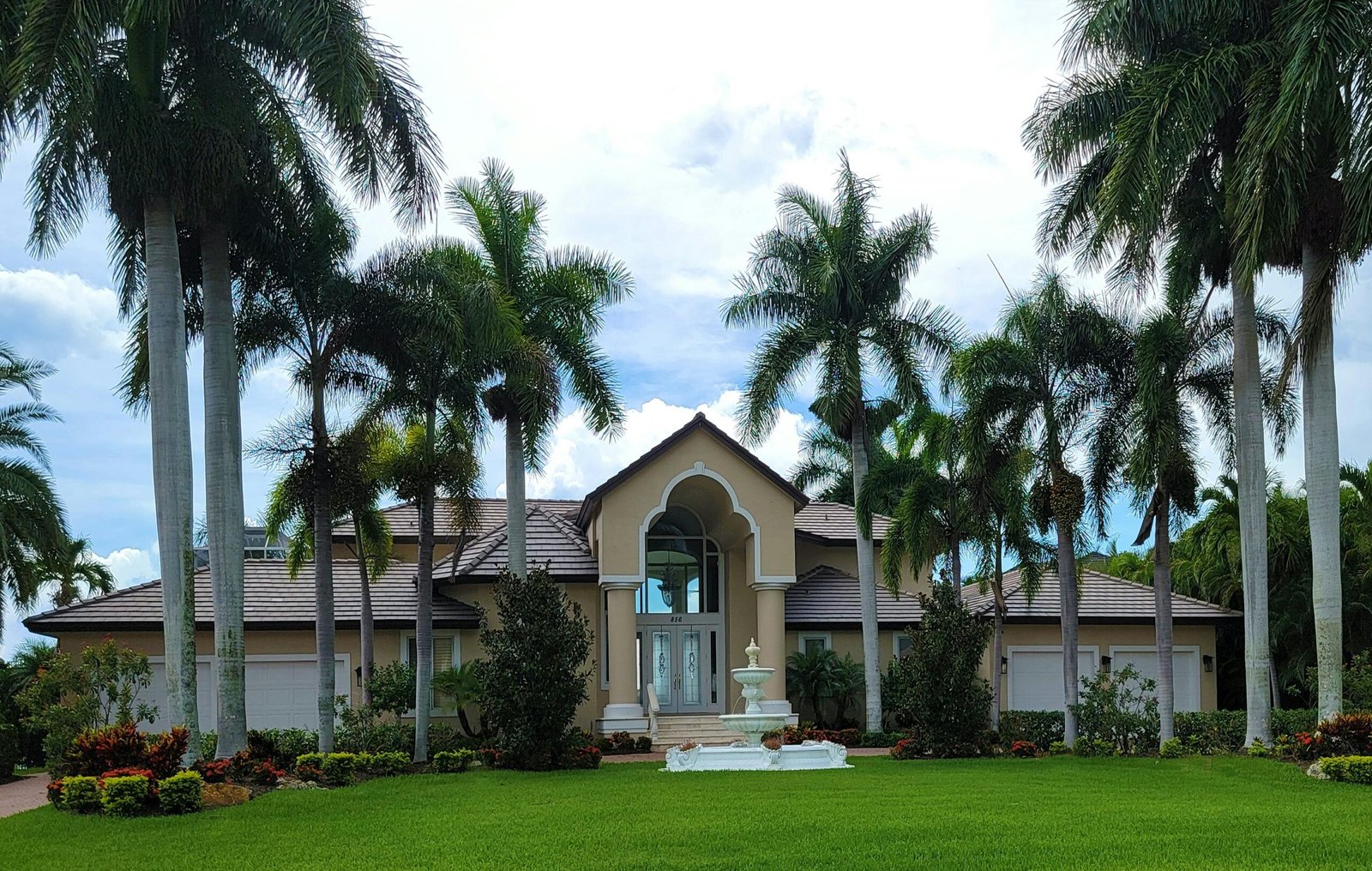
Deerwood was developed starting in 1972 as Jacksonville’s first true gated community, with major buildouts continuing through the 1990s. Glen Kernan came online in the late 1990s as the modern equivalent — large-lot estate homes designed for high-end buyers who wanted architectural sophistication. Both communities were built during eras when premium wood siding (cedar lap, redwood shake, tongue-and-groove pine, board-and-batten) was the standard exterior material for estate-class homes.
That wood is now 25 to 50 years old. The original homeowners are aging, properties are turning over, and new owners are discovering that the gorgeous wood exterior they fell in love with needs serious work before any repaint can be considered.
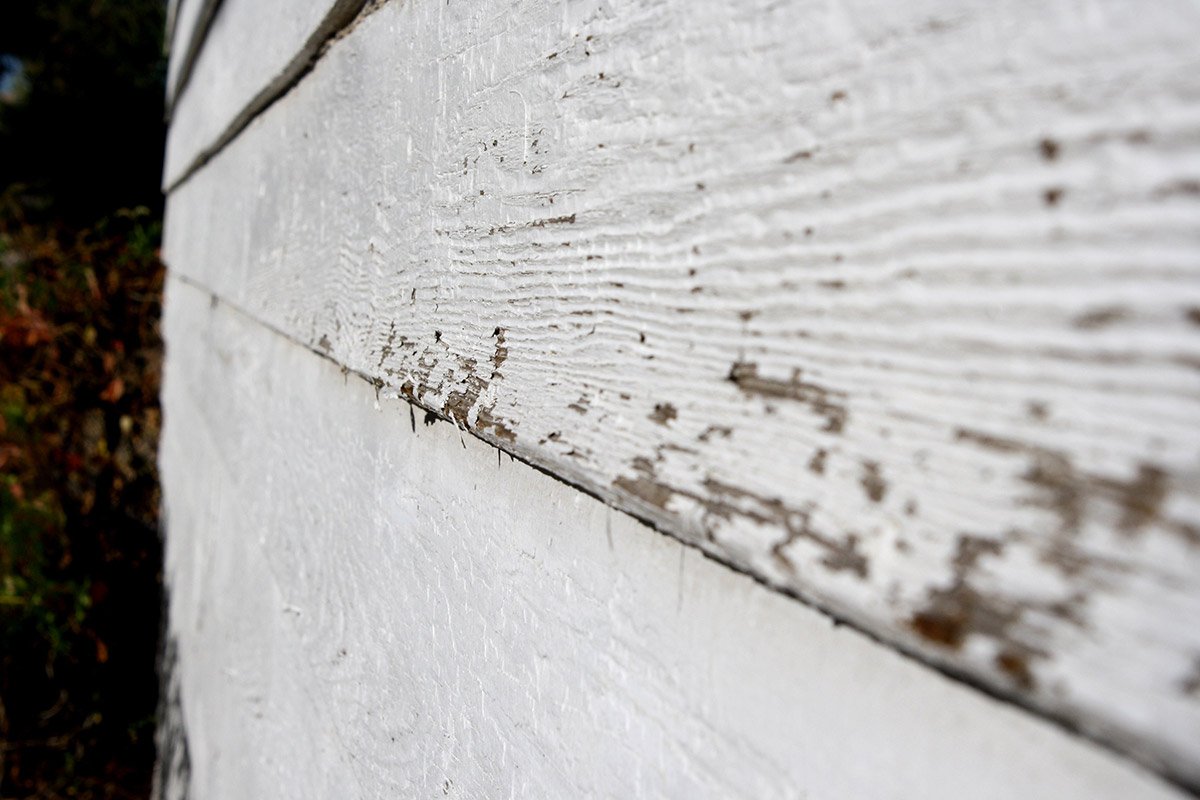
What 30-year-old Florida wood actually looks like up close
Wood at this age in this climate falls into four predictable conditions, often on different elevations of the same house. Sun-exposed south and west elevations: deeply weathered, gray, often with raised grain and surface checking — usually salvageable with aggressive sanding, restoration treatment, and a thicker paint film. Shaded north and east elevations: held up structurally but often showing mildew staining, soft spots near horizontal trim, and paint adhesion failure where moisture got behind the finish.
Lower courses near grade: highest rot exposure from sprinklers, splash-back, and ground moisture — frequently requires partial replacement. Hidden behind landscaping: often the worst because nobody has inspected it in years, and irrigation has been hitting it daily for decades. Walking the home with a probe and a moisture meter is the only way to know what you actually have.
Repair, replace, or restore: how to decide on each section
Three categories drive the decision. Surface weathering with no rot — the wood is sound, just visually aged from UV. This gets aggressive sanding, brightener treatment if cedar or redwood, primer, and a high-build topcoat that fills the texture. Salvageable. Localized rot in otherwise sound boards — a single soft pocket on a generally good board. Smaller pockets get cut out, treated with rot-arresting epoxy, and patched with PVC or matching wood.
Larger pockets mean full board replacement. Full-board failure or structural compromise — the board has lost integrity along its length, or the rot has reached the substrate behind it. This always gets full replacement. We don’t fill failing boards; we replace them, prime both faces and all four edges before installation, and then paint as part of the full system.
Why estate-class wood restoration takes longer (and costs more)
A wood-sided Deerwood or Glen Kernan repaint isn’t a 5-day job. It’s typically 2 to 4 weeks of carpentry, prep, priming, and finish work — staffed by crews that can swap between trades as the project demands. The carpentry alone on a 4,500 square foot wood-sided estate can run 5 to 10 days depending on rot exposure. Sanding and surface prep is another 3 to 5 days. Priming with the manufacturer-specified system (typically an oil-based stain-blocker on bare wood, then a bonding primer over weathered painted surfaces) takes 1 to 2 days.
Two coats of premium topcoat (Sherwin-Williams Emerald or Benjamin Moore Aura) takes another 4 to 6 days on a home this size. Total project costs range from $35,000 on the low end (lighter restoration, smaller footprint) to $80,000+ on the high end (heavy carpentry, large footprint, complex architecture).
Real example: a Deerwood cedar lap restoration nobody else would touch
A homeowner in original Deerwood inherited a 1981 cedar-lap-sided estate that hadn’t been painted in over a decade. Three other contractors had quoted a straight repaint, two had told her the home ‘needed to be re-sided,’ and one had walked away from the project entirely. We spent two days on initial inspection — probing every elevation, mapping rot zones, and identifying which boards could be restored versus replaced. The final scope: 38 boards fully replaced (matched to original cedar profile from a specialty supplier), 12 board sections partial-cut with PVC patches, full sand-and-restore on the remaining 80 percent of siding, oil-based stain-blocking primer on every bare wood surface, and two coats of Sherwin-Williams Emerald in a custom-matched color. Six weeks of work, total project cost in the mid $60,000s. Five years in, the topcoat is intact across all elevations and the homeowner has had zero callbacks. The ‘cheaper’ bids would have failed within 18 months.
Frequently Asked Questions
Can my 30-year-old cedar or wood siding still be saved?
In most cases, yes — with the right approach. Wood siding from the 1980s and 1990s in Deerwood and Glen Kernan was generally high-quality material (real cedar, redwood, or premium pine) and the species themselves are extremely durable when properly maintained. The question isn’t whether the wood can be saved; it’s how much carpentry, sanding, and priming the restoration requires. A proper inspection with a probe and moisture meter is the only way to know.
What’s the difference between repainting wood siding and restoring it?
Repainting assumes the substrate is sound and just needs new finish. Restoration assumes the substrate needs work — sanding to remove failed paint and weathered surface, brightener treatment for cedar and redwood to restore color before sealing, replacement of unsalvageable boards, and stain-blocking primer on bare wood. On a 30-year-old wood-sided estate, you almost never just ‘repaint.’ You restore, then paint.
How long does a wood siding restoration take in Deerwood or Glen Kernan?
Most wood-sided estates in these communities take 3 to 6 weeks from start to finish, depending on size and rot exposure. Deerwood homes range widely — some are 3,000 square feet, others are 8,000+. Glen Kernan estates are typically 5,000 to 10,000 square feet. Larger homes with heavier carpentry needs run longer. We provide a written timeline with the estimate so homeowners know exactly what to expect week by week.
What paint products do you use on wood-sided estates?
Sherwin-Williams Emerald and Benjamin Moore Aura are our standard premium topcoats. Both are formulated with elastomeric properties that flex with the wood through Florida humidity cycles, which prevents the cracking and peeling that destroys cheaper paints on wood substrates. For primer, we use Zinsser Cover Stain (oil-based) on bare wood for stain-blocking, and Sherwin-Williams Extreme Bond on weathered painted surfaces. Skipping the primer step on wood is the most common reason new paint fails — even with premium topcoats.
Should I paint or stain my wood siding?
Depends on the condition and what you’re trying to achieve. Solid-color paint provides the best protection and longest service life on wood that’s already been painted previously. Semi-transparent stain shows wood grain but requires re-application every 3 to 5 years in Florida exposure. If your siding has been painted in the past, switching back to stain is rarely practical because residual paint prevents stain penetration. For most Deerwood and Glen Kernan homes that have been painted before, we recommend continuing with high-quality paint rather than attempting a stain conversion.
Does Deerwood or Glen Kernan require ARB approval for siding repair and repainting?
Yes for both. Deerwood Improvement Association at (904) 641-7448 reviews all exterior changes, including color changes and material substitutions. The PARC Group manages Glen Kernan ARB at (904) 992-9750. Both require written submissions including paint colors, sheen, product specs, and any material changes (PVC trim replacing wood, for example). Plan for a 3 to 6-week review cycle. We submit the carpentry scope and paint specs as a single submission packet.
Will replaced wood boards match the original siding?
We work with specialty millwork suppliers in Northeast Florida who can match original cedar, redwood, and pine siding profiles even on homes from the 1970s and 1980s. Exact species matches are sometimes available; in cases where the original species is no longer commercially milled, we use the closest-grade equivalent and prime/paint to blend. The visual match is typically indistinguishable after the topcoat is applied. For homeowners who want PVC replacement on damaged sections (won’t ever rot again), we can do that too — though the texture difference may be visible up close.
How much does wood siding repair and repainting cost in Deerwood or Glen Kernan?
Project costs range widely based on home size and rot exposure. Lighter restorations on smaller footprints (3,000 to 4,000 square feet, modest carpentry needs) typically run $25,000 to $40,000. Mid-range projects (4,500 to 6,500 square feet, moderate carpentry) run $40,000 to $65,000. Large estates with heavy carpentry needs (7,000+ square feet, extensive board replacement) run $65,000 to $100,000+. Every estimate is a no-surprise fixed price — the carpentry scope is documented and priced before work begins, not handed back as change orders mid-project.