
Wood Rot Repair in Jacksonville, FL: Causes, Repairs & What to Fix Before Painting
This post was updated on August 29, 2026.
Almost every exterior repaint in Northeast Florida turns up wood that has gone soft somewhere — a corner of fascia, the bottom of a door casing, the sill under a window that has been catching sprinkler spray for a decade. Our climate is unusually hard on exterior wood: months of high humidity, wind-driven summer rain, and a termite population that treats damp softwood as an invitation. Painting over that damage hides it for a season and then costs you the paint job. This guide covers where rot starts on homes here, how to tell repairable wood from wood that has to come out, and what a durable wood rot and exterior carpentry repair actually involves before any primer goes on.
What Causes Wood Rot in Northeast Florida
Wood rot is a fungus, not a chemical process. The fungi that break down wood need four things at once: wood, oxygen, a comfortable temperature, and moisture — generally sustained moisture content above roughly 20 percent. Three of those four are permanent conditions outside your house. Moisture is the only variable you control, which is why every lasting repair comes back to keeping water out and letting wet wood dry. What supplies that moisture in Jacksonville is fairly predictable:
- Humidity and long wet seasons. Summer here keeps exterior wood damp for extended stretches, so anything that gets wet has less opportunity to dry between rains.
- Wind-driven rain. Afternoon storms push water sideways into joints, end grain and siding laps that shed a vertical rain perfectly well.
- Failed caulk and paint film. A hairline separation at a trim joint is enough. Water gets in through the crack, then the intact paint around it slows drying.
- Irrigation. Sprinkler heads aimed at the house are one of the most common causes we find, and one of the easiest to correct.
- Gutter and drainage problems. Overflowing gutters, disconnected downspouts and splash-back at grade soak the lowest, least visible wood on the building.
- Termites arriving after the moisture does. Subterranean termites are widespread in Duval and the surrounding counties, and damp wood is what draws them. Rot and termite damage frequently show up in the same board.
- Salt air near the coast. Closer to the beach, coatings weather faster, and a coating that fails sooner exposes wood sooner.
Where Wood Rot Commonly Shows Up on Jacksonville Homes
Rot rarely starts in the middle of a board. It starts at a joint, a cut end, a fastener hole or a horizontal surface — the places where water can sit or wick in. After twenty-plus years of exterior work in this market, a short list accounts for most of what we find:
- Fascia boards and soffits. The single most common location. Fascia sits directly behind the gutter, so any gutter that overflows or leaks at a seam keeps that board wet.
- Window sills, brickmould and casing. Sills are horizontal and hold water. The bottom corners of casing, where end grain meets the sill, go first.
- Door jambs and thresholds. Especially on doors without a covered entry, and on garage door jambs where the driveway sheds water back toward the opening.
- Bottom courses of siding and trim near grade. Splash-back from rain and irrigation soaks the lowest boards. Anything within a few inches of soil or mulch is at high risk.
- Columns, posts and porch railings. Particularly at the base, where the post meets concrete and water sits at the joint.
- Hardboard and T1-11 siding. Common on homes built in the 1970s through the 1990s here. Once the factory edge seal breaks down, these products swell and delaminate from the bottom edge up.
- Deck ledgers, stair stringers and framing. These are structural. Soft wood in any of them is a different category of problem, discussed below.
- Wood band or transition trim above stucco. Water running down a stucco wall concentrates at that transition. Rot here often signals a related stucco or flashing issue worth checking at the same time — see stucco repair if that describes your wall.

How to Tell Whether Wood Can Be Repaired or Needs Replacement
You do not need special equipment to make a reasonable first assessment. Press a screwdriver or an awl into the suspect area with moderate pressure and see what happens.
- Sound wood resists. The tip makes a small dent and stops.
- Early or surface decay gives slightly and feels spongy, but the board still holds together and the damage is shallow — a quarter inch or less.
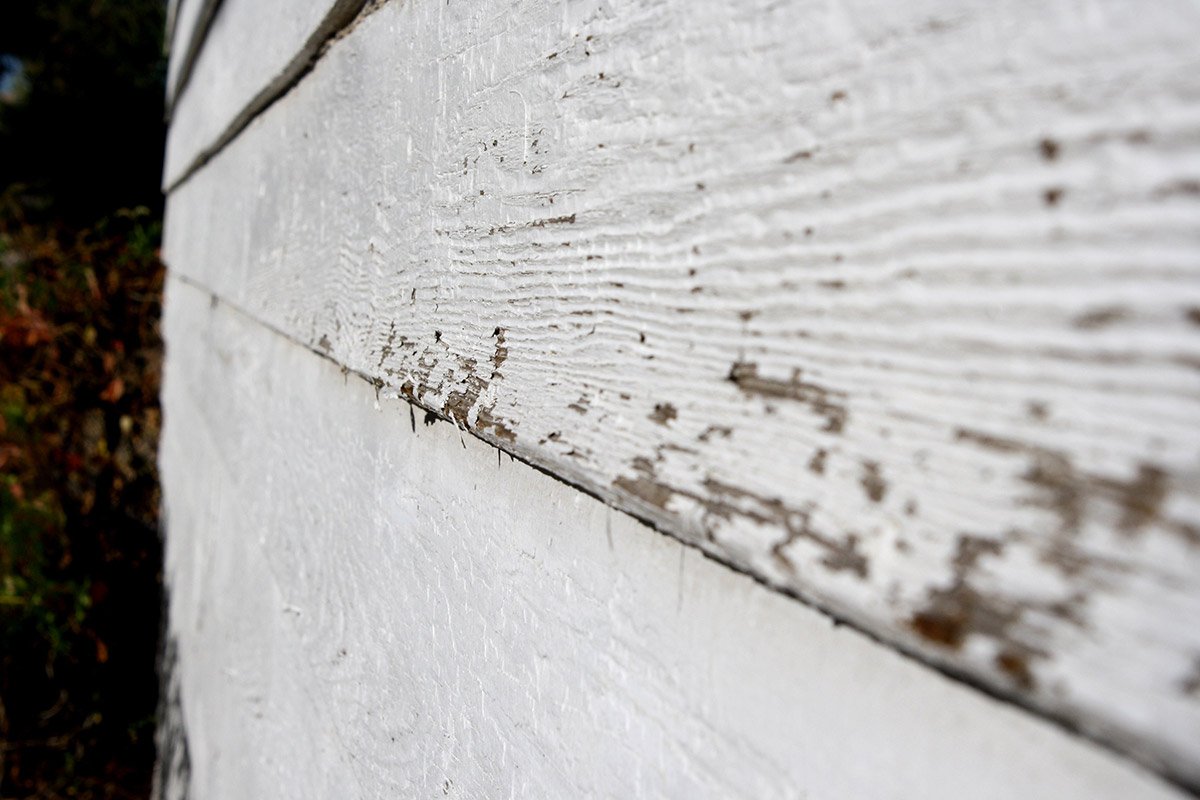
- Advanced decay lets the tool sink in easily. The wood is crumbly, stringy or fibrous, often darker, and it may be dry and light rather than wet. Rot that has run its course leaves wood that stays soft after it dries out.
From there the decision is fairly consistent across projects:
- Small, shallow, non-structural damage — a soft spot on a trim board, a corner of casing, a limited area of a sill — is a reasonable candidate for a two-part epoxy consolidant and filler repair, as long as the surrounding wood is sound and the moisture source has been corrected.
- Damage deeper than roughly a quarter of the board’s thickness, or larger than a few inches, or repeating along a length should be cut out and replaced. Epoxy is a repair material, not a substitute for a board.
- Any softness in framing, headers, joists, rafters, deck ledgers, load-bearing posts or stair stringers is outside what a filler or cosmetic repair should address. Those members carry load, and how much capacity has been lost is not something to judge from the surface. That work belongs to a general contractor or a structural engineer, and we tell you plainly when we find it rather than covering it.
One distinction worth making: rot leaves crumbly, cubed or stringy wood, while termite damage leaves hollowed galleries, sometimes packed with soil-like material, often behind an intact painted surface. If what we open up looks like termite activity, the next call is a pest control company — treatment comes before repair, or you will be repairing the same board again.
Why You Should Repair Rotten Wood Before Exterior Painting
- Paint will not bond to decayed wood. The fiber structure has already broken down, so the film sits on a surface that is coming apart underneath.
- Rot is active. The fungus does not stop because the board got painted. Sealing damp, decaying wood under a film can slow drying and make it worse.
- The failure telegraphs through. Peeling, blistering and dark bleed-through show up over patched areas within a season or two.
- Warranties depend on it. No coating manufacturer warrants performance over an unsound substrate, and no honest contractor should warrant work over one either.
- It is cheaper now. The trim is already accessible, the crew is already on ladders, and the surrounding surfaces are being prepared regardless.
For that reason, carpentry repair is part of the preparation sequence on nearly every exterior painting project we take on, not a separate conversation held afterward.
What a Proper Wood Rot Repair Process Looks Like
- Find the water first. Before anything is cut, identify what has been wetting the wood — gutter, flashing, sprinkler, missing caulk, grade. Replacing a board without correcting the source guarantees a repeat.
- Probe the full extent. Visible damage is usually smaller than actual damage. Sound the board past the obvious soft area to find where solid wood begins.
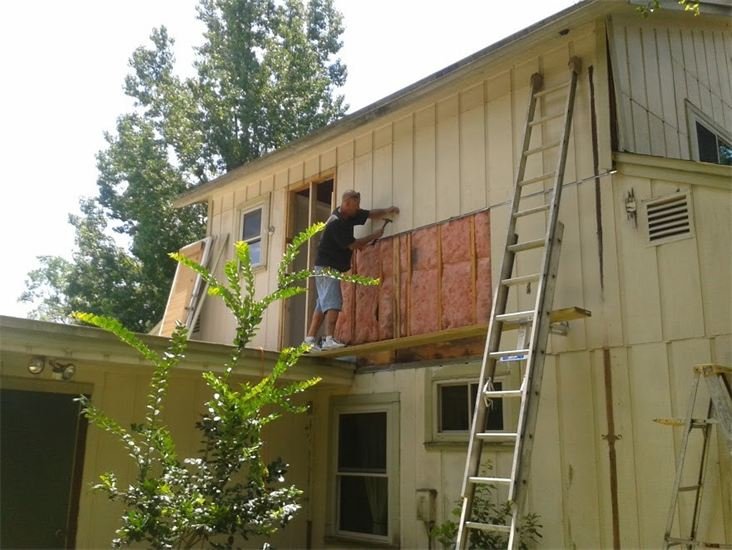
- Remove all decayed material. Cut back to sound wood, ideally to a fastening point such as a stud or rafter tail. Leaving any decayed fiber in place leaves the fungus in place.
- Replace with an appropriate material. Primed finger-jointed trim, solid cedar, treated lumber where it is in contact with masonry or close to grade, or cellular PVC in the locations that justify it. The choice depends on exposure and on what the rest of the elevation is made of.
- Prime every surface, including cut ends. End grain absorbs many times more water than face grain. Unprimed cut ends are one of the most common reasons a new board fails early.
- Fasten correctly. Corrosion-resistant fasteners, set and filled. Ordinary fasteners rust in this climate and stain through the finish.
- Seal joints with the right sealant. A quality exterior sealant at joints and transitions, applied to a properly sized joint — and deliberately not sealed where the assembly needs a drainage path.
- Finish with a full coating system. Repairs are primed and then coated along with the surrounding surface so the finish is continuous rather than patched.
PVC and Azek vs. Natural Wood for Exterior Repairs
Cellular PVC — Azek is the brand most homeowners know — has become a common replacement material for exterior trim in Florida, and for good reasons. It is worth being accurate about what it does and does not do.
| Cellular PVC | Natural wood | |
|---|---|---|
| Decay | Does not rot. It contains no cellulose for decay fungi to feed on, and it does not absorb water the way wood does. | Rots when moisture content stays high. Treated and naturally durable species resist it longer; none are immune. |
| Insects | Not a food source for termites. Insects can still nest in adjacent or behind assemblies. | Vulnerable, especially when damp. Treated lumber is more resistant. |
| Movement | Expands and contracts with temperature noticeably more than wood, along its length. Installation has to allow for it or joints open. | Moves with moisture rather than heat, mostly across the grain. |
| Paint | Does not require paint for protection, but takes it well with the right product. Light colors are recommended by most manufacturers because dark colors raise surface temperature and increase movement. | Requires a maintained coating to last. |
| Other limits | Scratches and scuffs. Can be marked by heat sources and reflected light. Surface dirt can support mildew growth even though the material itself does not decay. | Repairable and refinishable. Easier to match on historic profiles. |
| Cost | Higher material cost, similar labor. | Lower material cost, higher long-term maintenance. |
What PVC is not: a material that solves a water problem. If water is getting behind trim, it is still getting behind trim, and it will now find the wood framing instead. PVC removes one victim from the assembly; it does not remove the leak.
Should You Replace All Exterior Wood with PVC?
Usually not, and not for cost reasons alone. The approach that makes sense on most homes here is selective — put the durable material where the exposure is worst and keep wood where it performs fine and looks right.
Strong candidates for PVC: trim within a few inches of grade or masonry, window sills and other horizontal surfaces, door jambs and casings on unprotected entries, column bases, garage door jambs, and any location that has already rotted twice.
Usually fine to keep in wood: protected areas under deep soffits and porches, historic profiles in neighborhoods like Riverside, Avondale, Springfield and San Marco where the exact molding shape matters, large flat expanses where thermal movement is a bigger factor, and anything structural — PVC trim is trim, not framing.
The rest of it is drainage and maintenance: sprinklers aimed away from the house, gutters clear and discharging away from the foundation, mulch and soil kept below the siding line, caulk joints inspected annually and resealed before they open, and repainting on a sensible cycle rather than waiting for visible failure. Those habits prevent more rot than any material choice.
Common Reasons Wood Rot Comes Back
- The water source was never corrected. The most common reason by a wide margin.
- Not all decayed wood was removed. Any decayed fiber left behind keeps the fungus in the wall.
- Cut ends were left unprimed. A new board with bare end grain starts absorbing water immediately.
- Filler was used where a board was needed. Epoxy is excellent within its limits and fails quickly outside them.
- Everything was sealed, including the drainage path. Some joints are supposed to let water out; caulking them traps it inside.
- Untreated wood was placed in contact with concrete or masonry, which wicks moisture continuously.
- Termites were never treated. New wood in an active termite environment is simply a fresh supply.
- Maintenance stopped. Coatings and sealants are consumable and need attention on a cycle here.
Wood Rot and Carpentry Repairs Across Jacksonville and Northeast Florida
A New Leaf Painting Contractors has worked on Northeast Florida homes since 2001. We repair and replace rotted fascia, soffit, siding, trim, sills, jambs and columns, correct the drainage and sealant problems that caused the damage, and then coat the repair as part of a complete exterior finish. Where we find structural damage or active termite activity, we say so and point you to the right trade rather than painting over it.
We work throughout Jacksonville and nearby communities including Nocatee, Ponte Vedra Beach, Fleming Island and St. Augustine — the full list is on our service areas page. If you have soft wood somewhere on the house and want an honest read on whether it is a filler repair or a replacement, call 904-615-6599.