
•
Last Updated: July 21, 2025
•
Reviewed by: Thomas Drake, Owner, A New Leaf Painting Contractors
•Serving Northeast Florida since 2001 | 750+ verified 5-star reviews
Premium Exterior Paint vs. Cheap Paint: Is Better House Paint Worth the Cost?
Two exterior painting estimates for the same house can be thousands of dollars apart, and homeowners reasonably want to know where that gap comes from.
Sometimes it’s labor. Sometimes it’s how much preparation is actually included. Sometimes one contractor found wood rot the other didn’t look for. And sometimes the two bids are proposing genuinely different coating systems for the same walls.
That last one is worth understanding, because paint isn’t the largest line item on most professionally painted homes — labor and preparation usually are. But paint is the part that stays on the house after everyone leaves. Upgrading it is often one of the smaller percentage increases in a total project, and it affects color retention, mildew resistance, weather resistance, cleanability, and how long the exterior looks the way you wanted it to.
For homeowners comparing bids on an upcoming exterior painting project in Jacksonville, the product line is only one part of the system. Our Exterior Painting Resource Center covers preparation, coatings, Florida weather, paint failure, and long-term maintenance in more depth — and if what you’re really trying to work out is how many years you should expect from a repaint, that’s a separate question with its own answer.
That said, this article is not an argument that expensive paint is always better. It’s an argument that you should know what you’re buying — and that the most expensive coating on the shelf can still fail on a wall that wasn’t properly prepared.
Is Premium Exterior Paint Worth the Extra Cost?
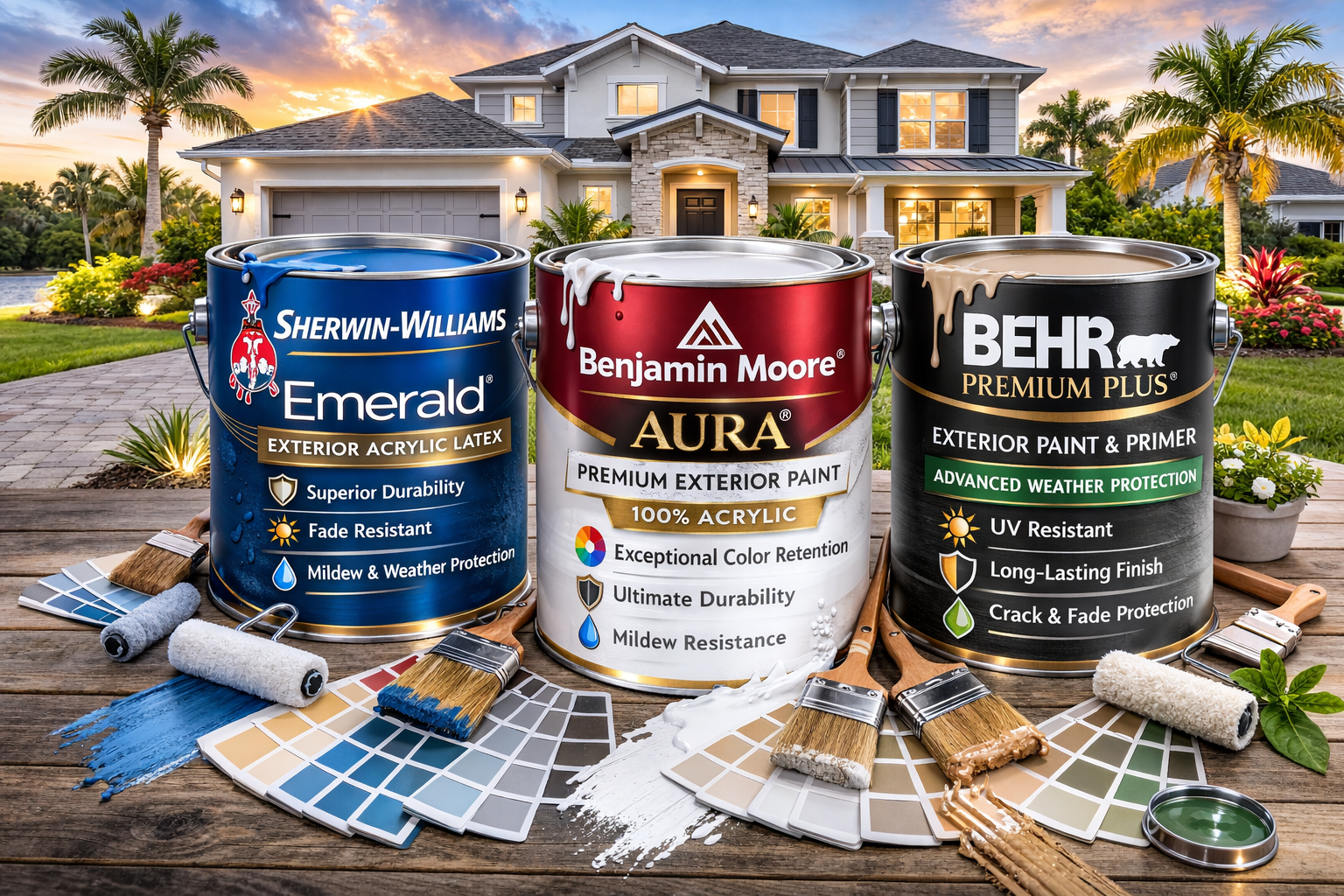
For homeowners planning to stay in the home, premium exterior paint is usually worth considering. Improved resins, pigments, and additives generally provide better resistance to UV, mildew, fading, weathering, and film degradation — and in Florida, those are the things that determine how an exterior ages.
What premium paint cannot do is compensate for poor preparation, active moisture, rotted wood, failing stucco, unstable previous coatings, or improper application. Premium paint over poor preparation is still a poor paint job.
That second half is the part homeowners hear least often, and it’s the reason we start every project with an inspection rather than a product recommendation.
What Does Premium Exterior Paint Actually Buy You?
Premium exterior coatings generally place more emphasis on:
- UV resistance — slower binder breakdown under sustained Florida sun
- Color retention — most visible on deep and saturated colors
- Mildew resistance — meaningful on shaded and slow-drying elevations
- Film durability — resistance to chalking, cracking, and general weathering
- Flexibility — moving with the substrate through daily thermal cycles instead of cracking
- Adhesion — bonding across a range of properly prepared substrates
- Cleanability — holding up to washing between repaints
- Long-term appearance — how the house looks in year seven, not year one
These advantages matter only when the surface is sound, preparation is correct, and the coating is applied at the proper film build.
What Makes One Exterior Paint Better Than Another?
Exterior paint is a formulated system, not a commodity. Four components do most of the work.
Binder (Resin)
The binder is what forms the paint film — it holds the pigment together and bonds the whole thing to the wall. More than any other component, it determines adhesion, flexibility, durability, weather resistance, and chalk resistance.
This is where 100% acrylic technology matters. Acrylic binders generally hold up better under sustained UV and stay flexible as substrates expand and contract, which is exactly what a Florida exterior demands. When you see a wall chalking heavily, you’re looking at binder that has degraded under years of sun, releasing pigment as loose powder.
One caution: “acrylic” on a label doesn’t mean two products perform identically. Resin quality and concentration vary considerably between product lines from the same manufacturer, let alone across brands.
Pigments
Pigments provide color, hide, and opacity, and they influence how well a color holds up under UV. Higher-quality pigments generally resist fading longer, which is most visible on deep and saturated colors.
What you can’t do is judge a coating by hunting for one ingredient on a label. Older consumer advice told homeowners to look for titanium dioxide as a marker of premium paint — but TiO₂ appears across a wide range of products at a wide range of quality levels, and its presence tells you very little on its own. Performance comes from the whole formulation working together.
Additives
Small percentages of the can, disproportionate effect on the result. Additives can contribute to mildew resistance, flow and leveling, application characteristics, foam control, drying behavior, and weather resistance.
Mildewcide additives matter a great deal in Northeast Florida, particularly on shaded elevations. They’re also not a substitute for cleaning — a mildewcide in the can can’t do anything about contamination left on the wall.
Volume Solids and Film Build
Volume solids describe how much coating remains after the water or solvent evaporates. It’s a useful number for calculating spread rates and expected dry film thickness.
It is not a quality score. Older consumer advice suggested that anything above a certain solids percentage was “good quality” — that’s a shortcut that doesn’t hold up. Solids can be raised with inexpensive fillers that add bulk without adding performance, and a lower-solids product with better resin and pigment technology can outperform a higher-solids one.
What actually matters is whether the coating is applied at the manufacturer’s recommended spread rate to achieve the specified dry film thickness. A premium product applied too thin doesn’t deliver premium performance.
Why Coating Quality Matters More in Florida
National paint advice consistently underestimates what Northeast Florida does to an exterior.
UV Exposure
Intense sun for most of the year degrades both pigment and binder. Pigment breakdown shows as fading; binder breakdown shows as chalking. South- and west-facing elevations take the brunt, and deeper colors generally show change sooner than lighter ones — see our guide on why dark exterior paint fades faster in Florida.
Heat and Thermal Movement
Exterior surfaces here expand and contract daily, and different materials move at different rates. Stucco develops hairline cracking over time. Fiber cement and wood move at their joints. Caulk lines work open. Trim assemblies shift where dissimilar materials meet.
A coating that has lost flexibility can’t follow that movement — it cracks instead. This is a large part of why film flexibility, not just film hardness, matters in this climate.
Humidity and Mildew
Long surface-wet periods, heavy morning dew, and shaded elevations under mature canopy create ideal conditions for mildew and algae. North-facing walls and areas behind dense landscaping often show growth long before the color fades anywhere on the house.
A mildew-resistant coating helps. It doesn’t solve drainage problems, sprinkler heads striking the wall daily, chronic moisture in an assembly, or a house that never gets washed. Those are separate fixes, and no product replaces them.
Heavy Rain
Summer storms drive real volumes of water against exterior surfaces. Coating quality is part of the answer, but proper caulking, crack repair, and sound substrate condition matter more — water finds the failed joint, not the wall in the middle.
Worth being clear about terminology: ordinary exterior house paint is not waterproof. Good exterior coatings provide weather resistance and shed water; they’re not membranes, and any contractor describing them that way is overselling.
Coastal Exposure
Homes near the Jacksonville Beaches, Ponte Vedra, and the Intracoastal see additional salt exposure that accelerates coating breakdown and corrodes exposed hardware. Inland communities generally don’t face the same condition, which is why a single “Florida” recommendation isn’t specific enough to be useful.
Premium vs. Production-Oriented Paint
This isn’t premium good, contractor-grade bad. Production-oriented coatings are engineered for a different job, and they do that job well.
| Feature | Production-Oriented | Premium |
|---|---|---|
| Primary priority | Efficient production | Long-term performance |
| Initial cost | Generally lower | Generally higher |
| UV and color retention | Product dependent | Often stronger |
| Mildew resistance | Product dependent | Often enhanced |
| Film durability | Adequate for intended use | Typically a higher priority |
| Best use | Budget- or schedule-sensitive projects | Long-term residential durability |
| Preparation requirement | Still critical | Still critical |
Note the last row. It doesn’t change.
The Paint Is Only as Good as the Surface Underneath It
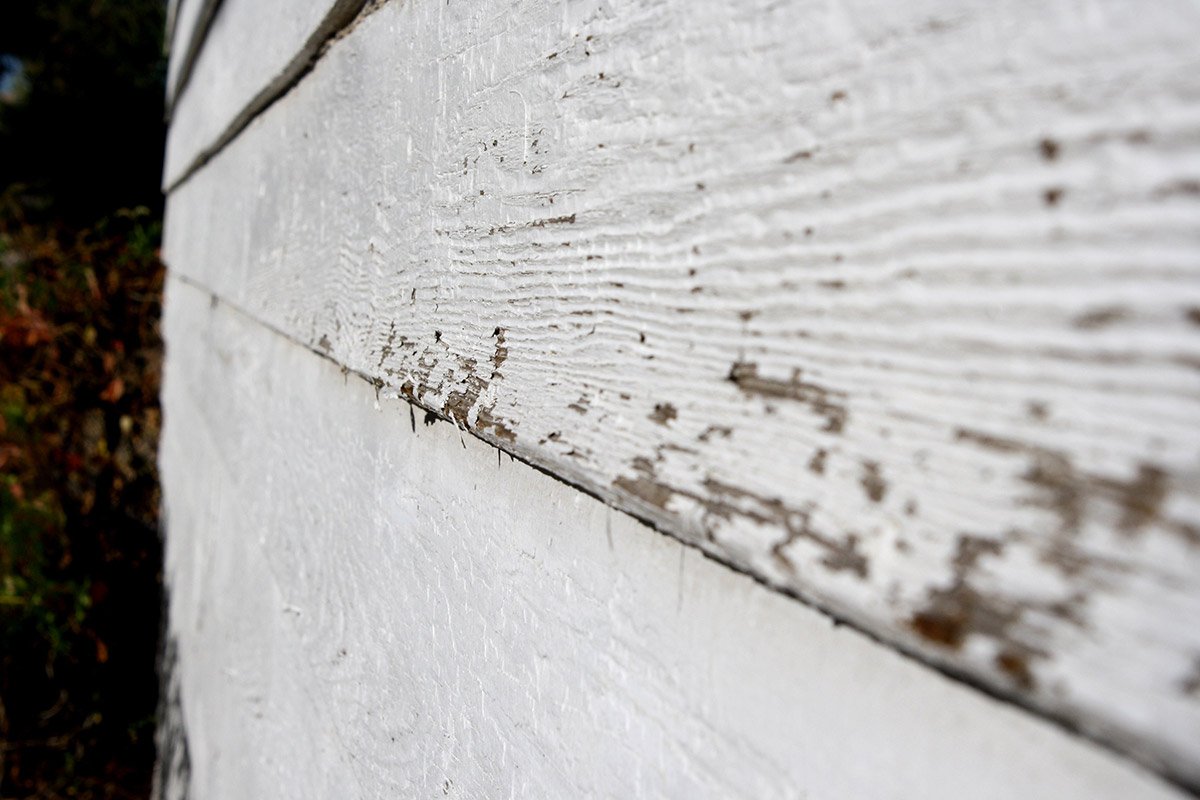
Many early failures we’re called to diagnose trace back to something on this list: chalk that was painted over, mildew that was rinsed rather than treated, loose coating left in place, rotted wood covered instead of repaired, moisture nobody looked for, failed caulk, unstable stucco, efflorescence coated over, or repairs that were never properly prepared.
None of those are paint problems. Any of them can undermine even a premium coating.
The order that works:
diagnose → repair → clean → prepare → prime where necessary → apply the correct coating system
Product selection is the last decision, not the first. Our guide to why surface preparation matters covers the process, and our exterior paint failure guide walks through what each failure mode actually indicates. For substrate-specific work, see our guides on stucco painting, James Hardie® siding, and wood rot and carpentry repair.
Does Premium Paint Mean Fewer Coats?
Sometimes, but don’t count on it as a cost offset.
Premium products often deliver stronger hide and more consistent coverage, which can reduce the material needed to reach the specified film thickness. But the number of coats a project requires depends on how much the color is changing, how porous the substrate is, what repairs were made, what coating is already on the wall, the specific product, and the manufacturer’s requirements for that system.
A significant color change over weathered stucco isn’t going to become a one-coat project because someone upgraded the paint. What matters is reaching the required film build — and that’s a spread-rate question, not a marketing claim.
Is the Cheapest Exterior Painting Estimate Really the Cheapest?
A lower bid can be legitimately lower. Smaller operations carry less overhead, and some contractors simply price leaner. That’s real.
A lower bid can also be lower because there’s less in it. The homeowner’s job is figuring out which.
Line items worth comparing across bids:
- What preparation is specified — washing, chalk removal, mildew treatment, scraping, sanding
- What repairs are included, and what happens if more are found
- Caulking scope — full replacement, spot repair, or nothing stated
- Primer: where, what kind, and why
- Coating manufacturer and the exact product line, not just “premium paint”
- Number of coats or the coating system specified
- What’s explicitly excluded
- Warranty terms and what voids them
- Insurance coverage
- Cleanup and site standards
Two bids that both say “wash, prep, and two coats” can describe completely different projects. Our guide on how to choose a painting contractor covers the rest of the evaluation, and the exterior painting cost guide explains where the money actually goes.
When Premium Exterior Paint May Not Be the Right Call
We’d rather say this out loud than sell an upgrade nobody needs.
A premium coating may not create meaningful value when you’re selling within months, when the work is a temporary improvement, on a low-priority outbuilding, or when the surface it’s going over is scheduled for replacement anyway. It also won’t help when a mid-tier product already satisfies what the project actually requires — or, most importantly, when the real issue is a substrate problem that no coating upgrade addresses.
The goal isn’t buying the most expensive paint. It’s choosing the right coating system for the house, its exposure, its condition, and what you expect from it.
Questions to Ask Before You Accept an Exterior Painting Estimate
Any contractor should be able to answer these without hesitation:
- What exact manufacturer and product line are you using?
- Is it 100% acrylic?
- Why is this product appropriate for my substrate?
- Is primer required anywhere, and what kind?
- How will chalking or mildew be addressed before painting?
- What repairs are included in this price?
- How many coats, or what coating system, is included?
- How will the required film build be achieved?
- Is the same product going on walls, trim, doors, and other substrates — and if so, why?
- What warranty applies, and what conditions exclude it?
That last pair matters more than most homeowners realize. Using the same product across every exterior surface without first verifying compatibility, adhesion requirements, and the manufacturer’s recommendations can create problems — different substrates may call for different primers, different preparation, or a different coating system entirely. A quality product can legitimately span several compatible surfaces; the question is whether anyone checked.
How We Think About Exterior Paint
Product selection follows inspection. We look at the existing coating and its condition, stucco cracking and porosity, wood and fiber cement condition, previous repairs, moisture, exposure by elevation, color, and what the homeowner actually wants from the project.
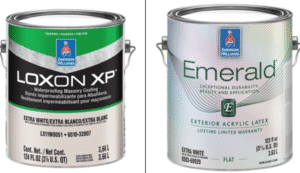
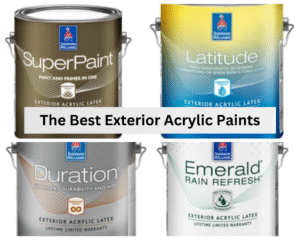
Depending on what we find, systems we commonly specify include Sherwin-Williams Emerald Rain Refresh, Duration, Latitude, and Loxon products for masonry, along with premium Benjamin Moore exterior coatings. None of those is automatically the right answer — the wall decides.
For deeper reading on selection, see best exterior paint for Florida sun and humidity and our guide to choosing exterior paint for Florida homes.
Frequently Asked Questions
Is expensive exterior paint really better?
Price alone doesn’t determine quality, but premium product lines generally place more emphasis on resin quality, UV resistance, color retention, mildew resistance, and film durability. The differences show up over years rather than immediately after the crew leaves.
Is 100% acrylic paint best for exterior homes?
For many exterior substrates in Florida, a quality 100% acrylic latex is an excellent default — it stays flexible, resists UV well, and lets moisture vapor escape. Specialty surfaces and conditions, including metal, factory-finished components, certain masonry, and problem surfaces with staining or adhesion issues, may require different primers or coating systems.
How long does premium exterior house paint last in Florida?
There’s no single number. Lifespan depends heavily on the surface, preparation quality, exposure, color, the coating system, how it was applied, and maintenance between repaints.
Does premium paint prevent peeling?
No. Peeling indicates adhesion failure, and the cause usually sits below the paint — moisture, contamination, poor preparation, incompatible coatings, or an older underlying layer that had already let go. Better paint improves the odds; it doesn’t override what it’s bonded to.
Does more expensive paint require fewer coats?
Sometimes improved hide helps, but coat requirements depend on the color change, substrate porosity, repairs, the existing coating, and the manufacturer’s specifications for that product. Premium paint doesn’t automatically make a project a one-coat job.
Is elastomeric paint better for stucco?
Not automatically. Elastomeric and high-build systems can be genuinely useful where the wall’s condition and the specification justify them, but they’re not the universal answer for every stucco home — and they don’t substitute for repairing cracks first.
What is the best exterior paint for Florida homes?
The right question is which system suits your substrates, their condition, and your exposure. Most Florida homes have several different surfaces on one exterior, and using one product across all of them is rarely the best-performing approach.
Planning an Exterior Painting Project in Jacksonville?
The most useful thing we can do before quoting a number is look at what you actually have — the condition of the existing coating, your stucco, wood, or siding, what repairs are needed, what preparation the surfaces require, how each elevation is exposed, and which coating options make sense given all of it.
That’s what determines the specification, and sometimes it determines that a less expensive approach is the right one.
A New Leaf Painting Contractors has served Jacksonville and Northeast Florida since 2001. Explore our exterior painting services, or request a written exterior painting estimate.
Call or text 904-615-6599.
Continue Learning About Exterior Painting
Choosing Paint
- Choosing the Best Exterior Paint for Florida Homes
- Best Exterior Paint for Florida Sun & Humidity
- Why Dark Exterior Paint Fades Faster in Florida
Preparing the Home
- Why Surface Preparation Matters
- Exterior Paint Failure Guide
- Stucco Painting Guide
- Wood Rot Repair Before Painting
Hiring & Planning
Any homeowner who is preparing for and looking to find exterior painters near me can count on the professionals with A New Leaf Painting to recommend suitable paint for their home. Give us a call at (904) 615-6599 to get a free estimate for your project. We’re ready to help you protect your investment without forcing you to gamble on it!