In this article
- What Is Light Reflectance Value (LRV)?
- Where Do You Find a Paint Color's LRV?
- How to Read LRV Numbers
- Does a Higher LRV Make a Room Brighter?
- Why Paint Looks Different on a Wall Than on a Chip
- How Natural Light Affects Paint Color
- Why Florida Light Matters
- What LRV Is Best for a Dark Room?
- What LRV Works for Different Rooms?
- LRV and Paint Sheen Are Not the Same Thing
- Can LRV Make a Small Room Look Bigger?
- Why Two Colors With the Same LRV Can Look Completely Different
- Does LRV Matter for Exterior Paint?
- The Best Way to Test Paint Before Committing
- Frequently Asked Questions
- LRV Narrows the Field. Your Room Makes the Call.
To find a paint color's Light Reflectance Value (LRV), look the color up on the manufacturer's website: Sherwin-Williams, Benjamin Moore and the other major brands list it on each color's detail page. LRV runs from 0 to 100 and tells you roughly what share of visible light the color reflects. Higher numbers read lighter; lower numbers read deeper.
That number is the most useful single predictor of the classic surprise: a chip that looked bright in the store turns out darker on the wall, or the same color looks different in two rooms. Our house painters in Jacksonville see it all the time. LRV won't tell you everything about how a color will look, but it explains a lot.
What Is Light Reflectance Value (LRV)?
A color with an LRV of 75 reflects about 75% of the light that hits it. A color with an LRV of 12 reflects about 12% and absorbs the rest.
The ends of the scale are theoretical: 0 would be a perfect black and 100 a perfect white. Real paint whites top out in the high 80s or low 90s, and the deepest blacks sit in the low single digits. LRV is measured with a spectrophotometer, not judged by eye, and it applies to every hue: a pale yellow can have a high LRV and a deep brown can sit near black.
Where Do You Find a Paint Color's LRV?
- The manufacturer's color page. The most current and reliable source, next to the color number.
- Fan decks. Many list LRV in the index or beside the color, depending on brand and edition.
- Spec sheets and color apps. Architects and designers pull it from technical sheets, and most brand apps show it in the color detail view.
Not every chip has LRV printed on the back. Some brands print it and some don't, and older chips often don't. If it isn't there, look it up rather than guess. Custom-mixed and color-matched paints usually have no published LRV, because nobody has measured that exact mix.
How to Read LRV Numbers
There is no official industry classification of LRV tiers. These ranges are a working guide we use with homeowners, not a standard.
| Range | Reads As | What to Expect |
|---|---|---|
| 0–15 | Very low | Deep and dramatic. Absorbs most available light. Needs layered artificial lighting to avoid feeling flat. |
| 16–35 | Low | Saturated, moody, intentional. Works well where you want enclosure rather than openness. |
| 36–55 | Medium | Clearly a color rather than a neutral. Reflects and absorbs in roughly equal measure. |
| 56–75 | High | Light and open while still holding visible color. The range most whole-home neutrals land in. |
| 76–100 | Very high | Whites and near-whites. Maximum reflectance, and the range where undertones become most obvious. |
Swipe to see the whole table
A handy rule of thumb: above about 50, a color reflects more light than it absorbs. Below that, it absorbs more than it reflects.
Does a Higher LRV Make a Room Brighter?
Only up to a point. Paint reflects light; it doesn't make it. An 85-LRV white in a windowless hallway will be lighter than a 20-LRV charcoal, but it's still a dim hallway, because there's little light to bounce around.
How bright a room feels depends just as much on the number and size of windows, which way they face, how the room is lit, the flooring (dark wood absorbs a lot; pale tile bounces it back), big upholstered furniture and rugs, and the ceiling, which is often the largest reflective surface in the room. LRV is one lever, not the whole machine.
Why Paint Looks Different on a Wall Than on a Chip
Scale. Color intensifies over a large area. A soft greige chip can read clearly beige or clearly gray across a whole wall, because the undertone is multiplied.
Surroundings. In the fan deck the color sits on white card stock. At home it sits next to your floors, trim, cabinets and furniture, and each of those shifts how you see it.
Light and sheen. Store lighting is bright, cool and overhead, and chips are usually flat. Your living room at 6 p.m., in eggshell, is a different situation.
How Natural Light Affects Paint Color
North-facing rooms get steady, cooler, indirect light. Colors often read a little deeper and cooler than the LRV suggests. South-facing rooms get the most direct light, so colors look brighter and warmer, and a very high-LRV white can verge on glare. East-facing rooms are warm in the morning and softer later, while west-facing rooms are the reverse, with strong warm light late in the day.
These are tendencies, not rules. Trees, a neighbor's house or a deep overhang can change any of them.
Why Florida Light Matters
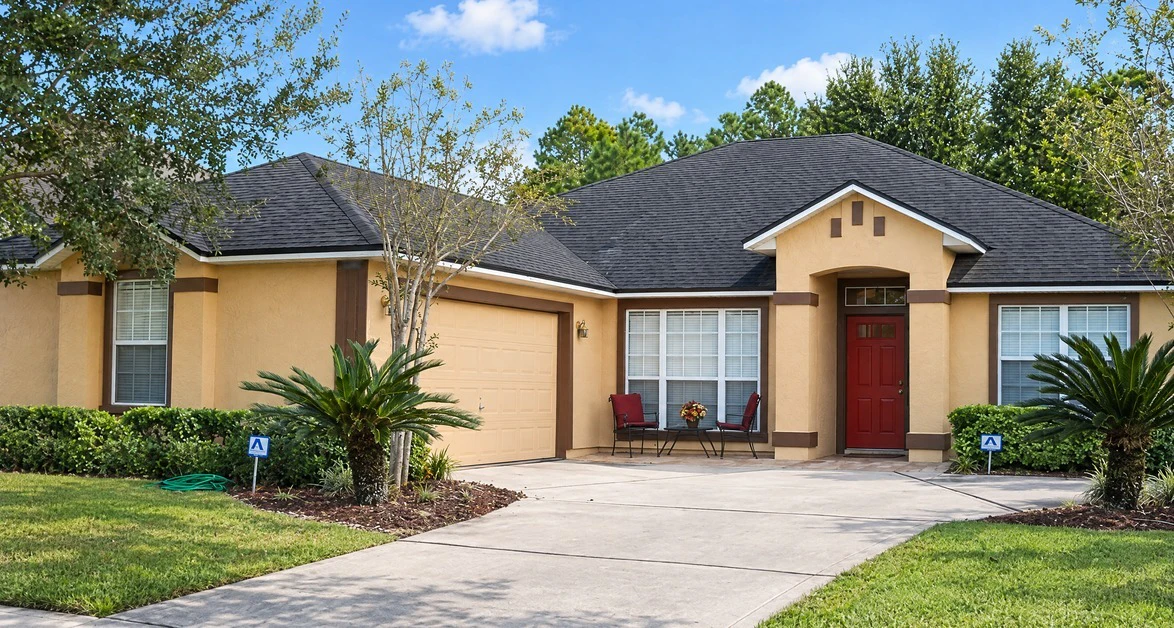
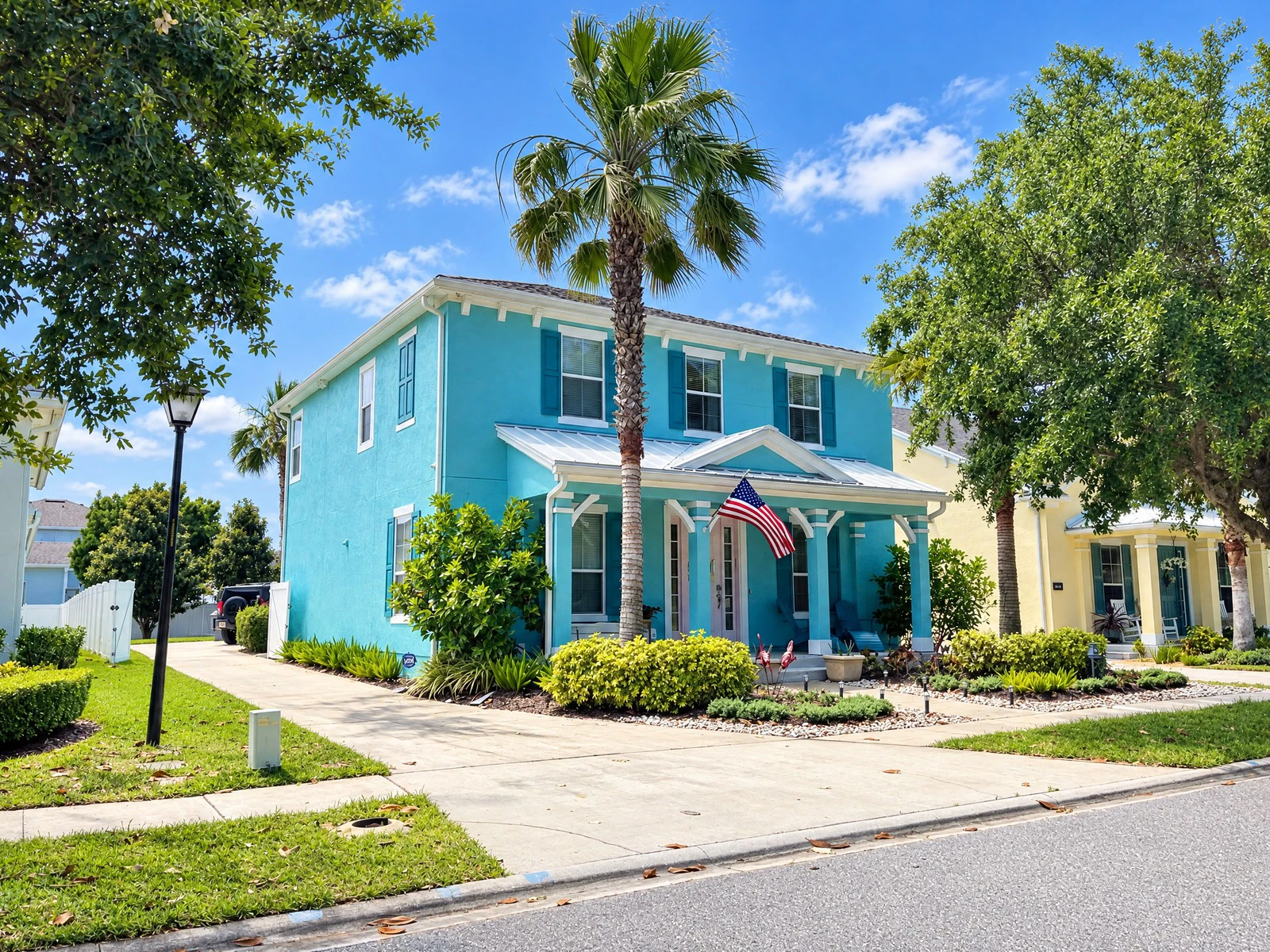
Northeast Florida daylight is strong, and a lot of it bounces in off pale stucco, pool decks, water and pavers. A color that looks calm in a photo from up north can read much more saturated here.
Two local features work the other way. A covered lanai or deep porch shades the rooms behind it, so a wall of sliders may let in far less direct light than you'd expect. Big live oaks can shade one whole side of a house while the rest sits in full sun. In an open floor plan, the color you pick for the bright end also has to work at the dim end. Two homes a mile apart can use the same can of paint and get very different rooms.
What LRV Is Best for a Dark Room?
Higher LRV helps. In a room short on light, something in roughly the 60–80 range gives back far more than a color in the 20s or 30s.
But a very bright white in a truly dim room often reads gray, and it can feel cold. A soft white or light neutral with a warm undertone usually looks better in low light. Fix the light too: add lamps at several heights instead of one ceiling fixture, keep the ceiling light, and remember that dark floors and big furniture soak up light before it reaches the walls.
What LRV Works for Different Rooms?
- Bedrooms: lower LRV feels restful and enclosed, higher feels open. Both work; it depends how you use the room.
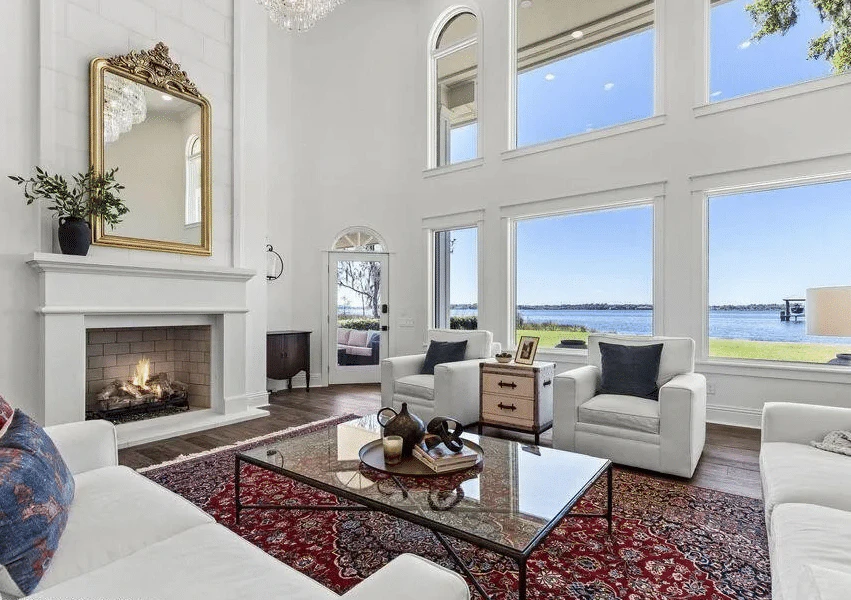
- Living rooms: mid-to-high LRV usually holds up best across a large area and changing light.
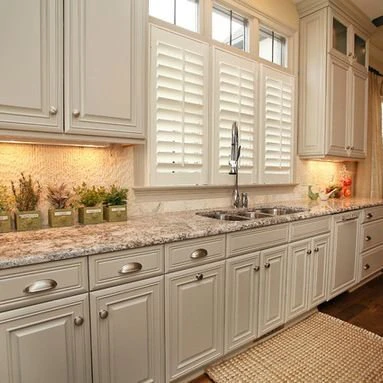
- Kitchens and bathrooms: cabinets, tile and counters take up most of the view, so their undertones matter more than the wall's LRV.
- Hallways: often the darkest spaces, so higher LRV is the practical choice, with continuity into nearby rooms.
- Home offices: a very high-LRV wall near a monitor in a bright room can cause glare.
- Media rooms: low LRV is often the goal, because reflected light washes out the picture.
More in our guide to interior painting by room.
LRV and Paint Sheen Are Not the Same Thing
LRV belongs to the color: how much light the pigment reflects. Sheen belongs to the surface: flat scatters light, while satin and semi-gloss reflect more of it in one direction, making highlights and glare and showing every dent and patch.
So a semi-gloss wall isn't a substitute for a lighter color in a dim room, and people rarely like the result. Our guide to flat vs. matte vs. eggshell explains what each sheen does.
Can LRV Make a Small Room Look Bigger?
It can make a room feel more open, not actually larger. Light walls tend to recede, especially when walls, trim and ceiling are close in value, because low contrast softens the edges. Bright white trim against a deep wall does the opposite and outlines the room's real size. A small room that opens into a much lighter one can also feel like a dark box by comparison.
Why Two Colors With the Same LRV Can Look Completely Different
This is the biggest limit of LRV: it measures lightness, not hue or undertone. A warm beige and a cool gray can both have an LRV of 62 and look nothing alike. One pulls warm against your floors, the other cool, and in strong afternoon sun the beige may go yellow while the gray drifts blue. Use LRV to narrow your choices to the right depth, then pick on undertone against the finishes you're keeping.
Does LRV Matter for Exterior Paint?
Yes. A high-LRV exterior can look very bright under Florida sun, especially on south and west walls. Dark colors absorb more heat and get hotter in direct sun, which is why some siding makers, vinyl especially, restrict dark colors; check the guidance for your material. Deep, saturated exterior colors also tend to show fading sooner. In most master-planned communities around Jacksonville, the HOA or ARB has to approve the color whatever its LRV.
The Best Way to Test Paint Before Committing
Use store chips to build a shortlist, not to decide. Put large samples in the actual room; peel-and-stick sheets or painted boards are better than brushing on the wall, because you can move them. Look at them in the morning, midday and evening, with the lights on at night. Hold them against what's staying: trim, flooring, cabinets, countertops, large furniture and the color in the next room. Try them on different walls, too, since the wall facing the window behaves differently from the one beside it.
Fifteen minutes of this prevents most color regret, and it's the step people skip most. LRV narrows the field; your own room makes the call. More on choosing products and finishes in our Interior Painting Resource Center and in builder-grade paint vs. premium paint.
Frequently Asked Questions
Light Reflectance Value: a 0 to 100 measure of how much visible light a color reflects. A color with an LRV of 70 reflects roughly 70% of the light reaching it.
LRV Narrows the Field. Your Room Makes the Call.
No number replaces seeing a color on your own wall, in your own light. A New Leaf Painting Contractors has painted interiors across Jacksonville and Northeast Florida since 2010, and we help homeowners check colors in the actual room before anything goes on the wall.
Questions about a color? Call or text (904) 615-6599, or request a free estimate. We serve Jacksonville, Jacksonville Beach, Ponte Vedra Beach, St. Augustine and Northeast Florida.