In this article
- Is Painting Brick a Good Idea?
- When Painting Brick Makes Sense
- Inspect the Brick First
- How to Prep Brick for Paint
- Best Primers and Paint for Exterior Brick
- Primers for Exterior Brick
- How Brick Gets Painted
- Brick Colors That Work Best
- Common Brick Painting Mistakes
- How Long Does Painted Brick Last?
- Painting Brick Across Northeast Florida
- Frequently Asked Questions
- Why Homeowners Trust Us With Their Brick
- Related Painting Resouces
- Explore Our Services
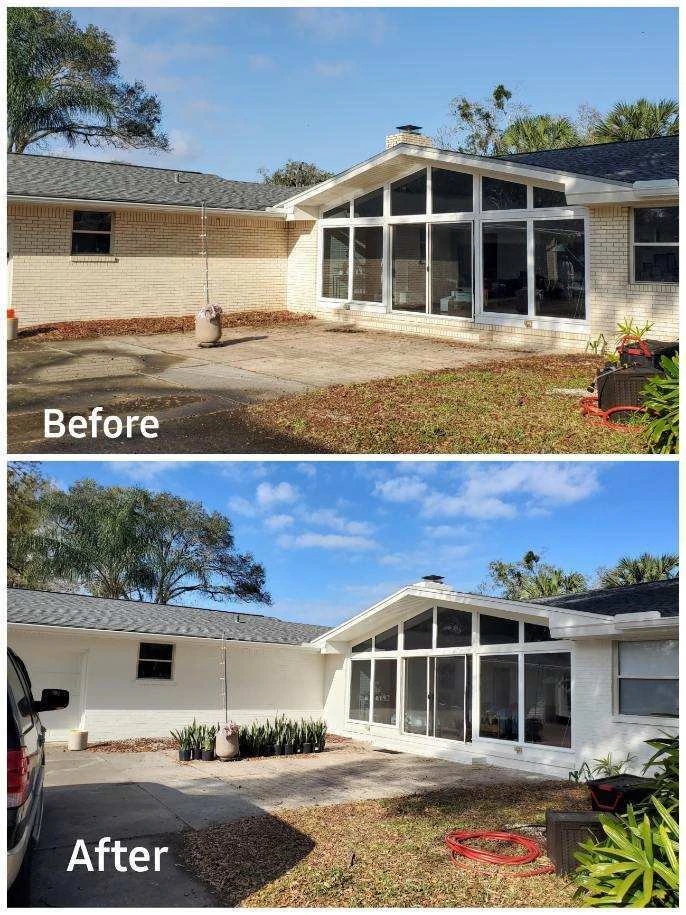
Painting exterior brick is a good idea for most Jacksonville homes, as long as the masonry is sound, the moisture is under control and you use a breathable system: a masonry primer and two coats of premium acrylic. It can change the look of a house more than almost anything else, but it's close to permanent, so the condition of the brick has to come first.
We've been doing exterior painting in Jacksonville since 2010, and our exterior painters check the brick, mortar joints, old repairs, moisture and any existing coatings before deciding how to clean, prep, prime and paint it. Northeast Florida's humidity, sun and rain make that prep matter even more on masonry.
Is Painting Brick a Good Idea?
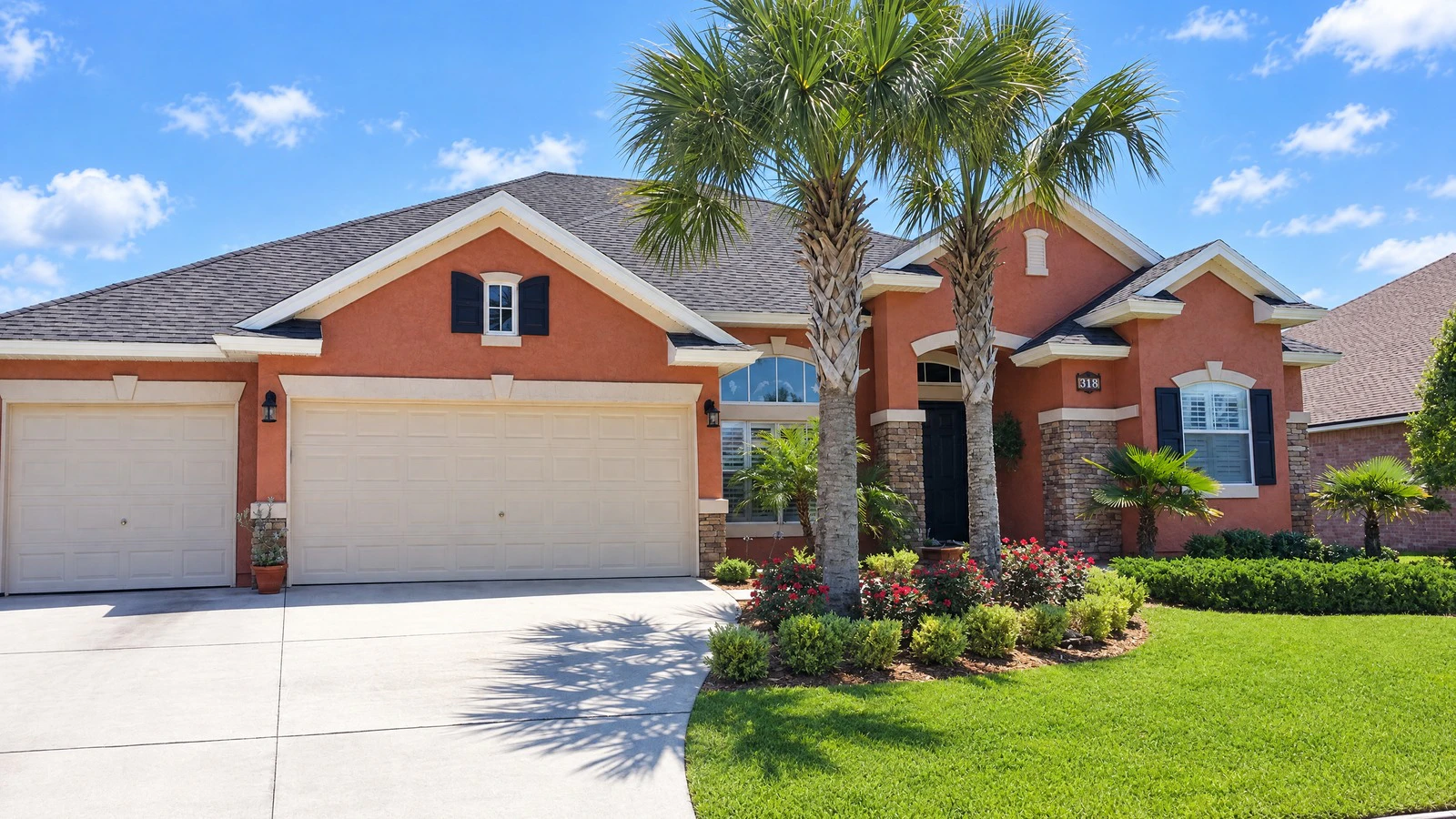
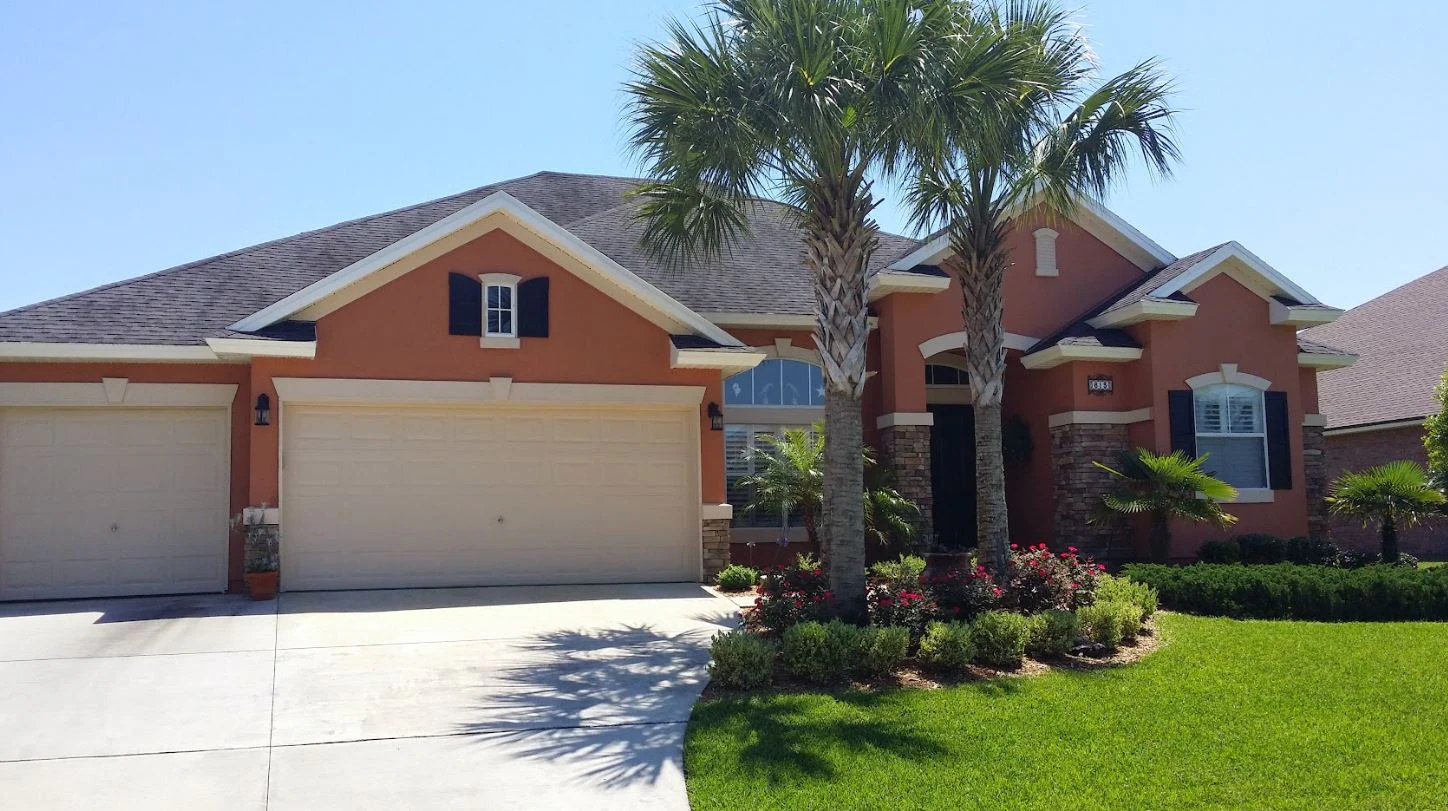
The case for it: paint can update a dated exterior for far less than re-siding or re-facing. It ties together mismatched brick from additions and repairs, hides patchy mortar work and opens up colors natural brick never offers. If you want to take a builder-standard orange-red brick home toward white, greige or black, paint is usually the only realistic way.
The case against: getting paint off brick is slow and expensive and rarely brings back the original look. Painting also changes how the wall handles moisture. Unpainted brick dries freely; painted brick depends on the coating letting water vapor out. The wrong product traps moisture behind the paint.
When You Should Not Paint Brick
- Historic homes. Original brick on a historic home is part of its value, and in some districts preservation rules apply.
- Active moisture problems. Persistent dampness, active efflorescence or water coming through the wall have to be fixed first, or paint just traps the problem.
- HOA rules. Some Jacksonville-area HOAs and ARBs don't allow painted brick at all, and others require approval of the exact color and sheen. Check before you buy paint.
When Painting Brick Makes Sense
- Weathered, unevenly faded or stained brick that washing won't fix
- Dated color, like the orange-red brick common on many older Jacksonville homes
- Repairs that don't match: patched areas, replaced brick or mortar in a different shade
- Curb appeal before a sale, where a well-done painted exterior reads as updated
- An extra layer of water resistance from a quality masonry coating
Inspect the Brick First
Walk the whole house, not just the front, and look for:
- Cracks. Hairline cracks in mortar are common and usually cosmetic. Wider cracks or cracks through the brick may mean settling and need a closer look.
- Failed mortar. Crumbling, receding or missing joints need repointing first. Paint is not a substitute for mortar.
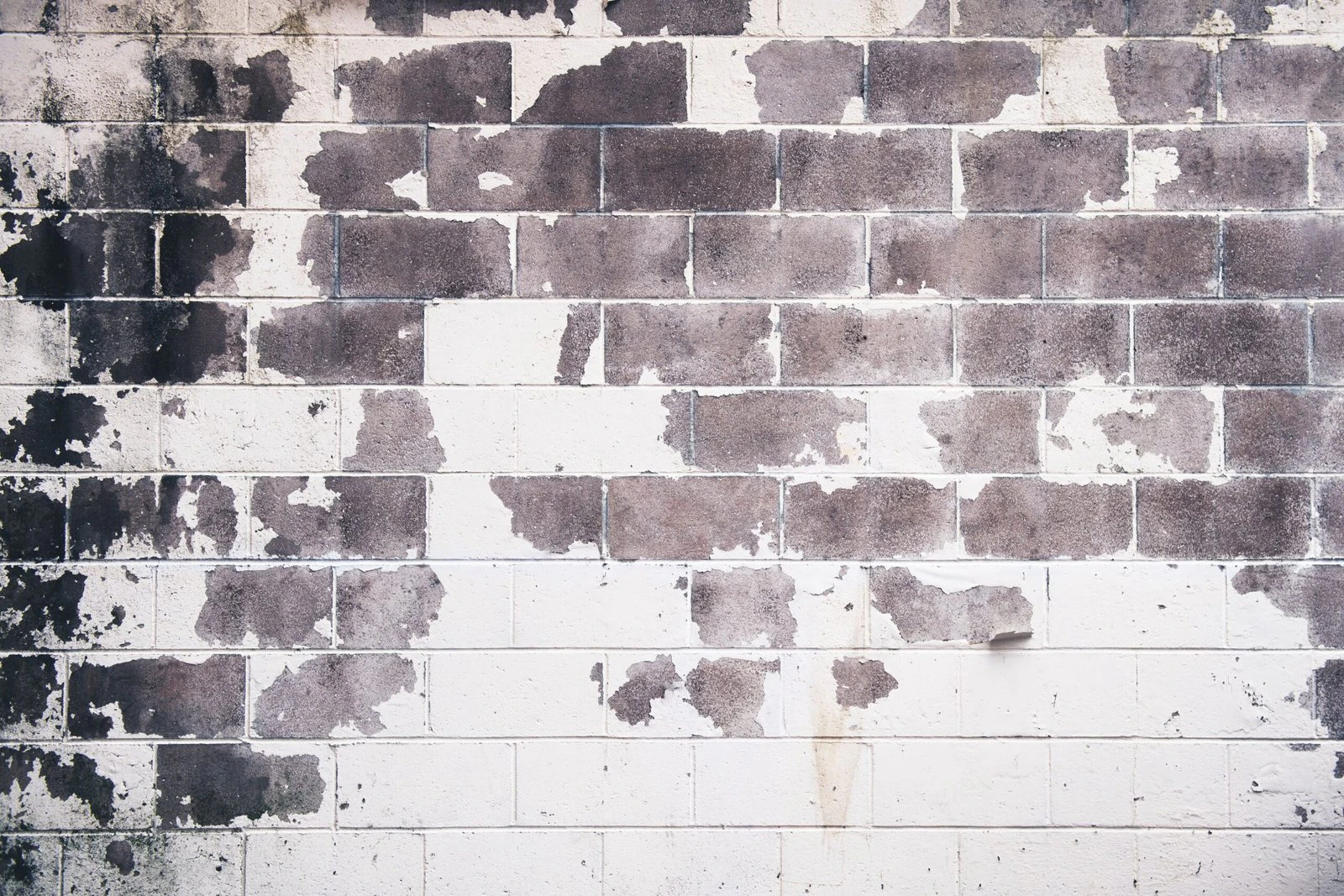
- Efflorescence. White mineral deposits left as water moves through the brick. Remove them and find out where the water comes from.
- Moisture. Damp brick, stains or a musty smell can point to gutters, grading or flashing problems.
- Spalling. Brick faces that flake or pop off are failing and need repair or replacement, not paint.
- Old coatings. Paint, whitewash or sealer already on the brick affects how new primer bonds and may need testing or removal where it's failing.
- Mildew and algae. Usually on shaded walls. Kill and clean it; never paint over it.
How to Prep Brick for Paint
Protect the area
Cover windows, trim, fixtures and plants. Cleaning solutions and overspray can damage landscaping near the foundation.
Wash gently
Remove dirt, chalk, mildew and loose material with controlled pressure and the right cleaner. Too much pressure damages brick and soft mortar. Use a mildew cleaner where there's growth so it doesn't come back under the paint.
Deal with efflorescence
Light deposits can be brushed or washed off; heavy ones may need a masonry cleaner used carefully and rinsed well.
Repair mortar and caulk
Repoint deteriorated joints, and caulk where brick meets trim, windows or other materials.
Let it dry all the way through
Brick and mortar hold water longer than most surfaces, and our humidity stretches that further. Rushing this is one of the most common causes of early failure.
Prime
Nearly every brick job needs a dedicated masonry primer.
Best Primers and Paint for Exterior Brick
Brick is alkaline and porous, so ordinary paint doesn't always bond well or hold up to the alkalinity. The right primer depends on the brick's condition, which is why we decide on site.
Primers for Exterior Brick
| Primer | Best used for |
|---|---|
| Sherwin-Williams Loxon Conditioner | Chalky, powdery or very porous brick: it binds the surface so the coats above have something solid to grip |
| Sherwin-Williams Loxon masonry primer | Sound brick, painted or unpainted: bonds to masonry and resists alkalinity |
| Block filler | Brick or mortar with large pores or pitting: fills voids before the finish coats |
Swipe to see the whole table
For the finish, brick needs to breathe, so a premium 100% acrylic is the standard choice. Products we use include Sherwin-Williams Emerald Rain Refresh (made to shed dirt with rain), Sherwin-Williams Duration, Sherwin-Williams Latitude (made for application across a wider temperature range) and Benjamin Moore Aura Exterior (strong color depth and fade resistance).
What we avoid on brick: elastomeric. It works on cracked stucco, but its thickness and lower permeability can trap moisture in sound brick.
How Brick Gets Painted
Brick's rough texture makes the method matter. We brush the cut-ins and work paint into deep joints, and on big walls we spray and then back-roll, which pushes the coating into the texture that spraying or rolling alone can miss. Two full coats at the manufacturer's spread rate is the standard. Too thin and the coating won't last; too thick and it can crack or cure poorly. A flat or low-sheen finish usually looks best, since gloss shows every irregularity.
Brick Colors That Work Best
- White is one of the most requested brick colors. It looks clean and works with almost any trim and roof.
- Greige and warm neutrals soften the contrast of pure white and hide pollen and dirt better, which matters under oak trees.
- Taupe works well with warm-toned roofs or stone accents.
- Black suits modern and farmhouse styles, but dark colors take more heat and UV here and fade faster, so a quality acrylic matters even more.
- Cream, soft yellow and muted warm tones suit traditional and Colonial-style homes.
Florida sun pulls out undertones a small chip hides, so test large samples on your brick and look at them in morning and afternoon light. In an HOA, get the color approved first. Our Exterior Painting Resource Center has more on HOA and ARB approvals.
Common Brick Painting Mistakes
- Skipping a masonry primer and trusting a "paint and primer in one"
- Painting damp brick, which sets up blistering
- Skipping the wash, mildew treatment or mortar repair
- Using standard house paint or elastomeric instead of a breathable masonry-ready acrylic
- Painting over cracks or an active water problem
- Painting over a chalky old coating. If powder comes off on your hand, it needs attention first. Our guide to exterior paint chalking shows a real Jacksonville project and the prep it took.
How Long Does Painted Brick Last?
With proper prep, primer and a premium acrylic system, painted brick holds up for many years, though exposure, color and the quality of the prep all change that. To get the most from it, rinse it gently once a year with mild detergent and low pressure to clear pollen, dirt and early mildew. Touch up sunny walls and areas near entries first. When you see chalking, fading, fine cracking in the paint or spots losing adhesion, plan the next repaint while the brick and mortar underneath are still in good shape.
Painting Brick Across Northeast Florida
Brick differs around the area. Coastal homes in Ponte Vedra Beach face salt air, so we lean on the most durable acrylic systems. Nocatee and other St. Johns County communities often have HOA rules on brick color and finish. Shaded, older neighborhoods like Mandarin see more mildew on brick. Orange Park and Fleming Island have many older brick homes where mortar and old coatings need a careful look, and parts of Amelia Island raise historic questions about whether to paint at all.
Frequently Asked Questions
For practical purposes, yes. Removing paint from brick is difficult and costly and rarely restores the original look.
Why Homeowners Trust Us With Their Brick
A New Leaf Painting Contractors has served Northeast Florida since 2010, and brick is one of the surfaces we're asked about most, because the decision is permanent. We start with a real inspection of the mortar, moisture, old coatings and porosity before recommending a primer or paint system. That approach has earned us 4.8 stars across 700+ reviews, and it's backed by our Iron-Clad Guarantee and workmanship warranty. We're an EPA Lead-Safe Certified Firm with $3 million liability insurance, and we use premium Sherwin-Williams or Benjamin Moore systems chosen for your brick. If the job needs more than paint, like mortar repair or trim and fascia work, we handle that too. See our exterior painting services, wood rot and carpentry repair, drywall repair and cabinet painting and refinishing, or browse the painting blog.
Related Painting Resouces
Explore Our Services
Ready to Talk About Your Brick Exterior?
Not sure painting your brick is the right move, or ready for a written estimate? We’re glad to walk your home with you and give you a straight answer. Contact A New Leaf Painting or call 904-615-6599 for a free estimate.