
What Exterior Paint Colors Go With a Light Gray Roof?

A light gray roof is one of the most flexible roofing colors you can build a color scheme around. Unlike a dark brown or terracotta roof that locks you into a narrower palette, light gray plays well with warm tones, cool tones, and true neutrals alike. That flexibility is exactly why it’s become one of the most requested roof colors for new construction and reroofs across Northeast Florida.
But “it goes with everything” isn’t quite the same as “anything will look good.” The right exterior color still depends on a handful of specific factors: the undertone of the roof itself, any brick or stone accents on the home, the trim color you’re planning to pair with it, the landscaping around the house, and the home’s overall architectural style. Get those right and a light gray roof becomes one of the easiest roofs to design around. Ignore them and even a “safe” color choice can look flat or slightly off.
One thing worth keeping in mind if you’re in Jacksonville, Ponte Vedra, Nocatee, St. Augustine, or anywhere else in Northeast Florida: colors read differently outdoors here than they do on a paint chip in a store. Florida sun is intense and reflective, and it tends to wash out subtle undertones and make colors appear brighter and lighter than expected once they’re actually on your walls. It’s something our exterior house painters in Jacksonville, FL account for when helping homeowners evaluate exterior colors and finishes. A shade that looks perfectly balanced indoors can look almost pastel once it’s in full sun on a stucco exterior.
Start by Identifying the Undertone of Your Light Gray Roof
Not all light gray roofs are actually the same color. This is the step people skip most often, and it’s the one that causes the most “why does this look wrong” moments after a repaint.
Some light gray roofs lean cool, with subtle blue, slate, or silver undertones. Others lean warm, with a hint of taupe, beige, brown, or greige mixed into the gray. Architectural shingles in particular are often blended from several granule colors, so the roof can look like a fairly neutral gray from the street but reveal a warmer or cooler cast once you really study it up close.
The best way to figure out which category your roof falls into is to actually look at it at different times of day. Morning light, midday sun, and late afternoon light will all shift how the roof reads. If you can, look at the roof on an overcast day too — clouds tend to diffuse light and make undertones easier to spot than they are in harsh direct sun.
Before you commit to a full repaint based on a small sample, test large paint swatches on multiple sides of the home — not just the front. Sun exposure varies significantly from the north side of a house to the south side, and a color that looks perfect on a shaded elevation can look completely different on the side that gets full afternoon sun. This is one of the most common regrets homeowners have with exterior color choices, and it’s also one of the easiest to avoid.
Best House Colors for a Light Gray Roof
White and Soft White
White is the classic, low-risk choice for a reason. It’s crisp, timeless, and works across nearly every architectural style — coastal homes, traditional two-story colonials, farmhouse-style builds, and clean modern exteriors all wear white well.
If your roof leans warm, consider a soft or warm white rather than a stark, cool white. Popular choices in this category include Sherwin-Williams Alabaster, Sherwin-Williams Pure White, and Benjamin Moore White Dove — all of which read as white without the slightly clinical look of a true bright white. A stark white against a warm gray roof can sometimes look like it’s fighting the roof rather than complementing it.
For trim on a white house, you have room to play: white-on-white with subtle sheen contrast, black shutters and accents for a modern farmhouse feel, or charcoal-gray shutters for something a bit softer than full black.
Light Greige and Warm Beige
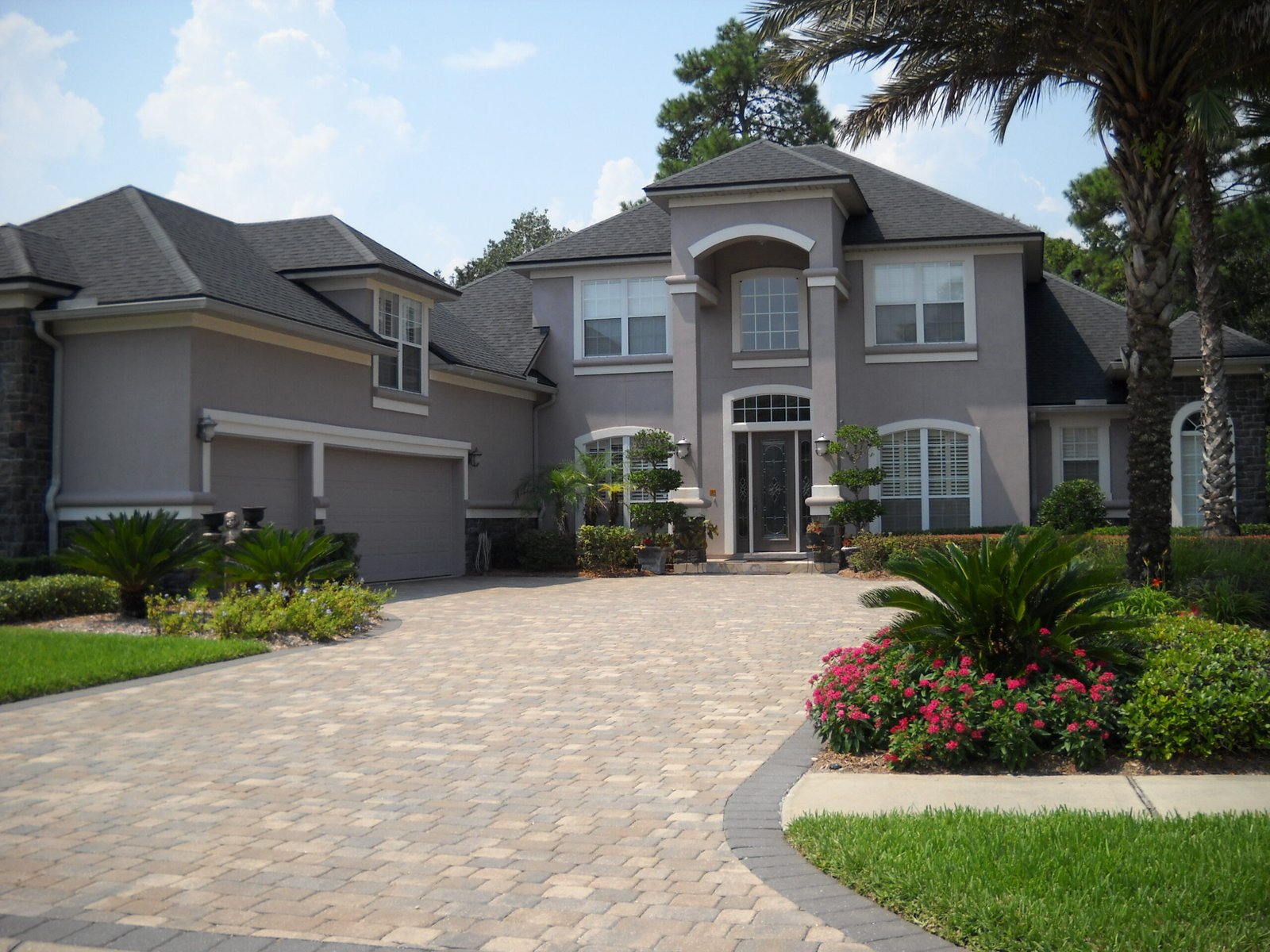
Greige — that in-between blend of gray and beige — has become one of the most popular exterior colors in Florida over the last several years, and for good reason. It’s a safe but far from boring choice, especially on homes with a light gray roof that leans warm.
Greige helps soften a home’s overall look and pairs especially well with tan stone accents, brick, and natural wood elements like a stained front door or wood garage doors. It’s a strong option throughout Jacksonville, Ponte Vedra Beach, Nocatee, and St. Augustine, where a lot of stucco homes benefit from a warmer, more grounded neutral rather than a stark contrast.
Sherwin-Williams Agreeable Gray, Sherwin-Williams Repose Gray, and Benjamin Moore Revere Pewter are all popular greige options worth sampling against your specific roof.
Medium Gray or Charcoal Accents
A monochromatic gray exterior — where the body color, roof, and accents all live in the gray family — can look genuinely elegant, but it only works if there’s enough contrast built in. Without it, a house can start to blend into its own roofline and lose definition, especially from a distance.
The way around this is to keep the body of the house a lighter gray and push the contrast into the details: darker shutters, a charcoal front door, dark fascia, or a garage door in a deeper shade. That contrast is what keeps an all-gray palette from looking flat.
One thing to actively avoid: painting the body of the house in a gray that’s nearly identical to the roof color. It sounds like it should look “coordinated,” but in practice it usually just makes the whole exterior look like one undifferentiated block from the street.
Navy Blue
Navy against a light gray roof is one of the more striking combinations available, and it’s becoming more common on coastal, colonial, craftsman, and modern homes throughout Northeast Florida. It reads as confident and polished without being trendy in a way that will feel dated in five years.
White trim is almost mandatory here — it keeps the navy from feeling heavy — and a natural wood or black front door adds a nice finishing touch. Sherwin-Williams Naval and Benjamin Moore Hale Navy are two of the most requested navy exterior colors, and both hold up well against a range of gray roof undertones.
Blue-Gray
If navy feels like too much commitment, a softer blue-gray can deliver a similar coastal, calming feel with less visual weight. This is a particularly good match for gray roofs that lean cool, since the undertones complement each other rather than compete.
Blue-gray is a natural fit for Florida-style and coastal homes specifically, and it’s a color that photographs beautifully against blue skies — which, given how often Northeast Florida delivers those, is a nice bonus. Keep the trim white here too; without it, an all blue-gray exterior can start to look washed out rather than intentional.
Sage Green and Soft Green
Sage and other soft, muted greens have had a real resurgence in exterior design over the past few years, and they pair especially well with gray roofs that carry green, blue, or true neutral undertones. It’s a sophisticated choice that doesn’t read as “trendy” the way a brighter green might — it’s closer to a natural, grounded neutral than a bold statement color.
White trim, black hardware and light fixtures, and a stained wood front door all complement sage beautifully. It’s also a strong option if your home has a lot of mature landscaping, since the color tends to blend with greenery rather than compete with it.
Taupe and Mushroom
Taupe and mushroom tones — richer, slightly deeper neutrals than a standard beige — work with almost any light gray roof, which makes them one of the more versatile choices on this list. They’re especially useful on homes with stone accents, brick, bronze light fixtures and hardware, or warm-toned landscaping like mulch beds and brick pavers.
The appeal here is that taupe and mushroom tones tend to look more custom and less “builder-grade” than a standard beige, without requiring the boldness of navy or sage. If you want a neutral that still feels a little more considered than the obvious choice, this category is worth sampling.
Black or Deep Charcoal
Black and near-black exteriors have become a genuine trend in modern home design, and a light gray roof actually balances a dark body color nicely rather than fighting it. That said, a full black exterior is a bigger commitment than most of the other options on this list, and it tends to work best on modern architectural styles rather than traditional or farmhouse designs.
Because black and deep charcoal are the most common places we get this question, it’s worth using them as accents first — shutters, a front door, trim, or garage doors — before committing to a full black body. If you do go with a full dark exterior, Florida’s heat is a real consideration: darker colors absorb more heat and can show fading and wear faster than lighter colors in a climate with this much direct sun exposure. Choosing a high-quality exterior coating built for UV resistance matters more with dark colors than with almost any other choice on this list.
Exterior Color Combinations That Work Especially Well
If you’d rather skip the theory and just see some combinations that consistently work well with a light gray roof, here are several worth considering:
- Soft white siding, black shutters, and a natural wood front door
- Warm greige stucco, bright white trim, and dark bronze accents
- Light blue-gray siding, white trim, and a navy front door
- Sage green siding, cream trim, and black hardware
- Taupe exterior, white trim, and charcoal shutters
- Navy blue siding, white trim, and a stained wood entry door
- Light gray body, white trim, and a deep charcoal front door
Any of these seven combinations can work across a range of architectural styles — the key is matching the boldness of the palette to how bold you actually want the house to look from the street.
Colors to Be Careful With When You Have a Light Gray Roof
A few color choices tend to cause more regret than others when paired with a light gray roof, and they’re worth flagging before you commit to a gallon:
- Very cool blue-gray paint on a roof with warm gray undertones can create a subtle but noticeable clash — the two grays end up looking mismatched rather than coordinated.
- Pale gray siding that’s nearly identical to the roof color tends to make the whole house look bland and under-defined, since there’s no contrast between the roofline and the body of the home.
- Bright yellow or overly golden beige can fight against a cool-toned roof, creating a warm-versus-cool tension that’s hard to resolve with trim alone.
- Dark colors in general can look dramatic and striking in photos, but they show fading, dirt, and heat-related wear more quickly in Florida’s climate than lighter colors do. That’s not a reason to avoid them — it’s a reason to budget for a quality coating system and realistic maintenance expectations.
How Trim, Shutters, and Front Doors Change the Final Look
It’s worth remembering that exterior paint isn’t really one decision — it’s a complete palette made up of several decisions working together. The body color gets most of the attention, but trim, shutters, the front door, garage doors, soffits, fascia, gutters, and any stone or brick on the home are all part of the same visual composition.
The most reliable order of operations is to choose the body color first, then build outward from there: trim next, then accent colors like shutters and the front door last. Trying to work in the opposite direction — picking a bold front door color first and designing the whole house around it — tends to produce results that feel disjointed rather than intentional.
White trim remains the single safest, most flexible option with a light gray roof, and it’s the right call in the majority of cases. But it’s not the only option. Black, charcoal, navy, and stained wood front doors can all add meaningful contrast and curb appeal when the rest of the palette calls for it. The goal isn’t to avoid boldness — it’s to be intentional about where the boldness lives in the overall design.
Best Paint Colors for Light Gray Roofs in Florida
Northeast Florida’s sun changes the color equation in ways that are easy to underestimate if you’re used to picking paint colors somewhere with less intense, less direct light. Strong sun tends to make colors look lighter, cooler, and more saturated than they appear on a small paint chip indoors.
In practice, this means lighter neutrals, soft greens, warm whites, greige tones, and blue-gray shades tend to hold up visually well here — they’re forgiving of the intensity of Florida sunlight rather than being amplified by it in an unflattering way. Colors that look subtle and balanced in a showroom can look almost washed out or, in some cases, unexpectedly bold once they’re actually on a sun-drenched exterior.
This is really the core reason we don’t recommend making a final decision from a small paint chip alone. A large sample painted directly on your home’s exterior, viewed at different times of day, is the only reliable way to know how a color is actually going to behave in your specific yard, under your specific sun exposure, next to your specific roof.
Frequently Asked Questions
Should my house color be lighter or darker than my light gray roof?
Either direction can work well. What matters more than lighter-versus-darker is making sure there’s enough contrast between the body color and the roof so the home doesn’t visually blend into its own roofline.
Does a light gray roof go with beige siding?
Yes, and it’s one of the more common pairings we see, especially when the gray roof itself has warm or taupe undertones rather than a cool, blue-gray cast.
Can I paint my house gray if I have a gray roof?
You can, but the two grays need to be noticeably different shades rather than close matches. Adding contrast through trim, shutters, or the front door helps keep an all-gray exterior from looking flat.
What trim color looks best with a gray roof?
White is the most flexible and forgiving choice across nearly every style and undertone. Black, charcoal, cream, and soft greige can also work well, depending on the home’s architectural style and the specific undertone of the roof.
Does a light gray roof work with brick or stone?
Yes. Light gray roofs pair well with white brick, tan stone, mixed neutral stone, red brick, and many painted brick exteriors. The roof’s neutrality is actually an advantage here, since it doesn’t compete with the existing color of the brick or stone the way a more saturated roof color might.
Get Help Choosing the Right Exterior Paint Colors
Choosing exterior colors is genuinely more involved than just matching the roof — it means weighing the home’s fixed elements like brick, stone, and roofing, the amount and direction of sunlight it gets, trim and door colors, what neighboring homes look like, any HOA color requirements, and how the choice will hold up for curb appeal over the long run.
A New Leaf Painting Contractors provides professional exterior painting and color guidance for homeowners across Jacksonville, Ponte Vedra Beach, Nocatee, St. Augustine, Fleming Island, and the rest of Northeast Florida. If you’d like help narrowing down the right palette for your home’s specific gray roof and architectural style, our color consultation service is a good place to start, and our exterior painting team can walk you through prep, products, and timeline once you’ve settled on a direction.
Need help choosing exterior paint colors that complement your light gray roof? Contact A New Leaf Painting Contractors for a free estimate and professional color guidance tailored to your home.