
Exterior Brick Painting in Jacksonville, FL: The Complete Homeowner’s Guide
Brick is one of the few exterior materials that can go decades without demanding much attention. That’s exactly why, when a homeowner finally decides to paint it, the decision carries more weight than repainting siding or stucco. Brick is porous, and once it’s coated, you’re committing to an exterior finish that will require maintenance over time. After more than 25 years of exterior painting in Jacksonville, FL, we’ve seen why Northeast Florida’s moisture, humidity, intense sun, and frequent rain make the preparation and coating system especially important on masonry surfaces.
Painting brick can completely transform a home’s appearance, but the condition of the masonry has to come first. Our exterior painters in Jacksonville, FL evaluate the brick, mortar joints, previous repairs, moisture conditions, surface contamination, and any existing coatings before deciding how the surface should be cleaned, prepared, primed, and painted. This guide covers what actually matters before you paint exterior brick in Jacksonville — when it’s a good idea, when it isn’t, how to prepare it correctly, which primers and paint systems make sense, and what it takes to keep a painted brick exterior looking right for years rather than months.
Is Painting Brick a Good Idea?
For most homes, yes — but “most” isn’t “all,” and the exceptions matter.
The Case For Painting Brick
Painted brick can modernize a dated exterior faster and at a fraction of the cost of re-siding or re-facing. It unifies mismatched brick from additions or repairs, hides patchy mortar repairs and minor efflorescence staining, and opens up a much wider color palette than natural brick ever offers. For homeowners updating a builder-standard red or orange brick home toward a more current white, greige, or black exterior, paint is often the only realistic path.
The Case Against
Brick is not glamorous to un-paint. Removing paint from brick is expensive, slow, and rarely returns the brick to its original condition — some texture and color variation is typically lost for good. Painting also changes how the brick handles moisture: unpainted brick can dry outward in both directions, while painted brick relies on the coating’s permeability to let trapped moisture vapor escape. Choose the wrong product, and you can trap moisture behind the paint film instead of letting it pass through.
When You Should NOT Paint Brick
Historic homes. Original, unpainted brick on a historic or architecturally significant home is part of its value and, in some districts, is protected by preservation guidelines. Painting it can be difficult to reverse and may run against local historic review requirements.
Active moisture problems. If brick shows persistent dampness, active efflorescence, or signs of water intrusion from behind the wall, painting over it without solving the underlying moisture source will trap the problem rather than fix it. The moisture issue has to be resolved first.
HOA restrictions. Many Jacksonville-area HOA and ARB communities have specific rules about brick — some prohibit painting it entirely, others require approval of the exact color and even the paint sheen. Confirming this before you buy paint saves a repaint and a potential violation notice.
When Should You Paint Brick?
Outside of the exceptions above, a few common situations make brick painting the right call:
- Aging, weathered brick that has faded, discolored unevenly, or accumulated years of staining that pressure washing alone won’t fully correct.
- Outdated color — the builder-standard orange-red brick common on 1980s and 1990s Jacksonville homes reads dated against a renovated interior or updated landscaping.
- Prior repairs that don’t match — patched sections, replaced brick, or mortar repairs done with a different mix that stand out visually.
- Resale value — in many Northeast Florida markets, a well-executed painted brick exterior (particularly white or warm neutral tones) reads as updated and can support a stronger first impression than unpainted, dated brick.
- Additional weather protection — a quality masonry coating adds a layer of water-resistance on top of the brick and mortar, which matters given how much rain and humidity Northeast Florida sees each year.
Exterior Brick Inspection Checklist
Before any prep work or paint goes near the brick, the surface needs a real inspection — not a glance from the driveway. Walk the full perimeter and check for:
- Cracks — hairline cracks in mortar joints are common and usually cosmetic; wider cracks or cracks running through the brick itself may signal settlement and deserve a closer look before painting.
- Failed or missing mortar — mortar joints that are crumbling, receding, or missing entirely need to be repointed before painting. Paint is not a substitute for mortar.
- Efflorescence — the white, chalky mineral deposits that form as water moves through brick and evaporates at the surface. Efflorescence has to be removed and, more importantly, its moisture source understood before coating.
- Moisture intrusion — damp brick, staining, or a musty smell near the wall can point to a bigger problem than the brick itself: gutters, grading, or flashing that need attention first.
- Loose or spalling masonry — brick faces that are flaking, cracking, or popping off (spalling) usually indicate the brick absorbed water and froze or expanded, and needs repair or replacement rather than a coat of paint.
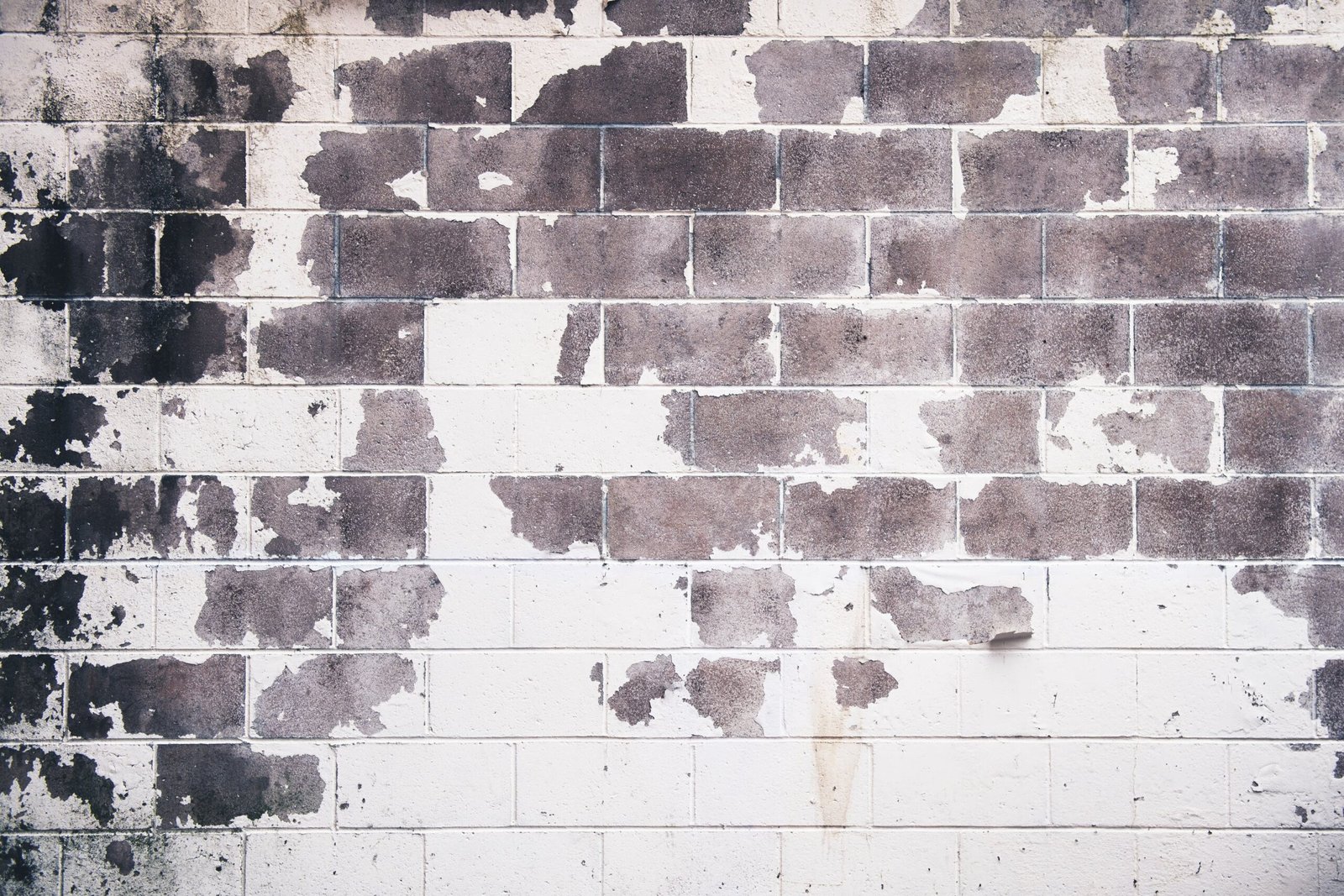
- Previous coatings — old paint, whitewash, or sealer already on the brick changes how new primer and paint will adhere, and may need to be tested or removed in failing areas.
- Mildew and algae — dark or greenish staining, typically on shaded or north-facing walls, that needs to be killed and cleaned rather than painted over.
Surface Preparation for Painting Brick
Preparation is where a brick painting project is won or lost, and it’s a longer process than most homeowners expect.
Pressure washing. Brick should be washed to remove dirt, chalking, mildew, and loose material, but pressure needs to be controlled — brick and older or soft mortar can be damaged by aggressive pressure. A lower-pressure wash with the right cleaning solution and proper dwell time is usually more effective than raw PSI.
Cleaning products. Mild detergents handle general dirt; mildewcide-based cleaners are needed where biological growth is present. Stronger masonry cleaners may be appropriate for heavy efflorescence, but should be used carefully and rinsed thoroughly.
Removing mildew. Mildew must be killed at the source, not just rinsed off the surface, or it returns under the new paint film within a season.
Efflorescence removal. Light efflorescence can often be dry-brushed or washed away; heavier deposits may need a specialized masonry cleaner. Either way, understanding why the moisture is migrating to the surface matters more than removing the visible salt.
Drying time. Brick and mortar hold moisture longer than most exterior surfaces, and Florida’s humidity extends that further. The wall needs to be genuinely dry all the way through, not just dry to the touch, before priming — rushing this step is one of the most common causes of early coating failure on brick.
Masking and protection. Windows, trim, light fixtures, and landscaping all need to be protected before washing and painting begins.
Protecting landscaping. Cleaning solutions and overspray can damage plants and grass near the foundation; covering and rinsing landscaping is part of a professional prep sequence, not an afterthought.
Repairing mortar joints. Deteriorated mortar should be repointed — cut out and replaced — before painting, not simply coated over.
Caulking. Gaps where brick meets trim, windows, or dissimilar materials should be caulked to keep water from getting behind the wall system.
Priming. Nearly every brick painting project needs a dedicated masonry primer, covered in detail below.
Best Primers for Exterior Brick
Brick is alkaline and porous, and ordinary paint doesn’t always bond to it well or block that alkalinity from affecting the finish coat. This is why primer selection matters more on brick than on almost any other exterior surface.
| Primer | Best Used For | Why |
|---|---|---|
| Sherwin-Williams® Loxon® Conditioner | Chalky, powdery, or heavily porous brick | Penetrates and binds a chalky surface so the primer and topcoat above it have something solid to grip, rather than bonding to loose material. |
| Sherwin-Williams® Loxon® Masonry Primer | Sound, previously unpainted or previously painted brick in good condition | Formulated to bond to masonry and block alkalinity, giving the finish coats a stable, uniform surface across old and new material alike. |
| Block filler | Brick or mortar with large pores, pitting, or surface irregularities | Fills larger voids and pores before priming, so the finish coat doesn’t have to bridge gaps it wasn’t designed to fill. |
The honest answer for which primer to use is: it depends on the brick’s actual condition, which is why an on-site evaluation matters more than a generic recommendation. Chalky brick needs conditioning first. Sound brick needs standard masonry primer. Heavily pitted or gapped brick needs block filler before either.
Best Paint Systems for Exterior Brick in Florida
Brick needs to breathe. A coating that seals it too tightly can trap moisture vapor migrating from inside the wall, leading to blistering and peeling later. That’s why acrylic latex is the standard recommendation for brick in most conditions — it offers strong color retention, weather protection, and mildew resistance while remaining permeable enough to let the wall breathe.
| Product | Type | Florida Performance Notes |
|---|---|---|
| Sherwin-Williams® Emerald® Rain Refresh™ | Premium 100% acrylic | Strong dirt- and rain-shedding performance suited to Florida’s frequent rain and humidity, with good UV resistance for sun-exposed elevations. |
| Sherwin-Williams® Duration® | Premium 100% acrylic | A thicker-build acrylic with strong durability; a solid choice where extra film thickness is wanted on a single-coat-friendly system. |
| Sherwin-Williams® Latitude® | Premium 100% acrylic | Formulated for application in a wider temperature range, useful for scheduling flexibility during Florida’s shoulder seasons. |
| Benjamin Moore® Aura® Exterior | Premium 100% acrylic | Rich color depth and strong fade resistance; a frequent choice where color accuracy on a bold or deep tone matters most. |
What we avoid on brick: elastomeric coatings, despite being popular on stucco, are usually the wrong call on brick specifically. Their thickness and lower permeability run counter to brick’s need to breathe, and can trap moisture vapor rather than allow it to escape. Elastomeric has a place in exterior painting — stucco with extensive hairline cracking being the clearest example — but sound brick isn’t typically it.
Application Methods for Painting Brick
Brick’s rough, irregular texture makes application method matter more than it does on a flat surface like trim or siding.
Brush. Best for cut-in work around windows, trim, and edges, and for working paint into deep mortar joints.
Roll. A thick-nap roller can work paint into brick’s texture reasonably well on its own, though it can miss deep mortar recesses.
Spray. Delivers fast, even coverage across large brick elevations and gets into texture that rolling alone can miss.
Back rolling. Spraying followed by back-rolling — working the sprayed coating into the surface with a roller — combines the speed of spray application with the texture penetration of rolling, and is the standard approach on textured masonry like brick.
Film build and mil thickness. Manufacturers specify a minimum and maximum wet and dry film thickness for a reason: too thin, and the coating won’t reach its rated durability or coverage; too thick, and it can crack or fail to cure properly. Two full coats, applied at the manufacturer’s recommended spread rate, is the standard that gets a brick exterior to its expected lifespan.
Brick Colors That Work Best
Color choice on brick is partly aesthetic and partly practical — Florida sun and heat both play a role.
White remains the most requested brick color nationally and in Jacksonville specifically. It reads clean and modern, pairs with almost any trim and roof color, and works across traditional and contemporary homes alike.
Greige and warm neutrals soften the stark contrast of pure white while still feeling current, and tend to hide dirt and pollen — a real consideration under Florida’s oak canopies — better than bright white.
Taupe works particularly well on homes with warm-toned roofing or stone accents, bridging brick and other exterior materials into one cohesive palette.
Black has become popular for modern farmhouse and contemporary styles, but deserves a note of caution in Florida: dark colors absorb significantly more heat and UV, which can accelerate fading and puts more stress on the coating over time. A quality acrylic system becomes even more important if you’re set on a deep, saturated color.
Traditional palettes — cream, soft yellow, and muted warm tones — suit historic-style and Colonial-influenced Jacksonville homes without reading as a dramatic departure from the brick’s original character.
Two practical notes apply regardless of color: Florida sunlight reads color more strongly than most climates, pulling out undertones invisible on a small paint chip, so always test large-format samples directly on your brick in morning and afternoon light. And if you’re in an HOA community, confirm the color is approved before you buy paint — see our Exterior Painting Resource Center for more on HOA and ARB color approval across Northeast Florida communities.
Florida Climate Challenges for Painted Brick
Northeast Florida’s climate is genuinely harder on a painted brick exterior than most of the country’s:
Humidity keeps brick and mortar damp longer after rain, extending dry times and feeding the conditions mildew needs to establish.
Heat accelerates UV breakdown of lower-quality coatings and drives the daily thermal expansion and contraction that works mortar joints and caulk lines open over years.
Rain is frequent and often heavy, which is exactly why permeability matters — a coating that can’t let moisture vapor escape traps it instead, leading to blistering.
Salt air near the coast accelerates coating breakdown and corrodes any exposed hardware faster than inland exposure.
UV damage fades color unevenly, hitting south- and west-facing brick walls hardest.
Mildew concentrates on shaded, poorly ventilated elevations and needs to be addressed at the prep stage, not painted over.
A properly specified paint system — the right primer, a breathable premium acrylic, and two full coats applied over genuinely dry, well-prepared brick — is what prevents these conditions from becoming coating failures a few years in.
Common Brick Painting Mistakes
- Skipping primer entirely, assuming a “paint and primer in one” product is equivalent to a dedicated masonry primer on porous, alkaline brick.
- Painting wet or damp masonry, which traps moisture behind the finish coat and sets up early blistering.
- Poor preparation — skipping the wash, mildew treatment, or mortar repair to save time or money.
- Using the wrong paint — reaching for standard exterior house paint instead of a masonry-appropriate acrylic, or choosing elastomeric on brick that doesn’t need it.
- Wrong sheen — high-gloss finishes on brick tend to highlight every surface irregularity rather than the clean, uniform look most homeowners want.
- Ignoring cracks instead of having them evaluated and repaired first.
- Ignoring moisture — painting over a wall with an active water problem instead of solving the source first.
- Painting over a chalky existing coating — previously painted brick can develop a powdery residue as the coating weathers and breaks down. If white or colored powder transfers to your hand when you rub the surface, the existing coating may be chalking and should be evaluated before repainting. Applying new paint over a heavily chalked, unstable surface can compromise adhesion even when premium paint is used. See our guide to exterior paint chalking, including a real Jacksonville project showing the preparation that can be required before repainting.
How Long Does Painted Brick Last?
With proper prep, primer, and a premium acrylic system, painted brick in Northeast Florida typically holds up well for 10 to 15 years before a full repaint is needed, though performance varies by exposure, color, and how well the project was prepared in the first place.
Maintenance schedule. An annual gentle rinse to remove pollen, dirt, and early mildew goes a long way toward extending that lifespan.
Cleaning recommendations. Mild detergent and low pressure are usually sufficient for routine maintenance; aggressive pressure washing on a schedule can wear down the coating faster than the climate alone would.
Touch-up intervals. High-traffic areas near entries, and heavily sun-exposed elevations, are the first places to show wear and the first worth touching up rather than waiting for a full repaint.
Repaint timeline. Watch for changes in the existing coating such as chalking, fading, loss of color consistency, hairline film cracking, or localized adhesion problems. These can be early signs that the coating system is reaching the point where maintenance or repainting should be evaluated. It’s better to address deterioration while the underlying brick and mortar remain in good condition than to wait for widespread coating failure.
Painting Brick Homes Across Jacksonville and Northeast Florida
Brick construction shows up differently across the communities we serve, and each has its own considerations:
Jacksonville has a wide mix of brick ages and styles, from mid-century ranch homes to newer brick-accented construction, each with different prep needs based on age and prior coatings.
Ponte Vedra Beach and other coastal communities add salt air exposure on top of Florida’s standard humidity and UV load, which pushes us toward the most durable acrylic systems available.
Nocatee and St. Johns County master-planned communities frequently have HOA and ARB requirements on brick color and finish that need to be confirmed before any paint is purchased.
Mandarin and other mature, tree-canopied neighborhoods see more shade-driven mildew on brick than sun-exposed communities, which changes the prep priorities.
Orange Park and Fleming Island have a strong stock of older brick homes where mortar condition and prior coatings need careful evaluation before painting.
Amelia Island combines coastal salt exposure with historic-district considerations in some areas, making the “should you paint it at all” question especially worth asking first.
Across all of these, the common thread is the same: Florida’s humidity, heat, and rain make preparation and product selection matter more here than in a milder climate, and skipping either is where brick painting projects go wrong.
Frequently Asked Questions
Can you paint brick that has never been painted before?
Yes, and it’s the most common starting point. Unpainted brick generally needs a full wash, repair of any mortar or crack issues, and a masonry primer before the first coat of paint.
Is painting brick permanent?
For practical purposes, yes. Removing paint from brick is difficult, costly, and rarely restores the original look completely, so the decision should be treated as permanent.
Do I need to prime brick before painting?
In nearly all cases, yes. Brick’s porosity and alkalinity make a masonry-specific primer essential for adhesion and even coverage.
What’s the best paint finish for brick?
A flat or low-sheen finish generally looks best on brick, since higher sheens tend to highlight surface texture and irregularities rather than smoothing them out.
Can painted brick be pressure washed?
Yes, but at a controlled pressure and with a cleaner appropriate to painted masonry, since excessive pressure can wear down the coating.
How long does it take to paint a brick home exterior?
Most brick exteriors take several days from washing through final coat, depending on home size, brick condition, and how much repair work is needed.
Does painting brick affect resale value?
It can help or hurt depending on the market and execution — a well-done, tastefully colored repaint often reads as updated, while a poorly prepped job can do the opposite.
Can you paint over mildew on brick?
No. Mildew needs to be killed and cleaned first, or it will continue growing beneath the new paint film.
What causes efflorescence on brick?
Moisture moving through the brick or mortar carries mineral salts to the surface, where they’re left behind as the water evaporates.
Should efflorescence be removed before painting?
Yes, and ideally the underlying moisture source should be understood, since heavy or recurring efflorescence points to ongoing water movement.
Can cracked mortar be repaired before painting?
Yes, and it should be. Deteriorated mortar joints are repointed with fresh mortar before any priming or painting begins.
Is elastomeric paint good for brick?
Generally not recommended. Brick needs to breathe, and elastomeric’s thickness and lower permeability can trap moisture vapor rather than let it escape.
What’s the difference between latex and acrylic paint?
In practice, most modern “latex” exterior paints are acrylic latex — a water-based formula built on acrylic resin, which is what’s typically recommended for brick.
Can dark colors damage painted brick?
Not directly, but dark colors absorb more heat and UV, which accelerates fading and puts more stress on the coating over time.
Do I need HOA approval to paint brick in Jacksonville?
In many master-planned communities, yes. Confirm your HOA or ARB’s requirements on brick color and finish before purchasing paint.
Can you paint brick that has spalling or flaking?
Spalling brick should be repaired or replaced rather than painted over, since the underlying material is already failing.
How many coats of paint does brick need?
Two full coats is the standard for proper coverage, color consistency, and durability.
Can brick be painted in humid weather?
It’s best avoided. The brick needs to be genuinely dry, not just dry to the touch, before priming and painting.
What’s the best time of year to paint brick in Florida?
Drier stretches of the year make it easier to get brick fully dry before painting, though a professional crew can plan around Florida’s rain patterns at almost any time of year.
Can you change the color of already-painted brick?
Yes, following the same preparation principles — washing, repair, and appropriate priming, especially for a dramatic color change.
Does painted brick need to be resealed?
A quality exterior acrylic coating provides its own protective film; a separate sealant generally isn’t necessary if the coating system is applied correctly.
Can I paint brick myself?
It’s possible for a small, sound section, but full-home brick painting involves inspection, repair, correct primer selection, and application methods that are easy to get wrong on a first attempt.
Why does painted brick sometimes peel?
Peeling on brick almost always traces back to moisture — either the brick wasn’t fully dry when painted, or an underlying moisture source was never addressed.
Is white still the most popular brick color?
Yes, white remains the most requested exterior brick color both nationally and across Jacksonville, though warm neutrals and greige are close behind.
Can brick veneer be painted the same way as solid brick?
Generally yes — brick veneer is still masonry and follows the same prep, primer, and paint principles as solid brick construction.
What’s the biggest factor in how long painted brick lasts?
Preparation. A quality paint system applied over poorly prepped, damp, or unrepaired brick will fail long before its rated lifespan, regardless of the product.
Why Jacksonville Homeowners Trust A New Leaf Painting with Their Brick Exteriors
A New Leaf Painting Contractors has served Northeast Florida since 2001, and brick is one of the substrates we’re asked about most often — precisely because the decision is permanent and homeowners want to get it right the first time. We start with a real inspection, not a guess: checking mortar condition, moisture signs, prior coatings, and the brick’s actual porosity before recommending a primer or paint system, rather than applying the same approach to every home.
That approach has earned us 750+ verified five-star reviews from homeowners across Duval, St. Johns, and Clay counties, and it’s backed by our Iron-Clad Guarantee and workmanship warranty. We’re insured, EPA Lead-Safe Certified, and hold a Duval County Certificate of Competency — and every brick painting project uses premium Sherwin-Williams® or Benjamin Moore® systems selected for how your specific brick and exposure actually perform, not a one-size-fits-all recommendation.
If your project needs more than paint — mortar repair, moisture correction, or trim and fascia work around the brick — we handle that too. See our exterior painting services, wood rot and carpentry repair, drywall repair, and cabinet painting and refinishing for related work, or browse our full painting blog for more Northeast Florida homeowner guides. For a broader look at exterior painting products, prep standards, and Florida climate factors, see our Exterior Painting Resource Center.
Related Painting Resouces
Explore Our Services
Ready to Talk About Your Brick Exterior?
Whether you’re deciding if painting your brick is the right move or you’re ready for a written estimate, we’re glad to walk your home with you and give you a straight answer. Contact A New Leaf Painting or call 904-615-6599 for a free estimate.