Texture Changes Everything About a Great Paint Finish
Textured walls are everywhere in Jacksonville homes — especially knockdown, orange peel, and other drywall finishes used throughout Northeast Florida to add depth and help disguise minor surface imperfections. They can look great, but they also make repainting more challenging than many homeowners expect. Paint has to reach both the raised texture and the recessed areas between it, and skipped preparation, thin or uneven coverage, or a mismatched drywall repair can become surprisingly noticeable once the wall dries.
Our interior painters in Jacksonville, FL approach textured walls with careful surface preparation, the appropriate primer when needed, the right roller nap and application method, thorough protection of floors and furnishings, and consistent coverage across the entire surface. Texture repairs require additional attention because matching the surrounding pattern is just as important as matching the paint color and sheen.
After more than 25 years of interior painting in Jacksonville, FL, we’ve learned that textured-wall problems often become most noticeable after the painting starts. Previous drywall patches, inconsistent texture, porous repairs, stains, poor touch-ups, and differences in sheen can all become more visible under a fresh finish—especially when natural light hits the wall from the side.
Whether you’re repainting one room, repairing drywall, changing colors, or refreshing your entire interior, this guide explains what homeowners should know before painting textured walls, how proper preparation and application affect the finished appearance, and where the job can become difficult enough that professional help makes sense.
For more Jacksonville homeowner guides covering textured walls, drywall repairs, surface preparation, primers, paint sheen, touch-ups, builder-grade coatings, washable finishes, and paint selection, visit our Interior Painting Resource Center.
Why Textured Walls Are Harder to Paint
A flat wall is one plane. A textured wall is hundreds of tiny peaks and valleys, which changes everything about how paint behaves:
- More surface area. All those ridges and grooves mean more square footage than a smooth wall of the same size — so it drinks more paint and takes longer to coat.
- Paint has to reach the low spots. Roll too fast or too dry and the recessed areas between the texture stay thin or bare, leaving a patchy, see-through finish.
- Texture traps dust. Every groove collects dust and cobwebs that smooth walls shed. Skip the cleaning step and you’re painting over grit, which kills adhesion.
- Touchups don’t blend. On a flat wall you can dab a small repair. On texture, a touchup almost always flashes — it catches light differently than the surrounding wall, so the “fix” stands out more than what you were covering.
- Light is unforgiving. Florida’s bright natural light rakes across textured walls and highlights every thin spot, lap mark, and missed groove. What looked fine while wet can look blotchy by afternoon.
None of this means you can’t paint textured walls well — it just means the prep and technique matter more than they do on a smooth surface.
Common Wall Textures in Jacksonville Homes
Knowing which texture you’re dealing with tells you how to prep it, what roller to use, and how hard any repairs will be to match.
Knockdown Texture
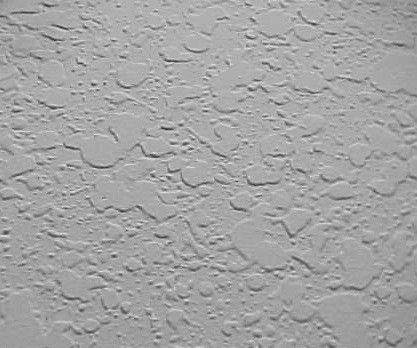
The most common texture in Jacksonville and Northeast Florida homes. Drywall mud is sprayed on, left to set briefly, then “knocked down” with a wide blade to flatten the peaks into a mottled, stucco-like pattern. It’s durable and forgiving — but it’s also the texture most likely to show a poorly matched drywall patch, because the random pattern is hard to replicate by hand.
Orange Peel Texture
A finer, bumpy finish that looks like the skin of an orange. It’s subtle, sprays on relatively evenly, and hides small wall flaws well. Orange peel takes paint nicely but still needs enough nap on the roller to reach into the dimples.
Skip Trowel Texture
A hand-applied texture with a flatter, more artisan look — broad, irregular patches of mud spread with a curved trowel. It’s more decorative and more common on accent walls and higher-end interiors. Because it’s applied by hand, matching it after a repair is genuinely a skill, not a quick fix.
Popcorn and Ceiling-to-Wall Transitions
Many older Jacksonville homes still have popcorn (acoustic) texture on ceilings that meets smoother or differently textured walls. Repainting around these transitions takes a careful cut line, and if you’re removing popcorn, that’s its own project that affects how the adjoining walls get finished.
How to Prepare Textured Walls Before Painting
This is the step that separates a finish that looks finished from one that looks rushed. On textured walls, prep is most of the job.
- Remove the dust first. Vacuum the walls with a brush attachment, or use a duster, working corner to corner. Don’t skip the baseboards and the area around door and window frames, where dust packs into the texture.
- Treat mold and stains. Florida’s humidity means interior mold and water stains aren’t rare. Clean affected areas with an appropriate cleaner, and lightly sand spots where mold worked into earlier paint layers so the new coat has a sound surface.
- Repair the damage. Fill nail pops, dents, cracks, and gouges, and patch any damaged drywall before you think about color. (More on matching the texture below — it’s the part most DIY jobs get wrong.)
- Sand carefully — don’t flatten the texture. The goal is to knock down rough repair edges and mold spots, not to smooth out the wall’s character. Over-sanding leaves bald patches that telegraph straight through the topcoat.
- Prime the repairs. Patched and sanded areas absorb paint differently than the rest of the wall. A spot of primer over repairs evens out absorption so those areas don’t flash once painted.
- Protect everything. Tape off baseboards, outlets, switches, and trim, and cover floors and furniture. Textured-wall painting throws more spatter than smooth-wall work, so protection matters more, not less.
Best Paint Roller for Textured Walls
The roller is the single biggest tool decision on a textured wall, because nap length determines whether paint actually reaches the low spots.
- 1/2-inch nap for light texture like orange peel — enough to reach the dimples without overloading the surface.
- 3/4-inch nap for heavier texture like knockdown or skip trowel — the longer fibers push paint into the deeper valleys.
- Woven or microfiber covers hold and release paint more evenly than cheap covers and shed far less lint into your finish.
- A quality brush for cutting in edges, corners, and around trim, where a roller can’t reach cleanly.
- Back-rolling — going back over freshly applied paint with the roller — drives paint into the texture for even coverage and is the secret to avoiding thin spots.
Using too short a nap is the most common DIY mistake on textured walls: it lays paint on the peaks and leaves the valleys starved, so the wall looks patchy the moment the light hits it.
Should You Spray or Roll Textured Walls?
Both work, and the right answer depends on your situation more than on which is “better.”
Spraying is faster and lays paint into the texture without the physical effort of back-rolling — but it demands serious masking, because overspray travels. Done right, it produces a beautifully even finish; done in an occupied home without proper containment, it’s a mess.
Rolling (with back-rolling) is slower but far more controllable in a lived-in home. You’re not coating the whole room in fine mist, and you can work room by room around a family’s schedule.
In practice, professional crews often spray and back-roll — spraying for speed and coverage, then immediately back-rolling to push paint into the texture and even out the finish — after masking the entire space. For most homeowners painting an occupied home themselves, careful rolling is the more forgiving route.
Best Paint Finish for Textured Walls
Sheen changes how much your texture — and any imperfections — show under light.
- Flat hides imperfections best and softens how texture reads, which is why it’s a popular choice for textured walls and ceilings. The tradeoff is it’s the hardest to clean.
- Matte gives a similar low-glare look with a bit more washability — a good middle ground for living spaces.
- Eggshell is the everyday choice for most living areas: subtle warmth, reasonably washable.
- Satin is more durable and wipeable but reflects more light, which can emphasize texture and any flaws — so it shows the wall’s character more than flat does.
- Kitchens and bathrooms usually want a more washable, moisture-tolerant finish, which matters in Florida’s humidity.
The higher the sheen, the more honest the wall — glossier finishes reward good prep and punish bad prep.
Texture Matching After Drywall Repair
This is where most repaint jobs quietly fail, and where experience genuinely shows.
Drywall repair is only half the work. You can patch a hole perfectly flat, but if the texture over that patch doesn’t match the surrounding knockdown, orange peel, or skip trowel, the repair will still stand out after painting — a smooth island in a textured sea, catching light from across the room. Paint doesn’t hide a texture mismatch; it highlights it.
Matching texture means reading the existing pattern and recreating it — the right mud consistency, the right spray or hand technique, the right knockdown timing — so the repaired area disappears into the wall. It’s a skill that takes practice, and it’s the difference between a repair you can find and one you can’t. Our drywall repair and texture matching work is built around making the patch invisible before a drop of paint goes on.
When to Hire Professional Interior Painters
Plenty of textured-wall jobs are doable for a patient DIYer. Others are worth handing off — not because you can’t, but because the cost of getting it wrong on textured walls is high and hard to undo. It’s usually worth calling a pro when you’re dealing with:
- Tall or open-plan walls where lap marks and thin spots are hard to avoid and very visible.
- Heavy texture that’s difficult to coat evenly by hand.
- Drywall repairs that need texture matching — the patch-and-blend step that DIY jobs most often botch.
- A previous paint job gone wrong — flashing, lap marks, or coverage you’re trying to correct.
- Color or sheen changes that demand full, even coats with no show-through.
- An occupied home that needs careful protection, containment, and a crew working around your schedule.
If a few of these describe your project, the prep and technique add up fast — and a smooth, even result from every angle is exactly what professional interior painters near you are practiced at delivering.
Painters Near Me in Jacksonville, FL
A New Leaf Painting Contractors is also your local resource for painters near me in Jacksonville, interior painters near me, exterior painters near me, residential painters near me, professional painters near me, and painting contractors near me throughout Northeast Florida.
Our team shows up when scheduled, communicates clearly throughout the project, and cleans up thoroughly at the end of each day.
- Painters near me in Ponte Vedra Beach
- Painters near me in Atlantic Beach
- Painters near me in Orange Park
- Painters near me in Fleming Island
- Painters near me in St. Augustine
Professional Interior Painting in Jacksonville, FL
Painting textured walls takes patience, proper prep, and the right tools. If your walls need drywall repair, texture matching, primer, color changes, or simply a cleaner professional finish, A New Leaf Painting can help. We provide interior painting in Jacksonville, FL, drywall repair and texture matching, wall prep, trim painting, color consultation, and full-room repaints throughout Jacksonville and Northeast Florida.
Our Jacksonville interior house painters protect your home, prepare the surfaces properly, and deliver smooth, even results that look finished from every angle. Call (904) 615-6599 or request a free estimate today.