
Everything You Need to Know About Residential Stucco Painting in Nocatee
Drive through almost any village in Nocatee and you’ll see the same exterior over and over: stucco, in soft whites, warm neutrals, and coastal grays. It’s the defining material of the community, and if you own a home here, there’s a very good chance your exterior is stucco over block or frame. Whatever your home needs, our residential painting services cover it — but stucco is a category all its own, and if you’re specifically looking for painters in Nocatee, FL, this guide is written for you.
Here’s the part that catches homeowners off guard. Nocatee started taking shape in the mid-2000s, and much of the earliest construction is now 15 to 20 years old — right at the age when builder-grade exterior paint reaches the end of its life. If your home is fading, chalking, or showing hairline cracks, you’re not doing anything wrong. You’re on schedule.
This guide is written specifically for Nocatee stucco, by a contractor who paints these homes. It covers how long stucco paint really lasts here, the prep that separates a lasting job from a callback, crack repair, product choices, colors that pass ARC review, and the questions that protect you when you’re comparing bids. A New Leaf Painting Contractors has served Northeast Florida since 2001, and stucco is a large part of what we do.
Why Stucco Homes Are So Common in Nocatee
Stucco dominates Nocatee for reasons that go beyond looks. As a master-planned community built in a Florida coastal climate, it favors an exterior that suits the architecture and the environment at once.
Cement stucco reflects heat rather than absorbing it, which matters under our sun. It stands up well to storm conditions, holds the clean Mediterranean and coastal lines the community is known for, and asks relatively little in the way of upkeep. You’ll also find some EIFS (a synthetic, foam-backed stucco) on certain homes, which looks similar but behaves differently and needs its own care.
The one word that gets homeowners into trouble is “maintenance-free.” Stucco is low-maintenance, not maintenance-free. The paint film on top is your home’s actual weather barrier, and that film wears out on a schedule. Keeping it renewed is what keeps the stucco underneath sound. Learn more about our exterior painting services in Jacksonville and the full range of our residential painting services.
How Long Does Residential Stucco Paint Last in Nocatee?
There’s no single number, because “stucco paint” covers a wide range of quality. As a general guide for our climate:
- Builder-grade paint: often 5 to 8 years before it fades and chalks noticeably. Many original Nocatee homes are past this now.
- Premium 100% acrylic systems: commonly 8 to 12 years when properly applied over good prep.
- Elastomeric systems: can last 10 to 15 years or more on suitable surfaces, because of their thickness and flexibility.
Those ranges swing based on real conditions on your specific home. UV exposure is the biggest driver, which is why south- and west-facing walls almost always fade first. Rain and humidity feed mildew on shaded elevations. Mature trees drop debris and hold moisture against walls. Sprinklers that hit the stucco daily are quietly one of the most damaging things a home can face, leaving mineral staining and constant saturation. And homes closer to the Intracoastal and the coast get an extra dose of salt air.
The practical takeaway: two identical Nocatee homes can need repainting years apart depending on orientation, landscaping, and irrigation. If yours is showing the signs below, it’s worth an evaluation regardless of the calendar.
Signs Your Nocatee Stucco Home Needs Painting
Stucco tells you when it’s ready. Watch for:
- Fading — especially uneven fading where sunny elevations look lighter than shaded ones.
- Chalking — a powdery residue on your hand when you rub the wall. It means the coating is breaking down.
- Hairline cracks — thin shrinkage and settlement cracks spreading across the surface.
- Larger cracks — anything you can fit a fingernail into deserves attention before painting.
- Peeling or flaking — a sign of adhesion failure, often tied to moisture or poor prior prep.
- Failed caulk — gaps opening around windows, doors, and penetrations.
- Mildew — dark green or black staining, usually on north-facing and shaded walls.
- Water stains — discoloration that hints at moisture moving through or behind the stucco.
- Visible old repairs — patches that never matched the texture or color and now stand out.
One or two of these means it’s time to plan. Several together means the exterior is overdue, and waiting mainly adds repair scope.
Common Stucco Problems We See in Nocatee Homes
After years of estimating exteriors in this community, the same handful of issues come up again and again — and they’re specific enough to Nocatee that they’re worth naming.
Hairline shrinkage cracks are almost universal on homes of this age. Stucco cures and settles, and fine cracks are the normal result. They’re not alarming, but they do need to be addressed before painting rather than coated over.
Fading on south- and west-facing elevations is the most common cosmetic complaint. It’s why a home can look fine from the street but noticeably washed out on the side that takes the afternoon sun.
Mildew on shaded sides shows up where walls stay damp — north elevations, spots tucked behind landscaping, and areas with poor airflow between closely spaced homes. It has to be killed and cleaned, not simply painted over.
Sprinkler overspray is a big one here. Irrigation heads that strike the wall leave mineral deposits, feed mildew, and keep the lower stucco perpetually wet. We frequently recommend adjusting heads as part of the project, because otherwise fresh paint faces the same assault.
Failed caulk around windows and penetrations is the entry point for most moisture problems. Once those joints open, water gets behind the system, and that’s where peeling and staining begin.
The Biggest Mistake Homeowners Make
The single most expensive mistake in stucco painting is painting over damaged stucco. Paint is a finish coating, not a repair material, and it cannot fix what’s underneath it.
When cracks, moisture, failed prior repairs, or ongoing movement get coated over instead of corrected, the paint may look fine for a season — then the cracks telegraph back through, the patches reappear, and the moisture keeps working behind the film. You end up paying twice: once for the paint that failed, and again for the repair that should have happened first.
Skipping prep to hit a lower price is the same mistake in a different form. It’s why two stucco bids on the same Nocatee home can be thousands apart. Paint doesn’t fix stucco. Preparation and repair do, and the coating protects the result.
Residential Stucco Surface Preparation
Preparation is where a stucco job is won or lost, and on stucco specifically it’s the majority of the labor. A thorough prep sequence looks like this:
- Washing to remove dirt, chalk, salt residue, and surface contaminants so the coating can bond.
- Mildew treatment to kill growth rather than trap it under fresh paint.
- Chalk removal until the surface is sound, since paint won’t adhere to a powdery layer.
- Scraping and sanding any loose or failed coating and feathering the edges.
- Grinding out cracks where needed so repairs can key into solid material.
- Crack and stucco repair, matching texture so patches disappear rather than stand out.
- Caulking failed joints around windows, doors, and penetrations.
- Priming repairs and bare or weathered stucco with a masonry-appropriate primer.
- Masking and protection for windows, landscaping, pavers, walkways, and fixtures.
On stucco, an important nuance is washing pressure. Aggressive pressure can drive water into the wall and blast out sound material along with the failed stucco, so cleaning should match the surface — sometimes a lower-pressure wash with the right solution and dwell time does more good than brute force. And the wall has to be genuinely dry before coating, which in our humidity takes longer than it looks. See our pressure washing and stucco repair services for how we handle each step.
Should You Repair Stucco Before Painting?
Yes, always — and it’s worth understanding what “repair” covers, because not all cracks are equal.
Hairline shrinkage cracks are cosmetic and routine, and the right coating helps bridge them. Settlement cracks come from the home settling over time and need proper filling. Expansion cracks reflect ongoing movement and require flexible treatment so they don’t simply reopen. Missing or loose stucco has to be rebuilt, not painted, and any sign of water intrusion needs to be traced and addressed before a coating seals it in.
Two details separate good stucco repair from bad. First, texture matching — a smooth patch on a textured wall is as visible as the crack it replaced. Second, cure time. Fresh stucco repairs and patching compounds need to cure before paint goes over them, or the coating can fail at exactly the spots you just fixed. A contractor rushing to paint over same-day repairs is setting up a callback.
Choosing the Right Paint for Residential Stucco
The two main choices for Nocatee stucco are 100% acrylic and elastomeric, and neither is universally “better.” They solve different problems.
100% acrylic masonry paints (such as Sherwin-Williams® Duration and Emerald, or Benjamin Moore® Aura and Regal Select in appropriate lines) offer excellent color retention, strong durability, and good breathability. That last point matters: stucco needs to let moisture vapor escape, and quality acrylics breathe well while still resisting weather. For sound stucco in good condition, a premium acrylic system is often the right call.
Elastomeric coatings are thicker and highly flexible, forming a membrane that bridges hairline cracks and moves with the wall. On homes with a lot of fine cracking, elastomeric can be the better system. The tradeoffs: it’s a heavier build that must be applied correctly, and because it’s less breathable than acrylic, it’s the wrong choice where moisture needs to escape or where a wall has an active water problem that hasn’t been solved. Applied over trapped moisture, elastomeric can blister.
The honest answer is that the right product depends on your home’s condition, which is exactly what an on-site evaluation determines. Anyone who quotes elastomeric sight-unseen as automatically superior is selling a product, not solving your problem. Our dedicated stucco painting page goes deeper into how we match the coating system to the wall.
Should You Use Loxon XP?
For bare, weathered, or repaired stucco, a masonry primer like Sherwin-Williams® Loxon XP is frequently the right foundation, and it’s worth knowing why.
Masonry primers are formulated to bond to stucco and block the alkalinity that can attack ordinary coatings on cement surfaces. On new stucco, previously unpainted stucco, weathered surfaces where the old coating has broken down, and fresh repairs, that primer coat dramatically improves adhesion and uniformity — giving the finish coats a stable, consistent surface to grip.
This is the thinking behind a hybrid approach: a masonry primer where the surface calls for it, followed by a premium acrylic or elastomeric finish suited to the home. It’s the same philosophy behind our Exterior Shield System and Florida-Hardened Specification — match the coating build to what the wall actually needs rather than applying one product everywhere and hoping.
The Residential Stucco Painting Process
Here’s what a professional stucco project looks like from start to finish:
- Estimate and walkaround — inspecting elevations, cracks, caulk, and problem areas up close, not from the driveway.
- Protection — masking and covering windows, landscaping, pavers, and fixtures.
- Washing and prep — cleaning, mildew treatment, and chalk removal.
- Repairs — crack repair, stucco patching, and texture matching, with cure time respected.
- Caulking — sealing joints around windows, doors, and penetrations.
- Priming — masonry primer on repairs, bare, and weathered areas.
- Application — spraying for even coverage, back-rolling to work the coating into the texture, and brushwork for detail and cut lines.
- Inspection — checking coverage and finish across every elevation.
- Cleanup and final walkthrough — walking the finished home with you before we call it done.
The spray-and-back-roll step is worth calling out. Spraying alone lays coating on the surface; back-rolling drives it into the stucco texture for better adhesion and a more uniform finish. On stucco, that combination matters.
Residential Stucco Colors That Look Great in Nocatee
Nocatee’s palette leans coastal and clean, and the colors that consistently look right on stucco here include crisp and warm whites, greige, coastal and blue-grays, light beige, and soft sage. These read beautifully in Florida light and tend to align with the community’s aesthetic.
Two rules save homeowners from expensive regret. First, sunlight changes everything — Florida sun reads color stronger and can pull out undertones that were invisible on a small chip, so a “neutral” gray can go blue or green across a full wall. Always look at large-format samples on your actual elevations, in both morning and afternoon light. Second, coordinate the body, trim, and door colors together rather than picking them in isolation. Our complimentary color consultation brings large samples to your home so you see real color at real scale before you commit.
HOA and ARC Considerations in Nocatee
This is the step that surprises first-time repainters in Nocatee: you generally can’t just pick a color and start. Exterior colors typically require Architectural Review Committee (ARC) approval before any work begins.
That means the body color, trim, and door colors usually need to be submitted and approved, and approval takes time — often a few weeks depending on the review cycle. Build that waiting period into your timeline so it doesn’t stall the project once you’re ready to paint. It’s smart to confirm your community’s current approved palette and submission process early, ideally while you’re still choosing colors, so approval runs in parallel rather than becoming a bottleneck. Our Jacksonville HOA directory can help you find your community’s management and ARB contact, and we’re glad to help you plan the project around the ARC timeline.
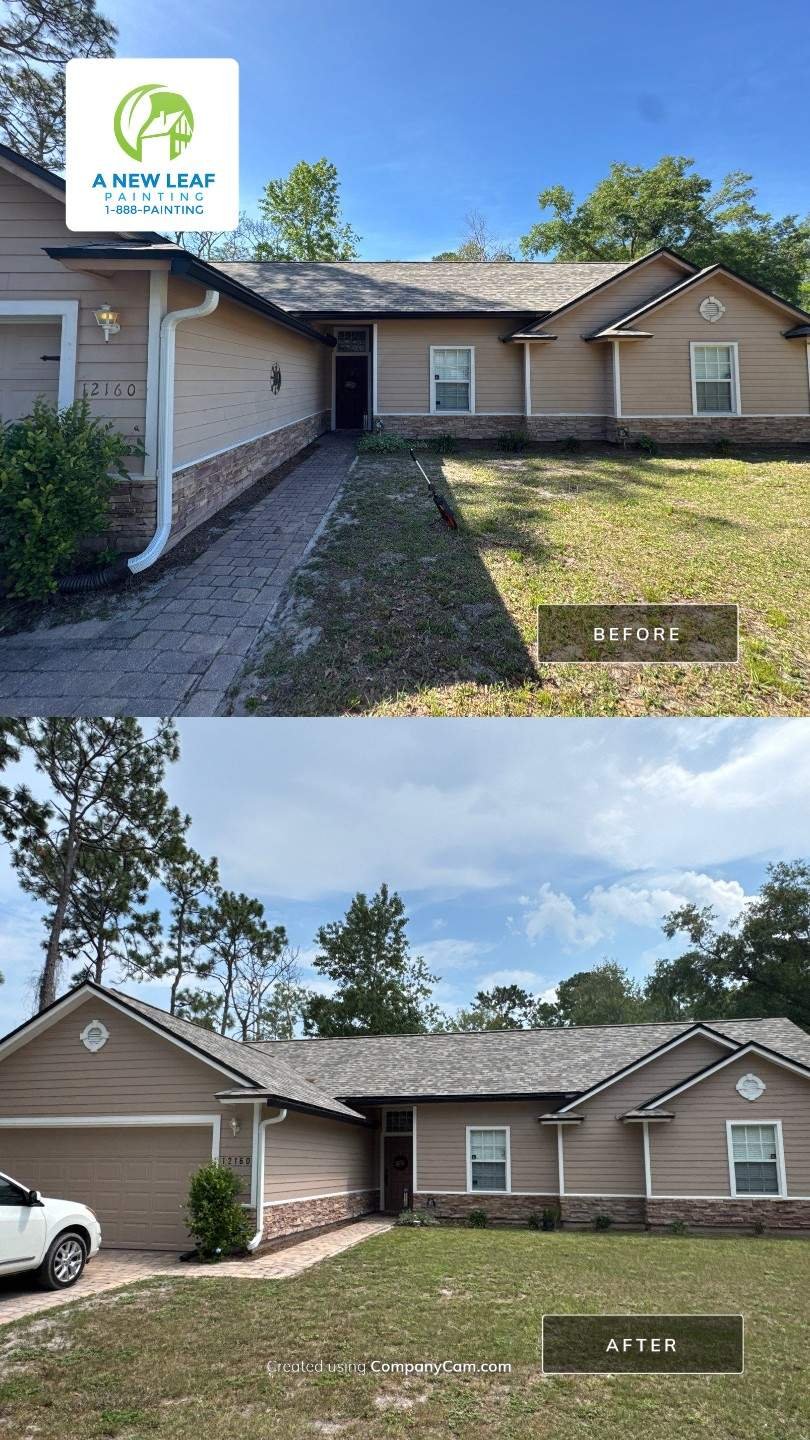
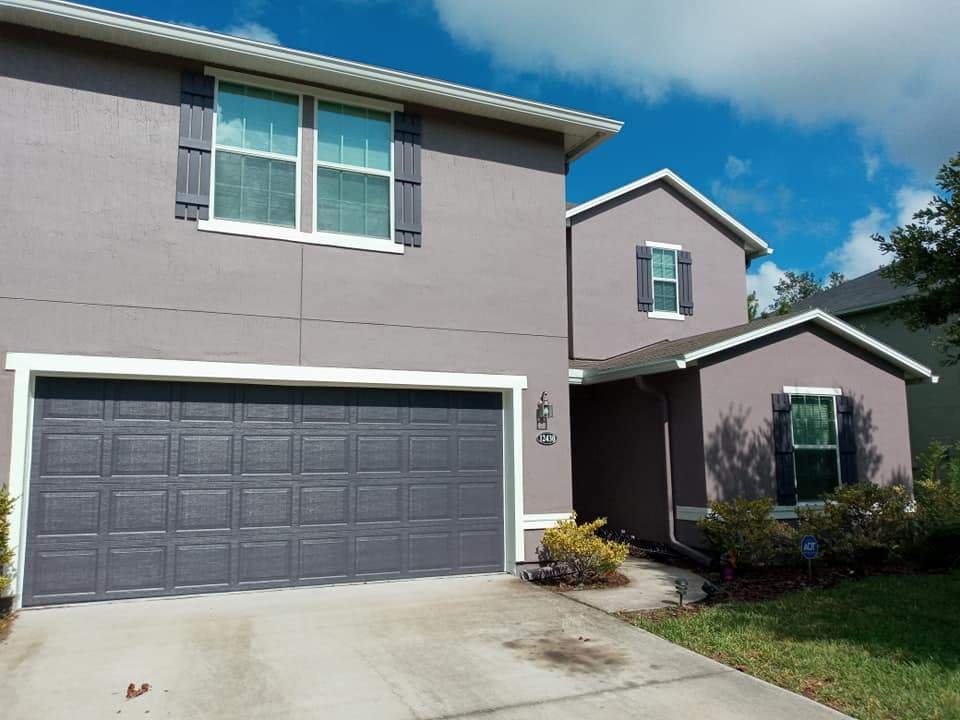
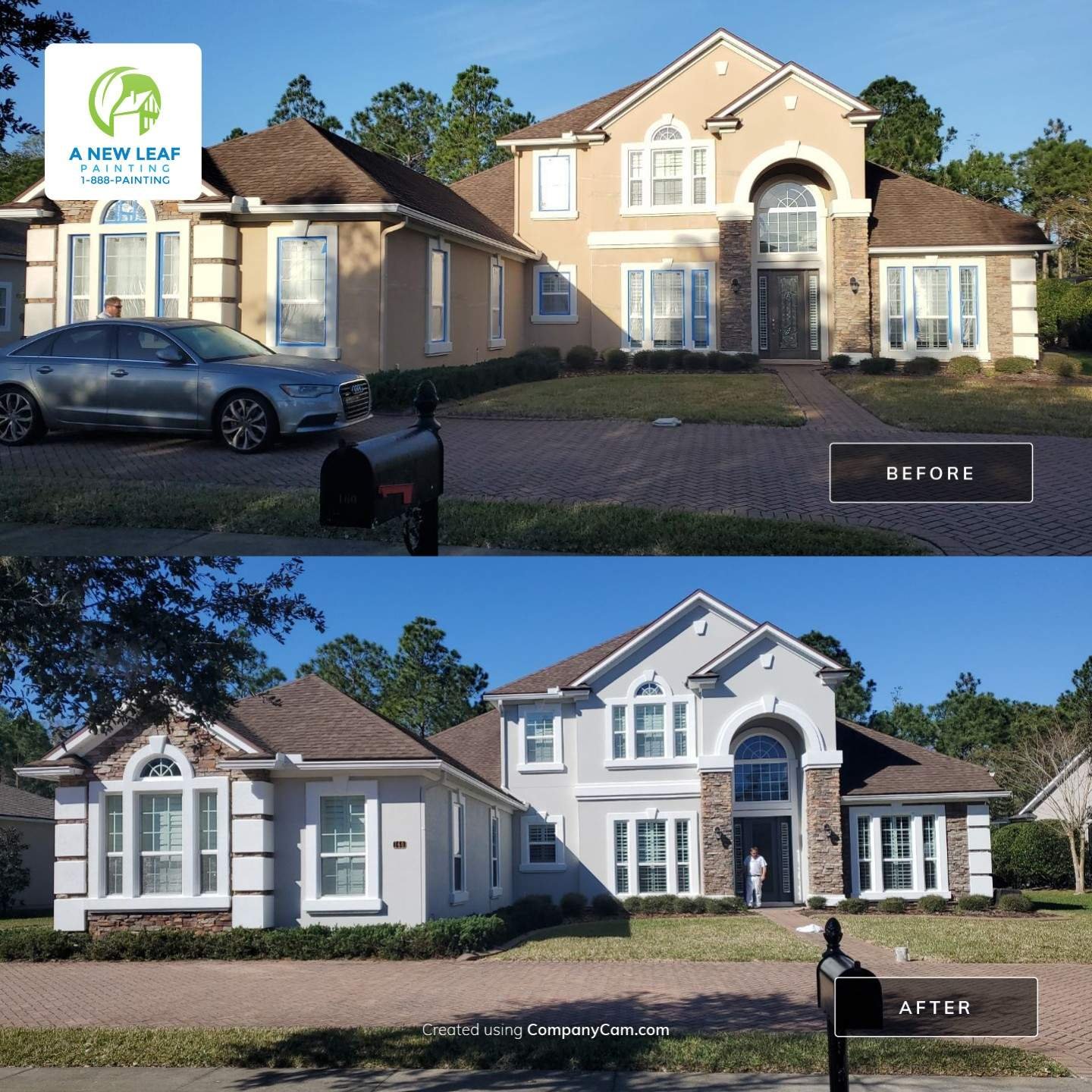
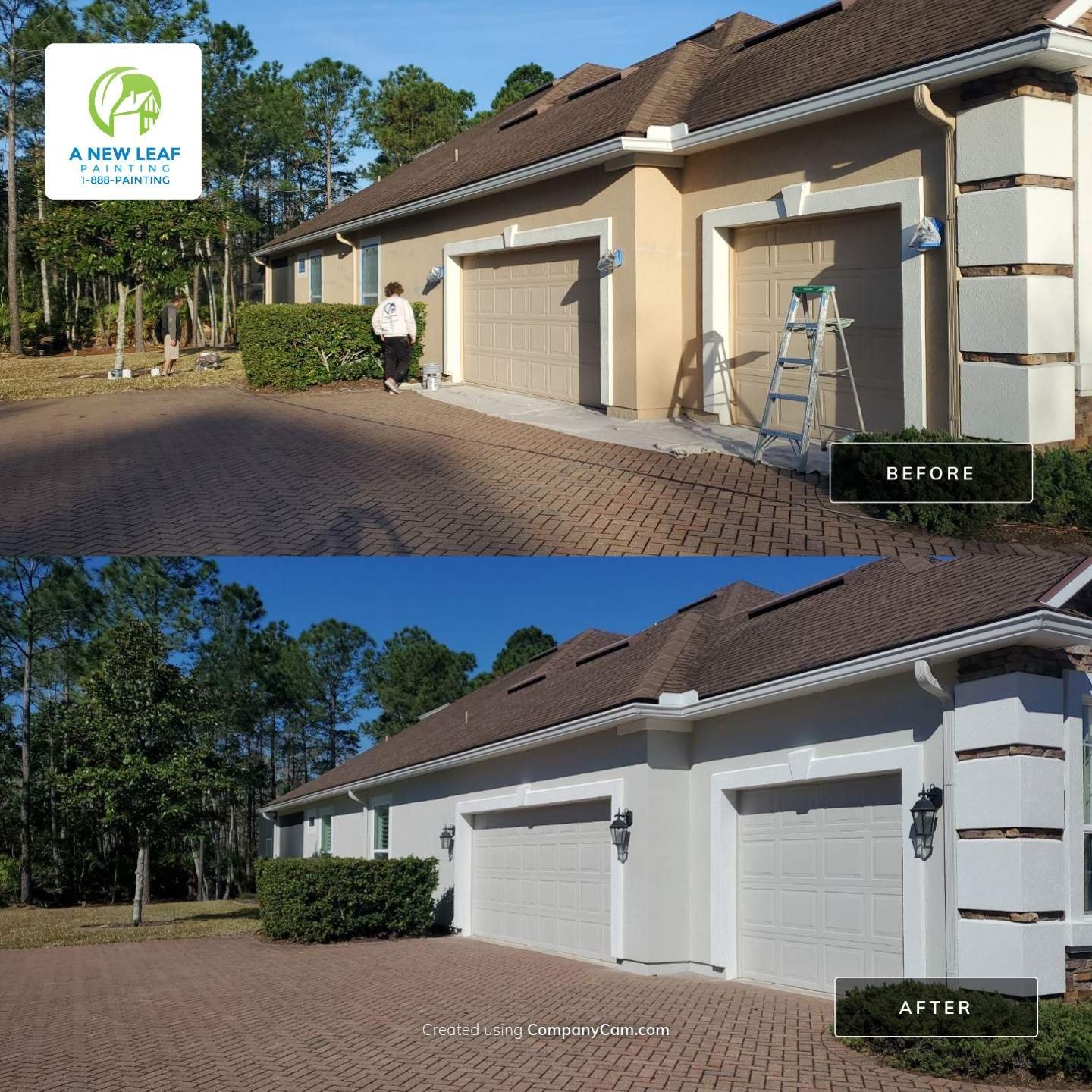
Residential Painting Projects Completed Throughout Nocatee, FL
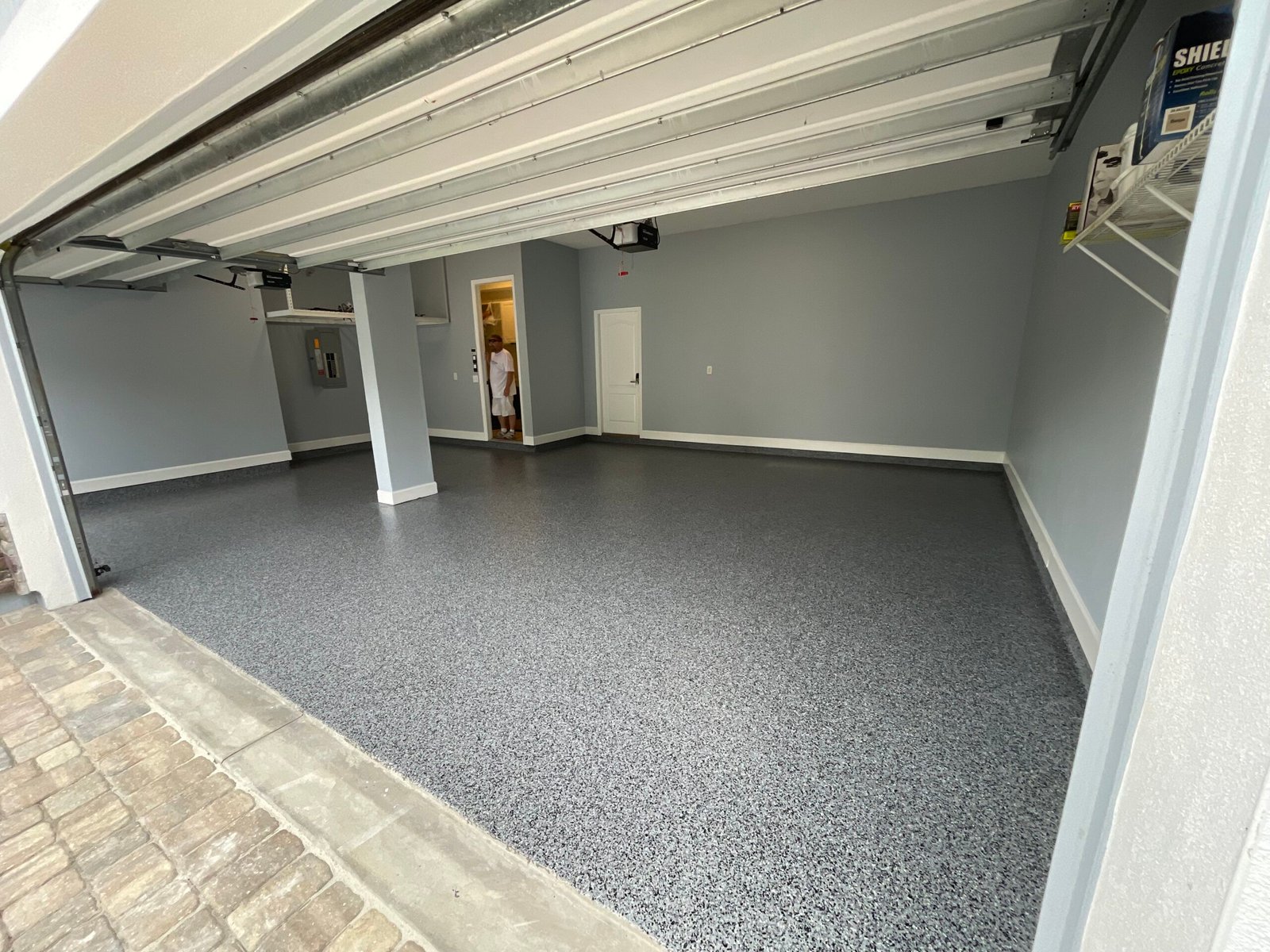
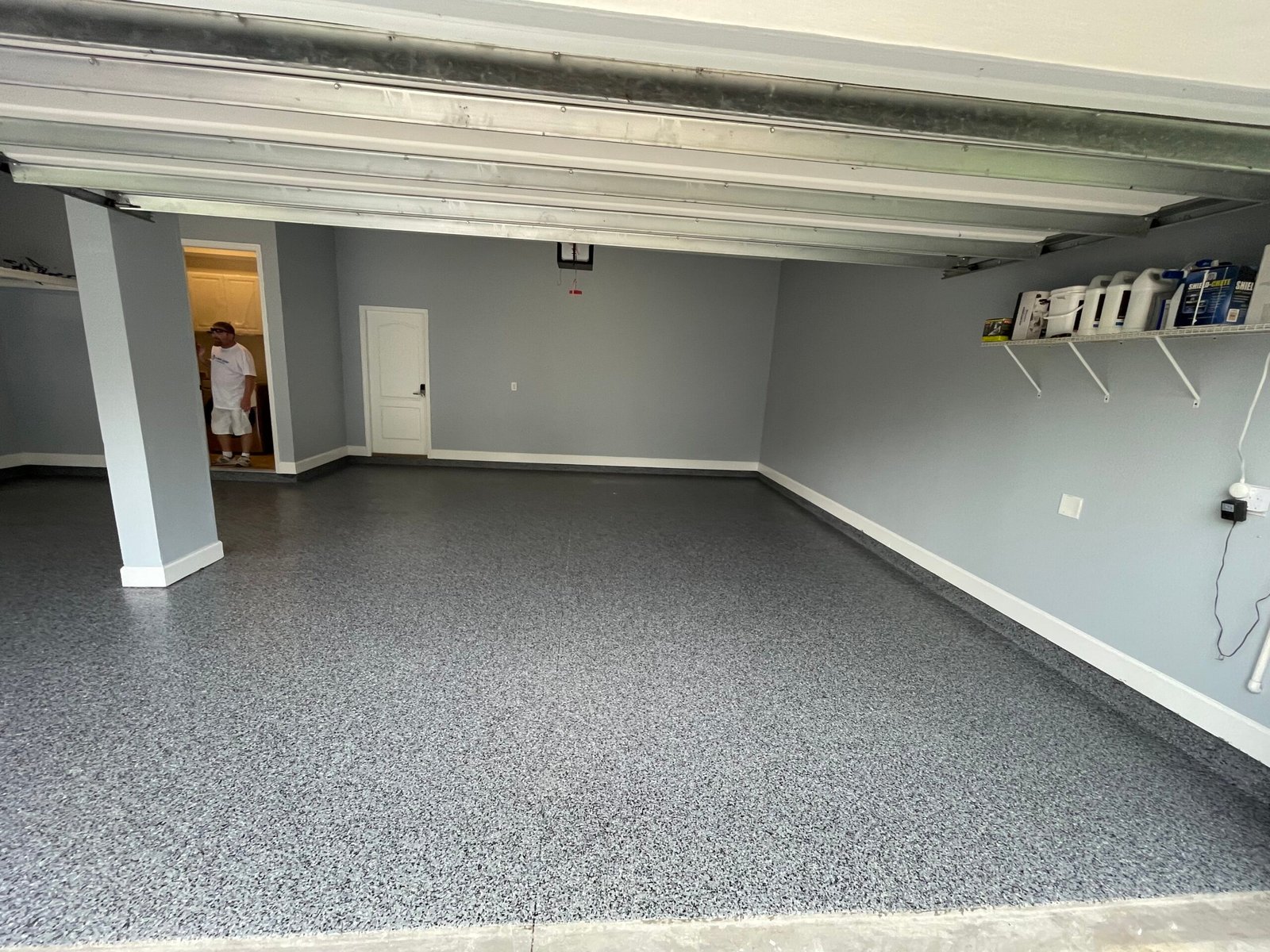
See examples of our residential painting work throughout Nocatee, FL, including interior painting, exterior house painting, stucco restoration, James Hardie® siding, and garage floor coatings. These completed projects demonstrate the quality, attention to detail, and craftsmanship that have made A New Leaf Painting Contractors a trusted choice for Nocatee homeowners
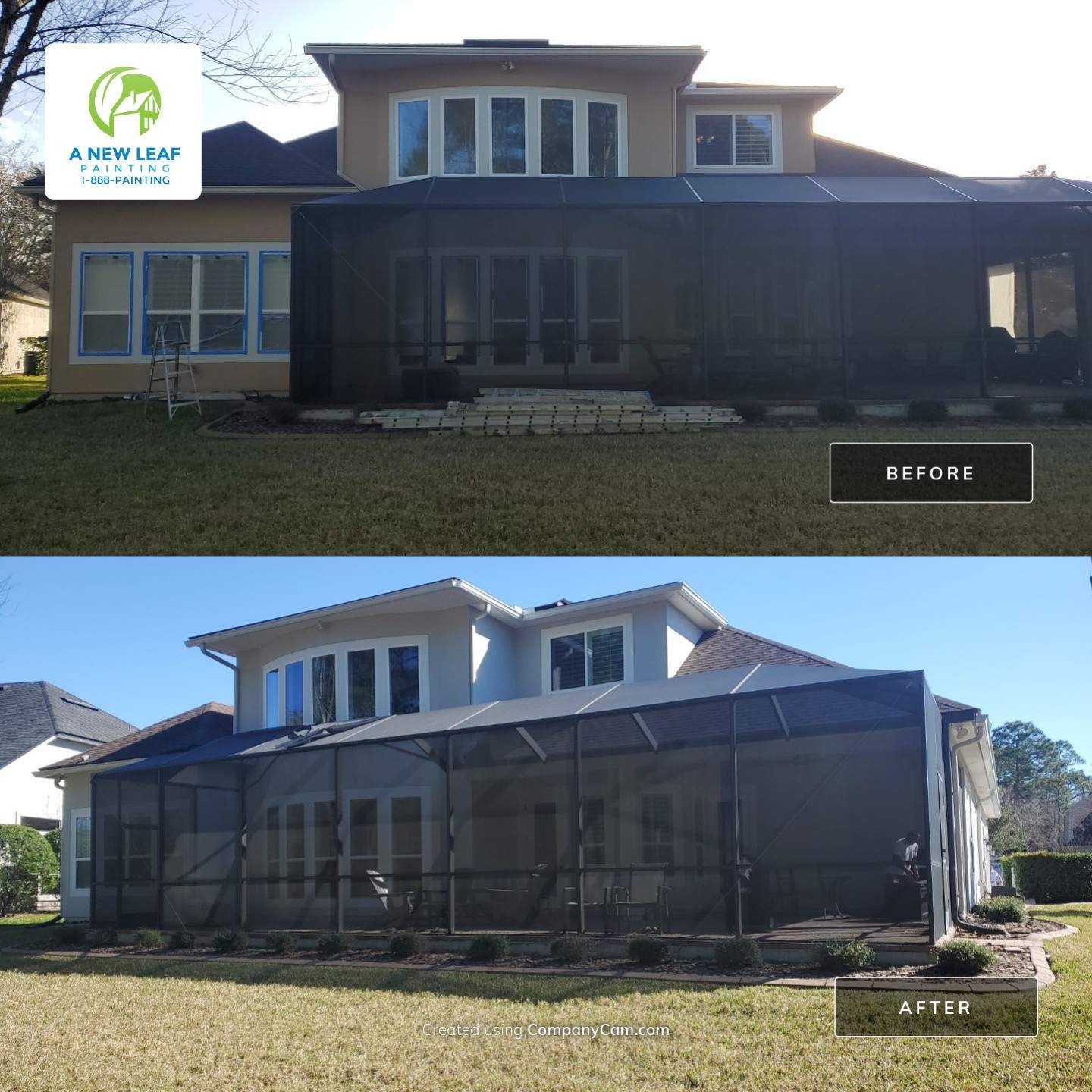
Stucco exterior — Coastal Oaks at Nocatee
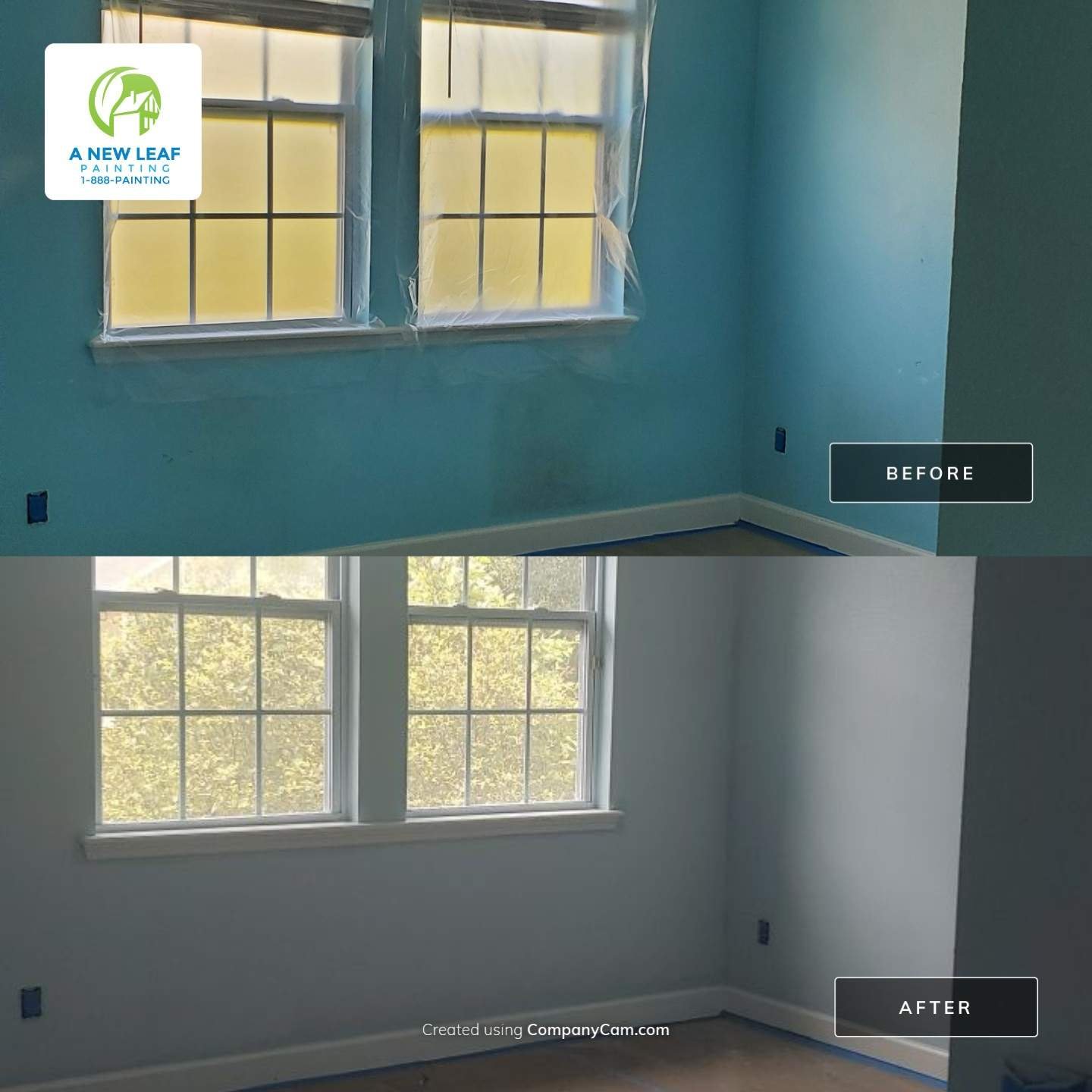
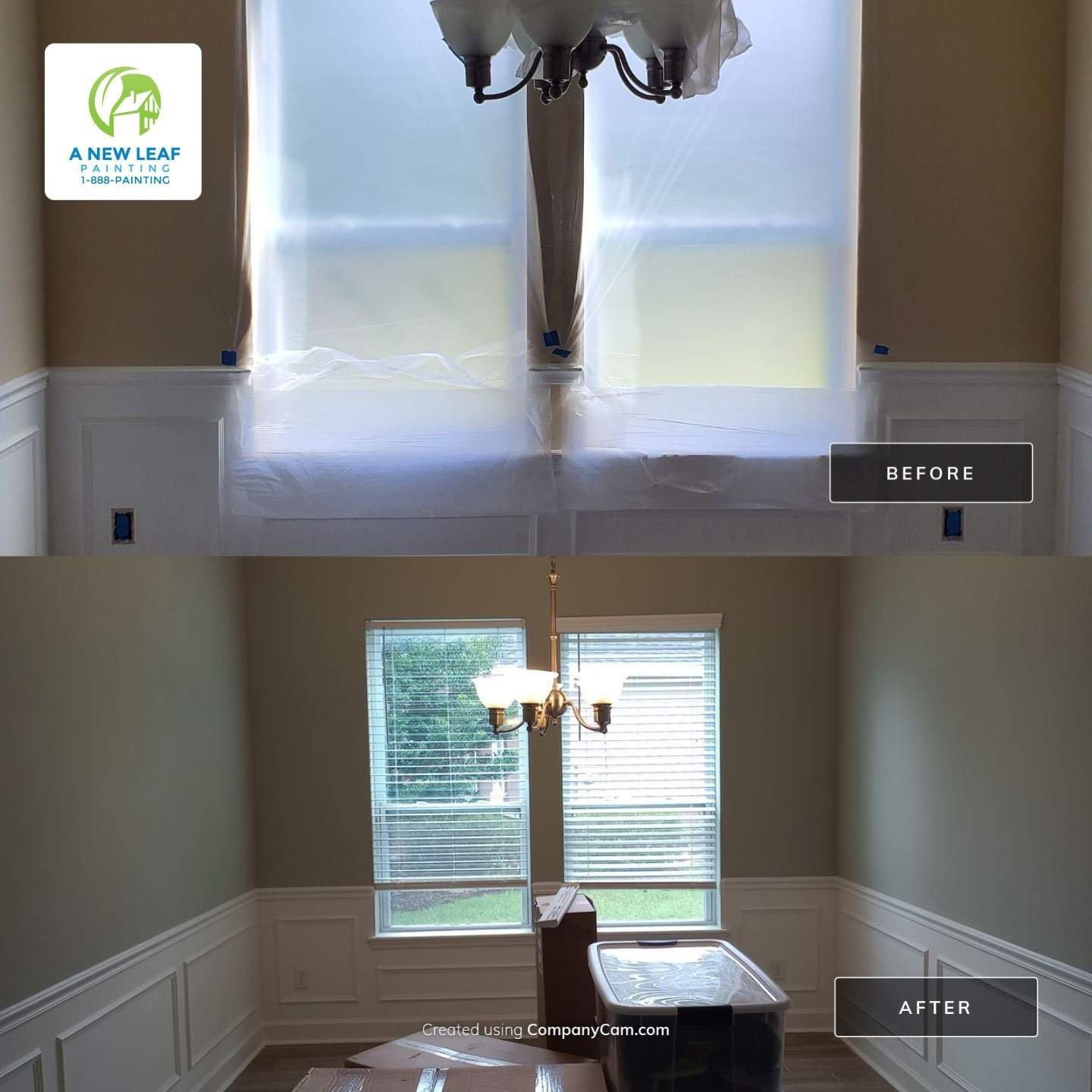
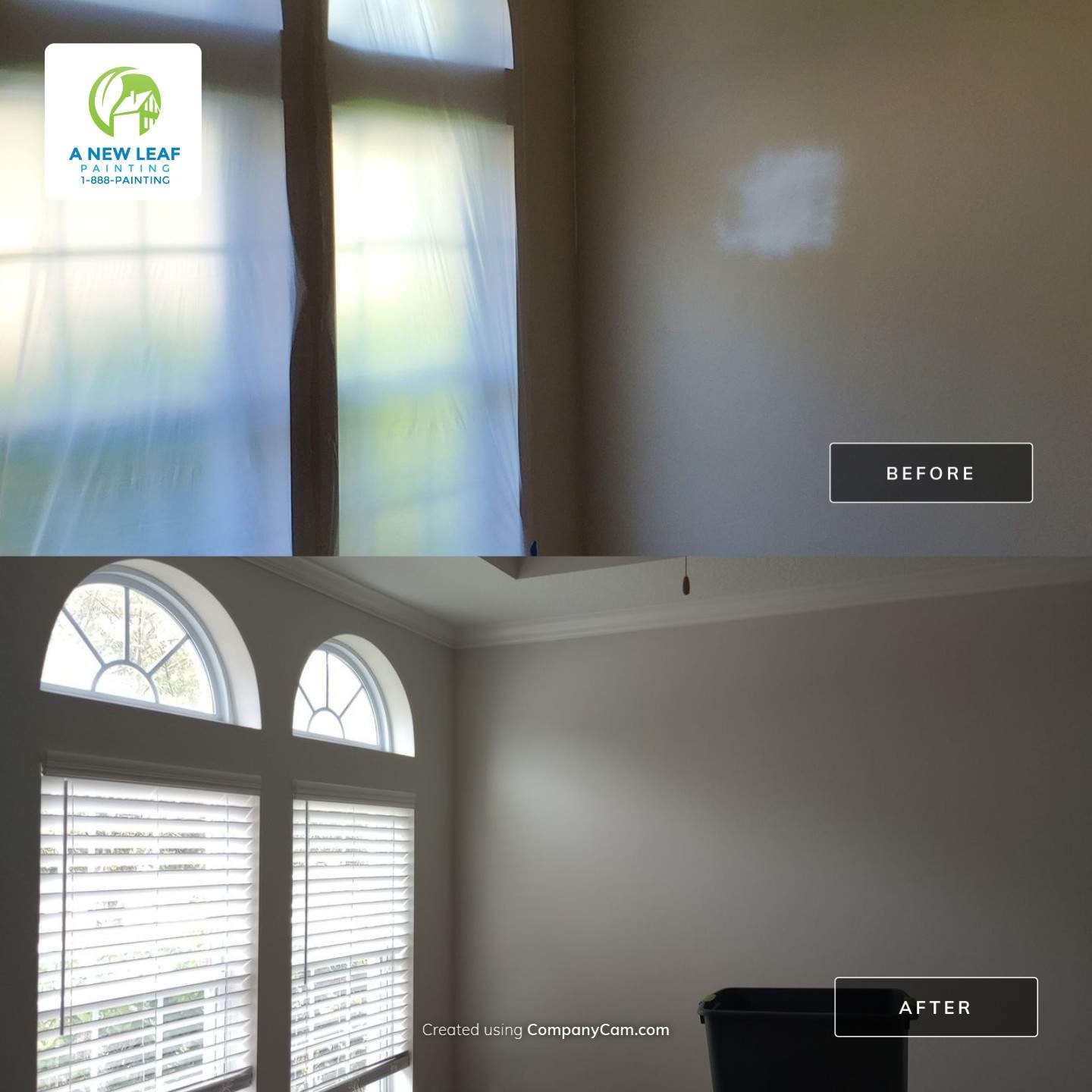
Interior painting — Nocatee (before & after)
Garage floor coating — Nocatee
How Much Does Residential Stucco Painting Cost in Nocatee?
Costs vary too much home-to-home for a meaningful number here, but the factors that drive your price are consistent and worth understanding so you can compare bids fairly:
- Square footage and the total wall area being coated.
- Prep scope — how much washing, chalk removal, and mildew treatment the home needs.
- Repairs — the extent of crack and stucco repair, which varies widely by home.
- Accessibility — landscaping, elevations, and tight spacing between homes.
- Number of stories and the staging that taller elevations require.
- Trim, doors, and detail included in the scope.
- Paint quality and system — acrylic versus elastomeric, and primer needs.
- Warranty and the coverage behind the work.
The lowest bid and the highest bid on the same home usually differ because of prep and repair, not paint. Compare the written scope, not just the number at the bottom.
Questions to Ask Before Hiring Residential Stucco Painters
- Are you insured, and can you provide a certificate of insurance?
- What local credentials do you hold?
- Do you repair stucco cracks and damage, or only paint?
- Will you prime bare, weathered, and repaired areas?
- How do you handle washing and mildew, and at what pressure?
- What products do you recommend for my home, and why those?
- Do you back-roll after spraying?
- What warranty do you offer, and what does it exclude?
- Who leads the crew, and who is my point of contact?
- Can I see recent reviews and comparable Nocatee projects?
Frequently Asked Questions
Can you paint over cracked stucco?
Not directly. Cracks should be repaired first, with texture matching and proper cure time, before painting. Hairline cracks can then be bridged by the right coating, but painting over open or unrepaired cracks leads to visible lines and recurring cracking.
Does stucco need primer?
Often, yes. Bare, weathered, previously unpainted, and repaired stucco benefit from a masonry primer like Loxon XP for adhesion and to block alkalinity. Sound, previously painted stucco in good condition may not need full priming, though repairs still do.
How often should stucco be painted in Nocatee?
It depends on the previous product and your home’s exposure. Builder-grade paint often needs redoing in 5 to 8 years, premium acrylic systems in 8 to 12, and elastomeric can last longer. South- and west-facing walls and homes with heavy irrigation tend to need attention sooner.
Is elastomeric always better than acrylic?
No. Elastomeric excels at bridging hairline cracks and is a great fit for homes with a lot of fine cracking, but it’s thicker, less breathable, and wrong for walls that need moisture to escape or have an unsolved water problem. Premium acrylic is often the better choice for sound stucco. The right system depends on your home’s condition.
Can mildew be painted over?
No. Mildew must be killed and cleaned before painting. Coating over it traps live growth under the paint, where it continues to spread and eventually shows through.
Can stucco be pressure washed?
Yes, but carefully. Too much pressure can drive water into the wall and damage sound stucco. Cleaning should match the surface, which sometimes means a lower-pressure wash with the right cleaning solution rather than maximum pressure.
Can hairline cracks be filled?
Yes. Hairline cracks are routine on Nocatee homes and are addressed during prep, then bridged by a quality coating or elastomeric system depending on their extent.
Does paint waterproof stucco?
No coating makes stucco waterproof, and any painter who promises that is overstating it. A quality system is highly water-resistant and helps the wall resist moisture intrusion, but stucco also needs to breathe, and sound caulk and repairs do as much for water protection as the paint itself.
What’s the best stucco color for a Nocatee home?
There’s no single best, but warm and crisp whites, greige, coastal grays, light beige, and soft sage consistently look right here and tend to fit the community’s palette. Always test large samples on your own walls in real light, and confirm ARC approval before committing.
How long does a stucco painting project take?
Most residential stucco homes take several days depending on size, prep, repairs, and weather. Repairs that need cure time and Florida’s afternoon storms can extend the schedule, which a good contractor plans around rather than rushing.
Helpful Residential Painting Resources
- Exterior painting services in Jacksonville
- Exterior painters near me in Jacksonville, FL
- Stucco painting in Jacksonville
- Stucco repair
- Pressure washing
- Wood rot repair
- Color consultation
- Jacksonville HOA directory
- How often should you paint your house in Florida?
- Residential painting services for Jacksonville homes
More Nocatee Homeowner Guides
Repainting a new build often leads to the next question, and we’ve written a complete Nocatee guide for each major part of the home:
- Residential Interior Painting in Nocatee — room-by-room finishes, drywall repair, color, cost, and what a professional interior project includes.
- Residential Stucco Painting in Nocatee — when your stucco exterior is ready to repaint, plus prep, crack repair, and coating choices.
- Residential James Hardie Siding Painting in Nocatee — fiber cement prep, caulking, primer, and the right paint system for Hardie board homes.
Why Homeowners in Nocatee Choose A New Leaf Painting Contractors
A New Leaf Painting Contractors is a residential painting company serving Nocatee and Northeast Florida since 2001. Stucco is a core part of our exterior work, and our approach is built around detailed preparation, honest repair, and matching the coating system to what each home actually needs — we prepare what matters underneath, not just what shows.
Homeowners here choose us for two decades of local experience with Florida stucco, thorough surface preparation, careful property protection, and clear communication from estimate to final walkthrough. We’re insured, Google Guaranteed, EPA Lead-Safe Certified, and hold a Duval County Certificate of Competency, with 750+ verified five-star reviews behind the work — all backed by our workmanship warranty and Iron-Clad Guarantee.
Repaint your Nocatee stucco with confidence.
Request a free residential stucco painting estimate, with prep, repairs, and products defined up front.