In this article
Reviewed by Thomas Drake, owner of A New Leaf Painting Contractors
Your home likely needs siding repair if you see siding that's loose, warped or soft to the touch, paint that keeps peeling or bubbling in the same spot, cracked or missing caulk, water stains running down from windows or joints, or wood that's dark and crumbling. The quickest homeowner check is the screwdriver test below: if the wood gives under gentle pressure, it's rot, and it needs repair before anything gets painted.
We've been doing exterior painting in Jacksonville, FL since 2010, and our exterior painters in Jacksonville, FL check siding and trim on every exterior estimate. Paint won't fix siding that's soft, cracked, loose or warped. Florida's humidity, heavy summer rain and strong sun also make small problems grow faster here than in drier places, so catching them early matters. For more guides on siding, stucco, prep and Florida weather, see our Exterior Painting Resource Center.
Signs your home needs siding repair
Walk around the house and look for:
- Loose siding: boards or panels that shift or pull away from the wall when touched.
- Warping or buckling: siding that no longer lies flat, often from moisture trapped behind it.
- Soft or rotting wood: dark, spongy or crumbling spots, usually at joints, corners and where trim pieces meet.
- Peeling or bubbling paint that keeps coming back in the same spot. That usually means moisture is coming from behind, not just surface wear.
- Cracked or missing caulk at joints, corners and trim.
- Missing boards, and damage around the spot where they were.
- Water stains streaking down from joints, sills or rooflines.
- Mold or mildew, especially on shaded sides of the house.
- Insect signs: small holes, sawdust-like debris, or termite or carpenter ant activity.
- Stains on interior drywall, which mean water has made it inside the wall and the damage is likely worse than it looks outside.
Several of these often point to one problem. Bubbling paint by a window, a slightly warped board under it and a faint stain on the inside wall are usually one leak, not three.
The screwdriver test: how to check for wood rot yourself
All you need is a flat-head screwdriver and a little time to walk the outside of the house.
- Start with suspicious spots: discoloration, slight warping, peeling paint or anywhere two pieces of trim meet. Corner boards, window and door trim, fascia, and the bottom edges of siding near the ground and sprinklers are where we find problems most.
- Tap with the handle every few inches. Sound wood gives a solid tap. Rotted wood sounds duller and hollow.
- Press with the tip where it sounds off. Use steady, gentle pressure, not a jab. If the tip sinks in easily, roughly a quarter inch or more, that's rot.
- Stop once you've found it. Digging around to see how bad it is opens the wood up to more water. Note the spot and move on; a professional inspection will map the full extent.
Thomas's tip: pay extra attention wherever two materials meet, such as trim against siding, a porch roof tying into the wall, or a window in its opening. Caulk fails there first, and that's where we find most of the rot on our inspections.
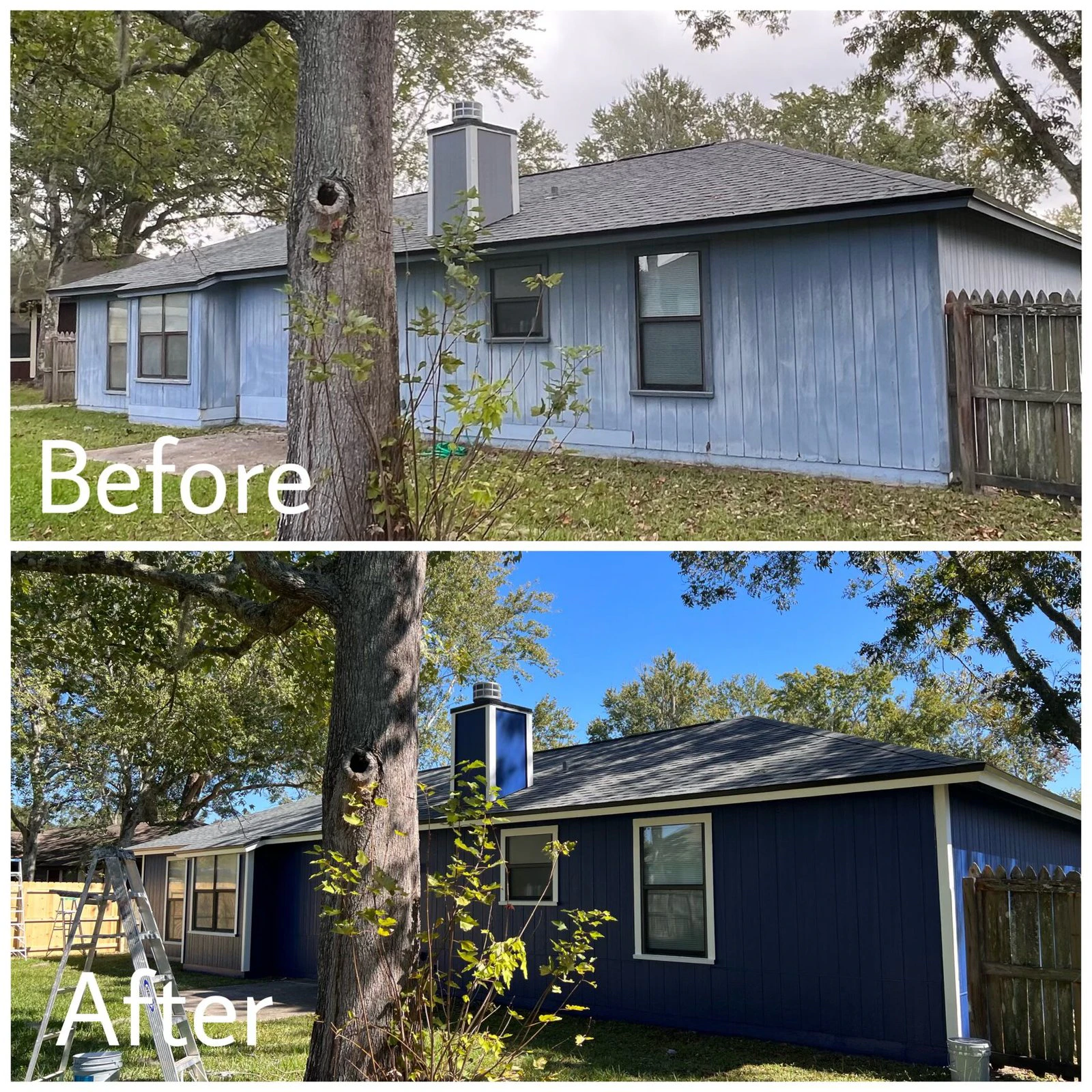 Real project
Common types of siding damage
- Wood rot: fungal decay from long-term moisture that breaks down the wood fibers.
- Moisture damage: swelling, warping and paint failure that hasn't turned into rot yet.
- Impact damage: cracks and dents from storms, branches or lawn equipment.
- Termite damage: termites are active year-round in Florida. The damage can look like rot, but an active infestation has to be treated before any repair.
- Sun damage: fading, chalking and eventual breakdown, worst on south- and west-facing walls.
- Flashing problems: missing or badly installed flashing at windows, doors and rooflines is one of the most common sources of water getting in that we find, even when the siding itself is fine.
- Poor original installation: gaps, wrong fastening or missing caulk that leave the wall vulnerable no matter how well it's kept up.
Wood rot explained
Rot is caused by fungi that need steady moisture. In Florida the source is rarely one big event. It's usually slow, repeated wetting from a failed caulk joint, a gap in the flashing or a sprinkler hitting the same wall every day. As long as the wood stays wet, the decay keeps spreading, so a small soft spot found early is a simple fix, while the same spot left a year or two can mean replacing a whole board or trim piece.
Paint can't fix rot. Paint is a finish, not a repair. Painting over soft wood seals the moisture in and hides the warning signs while the decay keeps going, which usually makes the eventual repair bigger.
The biggest mistake we see is caulking over a soft spot to "seal it up" before painting. Caulk seals gaps between sound materials. Over rot it just traps the water and often speeds the damage up.
Can damaged siding be repaired?
Usually, yes. The right approach depends on how far the damage has gone:
- Spot repair for small, isolated soft spots, using a wood consolidant and epoxy filler, then primer and paint. This works when the wood around it is still sound.
- Partial replacement when a whole board, panel or trim piece is damaged but the damage hasn't spread. The piece is replaced, primed, caulked and painted to blend in.
- Larger replacement when damage runs across several connected sections or reaches the sheathing or framing behind. That's less common than people fear, but it happens when damage is left alone too long.
What you see on the surface doesn't always match what's underneath, so an inspection is the reliable way to know which one you need.
Why Repairs Should Be Done Before Painting
James Hardie Siding Prep and Exterior Painting
Every repair (filler, a new board or fresh caulk) has to go on wood that's dry and sound, or it locks moisture in. Prime repaired or new wood before painting, too: skipping primer is one of the most common reasons a patch shows through the finish later. A wall repaired properly and then painted holds up far longer than one painted over rot or failed caulk, which tends to peel again in the same spot because the cause was never fixed. That's why a real exterior painting estimate includes an inspection and a repair scope, not just a coat count.
Siding materials and their weak spots
| Material | Common problems | Paintability |
|---|---|---|
| Wood lap and cedar | Rot, warping, insects; cedar grays if left unsealed | Excellent |
| T1-11 panels | Rot at seams and the bottom edge, delamination | Good with proper prep |
| LP SmartSide | Swelling at unsealed cut edges, caulk failure at joints | Excellent |
| James Hardie / fiber cement | Caulk joint failure, moisture at unprimed cut edges | Excellent |
| Vinyl | Cracking, heat warping, fading | Limited: needs a vinyl-safe paint and color |
| Wood trim, fascia and soffits | The most rot-prone parts of the exterior | Excellent |
Swipe to see the whole table
Money-saving tip: trim, fascia and soffits usually fail well before the siding itself because they take the most water. Small, regular trim repairs cost less over the life of a house than waiting until the damage spreads into the siding.
DIY or call a pro?
Homeowners can reasonably handle minor caulk touch-ups on sound joints, replacing one or two damaged vinyl panels, and cleaning and keeping an eye on things.
Call a professional for any confirmed wood rot, damage near windows, doors or rooflines where flashing is involved, damage in several places (which often points to a bigger moisture or installation problem), termite damage, or anything that means working higher on a ladder than you're comfortable with.
A simple routine helps: walk the outside every few months looking for new stains, peeling or gaps; do a full screwdriver check of the trim, corners and fascia once a year; look again after any big storm; and keep sprinklers and shrubs off the siding so it can dry.
Use the screwdriver test. If the wood sounds hollow when tapped or gives easily under gentle pressure, it's rot, not just surface discoloration.
Get your siding checked
Every problem on this page starts small: a hairline gap in the caulk, a slightly stained board, a little give under a screwdriver. Caught early it's a spot repair; left alone it can become a section replacement.
A New Leaf Painting Contractors has served Northeast Florida since 2010. We are licensed and insured, with 4.8 stars across 700+ reviews and over 5,000 projects completed. Besides painting, our team handles wood rot repair, stucco repair, drywall repair and trim replacement, and we check siding, trim, fascia and soffits on every exterior estimate as a standard step, not an upsell. Call (904) 615-6599 or request a free estimate.