In this article
Quick Answer
The best paint for a wrought iron fence in Jacksonville is not one can, it is a system: rust converter on any rust you cannot remove, a rust-inhibiting primer, then two coats of a direct-to-metal (DTM) or alkyd enamel in gloss or semi-gloss. For DIY, Rust-Oleum Stops Rust over Rust-Oleum Rusty Metal Primer is the easy place to start. For contractor work inland, Sherwin-Williams DTM Acrylic over a good metal primer. Near the beach, an epoxy primer such as Sherwin-Williams Macropoxy 646 under a urethane topcoat.
The primer does more to keep rust away than the topcoat. Skip it, or use ordinary house paint, and in our humidity and salt air the fence will be rusting through again in a year or two no matter how good the topcoat was.
We have been painting wrought iron fences, gates and railings across Jacksonville and Northeast Florida since 2010, from simple rail fences to ornamental iron on older Riverside and Avondale homes. Here is what holds up here and why.
Why Wrought Iron Is Different
Iron rusts whenever it meets water and oxygen. Rust is not a stain; it is a reaction that keeps eating into the metal until something stops it. Jacksonville speeds that up three ways: humid air that leaves metal damp most nights, strong sun that breaks down paint film, and, near the coast, salt. Salt makes the moisture on the metal conduct electricity better, which makes corrosion run faster. That is why the same fence that holds paint for years inland can rust through much sooner at the beach.
Why Standard Exterior Paint Fails on Wrought Iron
House paint is acrylic latex made to grip porous surfaces like wood, stucco and fiber cement. It does not bond well to smooth, dense metal and has nothing in it to slow rust. It also lets some moisture vapor through. On a house wall that breathability helps. On iron it means water keeps reaching the metal, rust forms under the film, and the paint bubbles and flakes off.
This is the most common mistake we see. Latex on iron often looks fine for a while, then peels to reveal rust that is worse than before. Metal needs metal-specific products.
The Three-Step Paint System
Rust Converter: Neutralize What You Cannot Remove
Rust converter reacts with rust and turns it into a stable black layer that no longer corrodes and can be primed. It does not remove rust. Use it after wire brushing, sanding or grinding has taken off everything loose and flaky, on the light rust that is left. It is not a fix for heavy, flaking rust that has not been prepped.
- Rust-Oleum Rust Reformer: the easiest to find in stores. Dries flat black and can be topcoated.
- Corroseal Water-Based Rust Converter: a converter and primer in one, popular in marine settings.
- FDC Rust Converter Ultra: another contractor option for rust you cannot fully blast off.
Converter alone is not protection. Without primer and topcoat over it, a fence starts rusting again within months here.
Rust-Inhibiting Primer: The Most Important Layer
The primer touches the metal. It provides the grip and the rust barrier, so if you spend extra anywhere, spend it here. The three main types are not interchangeable.
Alkyd (oil-based) rust-inhibiting primer
The workhorse for most fences. Oil primers bond very well to iron, carry rust-inhibiting pigments and dry slowly into a dense film that resists moisture better than fast-dry water-based primers. Rust-Oleum Rusty Metal Primer and Sherwin-Williams alkyd metal primers are both widely used by Florida painters. Expect to wait longer between coats.
Epoxy primer for coastal properties
For Jacksonville Beach, Atlantic Beach, Neptune Beach, Ponte Vedra and anything within a few miles of salt water, we use epoxy. It forms a very dense, chemical-resistant film that lets far less moisture and salt through than alkyd or acrylic. Sherwin-Williams Macropoxy 646 is an industrial two-part epoxy built for steel in corrosive settings. It takes more skill to mix and apply and longer to cure, but it is the right call on the coast.
DTM acrylic primer for inland DIY
Water-based, fast drying and easy to clean up, so it is the friendliest choice for homeowners. It does not match alkyd or epoxy in salt air, but on a well-prepped inland fence it does the job. Rust-Oleum Clean Metal Primer and Sherwin-Williams DTM Acrylic Primer are the common picks.
Direct-to-Metal Topcoat: Protection and Appearance
The topcoat takes the sun, rain and the occasional lawnmower. Over a good primer it does not have to carry the rust protection alone, but it still must be made for metal: a DTM acrylic, an alkyd enamel or a urethane. House paint does not belong here either.
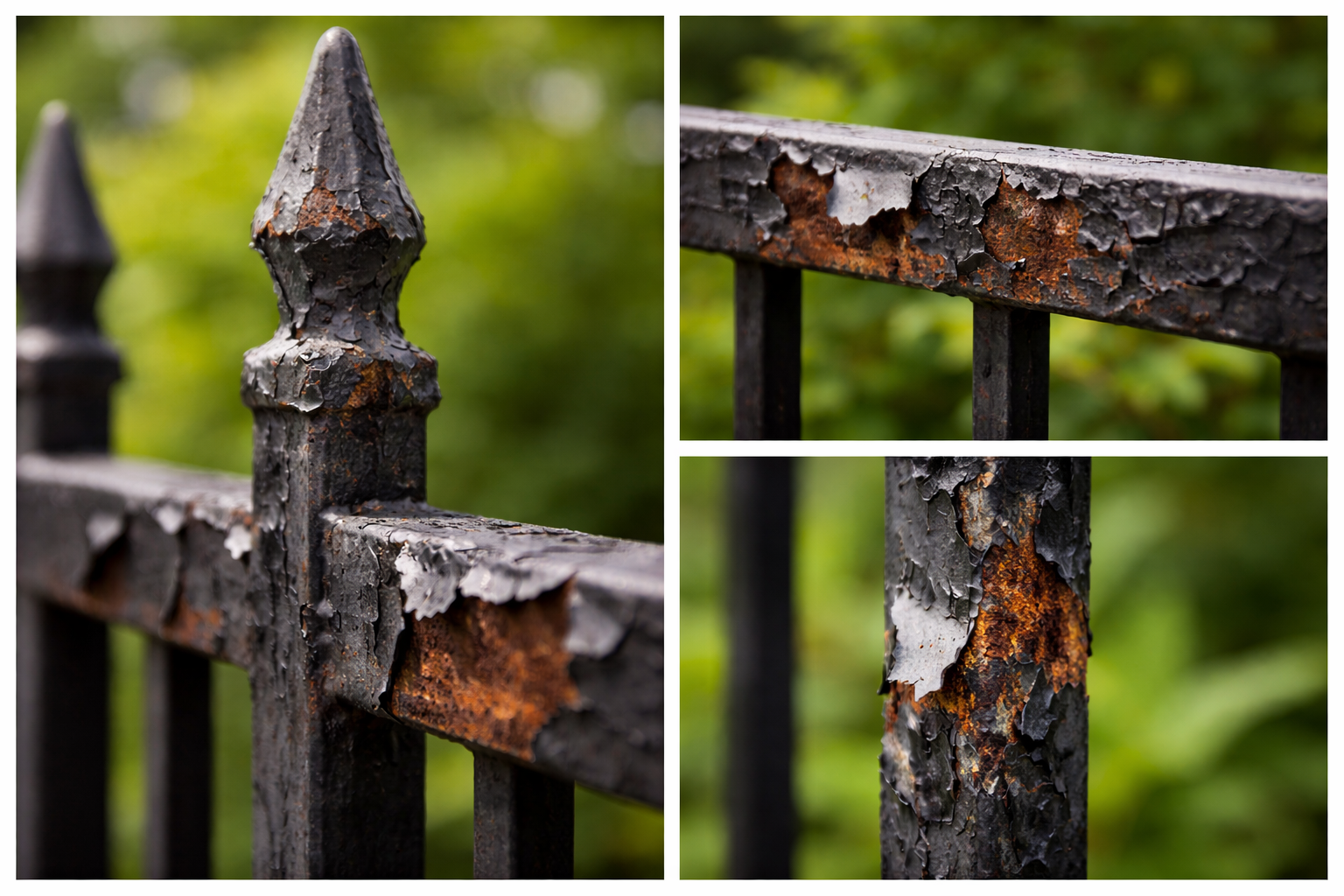
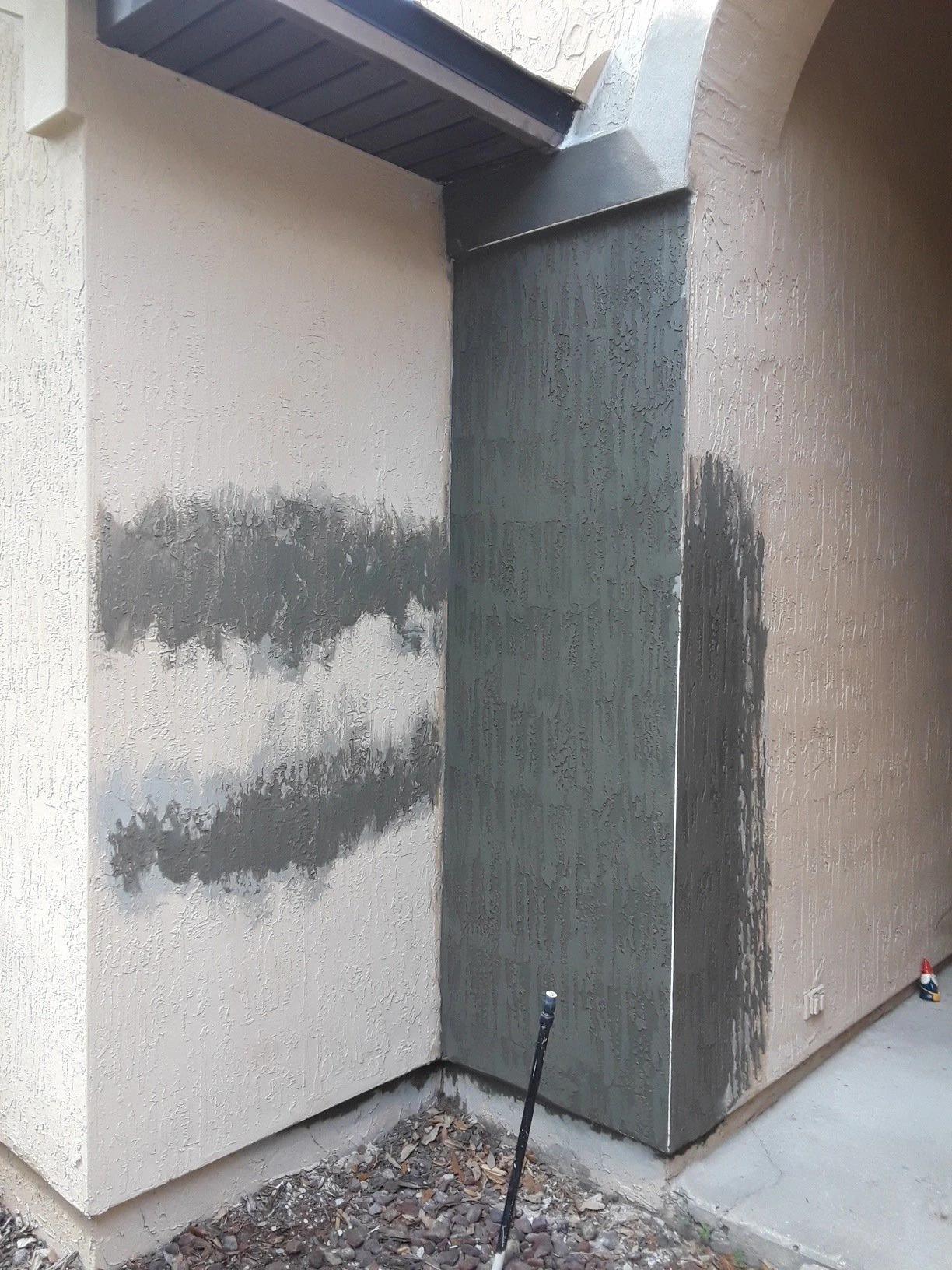
Paint failure on wrought iron
Topcoat Options
- Rust-Oleum Stops Rust Protective Enamel: the best DIY option. An oil-based enamel sold everywhere, in the classic gloss black. Not contractor grade, but good over proper prep and primer on inland fences.
- Rust-Oleum Professional Series: a harder enamel than Stops Rust that resists chipping better, still sold in home improvement stores. A sensible upgrade for DIY.
- Sherwin-Williams DTM Acrylic: our go-to water-based contractor coating for inland and moderate exposure. Hard, holds color well in the sun and cleans up with water.
- Benjamin Moore Impervo Alkyd: a high-gloss oil enamel with a smooth, hard finish. We like it on ornamental gates and scrollwork where looks matter as much as protection. Slower to cure, and cleanup takes mineral spirits.
- Epoxy plus urethane for the coast: Macropoxy 646 under a compatible urethane topcoat. More expensive and more technical to apply, but it lasts the longest in salt air.
Which System for Which Fence
| Situation | Rust converter | Primer | Topcoat (2 coats) |
|---|---|---|---|
| New or stripped fence, no rust | Not needed | Rust-Oleum Clean Metal Primer or SW DTM Primer | SW DTM Acrylic or Rust-Oleum Professional |
| Light rust, inland | Rust Reformer on rusty spots | Rust-Oleum Rusty Metal Primer or SW DTM Primer | SW DTM Acrylic or BM Impervo |
| Moderate rust, inland | Corroseal after wire brushing | Alkyd metal primer, full coat | SW DTM Acrylic or Rust-Oleum Professional |
| Any rust, coastal | Corroseal or FDC Ultra after prep | Macropoxy 646, two coats | Urethane topcoat, gloss |
| Heavy rust, restoration | Skip: blast to bare metal | Epoxy primer, two coats | DTM acrylic or urethane |
Swipe to see the whole table
Gloss or Semi-Gloss: Why Sheen Matters on Metal
On iron, use gloss or semi-gloss and nothing flatter. Higher sheen means a denser, harder film that lets less moisture through to the metal. A glossy surface also sheds water faster, so rain from our summer storms does not sit in the low spots and crevices as long.
High-gloss black is the traditional ornamental iron finish, and it happens to perform best too. Semi-gloss suits plain picket and straight-rail fences if you want less shine; high gloss shows off scrollwork and finials. Both protect well.
What Jacksonville Weather Does to Iron
Humidity. Most paint failure on iron comes from moisture in the air, not rain. Dew forms on metal overnight and on cool mornings, so for months at a time the fence is rarely fully dry. That is why rust-inhibiting primer is not optional here.
Salt air. At the beaches, Amelia Island and along the Intracoastal, salt turns every small chip or branch scratch into a starting point for rust that spreads under the paint. That is why we use epoxy on coastal fences.
Sun. Strong UV breaks down topcoat binder, fades color and makes the film more permeable as it ages, worst on top rails and caps that face the sky. Two topcoats instead of one give the system more thickness to lose.
When DIY Is Realistic
A short run of fence in decent shape, with only surface rust and away from salt air, is a fair DIY project if you are patient with prep. Wire brush the rust, use converter on what is left, prime, and put on two coats of DTM enamel in gloss or semi-gloss. Rust-Oleum Stops Rust in gloss black gives good results when the prep is right.
DIY also makes sense for spot maintenance. Check the fence once a year. When you find a chip, wire brush it, dab on converter if there is rust, spot prime and touch up. In our humidity an untreated chip can start rusting within weeks and spread under the paint around it.
When to Call a Professional
- Heavy rust: it needs grinding or sandblasting, which is hard work and takes equipment.
- Coastal homes: epoxy systems take professional mixing, application and timing. Consumer products do not last in salt air.
- Ornamental iron: every missed spot inside a scroll, behind a finial or under a rail is bare metal waiting to rust. Full coverage takes experience.
- Long runs and gates: a long fence is a multi-day job that goes faster with spray equipment.
A system: rust converter where needed, a rust-inhibiting primer, and two coats of metal topcoat in gloss or semi-gloss. Inland DIY, Rust-Oleum Stops Rust over Rusty Metal Primer; contractor inland, Sherwin-Williams DTM Acrylic; coastal, Macropoxy 646 under a urethane.
Every wrought iron job we take on starts with an honest look at the rust: what shape the iron is in, what prep it needs and which system fits your fence and location. If it needs sandblasting or a coastal epoxy system, we tell you before we price it. Call or text (904) 615-6599 or request a free estimate.
- Serving Jacksonville
- Jacksonville Beach
- Ponte Vedra
- Atlantic Beach
- Neptune Beach
- Fleming Island
- Orange Park
- Amelia Island