
Bedroom Paint Colors: How to Choose One You’ll Actually Live With
Thomas Drake is the founder and owner of A New Leaf Painting Contractors in Jacksonville, Florida. He and his crews have been painting homes across Northeast Florida since 2001.
Almost every time I walk a bedroom with a homeowner, some version of the same question comes up: what are people using in bedrooms right now?
What they’re really asking is whether they’re about to make a mistake. They want a little reassurance that the color they’re leaning toward is safe, current, and not going to look dated in three years. That’s fair. It’s their money and their bedroom.
But after twenty-five years of putting paint on walls, I can tell you the honest answer is that I’ve watched the same color go into two bedrooms and come out looking like two different colors. Not a little different — noticeably different. One reads soft and warm. The other reads cold and grey. Same product, same crew, same week. The houses were different, and that’s all it took.
So instead of handing you a list of five colors, here’s what actually determines whether you’ll like a bedroom color once it’s on the wall.
Start With the Room, Not the Paint Chip
Most people start at the paint store. I’d start standing in the bedroom looking at everything that isn’t paint.
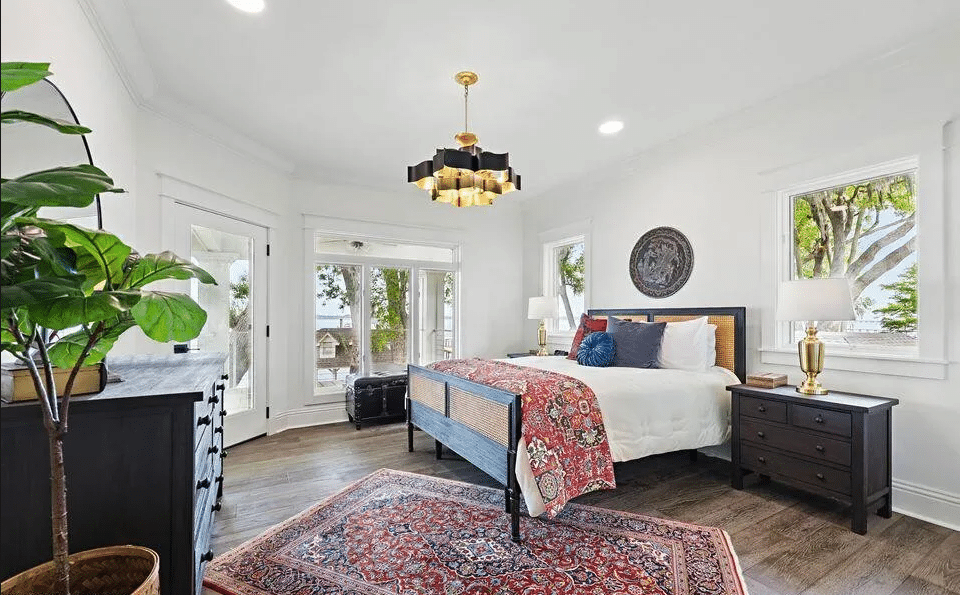
Flooring. Trim. The headboard and dressers, which in a bedroom are usually large wood pieces that set the room’s temperature before you pick anything. The closet doors. Whether there’s carpet or tile or wood. And bedding — which people leave out of the conversation constantly, even though a made-up king bed is often the single biggest block of color in the room after the walls themselves.
Paint is almost always the most flexible finish in a room. It’s the cheapest thing to change and the fastest to redo. So it should be working for the things that are harder or more expensive to replace, not the other way around. If you’ve got warm oak floors and a heavy wood bedroom set, that’s already pointing you toward a warmer direction whether you planned on it or not.
One thing we’ve learned as residential painters in Jacksonville, FL is that the paint chip is only a starting point — the house itself ultimately decides how that color reads.
Worth asking yourself early: how much of this room is actually changing? If new bedding and curtains are coming too, you have more latitude. If everything’s staying and only the walls are moving, the walls have to fit in.
Natural Light Changes Bedroom Paint Colors
Bedrooms are the one room where you see the color at both extremes of the day — bleary-eyed first thing in the morning, and last thing at night with a lamp on. Most rooms you only really look at in one lighting condition. Bedrooms you get both, which is why a color that felt right at the store can feel wrong at 6am.
A south-facing bedroom gets warm, bright light for most of the day, and that light pushes colors warmer than the chip suggests. A soft greige can read distinctly tan by mid-afternoon. A north-facing bedroom does the opposite — cooler, flatter light that pulls warmth out and can leave a color looking greyer and more severe than you wanted. East-facing rooms get that strong direct morning light and then go quiet; west-facing rooms are the reverse and can get genuinely hot-looking in the late afternoon.
Bedrooms also tend to be the darkest rooms in the house. They’re often on the back or side of the home, they usually have smaller windows than the living areas, and a lot of people keep blackout curtains half-drawn. A color that needs light to look good will not get much help in a room like that.
And then the bulbs take over. A 2700K bulb warms everything up. A 5000K bulb strips that warmth right back out and can make a soft white look almost blue at night. If your bedside lamps and your overhead fixture are different temperatures — which happens more often than you’d think — the room will read two ways depending on which one’s on.
There’s one more thing about bedrooms specifically: you spend time lying down looking at the ceiling. Nowhere else in the house do you do that. If the room has a tray ceiling, which plenty of newer homes around here do, it’s worth deciding what happens up there at the same time rather than defaulting to flat white and hoping.
Warm Whites and Soft Neutrals
Warm whites and soft neutrals have stayed popular in bedrooms for a long time, and it isn’t only fashion. They give you a quiet backdrop, they don’t fight with bedding or artwork, and they’re forgiving when the light changes through the day.
Sherwin-Williams Alabaster is one I’ve seen work beautifully in a lot of bedrooms. I’m naming it as an example, not a prescription — it works when it suits the room, and there are plenty of rooms where it doesn’t.
The thing that actually decides whether a neutral works is undertone. Every white and every greige leans somewhere. Some go creamy and yellow, some go pink, some go grey or almost violet. On a two-inch chip you can barely see it. On four walls, next to your floors and your trim, it’s obvious.
A cool white against warm wood floors can make the floors look orange. A warm white against crisp modern trim can look a little dingy by comparison. Neither white changed — what’s around it did. That’s why I don’t hand people a top-ten list. The list can’t see your floors.
When a Darker Bedroom Works
I like a darker room when it’s the right room, and bedrooms are one of the better places for it. Not every bedroom — but more than people expect.
A deeper color makes a room feel more enclosed and more finished. That’s a look people either want or they don’t, and it’s worth being honest with yourself about which one you are before we start. What it does visually is pull the walls in and make the room feel more like a defined space than an open one.
Where it tends to work:
- Larger primary bedrooms that can afford to feel a little smaller
- Rooms with real natural light, which keeps a deep color from going murky
- Rooms with crisp white trim and good baseboards — the contrast is what makes it look deliberate rather than gloomy
- A single wall behind the bed, if committing the whole room feels like too much
Where I’d think twice: small bedrooms with one small window, rooms with low ceilings, and rooms where the trim is already tired. A deep color is unforgiving about trim. It shows you everything.
Soft Blues, Greens and Muted Colors
Plenty of bedrooms around here end up in a softened blue or green, and there’s nothing wrong with that. Muted colors — the ones with some grey in them rather than pure saturated hues — tend to behave well on walls and coordinate easily with whatever’s already in the house.
I’d steer you away from picking one because you read that it’s calming. I can’t tell you what a color will do to your sleep, and anybody who says they can is guessing. What I can tell you is what it will look like: a muted blue-green in a north-facing bedroom will read cooler and greyer than the chip, and the same color in a south-facing room will read warmer and greener. That’s not psychology, that’s just light.
The specific color matters far less than whether it belongs in the house. A soft sage in a home where everything else runs warm and traditional can look like it wandered in from somewhere else.
Going From a Dark Bedroom to White Isn’t Always Two Coats
This is the part most decorating articles skip, and it’s the part that affects what the job costs and how long it takes.
People assume white is the easy choice. It’s often the hardest one to apply. Lighter colors carry less pigment and hide less, so when you’re going over a strong existing color — dark beige, gold, a deep grey, a red accent wall, a saturated blue — that old color pushes back up through the new paint.
What that means in practice:
- Some of those walls need a primer coat first, and a primer tinted toward the finish color does more work than a plain white one
- A big swing is frequently primer plus two finish coats — not two coats total
- Depending on what’s underneath and which product we’re using, a third finish coat is occasionally what it takes to get the color even and true
I’m not saying this to talk anyone out of white or to pad an estimate. I’m saying it because a homeowner deciding between a mid-tone and a bright white over a dark bedroom ought to know that the choice affects the labor, and it’s much better to know that while you’re still choosing than after we’ve started. Decide the final color before the job begins and everything downstream gets easier.
One thing people forget: the closet. If the walls change and the closet interior stays the old color, you’ll see it every time the door’s open. Same with the ceiling — if the walls get brighter and the ceiling doesn’t, the ceiling can suddenly look grubby.
A Common Bedroom Transformation We See Around Here
There’s one job that comes across my desk over and over, and if your house was built or decorated in the late nineties or early two-thousands you’ll know it right away.
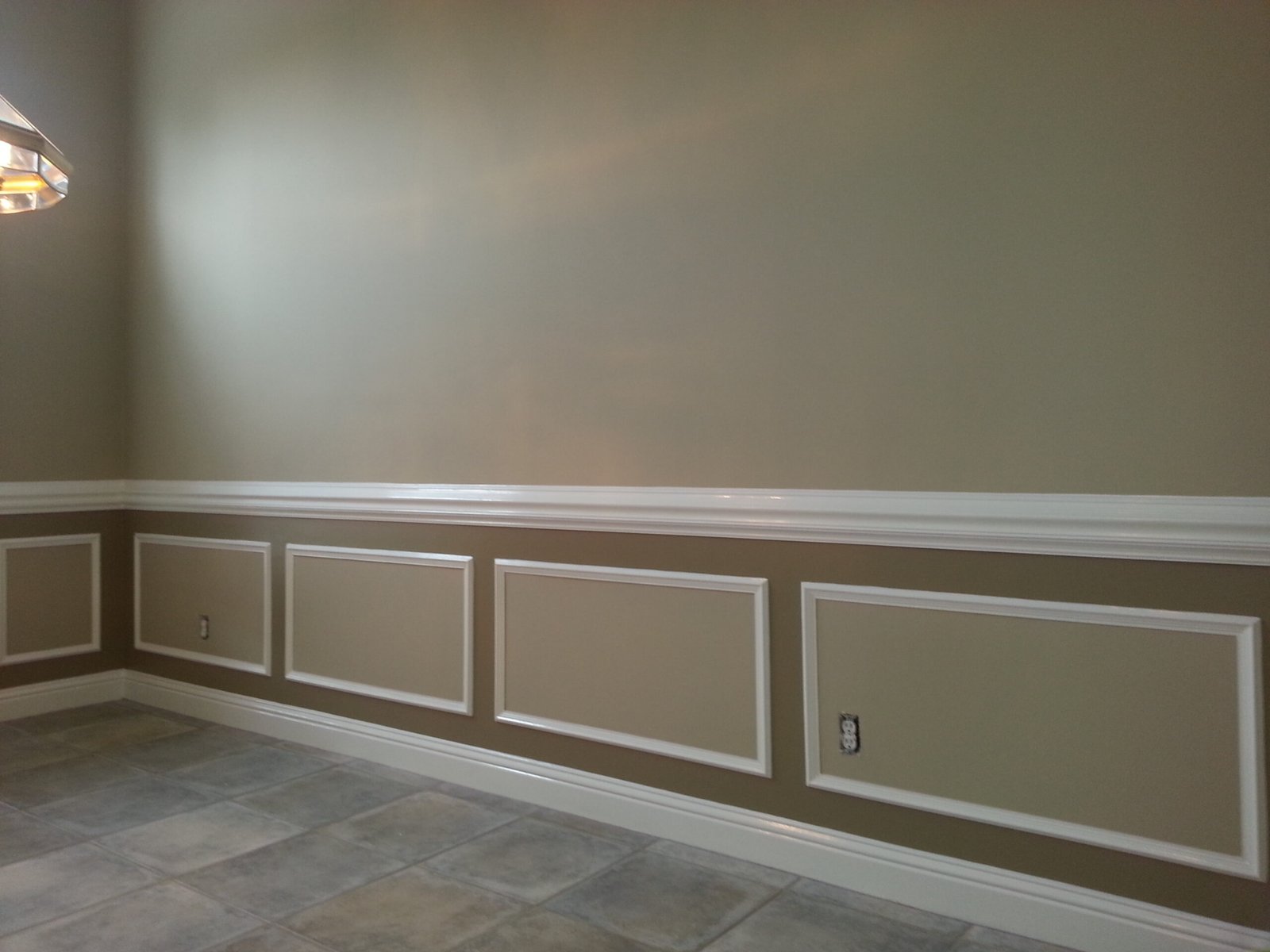
Dark beige or golden walls in the primary bedroom. Warmer wood flooring or a heavy wood bedroom set. Trim that’s gone a little yellow with age. None of it is bad work — it’s just of its moment, and that moment was a long time ago. The homeowner describes what they want the same way nearly every time: cleaner and more current, but not cold. They’ve seen white bedrooms in photos and they’re worried about ending up somewhere that feels clinical.
What usually works is a soft warm white or a warm neutral chosen specifically against the flooring, with the trim brought back to a clean white so the room has crisp edges again.
The effect is bigger than the swatch suggests. The room feels larger, because lighter walls bounce the light you already have instead of absorbing it. And things you weren’t planning to touch start looking different — wood floors that read orange against gold often read rich and warm against a soft white. Nothing got replaced. The backdrop changed.
That works because it fits that house. Drop the same color into a bedroom with cool grey tile and modern black hardware and it’s the wrong answer.
Don’t Pick a Bedroom Color Just Because It’s Popular
Popular-color lists are genuinely useful. They’re popular because they’re forgiving and they work in a lot of houses, and there’s nothing wrong with using one as a starting point.
They’re just not specifications. A new build in Nocatee with big windows, light flooring and white trim is a different room from a 1990s Mandarin house with warm floors and stained doors, which is different again from a traditional Fleming Island home with heavier millwork. The same color can be the right answer in one and clearly wrong in the next.
Use the list for ideas. Don’t let it make the decision.
Sample It Before You Commit
This is the step people skip, and it’s the one that prevents the expensive mistake.
- Get down to two to four real candidates. Twelve options doesn’t produce a better decision, it produces paralysis.
- Put the samples in the actual bedroom — not the hallway, not the garage, not your phone screen.
- Look at them in the morning, in the afternoon, and at night with your own lamps on.
- Check them against the trim, the flooring and the bedding, not against bare drywall.
- Then decide.
Two practical notes. Make the sample patch bigger than feels necessary — a small square surrounded by the old color reads wrong every time. And don’t put it right up against white trim or a primer spot, because the contrast will lie to you.
Sheen is part of this too. The same color in flat and in eggshell doesn’t look like the same color on a wall, and bedrooms are usually a flat or matte room unless there’s a reason otherwise. Our sheen guide covers where each one belongs.
The Short Version
There isn’t one bedroom color I’d recommend to everybody, and I’d be suspicious of anyone who tells you there is. The right color is the one that works with your house, your light, and the people sleeping in the room.
If you want more on how I think about color generally, there’s a longer piece on choosing interior paint colors, and the interior painting resource center has the rest of our guides. If you’re in a newer home and wondering whether the builder’s paint is even worth keeping, that’s a different question with a different answer — we cover it in builder-grade paint vs. premium paint.
And if you’d like help narrowing it down, or you’ve already settled on a color and want the room prepped and painted properly, that’s what we do. More on how we work is on our interior painting page, and we offer a color consultation if you want a second set of eyes on it.
Stuck between two colors?
We’ll look at the room, the light and what’s already in it, and give you a straight answer. Free estimate, no pressure, and we’ll tell you if what you’ve got is fine.