In this article
- Quick Answer
- Metal Fence Painting Cost by Length
- Metal Type: Wrought Iron, Steel, or Aluminum
- Rust Severity: The Biggest Cost Variable
- Rust Severity: The Biggest Cost Variable on Iron and Steel
- Best Paint for a Metal Fence in Florida
- How Florida Weather Ages a Metal Fence
- How Often to Repaint a Metal Fence in Jacksonville
- How to Prepare and Paint a Metal Fence
- DIY or Hire a Pro?
- Is It Worth Repainting a Rusted Wrought Iron Fence or Should I Replace It?
Quick Answer
Professional metal fence painting in Jacksonville typically costs $3.00 to $8.00 per linear foot, or about $450 to $2,400 for most residential fences. Aluminum in good shape sits at the low end. Wrought iron with active rust costs more because of the prep. If you do it yourself, materials run about $0.75 to $2.00 per linear foot. Your written estimate gives the real number for your fence.
The most important step is treating rust before painting. Skip it and the new paint fails early.
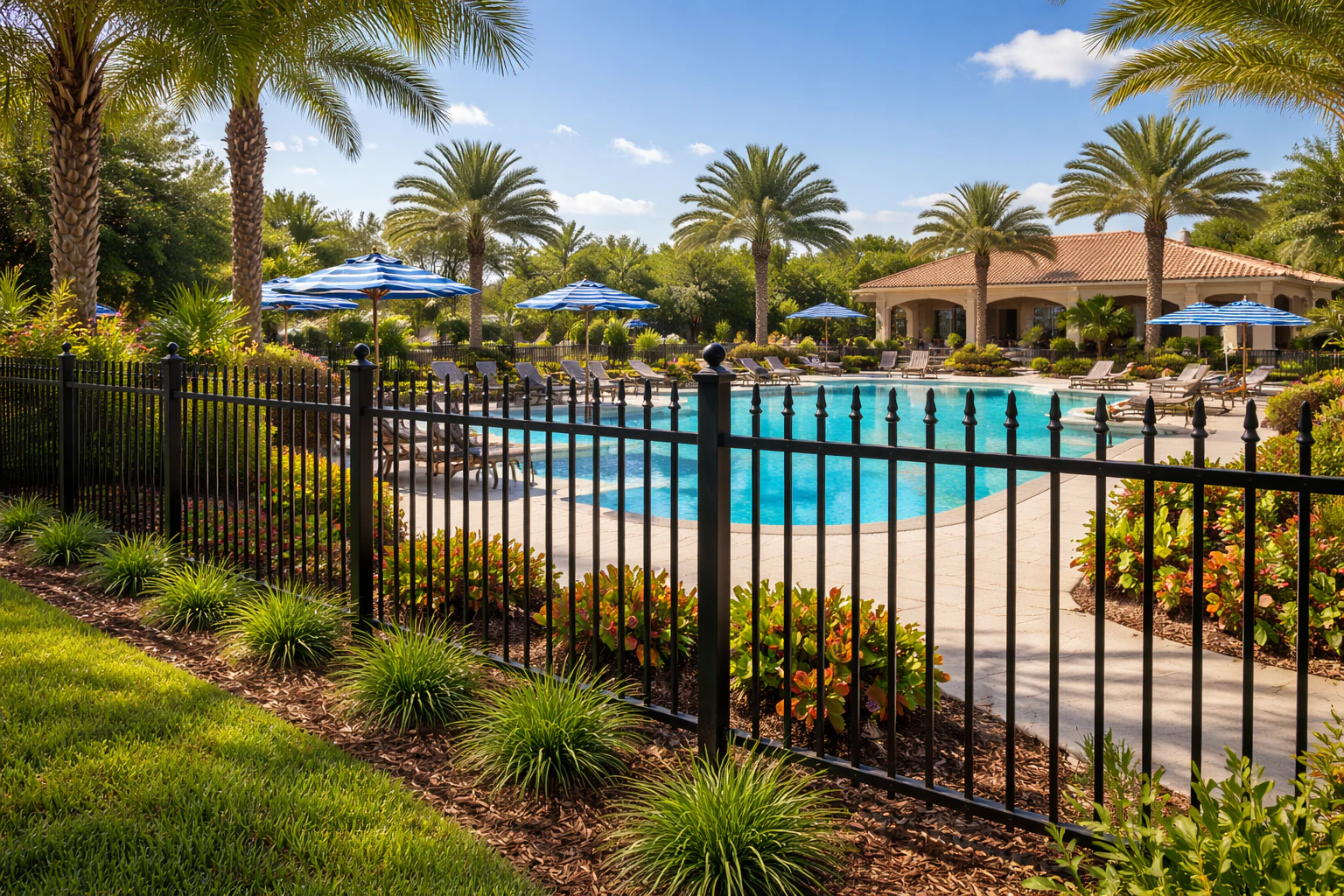
Metal fences are everywhere around Jacksonville, from wrought iron gates on older Riverside and Avondale homes to aluminum pool fences in newer HOA neighborhoods in St. Johns and Clay counties. Humidity, salt air and strong sun work on bare metal all year, and once rust starts it spreads.
A New Leaf Painting has painted metal fences and metalwork across Jacksonville and Northeast Florida since 2010. Here's what drives the cost, which products hold up here and when to hire a pro.
Metal Fence Painting Cost by Length
| Fence Length | DIY Materials | Pro: Aluminum/Good Condition | Pro: Iron/Light Rust | Pro: Iron/Heavy Rust or Restoration |
| 50 linear feet | $38 to $100 | $150 to $275 | $250 to $400 | $400 to $700 |
| 100 linear feet | $75 to $200 | $300 to $550 | $500 to $800 | $800 to $1,400 |
| 150 linear feet | $113 to $300 | $450 to $825 | $750 to $1,200 | $1,200 to $2,100 |
| 200 linear feet | $150 to $400 | $600 to $1,100 | $1,000 to $1,600 | $1,600 to $2,800 |
| 250 linear feet | $188 to $500 | $750 to $1,375 | $1,250 to $2,000 | $2,000 to $3,500 |
| 300 linear feet | $225 to $600 | $900 to $1,650 | $1,500 to $2,400 | $2,400 to $4,200 |
Swipe to see the whole table
- Aluminum / good condition: light cleaning, no rust treatment, one or two coats of direct-to-metal paint.
- Iron / light rust: wire brushing or grinding rust spots, rust converter, primer and two topcoats.
- Iron / heavy rust or restoration: extensive rust removal, possibly sandblasting, a full primer system, two topcoats and detail work on ornamental pieces.
How to measure: walk the fence line and count linear feet. On ornamental iron or aluminum with pickets, posts and rails, the real surface area is much bigger than the length suggests, so painters often price complex work by surface area or time. Height matters too: a 6-foot fence has twice the surface of a 3-foot fence of the same length. Ask whether a quote is per linear foot or per square foot.
Style matters as much. Chain link and flat-panel aluminum are quick to paint. Ornamental iron with scrollwork and finials is the slowest, since every piece needs careful brush work.
Metal Type: Wrought Iron, Steel, or Aluminum
- Wrought iron is the most beautiful and the most demanding. It rusts readily in our humidity and salt air, and a fence left alone for a few years can have rust over a good part of its surface. Iron jobs almost always land at the higher end of the range.
- Steel, including chain link frames and some commercial fencing, rusts much like iron. Galvanized steel holds up better but still needs attention once the galvanizing wears through, especially near the coast.
- Aluminum doesn't rust. It oxidizes into a white, chalky film that hurts paint adhesion but doesn't eat the metal. Prep is simpler, so it costs less to paint: clean off the oxidation and use a paint that bonds well to aluminum.
Rust Severity: The Biggest Cost Variable
Rust Severity: The Biggest Cost Variable on Iron and Steel
On iron and steel, the amount of rust decides how long the job takes more than anything else.
| Rust Level | What It Looks Like | What the Prep Requires |
| None / surface oxidation only | Dull, slightly discolored surface | Clean with TSP or metal cleaner; scuff sand; prime and paint |
| Light rust (under 20% of surface) | Rust spots scattered on surface | Wire brush rust spots; apply rust converter; spot prime; full topcoat |
| Moderate rust (20–50% of surface) | Widespread rust patches and streaking | Extensive wire brushing or angle grinding; rust converter; full prime system; two topcoats |
| Heavy rust (50%+ of surface) | Large areas of deep rust, pitting | Professional sandblasting or extensive mechanical removal; epoxy primer; two topcoats minimum |
| Structural rust damage | Metal pitting through, weak or broken sections | Section replacement required before painting; paint alone won’t do it |
Swipe to see the whole table
Don't paint over active rust. It's the most common metal fence mistake. Fresh paint seals moisture and oxygen against the rust, the rust keeps spreading underneath, and the paint bubbles and lifts. Then the whole prep has to be done again.
Best Paint for a Metal Fence in Florida
Metal fence paint isn't wall paint. The right system is a rust-inhibiting primer, a rust converter where needed and a direct-to-metal (DTM) topcoat. These cost more than standard exterior latex but are made to bond to metal and resist rust. Plain latex on metal without the right primer is a fast way to peeling and rust coming back.
Rust-inhibiting primer on iron and steel
Every iron or steel fence needs a rust-inhibiting primer, whatever its current condition. Epoxy primers give the strongest barrier over treated rust; rust-inhibiting alkyd primers work over light surface rust on sound metal. Sherwin-Williams DTM primer and Rust-Oleum Professional primer are two we see hold up here. Near the beaches, an epoxy primer is worth the extra cost.
Rust converter for rust you can't remove
A rust converter chemically turns remaining rust into a stable black layer that can be primed. Rust-Oleum Rust Reformer and Corroseal are two common ones. It's for light to moderate rust after wire brushing, not a substitute for removing heavy, flaking rust.
DTM topcoat in semi-gloss or gloss
Direct-to-metal paints bond to metal and carry rust inhibitors in the paint itself. On fences we use semi-gloss or gloss: the harder, smoother film sheds water and cleans more easily than a flat finish. Products include Sherwin-Williams DTM Acrylic Coating, Rust-Oleum Professional and Benjamin Moore Impervo for ornamental iron.
The classic look: high-gloss black is the traditional finish for ornamental wrought iron in Jacksonville. It shows off the detail and looks sharp against landscaping.
How Florida Weather Ages a Metal Fence
- Humidity: our muggy air works on iron all year. Any chip, scratch or pinhole in the paint can start rusting within months. On aluminum, humidity speeds the chalky oxidation that loosens paint.
- Salt air: in Jacksonville Beach, Atlantic Beach, Neptune Beach, Ponte Vedra Beach and along the Intracoastal and the St. Johns River, salt makes the moisture on metal far more corrosive. Coastal iron needs repainting noticeably sooner than inland iron.
- Sun: UV fades color and breaks down the paint film. Top rails and caps face the sky and almost always fail first.
How Often to Repaint a Metal Fence in Jacksonville
Typically every 4 to 7 years, depending on the metal and exposure, and sooner for coastal homes in salt air. Aluminum with a good paint system lasts longest; wrought iron near the ocean needs attention most often. Budget paint shortens all of these.
Walk the fence once a year. Look for chips, scratches down to bare metal, rust starting at welds and joints, and bubbling paint that means rust underneath. A small spot treated early takes minutes; rust left to spread for two years becomes a much bigger job.
How to Prepare and Paint a Metal Fence
Step 1: Clean the surface
Remove dirt, grease, oxidation and loose paint first. Aluminum gets a thorough wash with a metal cleaner or TSP solution. Iron and steel get wire brushing by hand or with an angle grinder to take off loose rust and old paint. Badly neglected fences may need sandblasting down to bare metal.
Step 2: Treat remaining rust on iron and steel
Rust that brushing can’t remove gets a rust converter, which must cure fully (follow the label) before primer. On a fence with widespread rust this can take a full day before any painting starts. This is the part that surprises people: on neglected iron, prep often takes longer than painting.
Step 3: Prime with a rust-inhibiting primer
Primer goes on every surface, including recesses, behind decorative pieces and the backs of rails and pickets. Ornamental iron usually needs a brush to reach everything. Let the primer cure before the topcoat.
Step 4: Two topcoats of DTM paint
Two coats of direct-to-metal paint finish the system. Let the first coat cure before the second, or the film stays soft and damages easily. Brush ornamental iron; simple rail or flat-panel fencing can be sprayed for a faster, more even finish.
Best time of year: spring and fall (March through May and October through November). Milder temperatures and lower humidity let primer and paint cure and harden before summer sun hits them. Avoid very humid days and direct midday sun, which can skin the paint over before it bonds.
DIY or Hire a Pro?
DIY is realistic for aluminum in good condition: clean it, scuff sand, apply a DTM paint, and it's a manageable weekend project. It gets hard on iron or steel with active rust, which takes time, effort and the right tools. Cutting corners on rust removal is exactly why DIY jobs fail in a year or two.
For wrought iron with moderate to heavy rust, any fence in salt air, or ornamental work where the details need to look right, hiring a professional usually pays off over the life of the paint, and our professional jobs include a workmanship warranty.
Is It Worth Repainting a Rusted Wrought Iron Fence or Should I Replace It?
Usually it's worth repainting, as long as the metal is sound: the rust is on the surface and hasn't eaten through the metal or weakened welds and joints. Wrought iron is expensive to replace. Replacement makes more sense when pitting has weakened sections, several welds have failed or metal has rusted through. A quick inspection tells you which you're dealing with.
Typically $3.00 to $8.00 per linear foot, or about $450 to $2,400 for most residential fences. Aluminum in good shape is at the low end and rusty wrought iron at the high end; heavily neglected iron that needs sandblasting can cost more.
Every metal fence job we take on starts with an honest look at the rust and the prep it needs. If your fence needs sandblasting or a section replaced before painting, we tell you upfront, not as a surprise add-on. We serve Jacksonville, the beaches, Ponte Vedra, Fleming Island, Orange Park and Amelia Island. Call or text (904) 615-6599 or request a free estimate.